New York is the third largest wine producer in the United States, following California and Washington. New York produces roughly 3.5% of the U.S.’s wine production compared to California at over 84% and Washington at slightly over 5%.
There are eleven designated American Viticultural Areas (AVA). An AVA is a designated wine grape-growing region in the United States as identified by the Alcohol and Tobacco Tax and Trade Bureau, and the United States Department of the Treasury. The AVAs are Champlain Valley, Long Island, North Fork of Long Island, The Hamptons Long Island; Hudson River Region; Finger Lakes, Seneca Lake, Cayuga Lake; Niagara Escarpment , Upper Hudson and Lake Erie.
Wine production began in New York in the 17th century with Dutch and Huguenot plantings in the Hudson Valley. Today the two dominant wine regions are the Finger Lakes and Long Island. In 1976 the Finger Lakes and Long Island regions had 19 wineries. By 1985 this number increased to 63 wineries.
The climate differs amongst the eleven regions because of regional influences, such as the Atlantic Gulf Stream and the numerous bodies of water and mountainous regions around the state. The annual precipitation ranges from 76 cm to 127 cm. The growing season in the Lake Erie and Finger Lakes regions ranges from 180 to 200 days a year, while on Long Island the season extends to 220 days.
Today there are over 450 wineries throughout the state.
Riesling grapes consist of less than 10% of New York’s wine production but are used to make some of the highest quality wines. Other varietals include French hybrids, American hybrids and Vitis Labrusca, which are vines native to eastern North America.
American hybrids grown include Catawba, Delaware, Niagara, Elvira, Ives and Isabella. French hybrids consist of Aurore, Baco Noir, De Chaunac, Seyval Blanc, Cayuga, Vidal and Vignoles, which is used to make late harvest wines and ice wines.
I find it interesting that even though I can see New York State from a Muskoka chair in my yard I can very seldom find New York wine in my local liquor store. On the other hand I can find California, Washington and even Oregon (ranked 5th in U.S. production at only 1.5%) wines all the time. Especially in the case of Oregon, I am left to think that either Oregon wines are superior in quality and flavour to New York wines or they have a much more aggressive marketing plan, or both. I can vouch for the quality of Oregon wine but have not had the opportunity to do the same for New York wine.
Today I am taking a break from my usual subject, the sweet nectar of the Greek gods, otherwise known as wine, to talk a little about my second passion, which I am equally as fond of; whisky, or is it whiskey? The fact of the matter is that whether it is whisky or whiskey is dependent on where the brew was made. Whisky hails from Scotland while whiskey originated in Ireland. Whiskey is also the normal spelling used for North American varieties.
Both Scottish whisky and Irish whiskey make use of the same grain, barley, but the similarity ends there. The two beverages do not taste at all alike. In fact the taste can vary dramatically by region within each of the countries.
The common North American whiskies are made with rye, wheat or corn, or a combination of two or all three. Again, regional differences may impact the composition and flavour of the whiskey.
My beverage of choice, whether it is whisky or whiskey, depends on my mood. I don’t have a single favourite, not because I can’t make up my mind but because my favourite of the day depends on my mood. What do I mean by this? If I find my mind overstimulated the last thing I want to do is try to relax by sipping on a very complex and robust whisky that attempts to challenge me. That just generates more unsettledness. Instead, in that situation I want something very mellow and smooth, such as Sexton or Bruichladdich’s ‘The Laddie’.
However, the reverse is also true. If I am relaxed and decide to sip on a whisky I will select one that is more complex and bold; one that is robust and will stimulate my mind, perhaps Bowmore or Lagavulin.
Being the family’s historian and an avid genealogist for the past 40 years, I have been asked on more than one occasion whether I place my allegiance behind my father’s Scottish heritage and whisky, or my mother’s Irish ancestry and whiskey. My answer is “definitely”. I must admit that I have a prejudice for the Scottish and Irish varieties over those from North America.
Going forward I will occasionally inject a whisky or whiskey musing just to keep life interesting, but my main focus will continue to be the grape.
Here is a sobering thought; if the industrialized world continues to produce greenhouse gases at its current rate, the United Nations predicts that there will be an increase in the global mean temperature of about 3.2˚C between now and the end of this century. This is a similar increase to the change that resulted in the most recent ice age.
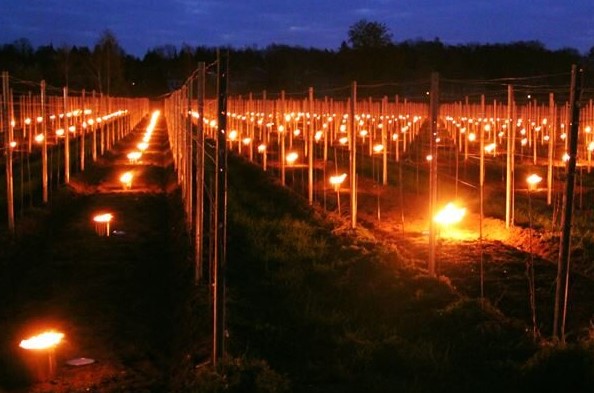
Photo credit: Guado al Melo Winery
Wine, which is among the most sensitive agricultural products, demonstrates how climate change is transforming traditions and practices, many of which are centuries old. Around the globe, producers have contemplated and experimented with adaptations, not only to hotter summers, but also to warmer winters, droughts and the sort of unexpected, sometimes violent events such as spring frosts, forest fires, and flooding, to name a few, that are a result of climate change.
Original archives compiled from 664 years of harvest dates and weather conditions from Beaune (pronounced: [bon]) in the Burgundy region of France, is the longest known homogeneous series of grape harvest dates available. These records indicate that temperatures have climbed enough that harvests now begin an average of 13 days earlier than they did prior to 1988.
Grape growers have been noting significant changes in weather patterns since the 1990s. Places such as England, that were traditionally unsuited for producing fine wine, have been given the opportunity to become part of the global wine world, transforming local economies in the process.
In areas like Burgundy, Barolo, Champagne and the Mosel and Rhine Valley, where great vintages were once rare, warmer growing seasons have made it much easier to produce exceptional wines on a consistent basis. This good fortune has increased both land values and wine prices giving grape growers and winemakers fame and fortune. The character of these wines has evolved in part as a result of climate change.
If the growing season becomes too hot, the grapes will advance through their life cycle too quickly. As a result tannins and anthocyanins, the compounds responsible for giving grape skins their color, won’t develop properly. Subdued acid and increased alcohol levels are also possible and often undesirable.
Variations between daytime and nighttime temperatures are in jeopardy as well. In warmer growing regions, that difference can be crucial to achieving freshness and encouraging certain flavour and aroma development.
Intense heat or too much direct sunlight can lead to dried fruit notes or create dull wines. Fruit that’s left too long on the vine can be damaged from sunburn or may simply shrivel.
Wine growers in northern Italy have already experienced more regular occurrences of sun-damaged crops.
The summer of 2019 in Southern Australia was the hottest since keeping national records began in 1910, and it ushered in an 8% loss of white wine varieties, with Chardonnay dropping 12% to its lowest yield in the past five years. Growers in Priorat, Spain reported devastating vine damage, scorched leaves and desiccated grapes when temperatures shot up to a record 42˚C.
Freezes during the winter or extreme frost in the spring may become less frequent in the years ahead but they have the potential of being much more severe. A decrease in regular winter frosts may also encourage the spread of pests and insect-borne diseases that would normally die off during cold seasons.
The amount of moisture is pivotal. Too much rain approaching or during harvest can lead to watery grapes and a weak vintage. Similar to mild winters, damp, soggy and humid conditions make the vines susceptible to a variety of pests, fungi, mildew and disease.
Rising sea levels, which according to NASA are expected to surge by about 66 centimetres by the beginning of the next century will have the capability of altering or destroying coastlines. Severe floods are also possible and could destroy many vineyards in Portugal, New Zealand and California.
Drought can be another challenge for grape growers. Even though vines may be more tolerant to water deficiency than other crops, the resulting stress can even be desirable, spurring root growth. However, too much stress can hinder photosynthesis, delay or inhibit bud ripening, lower winter hardiness or cause the vine to stop producing altogether. In these situations the soil could be eroded away by wind.
While irrigation can be beneficial, it is not always possible. The recent 3 year drought in South Africa resulted in a decline in vineyard area, improper berry set, hindered vine growth overall and produced the smallest yield since 2005.
The fast moving effects of climate change are forcing the wine industry to take decisive steps to counter or adapt to the changing climate. For example, some growers are pursuing higher altitude locations, which provide shorter periods of intense heat or are better at sustaining day-night temperature swings.
A group of Chilean winemakers, who recently cultivated Patagonia, are advancing into wild territory where nothing is guaranteed. Their hope is that the patchwork of microclimates and terroirs will provide future reprieve from some of nature’s elements, even if it means risk in the short term.
In order to minimize the effects of the intense sunlight, producers are rethinking canopy management, pruning techniques, developing cover crops and extensive shading methods, increasing vineyard biodiversity and finding ways to reuse water.
New World wine producers are experimenting with different grape varieties. In South Africa, growers are testing more drought-resistant varieties. In Australia, vintners are now growing Italian grapes like Fiano, Vermentino and Nero d’Avola varietals that can thrive in a warmer environment. In California, new varieties are being introduced to the Napa Valley.
In Old World regions as well, where many grapes and blends have been historically prescribed by law, the idea of moving to different vines is gaining momentum. For example, in Bordeaux the Union of Bordeaux AOC and Bordeaux Supérieur winemakers have unanimously approved a list of seven “varieties of interest for adapting to climate change”, those being Arinarnoa, Castets, Marselan, Touriga Nacional, Alvarinho, Liliorila and Petit Manseng.
Implementation of each of these solutions requires a great deal of time, research and testing. Unfortunately, the methods being devised now may not work in the future as the climate continues to change.
In the short term, it may appear that there is currently better wine from regions we know and new wine from previously uncharted areas, but the reality is we are going to experience ever-worsening and unpredictable viticultural challenges in the near future.
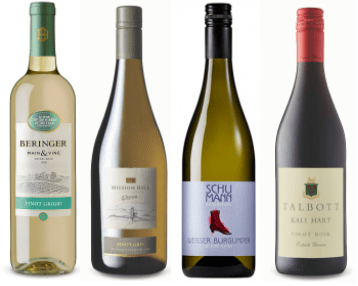
Pinot grapes come in a great variety and not only are they related, many varieties are quite closely connected through DNA.
However, before getting too far in this discussion it is important to point out that Pinot Gris and Pinot Grigio are in fact the same grape. Confusion sometimes arises from there being two names. Pinot Gris is what the grape is called in France, while the term Pinot Grigio originates in Italy.
There are some noticeable differences in characteristics between the two, due to climate, soil and production techniques. Pinot Gris tends to be a bit softer, with touches of honey and a smooth feel, while Italian Pinot Grigio is a bit more acidic with bitter almond undertones. Technically, there is also American Pinot Grigio which is most similar to Italian Pinot Grigio, but tends to be a bit less tart and more fruit-forward.
Similarly, Pinot Blanc and Pinot Bianco are one and the same as well; Pinot Bianco is the Italian name. Just as with Pinot Gris and Grigio, French Pinot Blanc and Italian Pinot Bianco produce markedly different wines.
The French versions from Alsace are musky and creamy-textured whereas those from Italy have livelier acidity, with pear or even soft citrus flavours. American Pinot Blancs are usually made in the French style, as the name suggests. Pinot Blancs pairs well with cheese-based dishes; Pinot Bianco goes nicely with light foods like chicken breasts or flaky white fish in a simple sauce.
Both the red and white grape are referred to as Pinot because the grape clusters resemble the shape of pine cones. The latter half of their name refers to the colour of the grapes. Pinot Noir is a rather dark skinned grape, Pinot Gris are considered to have a gray coloured skin, and Pinot Blanc is considered to be is often a mix of bronze, green and pink grapes within the same bunch.
Pinot Blanc/Bianco and Pinot Gris/Grigio are colour mutations from Pinot Noir in which they lack pigment, producing the lighter grapes and fruitier wines. Pinot Blanc/Bianco has the least amount of anthocyanin.
The juices of all the Pinots are clear, but Pinot Noir is allowed to remain with its skin for a period of time which gives it its red colour. Pinot Blanc/Bianco and Pinot Gris/Grigio on the other hand are not left with the skin, therefore creating a white wine.
With respect to taste, Pinot Grigio is noted for pronounced, often quite high, crisp and bold acidity. Pinot Gris and American Pinot Grigio have softer, medium levels of acidity but it is still very present.
Aged, Pinot Gris/Grigio will tend to showcase a bit more acidity and structure than Pinot Blanc/Bianco. Pinot Blanc has a rounder expression. It’s actually among the regular, daily whites consumed in Alsace. Unlike the often brighter fruit flavours found in some Pinot Grigio, Pinot Blanc can tend towards apple and even some smoky flavours; it can also be oaked for a bit more richness.
Pinot Blanc is very versatile. It is used in still wines, sweet, and sparkling wine. In northwestern Italy, Pinot Bianco is also used in Franciacorta, which is an Italian sparkling wine. It’s also a major component in Crémant d’Alsace.
Pinot Noir is semi-acidic, though because it is a red wine, the acidity is a bit less noticeable. It is a light bodied red wine with flavour notes of red berries, cherries, and vanilla. When aged there may be hints of vanilla and caramel accents. Clove, licorice, and even smokier tobacco are present in some varieties.
When pairing with food, Pinot Noir compliments light meats such as chicken and fattier fish like salmon. Most Pinot Gris wines have a medium body and crispness, allowing them to pair well with light seafood dishes.
Tannins provide an astringent, drying sensation and also add texture to the wine. For red wine, Pinot Noir is rather light in tannins, and being white wine, Pinot Grigio, Pinot Gris and Pinot Blanc are inherently low in tannins.
Both Pinot Noir and Pinot Grigio tend to be produced as dry wines. Pinot Gris, due to light touches of honey notes, tends to have a touch of sweetness, which can even be considered as slightly off-dry. Pinot Blanc has its own taste spectrum, either rich (when oaked) or lighter and more neutral in the Pinot Grigio way, but usually with more fleshiness and lower acidity.
In summary, when compared, there are a number of differences, but also a few similarities between Pinot Noir, Pinot Gris/Grigio or Pinot Blanc/Bianca. They all tend to be light; refreshing wines with distinct acidity, but can also be more complex and smoother, depending on climate.
At the time I was introduced to the world of wine I was told that white wine was to be served chilled straight from the fridge and red wine drank at room temperature. However, since then I have learned that the serving temperature of wine is much more complex than that.
Photo credit: Food52.com
Research has discovered that when wine is served at the proper temperature it is much more enjoyable. When determining serving temperature we need to look beyond just the colour of the wine to the type or varietal of the wine. Serving wine at the right temperature will provide the intended flavour, character and bouquet of the wine.
However, let’s not go crazy here; determining the serving temperature of wine is by no means an exact science. There isn’t an exact optimal temperature for any particular wine. A difference of a couple of degrees won’t affect your taste experience.
When considering serving red wine at “room temperature”, what most people don’t realize is that room temperature has actually changed over time as building construction and materials have changed. At one time room temperature would have been a drafty damp 13o to 16oCelsius versus today’s average temperature of 20o to 23o Celsius. That is a significant change. If you normally serve your red wine at room temperature try chilling it in the fridge for 15 minutes prior to serving and see whether you prefer it chilled or not.
White wines on the other hand can be served too cold. If the wine is served too cold then both the flavour and bouquet may be stifled; but if served too warm they are not enjoyable either. White wine is best served between 7o and 10o Celsius.
The following chart indicates the suggested serving temperature for a number of the more common varietals of wine, as recommended by the experts:
Varietal
Serving Temperature (oC)
Time in Fridge
Champagne/Sparkling Wine
7 – 10
30 – 40 minutes
Chardonnay
10
30 minutes
Pinot Gris/Pinot Grigio
7 – 10
30 – 40 minutes
Riesling
7 – 10
30 – 40 minutes
Sauvignon Blanc
7 – 10
30 – 40 minutes
Viognier
10
30 minutes
White Bordeaux Blends
10
30 minutes
Rosé
10
30 minutes
Cabernet Franc
16
20 minutes
Cabernet Sauvignon
16 – 18
15 – 20 minutes
Malbec
16 – 18
15 – 20 minutes
Merlot
16 – 18
15 – 20 minutes
Pinot Noir
13 – 16
15 – 20 minutes
Red Bordeaux Blends
16 – 18
15 – 20 minutes
Syrah/Shiraz
16 – 18
15 – 20 minutes
Zinfandel
16 – 18
15 – 20 minutes
Remember, these are suggestions only. You can try experimenting serving your wine at varying temperatures and see what works best for you.
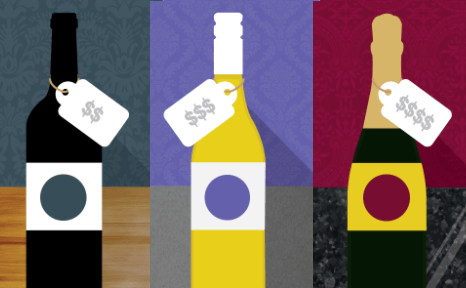
Studies have shown that there is a common perception that the higher the price of a bottle of wine, the better the taste and the more enjoyable it is.
Image credit: Fix.com
During one of these studies the participants were provided with incorrect information regarding the price of the various wines tasted. It was discovered that the participants found that an inexpensive wine was far more enjoyable when it was believed to have a higher price.
The study took place at Switzerland’s University of Basel where 140 participants were provided with six different wine samples which they had to rate for pleasantness and intensity. Three of the samples provided no price information while the others displayed a price; a low, a medium and a high price.
The three wines indicating price had none, one or two of the wines incorrectly priced. The mislabeled wines were either four times higher or four times lower than the actual price.
When the price of the wine was not displayed the study showed no difference in the pleasantness rating, irrelevant of the actual price. However, the mislabelled wines showed that the level of enjoyment was directly related to the indicated price. Low-cost wines displaying an erroneous high price were found to be more enjoyable than the true higher priced wines.
In another study researchers used MRIs to scan participants’ reactions while tasting deceptively labeled wines. The research indicated that as the label price increased so did the enjoyment of the wine. During a subsequent study the same results were achieved.
The studies also showed that decreasing the displayed price of an expensive wine did not affect the overall rating for its pleasantness. However, when the price was deceptively increased most participants preferred the wine more.
Even when one wine has a legitimate higher price it should be kept in mind that the higher price can often be attributed to being produced by a prestigious winery or vintner, being a rare vintage, being produced from exceptionally old or historic vines or wines consisting of varietals that are not in abundant supply. None of these reasons necessarily noticeably impact the flavour or quality of the wine; food for thought when perusing the aisles of your local wine merchant.
July 13th saw the beginning of torrential rains that resulted in devastating flooding in parts of Germany, Belgium and the Netherlands. The rivers were unable to withstand the volume of rain which resulted in rivers overrunning their banks, flooding some towns and villages. Some wine regions in northwestern Germany suffered extensive damage, with the full impact still to be determined. Even vintners in regions less impacted by the flooding have to contend with water in their cellars and mildew on grapevines.
Photo credit: TheTimes.co.uk
According to meteorologists, some parts of Germany received the equivalent of two months of rain in a 24 hour timeframe. Parts of the Rhine and its tributaries in Germany and the Meuse River in Belgium and Holland quickly overflowed their banks. The Ahr Valley, a Rhine tributary, was particularly ravaged. The steep slopes on both sides of the river contain Spätburgunder (Pinot Noir) vines, which are some of Germany’s best. The Germany’s Mosel region also experienced flooding that was compared to a tsunami. It came quickly and totally surprised everyone.
To date there have been upwards of 300 deaths attributed to the flooding with many more people still missing. Wineries in the region have all but been destroyed. All that remains in many cases are the bare walls of the structures. Furniture, cars, tanks, presses, tractors and other equipment are all lost.
With the equipment gone, the vintners will need a great deal of manual labour to maintain the vines for the balance of this season and then to harvest the grape crop. Then once it is harvested they will need to determine how they will press the grapes and ferment the juice.
Teams from the unaffected areas are organizing to help the grape growers in the devastated areas. The Verband Deutscher Prädikatsund Qualitätsweingüter (VDP), Germany’s association of top-quality wine, is organizing charity events. A wine festival is taking place this weekend where all of the proceeds will go to relief efforts.
It is worth making a mental note that when the 2021 vintage of German wines reach the shelves in a couple of years, the quantity will be less and the price will be relatively higher than in previous years. This will be due to the reduced supply and increased costs in getting these wines to market. There may also be some spoilage do to mold.
My thoughts are with everyone affected by this devastating situation.
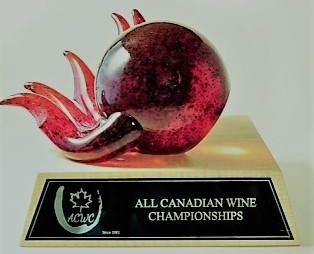
With COVID seeming to be lessening its grip, life as we used to know it is once again beginning to slowly return. Part of that are the various wine competitions. The 40th edition of the All Canadian Wine Championships was held from July 6th to 8th. In total, 208 wineries submitted 1,327 wines to assess.
Assessments and awards were based as follows:
Trophies : “All Canadian Best Wines of the Year”
All wines are judged using the 100-point system. Trophies are awarded for each of the following categories:
Best Red table wine
Best White table wine
Best Dessert wine
Best Sparkling wine
Best Fruit wine
The award for Best Red Wine of the Year went to BC’s Dark Horse Vineyard for their 2016 Red Meritage ($60.00).
The Best White Wine of the Year was the 2020 Gewürztraminer ($20.69) from BC’s Wild Goose Vineyards and Winery.
The Best Dessert Wine of the Year went to Ontario’s Peller Estates Winery for their 2019 Andrew Peller Signature Series Riesling Icewine ($89.85).
BC’s Forbidden Fruit Winery won the Best Fruit Wine of the Year award for their 2020 Flaunt Organic Sparkling Plum ($22.00).
Finally the Best Sparkling Wine of the Year award went to BC’s Gray Monk Estate Winery for their 2018 Odyssey Rose Brut ($29.90).
Double Gold medals / Best of Category were awarded to the single highest rated wine (using an average of the aggregate judges’ scores) from each of the categories. These wines were all submitted for the Trophy round.
Medals of Merit: Gold, Silver, Bronze were awarded in the following manner:
Gold awards were awarded to those wines scoring in the top 10 percentile.
Silver awards of merit were issued to those wines scoring in the second 10 percentile.
Bronze awards of merit were given to those wines scoring in the third 10 percentile.
I have put together my 2021 list of British Columbia wineries to watch for. Not all of these wines will be available at your local wine store; some are available in British Columbia wine stores, but most may be purchased online or directly from the winery.
My selections are based on my interpretation of recent trends, the wineries successes and the quality of their wine, their wine-making practices and what makes them stand out above their competitors at the present time. My list is presented in no particular order.
Mission Hill Family Estate Winery, West Kelowna
Mission Hill uses sustainable organic farming practices with the use of modern technology. Their wines are carefully aged with new and Old World techniques. They employ the use of bees, falcons, and chickens in lieu of pesticides and insecticides. Cover crops, earthworms, and compost are used in place of chemical fertilizers.
Their winemakers’ practices are fundamentally rooted in Old World techniques that are supported with modern technology. Drones provide a high-level view of the vineyard’s health. Soil science pinpoints the areas where best to plant the vines.
The winemaking team strives to be continually innovative, combining fermentation and maturation vessel traditions with future trends. The equipment and processes are designed to best serve the wines.
Mission Hill has 3 collections of wines: the Reserve Collection, Terroir Collection and the Legacy Collection.
Reserve Collection
The Reserve Collection expresses hand-selected blocks of grapes, extreme viticulture management, longer barrel time, and increased lees stirring, which is a process to handle the yeast during the fermentation process.
Terroir Collection
Only the top 3% of all of the winery’s fruit is hand-selected for these wines and each individual lot is carefully tasted throughout the winemaking process to ensure its quality level before the final blend.
Legacy Collection
The grapes are hand-harvested and hand-sorted, consisting of the top 1% of the harvest from all of their vineyards. They benefit from extended barrel aging which is followed by a 24-month period in-bottle prior to release.
These wines are small lot and limited production collectibles. Cellar-worthy, they may be aged for decades. The collection includes Compendium, Quatrain, Prospectus, Perpetua and their flagship wine, Oculus.
Covert Farms Family Estate, Oliver
Covert Farms Family Estate practices organic farming with minimal intervention winemaking. Regenerative agriculture offers many benefits to the farming ecosystem such as increasing soil organic matter, greater water holding capacity, improved nutrient cycling, pest and disease suppression through enhanced soil biology, and ultimately higher nutrient density in the vines.
They hope to introduce Dry Farming to the vineyards within the next few years which would provide such benefits as enhanced resiliency to climate change and potential increase in wine quality attributes.
They practice regenerative farming, which is based on five principles that need to be implemented together: no-till or minimal tillage, keeping the ground covered, species diversity, keeping living roots in the soil as much as possible and integrating livestock.
Regenerative agriculture offers many benefits to the ecosystem such as increasing soil organic matter, carbon capture, greater water holding capacity, improved nutrient cycling, pest and disease control through enhanced soil biology, and ultimately higher nutrient density within their crops.
Minimizing tillage is challenging in organic agriculture as this is one of the only means to manage weeds. They have been adapting their systems and processes and have had good success in the vineyards. Interestingly, the longer the soil is undisturbed, the fewer weeds there are.
Tantalus Vineyards, Kelowna
Tantalus Vineyards put incredible care into everything they do, from farming to winemaking and including the winery being Leadership in Energy and Environmental Design (LEED) certified. It is also LIVE certified. LIVE has independently certified the sustainable practices of winegrowers in the Pacific Northwest, using the latest in university research and internationally accredited standards.
Riesling is the major focus at Tantalus; it is an Okanagan icon. However, their Pinot Noir is very good as well.
Final Thoughts
Obviously these are far more than just 3 good wineries in British Columbia. In fact I have purposely excluded some of my personal favourites from this list as they were not what I consider as the innovative leaders this year. Included in that list would be Osoyoos Larose, Quails Gate and Gray Monk.
Unfortunately, it is unlikely that you will find many of the wines produced by these wineries outside of British Columbia. However, lucky for us many of the wineries offer online ordering.
With COVID-19 finally starting to loosen its grip over the country and the hopes that people will be able to begin moving more freely again, I have put together my 2021 list of wines to watch for. Not all of these wines will be available at your local wine store; some can only be purchased online or directly from the winery.
One significant indicator of which wineries are making an impact is usually the Ontario Wine Awards. However, COVID-19 caused the 2021 awards to be cancelled. The 2020 awards were conducted virtually but the organizers decided to forego the 2021 awards with the exception of the ‘Winemaker of the Year Award, which will be announced sometime during the summer. A second indicator is the National Wine Awards, which for 2021 has been deferred from June to October.
Selecting a list of top wineries is very subjective. Depending on the reviewer, ratings may be based on any or all of:
Customer visit experience at the winery
Overall service of the winery
The winery facility and amenities
The variety of wines offered for sale
Price point
The quality of the wine
For the purposes of this review I have based my opinions on my interpretation of recent trends, the wineries successes, and the quality of their wine, their wine-making practices and what makes them stand out above their competitors at the present time. My list is presented in no particular order.
Rosehall Run Vineyard, Prince Edward County
Having won the 2020 Ontario Wine Awards “Red Wine of the Year” for its 2018 ‘JCR Pinot Noir Rosehall Vineyard’ I am looking forward to seeing what Rosehall Run will do this year. I was fortunate enough to visit The County last fall and taste this prize winner, as well as bring a few bottles home. Based on last year’s performance, I would think that this year’s Pinot Noir release will be worth getting a hold of.
2020 was not the first time Rosehall Run has received an award. Their recognized achievements go back to 2006 and they have even had their wine included on the menu for a Royal visit.
Angels Gate Winery, Niagara
Winemaker Philip Dowell was named 2020’s ‘Winemaker of the Year’ at the Ontario Wine Awards. Dowell has a simple philosophy on winemaking; it’s all about balance both in the vineyard and in the actual wine. It’s about bringing together the ‘terroir’, ‘elevage’ and ‘typicity’ of wine. The ‘terroir” is the character of the grape from a specific vineyard site; ‘elevage’ is the progress the wine takes through the cellar during its maturation; and ‘typicity’ is the distinctive vinous character each wine has.
Karlo has rebounded after some struggles following the 2014 death of its founder and winemaker, Richard Karlo. Karlo has redeveloped its vision, which is to promote sustainability and show that it is possible to be respectful of the planet while producing award-winning wines. Karlo was the first certified vegan wine in the world. Not only is the wine in the bottles certified vegan but all the vineyard practices are vegan as well.
Personally, I am a big fan of both the Van Alstine white and red Port, as well as their Quintus which is made using Malbec, Petit Verdot, Merlot, Cabernet Franc, and Cabernet Sauvignon grapes.
The Picone Vineyard, Niagara
The Picone Vineyard was a complete mystery to me prior to their winning the White Wine of the Year award at the 2020 Ontario Wine Awards for their 2017 ‘Charles Baker Riesling’. The vineyard is small, only 10 acres.
In addition to the Riesling, they produce Fogolar Cabernet Franc, which is made from a one-acre block with prized vines that are 30+ years old.
Being committed to enhancing the environment by using sustainable practices in their winery and vineyard, the Wine Council of Ontario has certified Picone for sustainability management of their vineyard.
Interestingly, the owner, Mark Picone, is an internationally trained chef. As well as owning the winery, Mark is a Chef Professor at the Canadian Food and Wine Institute. What better way to showcase his wine than by pairing them with his own food creations.
Picone Vineyard may be small but it seems to have great future potential to become mighty.
Final Thoughts
Obviously these are not all the good wineries in Ontario, in fact far from it. However, these are the ones that caught my attention this past year. Unfortunately, it is unlikely that you will find any of their offerings in your local wine or liquor store. However, if you find yourself in either the Niagara region or The County, visiting these wineries could be a fruitful (no pun intended) experience. Most of the wineries offer online ordering as well.






 A Layman's Wine Musings