Hosting a Wine Party

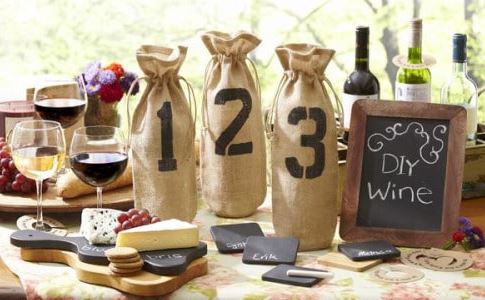
Are you suffering from the mid-winter blahs?  If so, have you ever given any thought to hosting a wine party?  A wine party provides the opportunity for self-awareness as you may discover you like a wine you never thought you would.  It is a great way to expand your horizons and try different wines.

Depending on the number of participants, ask each person or couple to bring a favourite wine.  It doesn’t need to be expensive and you can even put a price cap on it if you like.

If you will be sampling both whites and reds then follow the standard practice of wine tasting – whites first, reds last.  You could also do a theme tasting, such as have all the wines from the same region or country, or wines made with the same grape varietal.

Blind tastings where the labels are covered can be both challenging and fun.  Doing a blind tasting allows your participants to try and identify the wine they brought.  You can try identifying the various types /varietals, and possibly even hazard a guess as to the country/continent of origin that each wine came from. 

When tasting the wine you can see if you can distinguish between the different smells and tastes, such as florals, honey, fruit varieties, cedar, chicory, earthiness, leather, tobacco, etc. and then see whether your perceptions match the wine reviewers’ claims.

Also consider suggesting food pairings that may complement the wines.

The portions for each tasting need not be more than 2 ounces and it isn’t necessary to swallow the wine.  For those who don’t want to swallow, disposable beer pong glasses make great spittoons.

It is also a good idea to provide water and plain crackers, such as Carr’s Water Crackers, so you and your guests can refresh your palate between wines.

I hosted a tasting where I invited several couples, asking each couple to bring a bottle of white and a bottle of red of their choosing.  I made up score sheets where each person indicated what they tasted, how they rated it, and guessed at the varietal of the wine.  I also provided them with a “cheat sheet” to help them organize their thoughts and aid in their decision making.  The rating card and cheat sheet are below.

The person with the highest score was awarded a prize.  The tasting was followed by dinner and each person could then select their own wine pairing from all the wines we had tasted.

If you don’t have an adequate number of wine glasses on hand, I suggest purchasing inexpensive glass ones.   Your local Dollar Store should have a suitable selection to choose from. In addition to being more environmentally friendly, they are also much less flimsy and less susceptible to spills than plastic glasses.

Your wine party can be as simple or elaborate as you want to make it.  The most important thing is to have fun.

Sláinte mhaith

Score Card

Judge # ______            Wine #______                                                                                 

Determine the Sweetness or Level of Dryness

  1. Do you feel a tingling sensation on the tip of your tongue?
  2. Is there a slight oily sensation in the middle of your tongue that lingers?
  3. Wine has a higher viscosity; wine tears on side of glass slowly. (also an indicator of high Alcohol)

WARNING:  A bone-dry wine can often be confused with a wine with high Tannin.

Do you consider this to be a        sweet        or       dry         wine?

Acidity

Acidity is tart and zesty. Tasting acidity can be confused with the taste of higher Alcohol. Wines with higher acidity feel lighter weight because they come across as ‘spritzy.’

Acidity Characteristics:

  1. Tingling sensation that focuses on the front and sides of your tongue. Feels like pop rocks.
  2. If you rub your tongue to the roof of your mouth it feels gravelly.
  3. Your mouth feels wet, like you bit into an apple.

HINT:  It is common for wines grown in cooler climates to have higher acidity.

Do you consider this wine to have a high acid content?       Yes       or        No

Tannin

Characteristics of Tannins

  1. The wine tastes bitter on the front inside of your mouth and along the side of your tongue.
  2. Tannin makes your tongue dry out.
  3. After you swallow you feel a lingering bitter/dry feeling in your mouth.

CAUTION:  Tannin can often be confused with the term “dry” because it dries your mouth out.

Does this wine have a high tannin content?       Yes      or       No

Fruit

Wines are often characterized by their main fruit flavours. Tasting for fruit flavours in a wine can help you better define your preferences. For instance, wines that have strawberry notes lead into a very different set of wines than enjoying wines that taste like blackberries. The level of fruitiness that you taste in a wine leads to very different growing regions.

Tasting for fruitiness in a wine

Red wind characteristics:  red fruits such as raspberry or dark fruits like blackberry and blueberry

White wine characteristics:  lemon and lime or peach and yellow apple

  1. Can you name 3 different fruits easily?  If so, what are they?    ______________________________________
  2. Do you find it difficult to pick out a single fruit flavor?     ___________________________________________
  3. Does the wine give you stronger impressions of other flavors such as grass, bell pepper, black pepper, olive or meat?  ___________________________________________________________________________________

Body: Light to Full-Bodied

Alcohol Level ABV (or Alcohol by Volume) adds body. The wine will have a higher viscosity which is easily seen in watching it bead on the side of the glass. A high alcohol wine typically tastes fuller bodied than a light-alcohol wine.

Tasting body in wine

  1. How does the wine seem       lighter        or           bigger  ?
  2. How long does the taste last in your mouth after you’ve swallowed?     _________ seconds
  3. Is the wine full bodied up front but then drops off at the finish?             Yes                No

YOUR OVERALL RATING

  1. I cannot tell a lie; this wine does not suit my taste in any way, shape or form.
  2. I am not a fan.  It is a bit of a “yawner” if you ask me.
  3. I would be willing to serve this as a house wine for dinner parties.
  4. Yummy, I would be willing to serve this to close friends and/or on special occasions.
  5. Share – no way.  I want to keep this all for myself.

I think this wine came from ______________________________________ (country or continent)

I think the type of wine is

 WHITE RED
 Gewurztraminer Gamay
 Pinot Gris or Pinot Grigio Baco Noir
 Chablis Pinot Noir
 Pinot Blanc Valpolicella
 Riesling Merlot
 Viognier Zinfandel
 Sauvignon Blanc Cabernet (Cab Franc, Cab Sauv)
 Chardonnay Malbec
 Semillon Syrah or Shiraz
 Other  _____________________________ Other  _____________________________

Cheat Sheet

Canada’s Wine Regions – Part 4 – British Columbia

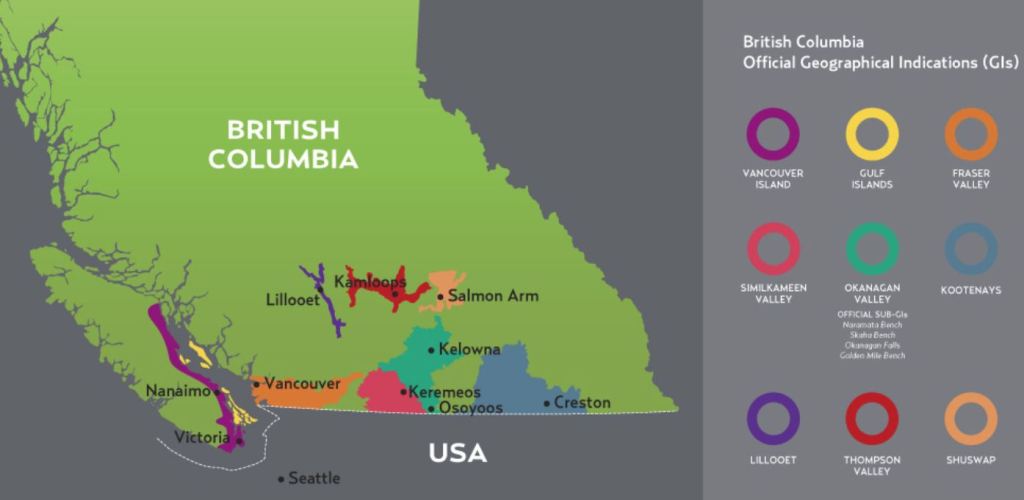
The climate for producing British Columbia wine is very unique. All of the BC vineyards are located at the northern extremes of where grape growing is possible. The vineyards are located in two main areas. About 4 hours’ drive east of Vancouver are the Okanagan and Similkameen Valleys. The second area includes the smaller wine regions of the Fraser Valley, Gulf Islands and Vancouver Island.

British Columbia’s wine industry has seen significant growth over the past 25 years, increasing from 17 wineries and 1,476 acres of vines in 1990 to over 270 wineries and over 10,260 acres today. The B.C. Vintners Quality Alliance (VQA) is the provincially-regulated appellation of origin and quality standard for Wines of British Columbia. BC VQA wines must be made from 100% B.C. grapes and meet standards for origin and production, vintage, varietals and quality characteristics that were discussed in my June 22, 2019 post, “Selecting Canadian Wines”.

Vancouver Island

On Vancouver Island, a provincial government-funded trial, called the Duncan Project, determined that grape production was viable.  The study identified Pinot Gris, Auxerrois and Ortega as having the capability of thriving in this seaside environment.

Vancouver Island is now home to a dedicated community of family grape growers and winemakers. There are now 26 wineries in this appellation.

Common varietals include:

  • Pinot Gris
  • Ortega
  • Siegerrebe
  • Pinot Noir
  • Maréchal Foch

Gulf Islands

The Gulf Islands are situated in the Georgia Strait which separates Vancouver Island from the mainland, and connected by a network of small ferries.  The Gulf Islands are home to about a dozen wineries that are located on each of Salt Spring, Pender, Saturna, Quadra, Gabriola, Hornby and Denman Island.  They display an easygoing lifestyle that allows time to savour the quiet moments with a nice variety of unpretentious wines.

Grape varietals include:

  • Pinot Gris
  • Orteg
  • Pinot Noir
  • Maréchal Foch

Fraser Valley

The Fraser Valley region includes Vancouver, Surrey, Richmond, New Westminster to Delta, Langley, Aldergrove and Abbotsford in the east.  The Fraser Valley region is dedicated to producing high quality, handcrafted wines with diverse varieties and styles.  There are about 25 wineries in this region.

Common varietals include: 

  • Siegerrebe
  • Pinot Gris
  • Bacchus
  • Pinot Noir

Similkameen Valley

The Similkameen Valley includes 15 wineries that are set amongst the dramatic backdrop of rugged and picturesque mountains. Considered the “organic capital of Canada”, the area is known for small farms and producers dedicated to creating quality produce, delectable foods, and award-winning wines.

Due to the tall surrounding mountains, and the reflectivity of the rock, heat remains in the valley late into the evenings. The valley is arid with persistent winds that can reduce the moisture in the vines and the soil. Even above ground irrigation can evaporate before touching the ground. The wind does minimize mildew, so vineyards generally don’t require frequent spraying.

Grape varietals include:

  • Chardonnay
  • Riesling
  • Merlot
  • Cabernet Sauvignon
  • Cabernet Franc

Okanagan Valley

Boasting 185 wineries and 84% of the province’s vineyard acreage, the Okanagan Valley is BC’s premier grape growing region. The valley stretches over 250 kilometres, across sub-regions, each with distinct soil and climate conditions suited to growing a range of varietals from sun-ripened reds to lively fresh and often crisp whites.

The 185 wineries include everything from quiet family-run boutique vineyards to world-class operations.  The Okanagan Valley wineries are rich in tradition and character, consistently ranking among the world’s best at international competitions.

The Okanagan Valley consists of 8 sub-regions – Kelowna / Lake Country, Peachland / Summerland / Penticton, Naramata Bench, Scaha Bench, Okanagan Valley, Oliver, Golden Mile Bench and Osoyoos.

Golden Mile Bench

The Golden Mile Bench was the first sub-Geographic Indication, created in 2015 within the Okanagan Valley wine region followed by Okanagan Falls, Naramata Bench and Skaha Bench.  Grape production in such areas must produce at commercially viable levels.

Located on the western slope of the valley south of Oliver and across from the Black Sage Bench, the Golden Mile Bench’s southerly aspect provides a warm climate. Its location on the west side of the valley is a cooler region than its eastern neighbour.

A wine made exclusively from grapes grown in the sub-appellation can use the term Golden Mile Bench as a Geographical Indication on a BC VQA Wine label. It’s the location the grapes are grown, rather than the location of the winery that is relevant.

Common varietals include:

  • Chardonnay
  • Gewürztraminer
  • Merlot

Kelowna / Lake Country

B.C.’s first vines were planted in Kelowna in 1859. Kelowna also boasts the province’s oldest continually operating winery, Calona Vineyard (est. 1932). Many of the first families of the BC wine industry call this area home: the Heiss family, who established Gray Monk Estate Winery; the Cipes of Summerhill Pyramid Winery; and the Stewart family of Quails’ Gate Winery.

Grape varietals include:

  • Riesling
  • Pinot Gris
  • Gewürztraminer
  • Chardonnay
  • Pinot Noir

Peachland / Summerland / Penticton

This region combines an exciting area of new development with wineries and vineyards that are more than 25 years old. The sub-appellation is renowned for delicious Pinot Gris, Gewürztraminer and Rosé.  There is also an outstanding lineup of sparkling wines.

Grape varietals include:

  • Riesling
  • Gewürztraminer
  • Pinot Noir

Naramata Bench

On May 13, 2019, wineries in the Naramata Bench joined Skaha Bench, Okanagan Falls and Golden Mile Bench, near Oliver, as wineries that meet the requirements of the Wines of Marked Quality Regulation.   B.C. wines and wineries meeting these requirements are certified that they achieve certain wine production standards, and are enabled to use protected labels that are prescribed under this regulation.

Naramata Bench is roughly defined as the bench lands between Penticton Creek and Okanagan Mountain Park on the east side of Okanagan Lake. Nowhere else in the Okanagan Valley are there so many wineries in a single area.

The vineyards of Naramata Bench boast ideal conditions for full-flavoured white varietals, as well as earlier ripening, elegant reds.

Common varietals include:

  • Chardonnay
  • Pinot Gris
  • Merlot
  • Pinot Noir

Scaha Bench

On May 13, 2019, wineries in the Skaha Bench joined the Naramata Bench, Okanagan Falls and Golden Mile Bench, near Oliver, as wineries that meet the requirements of the Wines of Marked Quality Regulation. Skaha Bench covers a 10-kilometre stretch from the outskirts of Penticton and along the eastern shore of Skaha Lake.

Wineries in Skaha Bench include Blasted Church, Black Dog, Painted Rock, Pentage and Crescent Hill.

Common varietals include:

  • Chardonnay
  • Pinot Gris
  • Pinot Blanc
  • Merlot
  • Pinot Noir

Okanagan Falls

On July 27, 2018, the Province named Okanagan Falls a Sub-Geographical Indication within the Okanagan Valley wine region, meaning consumers will now see a confirmation on labels of certified BC wine is from the region.

From the shores of Skaha Lake to the tip of Vaseux Lake, this cluster of award-winning wineries offers unsurpassed winery experiences, and great wines. The wineries in and around Okanagan Falls have been producing some of BC’s most celebrated wines for many years. Warm days and cool nights produce wines with ripe fruit character and acidity. There are a variety of vibrant sparkling wines and crisp Rieslings to complex Pinots and rich Syrahs.

Grape varietals include:

  • Riesling
  • Gewürztraminer
  • Pinot Noir
  • Syrah

Oliver

Oliver has been referred to as the ‘Wine Capital of Canada’.  It is home to nearly half of British Columbia’s vines and more than 40 wineries. To the west, the Golden Mile Bench is ideal for white wines such as Pinot Gris and Chardonnay, and bright fruity reds like Cabernet Franc.

To the east lies the Black Sage Bench which cultivates powerful red wines and full-flavoured whites. The combination of hot days and cool nights produce fruit with a perfect balance of exceptional flavours and vibrant acidity.

Common grape varietals include:

  • Pinot Gris
  • Chardonnay
  • Merlot
  • Cabernet Sauvignon
  • Cabernet Franc

Osoyoos

Osoyoos lies at the southern-most tip of the Okanagan Valley, near the Canada-USA border. Officially Canada’s hottest spot, this is red wine country.

Osoyoos Larose Le Grand Vin red blend has become a favourite of mine after my brother introduced it to me several years ago. I now pick some up whenever I come across it in Ontario.

Grape varietals include:

  • Chardonnay
  • Merlot
  • Cabernet Sauvignon
  • Cabernet Franc
  • Syrah

Kootenays

The Kootenays is situated in the southeastern corner of British Columbia.

In select microclimates, grapes have been grown in the Kootenays since 1995. Although a new viticultural area, ground crops and orchards have been cultivated there for many decades.

6 wineries are located in this region.

Common varieties include:

  • Gewürztraminer
  • Pinot Gris
  • Pinot Noir
  • Maréchal Foch

Lillooet

One of the oldest towns in the province, Lillooet is located at the southern tip of the Cariboo Chilcotin region.  The climate is very similar to the traditional grape growing regions in the Okanagan Valley with long, hot, dry summers. However, nights are cooler, making average summer temperatures slightly lower than the Okanagan, but at the same time preserving the fresh crisp acidity in the wines.  Viticulture is a recent development with  only 2 wineries at present.

Common varieties include:

  • Riesling
  • Chardonnay
  • Pinot Gris
  • Pinot Noir
  • Cabernet Franc

Shuswap

The Shuswap region is located north of the Okanagan Valley.  Wines have been produced here since 1997, predominately of cool climate varieties as it is one of the most northerly grape growing regions in North America. Shuswap Lake is the dominant feature in the region. Each of the 10 vineyards has its own microclimate, giving special character to its wines.

Common grape varieties:

  • Ortega
  • Siegerrebe
  • Gewürztraminer
  • Kerner
  • Maréchal Foch

Thompson Valley

On the edge of cool climate viticulture, the 4 Thompson Valley wineries are pioneering an exciting new region and expanding the boundaries of quality BC winemaking.  It is nestled amongst the North and South Thompson Rivers in and around Kamloops, in the rain shadow of the high coastal mountains, with the semi-arid conditions and diverse microclimates.

Common varieties include:

  • Riesling
  • Chardonnay
  • Marquette
  • Maréchal Foch

Although I have had the pleasure of visiting British Columbia several times I have never had the opportunity to experience any of the wine regions.  In particular, being a huge red fan, I would love to travel to the Osoyoos area and sample the wonderful offerings there.

Sláinte mhaith

Canada’s Wine Regions – Part 3 – Ontario

Ontario is the largest wine grape producing province and recognizes the Vintners Quality Alliance (VQA) as its provincially regulated appellation of origin system.  The VQA is discussed in detail in my June 22, 2019 post, “Selecting Canadian Wines”. 

The province’s three wine-producing appellations are the Niagara Peninsula, Lake Erie North Shore and Prince Edward County. They contain over 160 VQA wineries and 17,000 acres of vineyards.

Niagara Peninsula

The Niagara Peninsula has the largest planted area of the viticultural areas in Ontario with 90 wineries and about 15,000 acres of vines. The Niagara Peninsula has two regional appellations and 10 sub-appellations.

I have made numerous treks to Niagara over the years and have developed an ever changing list of favourite wineries that I like to frequent during my excursions to the region.  I will point those out in the sections below. Given that there are now 90 wineries in the region, I have in no way even come close to visiting all the wineries so my recommendations are based only on my own personal experience and research.

Generally speaking (but there are exceptions) I have found that I favour the whites from the sub-appellations north of St. Catharines, toward Toronto, and the reds from the sub-appellations south of St. Catharines, toward Niagara Falls.

Sub-Appellations

There are 10 unique growing areas within the Niagara Peninsula.  Only wines made from 100% grapes grown in the sub-appellation are permitted to include the sub-appellation name on the label.

Niagara River

This is a small strip of land that runs adjacent to the Niagara River.  The soils in the area are primarily stratified glaciolacustrine fine sand that provides natural drainage and encourages the vines to develop deep roots.

One of my favourite wineries, Two Sisters Winery, is located in this sub-appellation. I enjoy both their Stone Eagle and their Stone Eagle Reserve, which are blends of varying proportions of Cabernet Franc, Cabernet Sauvignon and Merlot

The common grape varietals grown in Niagara River include:

  • Vidal
  • Chardonnay
  • Pinot Noir
  • Cabernet Franc
  • Cabernet Sauvignon
  • Riesling

Niagara Lakeshore

This region follows the Lake Ontario shoreline from the Welland Canal to the Niagara River.  The soil composition and moderate temperatures resulting from the close proximity of Lake Ontario provide a longer growing season which results in mature full bodied wines.

The common grape varietals consist of:

  • Vidal
  • Chardonnay
  • Pinot Noir
  • Cabernet Franc
  • Cabernet Sauvignon
  • Riesling

Four Mile Creek

This is the largest of the sub-appellations that makes up central Niagara-on-the-Lake.  During the growing season this area provides warm days and cool nights providing growers the opportunity of growing many different varieties of grapes.

The common types of grapes grown include:

  • Vidal
  • Chardonnay
  • Pinot Noir
  • Cabernet Franc
  • Cabernet Sauvignon
  • Riesling

St. David’s Bench

This is the natural glacial bench that was carved out of the Niagara Escarpment.  The escarpment provides early spring warming and frost protection for the vines.

There are 2 wineries on my favourites list that are located on St. David’s Bench, Chateau des Charmes and Ravine Vineyard.  I am a fan of the red wines produced by both wineries.

Grape production in St. David’s Bench includes:

  • Vidal
  • Chardonnay
  • Pinot Noir
  • Cabernet Franc
  • Cabernet Sauvignon
  • Riesling

Creek Shores

Creek Shores is bound by Lake Ontario, Twelve Mile Creek, Twenty Mile Bench and Jordan Harbour.  Temperatures are moderated by Lake Ontario.

Grapes grown include:

  • Sauvignon Blanc
  • Pinot Noir
  • Chardonnay

Lincoln Shoreline

Lake Ontario has a major impact on this sub-appellation providing longer, tempered growing conditions and even ripening of the grapes.

The types of grapes grown include:

  • Chardonnay
  • Riesling
  • Cabernet Franc
  • Cabernet Sauvignon
  • Syrah
  • Gamay
  • Semillon

Short Hills Bench

Short Hills Bench is the most easterly of the appellations located between Twelve Mile Creek and Fifteen Mile Creek.  It provides warm days and cool nights which are perfect for enhancing grape flavours.

The varietals grown here include:

  • Riesling
  • Chardonnay
  • Pinot Noir
  • Cabernet Franc
  • Sauvignon Blanc
  • Vidal
  • Gewürztraminer

Twenty Mile Bench

The bench is dissected by Twenty Mile Creek.  There is a high proportion of limestone and shale making the soil quite alkaline.  The sheltered north facing slopes provide year round temperature moderation.

This is a rare situation where I favour white and red wine from the same appellation.  I enjoy the whites of Featherstone Estate Winery and the reds of Rockway Vineyards.

The list of varietals grown on the Twenty Mile Bench includes:

  • Riesling
  • Chardonnay
  • Pinot Noir
  • Cabernet Franc
  • Sauvignon Blanc
  • Vidal
  • Gewürztraminer

Beamsville Bench

This is a narrow bench area that benefits from good air circulation and frost protection.  The air circulation minimizes temperature swings and consistent growing conditions.

Angels Gate Winery produces some great white wines such as Unoaked Chardonnay, Riesling and Gewürztraminer, while Cave Spring Cellars makes a good Chardonnay Musque and Fielding Estate Winery makes great Riesling and Chardonnay.

The varietals grown on the Beamsville Bench include:

  • Riesling
  • Chardonnay
  • Pinot Noir
  • Cabernet Franc
  • Sauvignon Blanc
  • Vidal
  • Gewürztraminer

Vinemount Ridge

This sub-appellation contains shallow south-facing slopes.  The area provides early spring warming with warm days and cool nights.

Grapes grown include:

  • Pinot Noir
  • Chardonnay
  • Pinot Gris
  • Riesling
  • Gewürztraminer
  • Cabernet Franc
  • Vidal

Regional Appellations                            

There are 2 regional appellations in Niagara; each consisting of several sub-appellations.  However, not all of the sub-appellations are included as part of a regional appellation.  This raises the question as to why these regional appellations are necessary since many of the sub-appellations are not included.  However, I digress.

In order to apply for the Regional Appellation designation, the wine must have 85% of the grapes sourced from within an associated sub-appellation with the balance from within the Niagara Peninsula.                    

Niagara-on-the-Lake

Niagara-on-the-Lake is the area bounded by the Niagara River, Niagara Lakeshore, Four Mile Creek and St. David’s Bench.  A minimum of 85% of the grapes must be sourced within these sub-appellations with the balance coming from elsewhere within the Niagara Peninsula.

The common grape varieties of this regional appellation include:

  • Vidal
  • Chardonnay
  • Pinot Noir
  • Cabernet Franc
  • Cabernet Sauvignon
  • Riesling

Niagara Escarpment

The Short Hills Bench, Twenty Mile Bench and Beamsville Bench together form the Niagara Escarpment.  In order to use this designation a wine must consist of 85% of the grapes coming from these sub-appellations with the balance from elsewhere within the Niagara Peninsula.

The grapes grown include:

  • Riesling
  • Chardonnay
  • Pinot Noir
  • Cabernet Franc
  • Sauvignon Blanc
  • Vidal
  • Gewürztraminer

Prince Edward County

Prince Edward County was created as a new growing region in 2007. Some see the future of wine in “The County” in premium wines produced from Pinot Noir and Chardonnay.  There are now in excess of 40 wineries in the region.

Grapes grown in the region include:

  • Pinot Noir
  • Gamay Noir
  • Vidal
  • Chardonnay
  • Cabernet Franc
  • Baco Noir
  • Chambourcin
  • Marechal Foch
  • Seyval Blanc
  • Gewürztraminer
  • Sauvignon Blanc
  • Syrah
  • Merlot

Climate

Most vineyards are located in areas that receive maximum benefit from lake breezes. Prevailing westerly breezes travel steadily across Lake Ontario and the Bay of Quinte to help moderate temperatures. They are especially beneficial during the warm summer months, keeping average temperatures around 22°C, with pleasant cooling during the hotter days and keeping cool nights at bay.

Topography

The County’s topography is irregular, with hills creating various exposures for the vines, and valleys digging into the broad, flat Trenton limestone base. A gradual rise from northeast to southwest is crossed by a number of long, gentle east-west ridges and occasionally steep, rugged escarpments. On the northern and eastern shorelines, rocky bluffs rise to an elevation of 30 m (98 ft) or more above Lake Ontario, while the western shore has many inlets with sandy shores and large sandbars that define bodies of water such as West Lake and East Lake.

Soil

Top soils range from reddish-brown clay loam to sandy loam and overlay limestone bedrock embedded with shale fragments. The stony surface and numerous rock and shale fragments within the soils allow water to drain into the limestone, which ensures good drainage of winter-melt and substantial root penetration for mature vines. This rocky soil also allows good heat conduction and retention and encourages early warming in the spring.

My favourite wineries in Prince Edward County include Keint-He (pronounced “Quinte”) Winery and Vineyards, Sandbanks  Winery, and Stanners Vineyard.  In all cases I am a fan of their reds but Sandbanks has some fun whites as well.

The one thing to note with Sandbanks is that being one of the largest, if not the largest, producer in the region, they purchase a large portion of their grapes from other growers in the area. This limits their ability to control the source grapes and the flavour impacts from the wide range of soil types existing within the County. Therefore, in order to ensure conistency in taste, I have found that the wines produced with grapes grown in Sandbanks own vineyards are well worth seeking out.

The foolproof way to determine which wines contain their own grapes is to ask a member of their knowlegeable staff. However, based on my own experience, wines identifying a bin number or including “Reserve” in the title, have been produced using Sandbanks own grapes.

Lake Erie North Shore

The Lake Erie North Shore appellation contains one sub-appellation, the South Islands, which includes Canada’s southernmost vineyards on Pelee Island, including Canada’s largest estate winery, Pelee Island Winery.

Climate

Lake Erie North Shore has a long growing season. It benefits from the quick summer warming of the shallow waters of Lake Erie as well as from an abundance of sunshine during the growing season. Early harvests are the norm, with picking usually beginning at the end of August and late-harvest varieties often reaching their peak by late October.

Topography

Bounded on the northwest side by Lake St. Clair, to the west by the fast flowing Detroit River, with Lake Erie to the south, and including the nine islands in Lake Erie, which make up the South Islands sub-appellation, Lake Erie North Shore appellation is almost completely surrounded by water. Numerous short, shallow streams found throughout this appellation flow freely in the spring but often dry down to a trickle in the warm summer. The appellation is made up of long, gentle slopes that face in all directions, with elevations ranging from 172 m (564 ft) to 196 m (643 ft) above sea level. With no major topographic barrier to the prevailing southwesterly winds, this appellation enjoys the full effect of the lake breeze that moderates the entire area during the long growing season.

Soil

The soil composition was greatly affected by the glacial lakes, which deposited large amounts of unsorted stony materials in the area. When the glacial lakes elsewhere retreated, this area remained covered in deep waters for a longer period, allowing waves to smooth out the ridges and deposit considerable amounts of sediment. The light-textured, well-drained soils around the lakeshore contain mostly sandy loam and gravel deposits punctuated by small, irregular stony ridges, which overlie shale limestone bedrock. The South Islands have similar soil makeup as the mainland, and the majority of the vineyards are planted on the southwestern corner and centre of Pelee Island (the largest of the islands), where the soils are the deepest and allow for root systems to properly set.

There are currently 15 wineries in the Lake Erie North Shore region.  Personally I am not very familiar with these wineries.  However I can say that over the years I have enjoyed a number of the reds from Pelee Island Winery, in particular their Meritage and Cabernet Sauvignon.

I have not experienced the pleasure of visiting Lake Erie North Shore but have enjoyed a number of the wines produced there.

Sláinte mhaith

Canada’s Wine Regions – Part 2 – Quebec

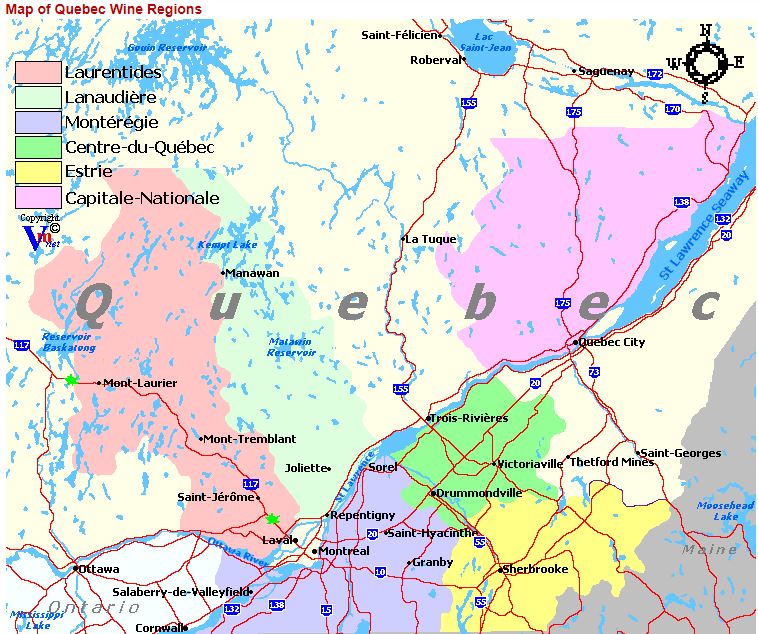
The wine appellations of Quebec are located in the Eastern Townships of Montérégie, Ouest-du-Québec, Est-du-Québec, and Centre-du-Québec.

While the first grapes grown in Québec can be traced to the early days of “New France”, the industry really began to blossom in the 1980s.

Today there are about 140 wineries (most are artisanal) in the province located in six primary wine regions: Laurentides, Lanaudière, Montérégie, Estrie, Capitale-Nationale and Centre-du-Québec.

The Québec wine industry is responsible for a total of 1,975 acres of grapevines and 45 different grape varietals grow across the province.

Over half of Quebec’s wineries are found in the two tourist regions that produce the most wine, namely the Eastern Townships and Montérégie. Various wine routes enable you to discover the secrets of Quebec viniculture.

The vine varieties that seem to grow the best in Quebec are those of Northern France, Germany, and North-Eastern United States. Some 40 varieties are grown in Quebec, with the most commonly planted being,

Red Wine

  • Sainte-Croix
  • Maréchal Foch
  • Frontenac
  • Sabrevois
  • De Chaunac

White Wine

  • Vidal
  • Seyval Blanc
  • L’Acadie Blanc
  • Vandal-Cliche
  • Geisenheim

Vines used in red wine make up 60% of the total planted area.

Several Québec wines are available at SAQ (Société des alcools du Québec) outlets. You may also discover them at the wineries and some public markets throughout Québec.

Sláinte mhaith

Canada’s Wine Regions – Part 1 – Nova Scotia

This is the first part of a four part series on the 4 wine regions of Canada, travelling from the east coast to the west coast.  The regions are Nova Scotia, Quebec, Ontario and British Columbia. 

Nova Scotia’s wine regions are situated in the Annapolis Valley, Avon River Valley, Malagash Peninsula, LaHave River Valley, and Bear River Valley.

The region’s soil and mesoclimates provide an excellent environment for the production of character-rich high quality wines. The vast majority of the province’s wineries are located in the Annapolis Valley, which includes the Gaspereau Valley at its eastern end.  However, other regions such as the Avon River Valley, Malagash Peninsula, LaHave River Valley and Bear River Valley are also home to Nova Scotian wineries.

Nova Scotia produces some of the most distinctive premium-quality grapes in North America. Their wineries have garnered international acclaim for their efforts and genuine passion.

The warm summers and long falls create crisp wines with bright acidity and aromatic complexities. Constantly being recognized as distinctly Nova Scotian, the combination of these unique characteristics led to the development of the first appellation in the province, Tidal Bay, officially launched in June 2012.

There are over 70 grape growers, some 20 wineries and more than 800 acres of vines in Nova Scotia.  Their wine offerings include: 

White Wines

Nova Scotia has become well known for producing bright, crisp and aromatic white wines with pronounced acidity and prominent character. White hybrids such as L’Acadie Blanc, Seyval Blanc, Vidal and New York Muscat have had tremendous success in Nova Scotia and growing success has also been seen with traditional European varietals (vinifera), such as Chardonnay, Ortega and Riesling.

Red Wines

Because of the cooler climate and shorter growing season it’s often thought that Nova Scotia is unable to produce quality red wines. However, the focus has been on producing grapes that grow incredibly well in Nova Scotia and produce well rounded, full-bodied and dry red wines with low tannins. These wines are typically earthy and smoky with berry fruit characteristics. Varietals such as Lucie Kuhlmann, Baco Noir, Marechal Foch and Leon Millot grow particularly well in Nova Scotia.

Traditional Method Sparkling Wine        

Over the past decade Nova Scotia has developed a wealth of expertise and specialization in traditional method sparkling wines. 

Nova Scotia has near perfect climatic conditions for making sparkling wines. The warm summers, complimented by the temperate influence of the Atlantic Ocean encourages flavours to develop brilliance and uncommon intensity, while still retaining the acidity required for balance and structure.

Ice Wines

Nova Scotia provides ideal temperatures for growing this unique luxury product. Made from frozen grapes, Ice Wine is usually harvested at night between late November and late December, when the temperatures hit between -8 °C and -10 °C.

A cool, slow fermentation results in a very complex, full bodied dessert wine. The golden nectar is high in sugar, flavour and balanced acidity, and depending on the variety, displays notes of spicy tangerine, apricot and melon. Common Nova Scotia ice wine varieties are Vidal, Ortega and New York Muscat.

Beyond Nova Scotia

Nova Scotian wines are not always available outside of the province.  However, there are a few wineries that produce a sufficient volume for export.  Those include Benjamin Bridge, Gaspereau Vineyards, Domaine de Grand Pré, Luckett Vineyards and Jost Vineyards.

When in Nova Scotia I have tried some of the local wines.  I found Jost’s red wine offerings to be good and look forward to experiencing them again at some point in the future.

Sláinte mhaith

Australia’s Wine Regions

The vineyards of Australia cover 170,000 hectares in different wine regions in New South Wales (NSW), South Australia, Victoria, Western Australia, Tasmania and part of Queensland.

Australia has become the 7th biggest wine producing country having about 1,200 million litres of wine produced each year. With the country’s own consumption representing less than 40% of the production, Australia is the 4th largest wine exporter.

Australia has spent millions of dollars to build a brand around Shiraz (Australia’s word for Syrah). As a result Australia wine production has tripled since 1990. However, despite this success, Australian wines have suffered some serious drawbacks in the media. Wine critics often disregard most Aussie wine as “Critter Wines”, referring to the cute animal designs that adorn many of the wine labels.

Australia’s main grape varietals are Shiraz followed by Chardonnay. The two varieties make up 44% of the total wine production.  However, Australia is working toward diversification.  The balance of production comes from Cabernet Sauvignon, Merlot, Sauvignon Blanc, Sémillon, Riesling, Viognier, Pinot Noir, Grenache, Sangiovese, Mourvèdre and Pinot Gris.

The Wine Regions

Margaret River (Western Australia) produces Cabernet Sauvignon, Merlot, Sémillon, Sauvignon Blanc, Chenin Blanc, Chardonnay, and Shiraz.

Barossa (South Australia) produces Shiraz.

Coonawara (South Australia) produces Cabernet Sauvignon, Chardonnay, Malbec, and Merlot.

Adelaide Hills (South Australia) produces Chardonnay, Riesling and Pinot Gris.

McLaren Vale (South Australia) produces Shiraz, Cabernet Sauvignon, Merlot and Chardonnay.

Clare Valley (South Australia) produces Chardonnay, Sémillon, and Riesling.

Hunter Valley (New South Wales) produces Sémillon, Chardonnay and Cabernet Sauvignon.

Yarra Valley (Victoria) produces Chardonnay and Pinot Noir.

Rutherglen (Victoria) produces Shiraz and Durif.

Heathcode (Victoria) produces Shiraz and Cabernet Sauvignon.

Mornington Peninsula (Victoria) produces Pinot Gris, Pinot Noir and Chardonnay.

Tasmania produces Riesling and Pinot Noir.

The grape varietals produced in Australia are bolder than the same varietals grown in the northern hemisphere, in places like France, Germany, or Canada.  However, if you prefer the bolder spicier flavours, Australian wines may be right for you.

The impact on the wine industry from the wild fires currently raging in Australia remains to be seen.  More than 3.4 million hectares of land have already been destroyed.  Previously the most land burned during an entire fire season was only 280,000 hectares.

Vines not destroyed by the fires could still be impacted by the smoke.  Bushfire smoke can permeate the skin of the grapes as they ripen, causing wine to have an unpleasant smoky characteristic. It is worse in red wine, when the skins are used to create colour.

Experts say it is still too early to determine what the extent of the fires will have on the 2020 harvest. 

Grape growers are facing a second problem; record high temperatures which have reached the upper 40’s Celsius.   Extreme heat can cause leaves to droop or even drop off, leaving grapes exposed to sunburn. This causes discolouration and affects the flavour profile of the wine.

The effect of heat can be managed provided vineyards still have access to enough water – which they don’t in many areas across South Australia, central and northern Victoria, and NSW.

As we prepare to enter 2020, no one seems to face more challenges than the Australians.  I fear that some of the Australian wines the world enjoys today may soon disappear forever.  A sobering thought to close out 2019.

Sláinte mhaith

Festive Holiday Selections

Traditionally white wine would be the only choice to serve at Christmas.  However, this is no longer the case.  Today there are many more options available to complement your menu, whether it is brunch, afternoon munchies, dinner, or dessert.

Christmas morning could start off seated around the holiday tree with a flute of Champagne or Prosecco.   The sparkly can also be combined with orange juice to create mimosa.  The same could be included as part of Christmas Brunch. 

When serving hors d’oeuvres such as prawns or seafood, a zesty white is always good, such as Sauvignon Blanc or Pinot Gris.  Rosé, Pinot Noir, or Beaujolais are also viable choices.

For a traditional turkey dinner, white options would include an oaked Chardonnay or White Burgundy.  Red options include Pinot Noir, Baco Noir, Chianti, Beaujolais, a mature Bordeaux or Rioja.

With ham, wines with some sweetness, lots of acidity and bold fruit are in order. These would include Riesling, Moscato, Chenin Blanc, Rosé, Lambrusco, Grenache or Zinfandel.

If you are serving goose or duck during the holidays, these fatty meats should be paired with a white such as an oaked Chardonnay, white Bordeaux, Chenin Blanc or an off-dry Riesling.  Red options would include a mature Châteauneuf-du-Pape, Pinot Noir, or Beaujolais.

When serving sweets or desserts, a Late Harvest Riesling or Ice Wine will suit the bill.  The day can end with a glass of your favourite Port, whether it be a sweet ruby or a dry tawny.

Here’s to the best of the season!

Sláinte mhaith

Hosting a Wine & Cheese Party

If you are thinking of hosting a get together for friends or family this holiday season, a wine and cheese party may be the way to go.  Such an event can be as simple or elaborate as you like.

On the simple side you could offer 2 wines and 4 cheeses.  I would suggest a dry but not overly bold red wine, such as a Pinot Noir, and a dry crisp white wine, such as a Riesling or Pinot Gris.

Cheese selections could include an aged cheddar, a blue, a mild, and a soft and creamy.  To accompany the wine and cheese a baguette, crackers, fruit, olives and nuts are a few suggestions.

If you want to create a more elaborate affair you could provide a selection of 8 to 12 cheeses, along with 3 or 4 different wines.  To make your party a little more unique you could go with a Canadian theme where you include only a selection of Canadian cheese and wine.

There is much disagreement among cheese and wine experts as to which wines are best suited to accompany the various types of cheese.  However, here are some general recommendations.

For a varied cheese plate, almost any dry white or red wine is appropriate.

White wines, such as Gewürztraminer, Pinot Gris, Muscat and Riesling, are good options. However, it is generally best to stay away from an oaked style of Chardonnay.  If you feel the need to include a Chardonnay, be sure it is either a Chardonnay Musque or an Unoaked Chardonnay.  The label will clearly identify both of these wines.

Most red wine is cheese-friendly. Generally speaking, the richer the cheese is, the richer the wine should be. For a cheese plate of mild and medium cheeses, choose a lighter wine, such as Pinot Noir or Gamay; for richer, creamier and full-flavoured cheeses, Cabernet Sauvignon, Merlot or Meritage blends are good choices.  I suggest avoiding heavy bold reds such as Shiraz or Barolo, as these wines may be too overpowering for the foods being offered.

As far as portions go it is recommended to provide 1 to 1 1/2 ounces of each cheese per person.  This equates to about a 1/2 pound of cheeses and 1/2 bottle of wine per person.

Remember, the wine & cheese party is just an enabler to allow friends and family to get together over the holidays.  Therefore it isn’t necessary to plan and present an extremely elaborate affair.  Simple and easy is a good way to go.

All the best for your holiday celebrations!

Sláinte mhaith

Christmas Gift Giving

A bottle of wine may be the go-to gift for any wine-loving friend or difficult relative, but choosing a bottle is not always easy. Here are some suggestions that may be of some help when buying wine as a gift.

Do Your Homework

There are lots of web sites, blogs and educators who can help with recommendations so if you’re feeling lost, do some research before you start shopping. Vintage guides, which are often available at your wine seller, will tell you what is currently available for drinking now or what will make a great addition to someone’s cellar.

Avoid Brand Bias

Selecting famous vintner names may be tempting but you will end up paying a premium. Find something more unique from a region with a similar climate using the same grapes. While wines from France may be supreme, you will typically pay  premium prices for them.  You may get an equally good, but lesser known wine for less cost. For example, a Merlot from Chile will be a great alternative to Bordeaux, while a New Zealand Pinot Noir could be chosen in place of a Burgundy.

Accept Advice

Asking the store clerk for assistance can be most helpful.  They will likely be highly educated and have tasted the full range so can give you the best service and tailor their knowledge to your desires. I have a go-to guy at the store I most often frequent, who I rely on for suggestions and answers to my questions.

Consider Food Pairing

Often people will enjoy a glass of wine alongside a nice meal, so take this into consideration when buying a loved one a bottle of wine for a special occasion. If you know their favourite dish, consider selecting a bottle that will pair nicely with that dish.

Selecting by Appearance

While an appealing label can make an attractive gift, it doesn’t say anything about the wine in the bottle. Be sure to read the fine print as this will reveal the most about what to expect from the wine and the story of its production. Anyone can pay for premium design work but it’s the winemaker who makes a product great.

The Price Point

Don’t be sucked into selecting a wine based on a display setting or sales promotion.  Often these will be items that the merchant is trying to get rid of for various reasons.  Such wines are not necessarily right for you. Don’t be distracted by discount tags and take your time to scour the shelves to find the perfect bottle for the right price.

Who doesn’t like a bargain?  However, a bottle on sale does not necessarily mean that it’s a great deal.  Don’t just automatically go for the best deal; be sure to browse the wine offerings fully to find the right bottle for the right price.

Likewise, the best bottle within your allocated budget might not be the one that reaches the upper limit of your price range. Many factors come into the pricing of wine, including production style, bottling processes, taxes and demand for that type of wine.  As a result, there will be some variation between prices of similar wines. Price does not always correlate with quality, and so, if you select a bottle from a unique region or variety, you may be able to find a wine that is a better value for your money.

Gift Packages

Gift packages may not be a good idea.  They are designed to look appealing but looks can be deceiving.  When buying prepackaged gift sets, it is best if you are familiar with at least the winery, if not the wine itself.  That way you have a better understanding of the quality of the gift you are giving.  Case in point, a few years ago I couldn’t resist buying a Bordeaux set that included 2 bottles of wine and an irresistible wooden case that they were contained in.  As it turned out, it was an expensive box as the wine was mediocre at best.

If the idea of providing a wood box is appealing, I suggest selecting the wine of your choice and purchase a gift container separately.  Your local retailer may have suitable containers for sale.

Too Many Choices

If the number of wine varieties is too many to fathom, making the decision too daunting, rather than being overwhelmed and selecting a bottle at random, maybe take a different approach and choose an accessory for your wine-loving friend, such as a corkscrew or wine stopper.

I wish you great success with your Christmas shopping adventures.  Whatever you decide, it will be the right decision for you.

Sláinte mhaith

Restaurant Wine Service

There can be great inconsistencies in the quality of wine service provided by restaurants. There are no regulations regarding the quality or reliability of the information provided to patrons wanting to purchase wine to complement their meal.

In some establishments the wait staff is responsible for answering wine related questions and offering suggestions.  Others will have a wine steward who may or may not be knowledgeable about wine and the selections they offer.  In restaurants only offering a house red or house white, it probably doesn’t matter if staff doesn’t have a good understanding about wine.  However, where there is a reasonably sized wine list, a knowledgeable wine server can be of great benefit.

A good restaurant wine server will not automatically try to upsell you on purchasing a more expensive wine. They should respect your desired price point.  Your server should also not lecture you on what you should select.  A good server will leave you feeling knowledgeable and provide you with options.

Generally speaking, your server should be able to assist you with 3 preferences:  colour (red, white, rosé or sparkling), weight (richness), and price.

Some higher end restaurants will have a sommelier on staff.  She or he is a trained and knowledgeable designated wine professional specializing in all aspects of wine service as well as wine and food pairing. The role in fine dining today is much more specialized and informed than that of a wine waiter.

A sommelier may be responsible for the development of wine lists, as well as the delivery of wine service and training for the other restaurant staff. Working along with the culinary team, they pair and suggest wines that will best complement each particular food menu item. This entails the need for  knowledge of how food and wine, beer, spirits and other beverages work in harmony. A professional sommelier also works on the floor of the restaurant and is in direct contact with restaurant patrons.

If you get the opportunity to consult with a sommelier it can be a very rewarding and educational experience.

I have had both wonderful and terrible experiences with restaurant wine servers.  However, it is the bad ones I tend to remember.  Oncein a restaurant in Toronto I had selected a wine only to be told by my server that the varietal I selected was unreliable and very inconsistent from one bottle to the next. Instead, he suggested a wine considerably more expensive.  Realizing that what I was being told was a complete fabrication and that he was only interested in upselling me, I was not swayed from my original decision which I did not regret in the least.

A good wine server or sommelier can be a valuable resource in helping you get the most out of your dining experience.  The challenge is being able to identify the bad ones and dismiss them before they convince you to purchase a wine you don’t really want.

Sláinte mhaith