The 2023 Canadian wine award season began in early June with the Ontario Wine Awards. There were 558 entries from 77 Ontario wineries.
Receiving the honour of the Winemaker of the Year was Peller Estates Winery’s Katie Dickieson. She earned more gold medals than any other winemaker in Ontario.
The Niagara region’s Domaine Queylus attained the Red Wine of the Year award for its 2020 Cabernet Franc Tradition. This wine is only available directly from the winery but at a very affordable price of $33.50 CDN.
The White Wine of the Year award was presented to Prince Edward County’s Norman Hardie for their 2017 Semi-Dry Riesling. This wine comes at a price of $21.00 CDN and is available from either the winery or select LCBO stores.
This year Gold medals were awarded in the following categories:
Sparkling Wine Award (Traditional Method)
Gold medals were presented to:
Malivoire Wine Bisous Rose NV
Megalomaniac Bubblehead Limited Edition Brut NV
Niagara College Teaching Winery, Balance Brut NV
Thirty Bench Wine Makers, Sparkling Riesling NV
Trius Winery, Showcase Blanc de Blancs NV
Sparkling Wine Award (Cuve Close)
The gold medal was awarded to Greenlane Estate Winery for their Saffron Sparkling Rose 2021
Riesling Award (Semi-Dry)
The gold medal was awarded to Megalomaniac Winery for their Narcissist Riesling 2021
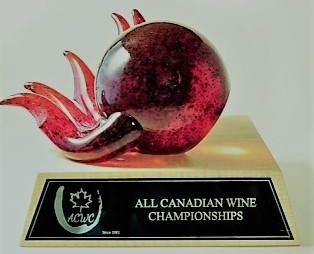
The 41st edition of the All Canadian Wine Championships was held in mid June. There were participants from nine of the ten provinces and even one territory. In total 184 wineries entered 1,154 wines.
All wines are judged using the 100-point system. Trophies are awarded for each of the following categories:
Best Red table wine
Best White table wine
Best Dessert wine
Best Sparkling wine
Best Fruit wine
Double Gold medals / Best of Category were awarded to the single highest rated wine (using an average of the aggregate judges’ scores) from each of the categories. These wines were all submitted for the Trophy round.
Medals of Merit: Gold, Silver, Bronze were awarded in the following manner:
Gold awards were awarded to those wines scoring in the top 10 percentile.
Silver awards of merit were issued to those wines scoring in the second 10 percentile.
Bronze awards of merit were given to those wines scoring in the third 10 percentile.
The Trophy Awards were presented as follows:
Best Sparkling Wine of the Year
TIME Family of Wines, BC; N/V Chronos Brut ($40.24 CDN)
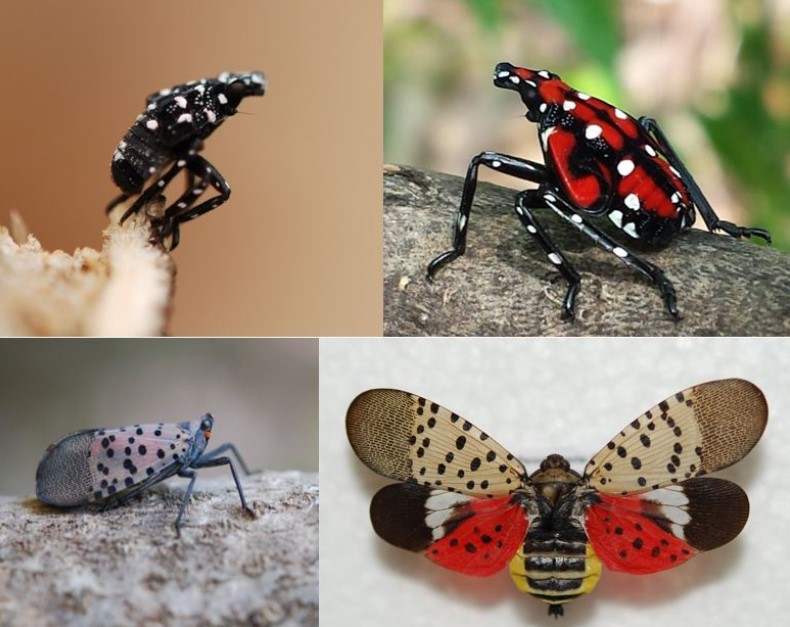
The spotted lanternfly is an invasive species from Southeastern Asia that poses a threat to Ontario’s wine-growing industry. It has been recently detected in New York state, not far from the Niagara wine-growing region.
Photo credit: onnurserycrops.wordpress.com
According to the Invasive Species Centre, the spotted lanternfly is an invasive plant-hopper native to Southeast Asia. The insect was first detected in Pennsylvania in 2014 and since then has advanced to several other states, including Monroe and Erie Counties of New York, which are very close to the Niagara wine region. It has not yet been detected in Canada, but industry experts say it’s only a matter of time.
The spotted lanternfly has caused a great deal of destruction to grape vines and other tender fruit trees in the United States. The insect sucks the sap out of grape vines, causing them to collapse. If left unchecked, the insects could devastate entire vineyards, which would each cost upwards of $45,000 an acre to replant. It is a much more aggressive pest than previous pests.
A 2019 study completed by Pennsylvania State University estimated that the insect caused between $43 million and $99 million US since being detected. Although the study also includes nursery operators and Christmas tree growers, researchers noted that grape growers were hit especially hard. Pennsylvania has experienced a loss of between 45% to 100% of wine grape crops.
Insecticide application in some vineyards and orchards in the affected areas have gone from four applications per season up to 14 applications, increasing industry expenditures and potential negative impact to the environment.
Early detection will be the key to mitigating the damage caused by the spotted lanternfly. It’s easier to control and a lot less expensive at the prevention stage. At the management stage it has proven to be very difficult to control and eradicate.
An adult spotted lanternfly can be identified by its black and grey spots and bright red underwing. Their wings are about 2 centimetres or 1 inch long. They will often be found clustered together on a tree.
The eggs are brown, seed-like, covered in a grey, mud-coloured secretion. They will be grouped together in a vertical formation, usually found on trees, but can be laid on any surface, including cars.
The nymphs grow in four stages, starting out with black and white spots but as they mature they gain red spots with distinctive patches of black and white.
Spotted lanternflies spread into new environments in two ways. They are not strong flyers but are able to cling well to a variety of surfaces. They will hold on to people and vehicles who move through heavily infested areas. Their eggs masses are very difficult to spot and can be laid on almost any material, including stone, cut logs, Christmas trees, rusty metal, boats or grills. Egg masses are laid on an object then covered by a shiny, grey, putty-like material that darkens and turns brittle overtime.
The Ontario Ministry of Agriculture, Food and Rural Affairs is currently surveying for spotted lanternflies in high-risk areas to assist with early detection. However, we can all help prevent the spread of spotted lanternfly by buying and burning local firewood, checking ourselves and our belongings thoroughly after visiting an infested area, and watching for egg masses especially during the winter. If spotted, take photos, note the location, and report the sighting to the Canadian Food Inspection Agency.
The pending invasion of the spotted lanternfly is an example of a larger problem linked to climate change. The longer growing season and more temperate winters caused by rising temperatures are allowing more invasive species to spread into the region and to live longer.
Earlier this month it was announced that, after 16 years, British Columbia’s Harper’s Trail Winery will be closing by June of this year. Owners Ed and Vicki Collett will open their tasting room in May for one final month before retiring and moving on to the next stage of their lives. Along with the current vintage, Harper’s Trail will now be releasing an exclusive collection of library wines.
Having previously visited both Australia and Chile’s wine regions and seeing how similar their climates are to that of the Thompson River Valley, Ed recognized the possible success of starting a vineyard in the Kamloops area.
The Colletts were the first participants in the development of the Thompson River Valley wine region, even though they had no previous vineyard or winemaking experience. The couple relied on advice from several industry veterans who helped set them on the right path. As a result, the Thompson Valley wine industry emerged and developed into an official wine appellation.
The Colletts purchased the property in 2007, planted the first vineyard block in 2008, and opened Harper’s Trail, which was Kamloops’ first winery, in 2012. Since then, Harper’s Trail has become a 5,000-case producing winery that generates 100% estate grown wines on the vineyard’s 25.5 acres. The winery has earned many top honours in prominent national and international wine competitions. Most recently, at the 2022 National Wine Awards, Harper’s Trail won a gold medal for its 2019 Chardonnay Sparkling and a silver medal for their 2020 Silver Mane Block Riesling. At this past year’s All Canadian Wine Awards, Harper’s Trail received gold for their 2019 Chardonnay and silver for their Field Blend White.
In preparation for their pending retirement, the Colletts hope to find a successor to purchase the winery and further enhance it. In case you have a desire for taking on such a challenge, the winery is listed with realtors Cushman & Wakefield.
Most wine enthusiasts are familiar with international wine regions such as France’s Bordeaux, California’s Napa Valley or Italy’s Tuscany. However, there are many other, lesser-known regions, each offering its own unique characteristics. These regions offer not only good wine but fewer crowds and opportunities to discover places less travelled. My list is not intended to be all-encompassing; it is merely a list of regions that I have found intriguing for one reason or another. The regions are presented in alphabetical order by country.
Pedernal Valley, Argentina
Located in the shadow of the Andes mountains, Argentina’s wine country is spectacular. Situated north of the famous Mendoza region is the lesser-known Pedernal Valley. It is felt that the Pedernal Valley can stand on its own merits as a premium wine region. The region’s Malbec is considered world-class and distinct and represents a unique style.
Mendocino County, California, United States
Mendocino County grows less than four percent of California’s grape yield but contains an impressive one-third of the state’s certified organic vineyards. The number of old vines, post-WWII plantings makes this region unique. Some of the best wineries in California source their grapes from Mendocino. Dry-farming practices were introduced to the region by Italian families in the early 1900s, which resulted in wines that are concentrated, balanced and distinctly Californian.
Okanagan Valley, British Columbia, Canada
Photo credit: dailyhive.com
Canada’s own Okanagan Valley is considered breathtaking as it is situated between two mountain ranges and contains glacial lakes and rolling hills of vineyards. The region produces world-class wines that are difficult to find outside of Canada. The high-quality wines combined with the beautiful views of the region have attracted top winemakers from France, New Zealand and South Africa.
Chinon, Bugey and Savoie, France
There are three lesser-known regions in France. Chinon is in the Loire Valley. It is much less popular than its neighbours, Bordeaux and Burgundy. The Loire Valley is famous for its white Sancerre and Pouilly-Fumés. The red variety is Cabernet Franc.
The wine regions of Savoie and nearby Bugey are nestled in the French Alps and are home to great wines and hospitality. Savoie has both a ski and hiking industry and thus there are quality restaurants, wine bars and a wide range of accommodations. The vineyards are spread throughout the Auvergne-Rhône-Alpes overlooking both the mountain ranges and fresh bodies of water.
Bugey is situated underneath the alps. There is a group of small producers that have either relocated from other parts of France or are new vintners who are focused on raising the profile of the region.
The Republic of Georgia
Georgia is the world’s oldest continuously producing wine region but it is one of the lesser known. This is due to The Republic formerly being under the control of the former Soviet Union. During that time only four grape varieties of the over 500 available were allowed in production. After gaining independence, Georgia rediscovered its wine culture and began sharing it with the world. Traditional Georgia wine production is unique, resulting in the production of some exceptionally distinctive wines. The wines are produced in underground amphorae called Qvevri.
For additional information about the wines and the region, see my posts The Wines of European Georgia from February 6, 2021 and Traditional Georgian Wine from September 18, 2021.
Szekszárd, Hungary
The Szekszárd wine region is located about 160 kilometres south of Budapest. Not many tourists explore beyond Budapest since the region has not been marketed. However, it is one of the country’s oldest wine regions, dating back around 2000 years. Wine production is small and the wineries are often family-owned, which equates to limited exports and less awareness about the region.
The region has a wide range wine styles. The most popular variety is the Kékfrankos grape (aka Blaufränkisch) which produces a tannic and spicy style of wine. There’s also Kadarka grapes which creates a fresh acid red fruit that is meant to be enjoyed without aging.
Mexico
Mexico’s wine history dates back to the1600s but the region remains a virtual unknown for many wine enthusiasts. Although wine grapes have been cultivated there for 400 years, it has only been during the past several decades that there has been a renewed focus on premium and terroir-driven expressions.
Valle de Guadalupe’s boutique wineries are experimenting with a mix of European red grapes such as Cabernet Sauvignon, Nebbiolo and Tempranillo. The varietals are often blended to create a Bordeaux style of wine.
Middleburg, Virginia, United States
California, Oregon, Washington and New York dominate the U.S. wine industry but there are other regions worth noting. One of these is Middleburg, Virginia. Virginia was one of the first places in America to produce wine but it is still a relative unknown. The wine industry there is mostly made up of small artisanal producers who are creating world-class wines. Some think of the region as a crossroads between Napa Valley and Bordeaux. The region is situated in the foothills of the Blue Ridge Mountains an hour outside Washington DC.
Final Thoughts
There are many lesser-known wine regions to be explored, either by visiting or merely by sampling the wines they produce. By expanding our horizons and creating new experiences, we will ultimately find more wines to enjoy.
Here is my list of what I consider to be British Columbia’s most noteworthy wineries for 2022. My opinions are based on several factors: the winery’s performance at both the National Wine Awards and the All Canadian Wine Championships, environmental and sustainability practices of each winery and my own personal impressions.
However, there are many more great wineries in the province. These are just the ones that I paid particular attention to this year.
I have listed my choices in alphabetical order and have included several of each winery’s 2022 award winning wines.
Black Hills Estate Winery
Black Hills Estate Winery vineyards have some of the most favourable grape growing conditions in the country, located in the middle of Canada’s only official desert. The resulting microclimate provides one of the hottest, driest and sunniest sites in the country.
Black Hills irrigation techniques and viticulture practices provide ideal growing conditions for the Bordeaux and Rhone varietals.
Black Hills grows four clones of Cabernet Sauvignon, two clones of Cabernet Franc and four clones of Merlot. Each clone has a unique flavour profile. When they are blended together, this Clonal diversity gives multi-faceted depth and complexity to the wine.
Black Hills is committed to sustainable, environmentally friendly farming and winemaking practices. All the vines are hand picked, hand pruned and manually maintained. They have been awarded Environmental Farm Plan Status by the British Columbia Environmental Farm Plan, which is administered by the Federal and Provincial Departments of Agriculture, as well as the BC Agriculture Council and the Investment Agriculture Foundation.
Black Hill’s 2022 award winning wines include:
Black Hills 2020 Addendum
Black Hills 2020 Chardonnay
Black Hills 2020 Ipso Facto
Black Hills 2020 Per Se
Black Hills 2020 Roussanne
Black Hills 2021 Alibi
CedarCreek Estate Winery (Ranked 1st at The National Wine Awards)
CedarCreek was named Winery of the Year at the 2022 National Wine Awards. The award was earned based on the number of wines receiving awards as well as for their approach to growing grapes and producing their wine.
CedarCreek works to build a healthy ecosystem, utilizing animals and plants to naturally combat disease or pests. Cover crops, like alfalfa and crimson, keep the soil healthy while animals bring a diversity and balance to the land.
Bees pollinate cover crops and wildflowers contributing to the diversity of the vineyard and helping eliminate the need for synthetic pesticides and fertilizers. Chickens eat many unwanted pests and help scratch and aerate the soil and their eggs are served in the winery’s restaurant.
There are three Scottish Highland cows that wander the vineyard rows breaking up the soil. Also, their manure is good for compost and attracting beneficial bugs and birds. Their Scottish roots make them a hearty stock, comfortable in the cool Okanagan winters and known for their friendly temperament.
La Frenz Estate Winery (5th at The National Wine Awards)
La Frenz was the Small Winery of the Year at the 2017 National Wine Awards. They are located on the Naramata Bench in the heart of the Okanagan Valley. Over time the winery has grown to encompass 17 hectares across four different vineyard sites, each with its own distinctive soils and aspects.
Their 2022 award winning wines include:
La Frenz 2018 Aster Brut
La Frenz 2019 Cabernets Rockyfeller Vineyard
La Frenz 2019 Grand Total Reserve
La Frenz 2019 Malbec Rockyfeller Vineyard
La Frenz 2019 Syrah Rockyfeller Vineyard
La Frenz 2020 Pinot Noir Desperation Hill Vineyard
La Frenz 2020 Reserve Vivant
La Frenz 2021 Riesling Cl. 49 Rockyfeller Vineyard
La Frenz 2021 Semillon Knorr Vineyard
La Frenz Liqueur Muscat
Mission Hill Family Estate (4th at The National Wine Awards)
Mission Hill is the only winery to appear on both my 2020 and 2021 Movers and Shakers list.
Mission Hill follows organic farming practices. Bees, falcon, and chickens replace pesticides and insecticides. Cover crops, earthworms and compost are used in place of chemical fertilizers.
Their practices are fundamentally rooted in Old World techniques supported with modern technology. The winemaking team continuously innovates, combining fermentation and maturation vessel traditions with future trends.
The 2022 award winning wines includes:
Mission Hill 2020 Perpetua Chardonnay
Mission Hill 2020 Reserve Cabernet Sauvignon
Mission Hill 2020 Reserve Merlot
Mission Hill 2020 Terroir Collection Jagged Rock Syrah
Mission Hill 2021 Reserve Riesling
SpearHead Winery (3rd at The National Wine Awards)
SpearHead was named Best Performing Small Winery at this year’s National Wine Awards. Their focus is on premium quality wine produced from grapes grown on their estate vineyard and from selected Okanagan Valley vineyards. The hand harvested grapes are sorted at the winery and fermented in small lots.
Approximately 80% of the 15 acres of vines is comprised of Pinot Noir, including four different Dijon clones, 2 California heritage clones and Pommard. This combination of plantings enables their wine maker to select from the different characteristics exhibited by the clones in order to create a harmonious, complex Pinot Noir from the home vineyard. They also draw from several other vineyards in the Okanagan including Golden Retreat in Summerland and Coyote Vineyard in West Kelowna.
They have extended their wine making methods to other varietals including Chardonnay, which is made from a single clone.
Spearhead’s 2022 award winning wines include:
SpearHead 2019 Botrytis Affected Late Harvest Riesling
Here is my list of who I consider to be the Ontario wineries of notoriety for 2022. My opinions are based on several factors: the winery’s performance at both the National Wine Awards and the All Canadian Wine Championships, environmental and sustainability practices of each winery, and my own personal impressions.
By far these are not the only good wineries in the province, they are merely the ones that especially caught my attention this year.
I have listed my choices in alphabetical order and have included several of each winery’s 2022 award winning wines.
Hidden Bench Vineyards and Winery (Ranked 17th at National Wine Awards)
Since 2010, Hidden Bench has followed organic practices, and since 2013, all their estate vineyards have been certified as organic.
At Hidden Bench they believe that the highest quality of grapes and wine can only be achieved by avoiding the use of systemic chemical insecticides and fungicides. Since 2015 they have extended their organic certification into the winemaking processes and as of 2016, most wines carry the Pro-cert certification on their labels. Although becoming an organic certified winery has raised costs significantly, they believe the peace of mind and health of those who enjoy the wines and vineyard is well worth the additional costs they embrace.
Part of their philosophy is to have the smallest impact possible on the environment. They have instituted several initiatives to help reduce the footprint and assist with the recovery of the environment.
Hidden Bench uses geothermal energy to provide heating and cooling for both their building and winemaking processes. They have also installed a 105 panel/23.5kW solar array on the storage building which reduces their reliance on the electrical grid and works to be energy cost neutral on an annual basis.
Recycled materials are used in product packaging wherever possible. They also only package their wines at the point of sale to reduce the associated environmental impact.
Hidden Bench’s 2022 award winning wines include the following:
Hidden Bench last appeared on my annual list in 2020.
Malivoire Wine Company (15th at National Wine Awards)
Malivoire was named Winery of the Year at last year’s National Wine Awards and earned 6 Gold, 6 Silver and 8 Bronze medals at this year’s event.
For over 20 years Malivoire has become a base for innovation, creativity and sustainability. They are proud to be Certified under Ontario’s Sustainable Winemaking Program. They promote biodiversity and a healthy living vineyard that protects wildlife habitat. They conserve water and energy in both the vineyard and winery, recognizing the vital importance of natural resources.
While always receptive to new practices or tools to improve their wine, Malivoire recognizes that as a quality-of-life product, wine’s traditions are treasured by many as essential to their fullest enjoyment of the experience. Malivoire has evaluated emerging farm, vinification and bottling techniques, while remaining dedicated to the concept of wine as a natural product.
Malivoire chooses not to use quick-fix chemical solutions to vineyard challenges. Experience has shown that synthetic treatments, while effective in the short term, can cause long-term complications. Natural obstacles can be remedied effectively with natural solutions so the vineyards will thrive without causing deterioration to their surrounding habitat.
Malivoire’s 2022 award winning wines include:
Malivoire 2021 Farmstead Gamay
Malivoire 2021 Gamay Concrete
Malivoire 2021 Le Coeur Gamay
Malivoire N/V Bisous Brut
Malivoire NV Bisous Rose
Peller Estate Winery (14th at National Wine Awards)
Peller Estates consistently produces fine quality wines. They earned 7 Gold, 4 Silver and 3 Bronze medals at this year’s National Wine Awards. Their wine portfolio features four collections: Andrew Peller Signature Series, Private Reserve, Family Series and French Cross.
This year’s award winners include:
Peller Estates Winery 2018 Cabernet Franc Icewine
Peller Estates Winery 2018 Signature Series Vidal Blanc Icewine
Peller Estates Winery 2019 Oak Aged Vidal Blanc Icewine
Peller Estates Winery 2019 Signature Series Riesling
Peller Estates Winery 2020 Signature Series Sauvignon Blanc
Peller Estates Winery Signature Series Sur Lie Chardonnay
Potter Settlement Artisan Winery
Potter Settlement is very small but it has been making great strides to create high-end, quality wines. They produce more than a dozen different wines, most of which are made with grapes grown on the Tweed property. The winery only purchases grape varieties that can’t be grown onsite (because of the cool climate) and they never buy finished wine. If the grapes are not grown on site, the wine label will indicate where they were grown.
It is one of the northernmost vineyards in Canada, where the temperature is known to drop to -27o C during the winter. However, being further north has its benefits, as the soil is rich in minerals.
Potter Settlement is a marriage of rustic, old-world charm with up-to-date winemaking techniques. They respect tradition but strive for progression when creating their wines. The winery promotes organic farming, as well as the use of solar and geothermal energy. They strive to be considerate and respectful of their surroundings. Potter Settlement consists of 10 planted acres of vinifera, hybrid, and VQA-recognized grapes.
Several of Potter Settlement wines are uniquely crafted adhering to historic processes, specific European yeast, or barrels made of uncommon woods.
This year’s award winners include:
Potter Settlement 2019 Cabernet Franc
Potter Settlement 2020 Cordova
Potter Settlement 2017 Marquette
Potter Settlement 2017 Pinot Noir
Potter Settlement 2020 Pinot Noir Rosé
Redstone Winery (18th at National Wine Awards)
Redstone is a new addition to my Movers and Shakers list. They earned a Platinum, 2 Gold, 3 Silver and 4 Bronze medals at this year’s National Wine Awards.
In 2009, Moray Tawse, owner of Tawse Winery, purchased what was formerly the Thomas and Vaughan Estate Winery. Redstone got its name from the red clay soil and large stones that exists throughout the vineyard.
The 38-acre estate vineyard is farmed organically and is perfect for maturing late-ripening varietals including Merlot, Cabernet Franc, Cabernet Sauvignon and Syrah. There is also Pinot Gris on the property. Riesling, Sauvignon Blanc, and Chardonnay varietals are grown on the recently acquired Limestone vineyard.
Fostering the health of their vines and the soil they grow on requires a labour-intensive and hands-on approach. The yields are kept low by cluster thinning to ensure that all the energy of the vine is focused in fewer grape clusters which then become more concentrated in flavour. The grapes are hand-picked to select the very best fruit.
They practice organic farming, which feeds the vines and controls diseases without the use of synthetic insecticides, fungicides and fertilizers. They have chickens that feed on bugs, sheep that eat the lower vine leaves to expose the grapes to the ripening sun and use horses instead of tractors whenever possible to help prevent soil compaction.
Redstone’s list of award-winning wines for 2022 include:
Redstone 2018 Cabernet Franc Redstone Vineyard
Redstone 2019 Bistro Gamay Noir
Redstone 2019 Bistro Riesling
Redstone 2019 Brickyard Riesling
Redstone 2019 The Club Riesling
Thirty Bench Wine Makers (10th at National Wine Awards)
Thirty Bench Wines was awarded Best White Wine of the Year at the All Canadian Wine Awards for their 2019 Small Lot Riesling Triangle Vineyard wine. At the National Wine Awards they received 6 Gold, 7 Silver and 1 Bronze medal.
The vineyard’s location beneath the Niagara Escarpment provides a longer season that allows grapes more time to ripen and cooler nights that help intensify flavours. All Thirty Bench wines are made exclusively with grapes from their own vineyards. Their vines are hand cropped and thinned to produce very low yields to create exceptional quality and an intensity of fruit flavour.
The commitment to “Small Lot” winemaking means many of their wines are made in extremely limited numbers.
2022 award winners include the following wines:
Thirty Bench 2019 Small Lot Riesling Triangle Vineyard
Thirty Bench 2019 Small Lot Riesling Wild Cask ($32.00)
Thirty Bench 2019 Small Lot Riesling Wood Post Vineyard
Thirty Bench 2019 Special Select Late Harvest
Thirty Bench 2020 Small Lot Pinot Noir
Thirty Bench 2020 Small Lot Riesling Steel Post Vineyard
Thirty Bench 2020 Winemaker’s Blend Cabernet Franc
Thirty Bench 2020 Winemaker’s Blend Riesling
Thirty Bench 2021 Winemaker’s Blend Rosé
Next week I will present this year’s list for British Columbia wineries.
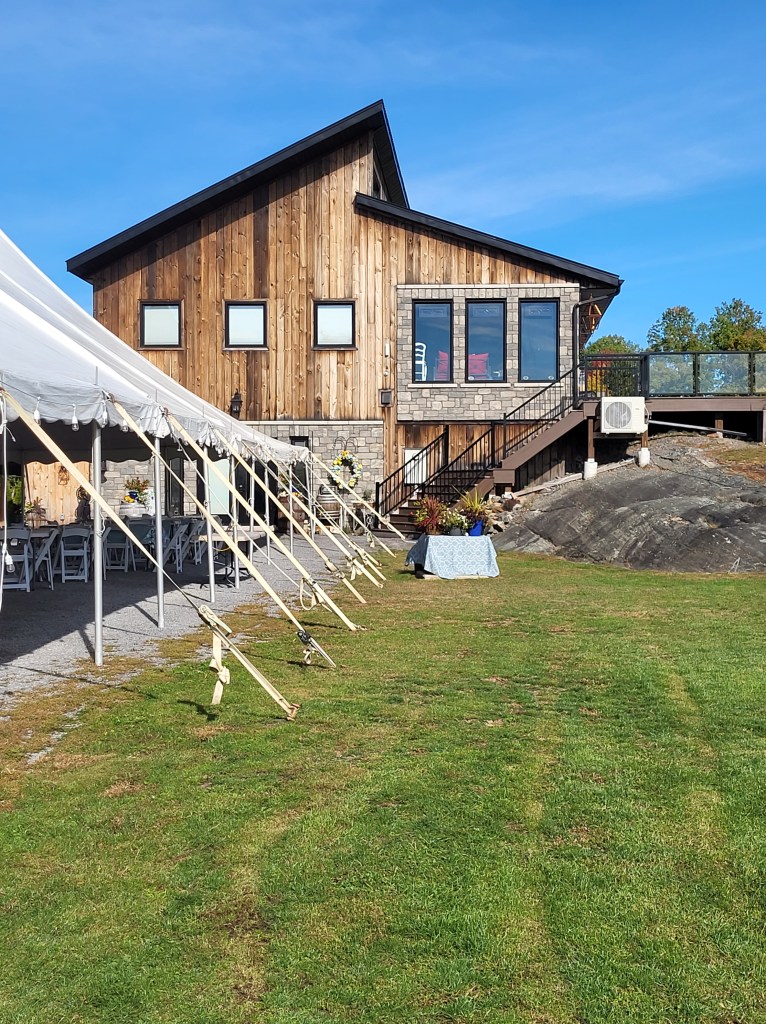
When you think of Ontario wines, Niagara and Prince Edward County usually come to mind, but there is one of international notoriety near Tweed. Potter Settlement Artisan Winery has award-winning wine and has been putting Tweed on the map as a good place to grow grapes.
Owner Sandor Johnson says the winery is very small but has been making great strides to create high-end, boutique quality wines. His team produces more than a dozen different wines, most of which are made with grapes grown on the Tweed property. The winery only purchases grape varieties that can’t be grown in the cooler climate of Tweed and they never buy finished wine from elsewhere. If the grapes are not grown on site, the wine label will indicate where they were grown.
As one of the northernmost vineyards in Canada, the temperature is known to drop to -27o C during the winter. However, being further north has its benefits, as the soil is rich in minerals.
Potter Settlement makes a unique wine that was accidently discovered during the McClure Arctic Expedition in 1850. The wine, referred to as Portage, was named in honour of the sailors who pulled barrels of Port across the ice after their ship’s passage through the Northwest Passage was halted by winter weather.
One of the expedition’s participants was Henry Gaun, at that time the ship’s carpenter, and who eventually settled near Tweed in Ivanhoe, and is the founder of Ivanhoe cheese. Gaun had recorded in his diaries how he and the other sailors created Portage. The Port that they had taken with them on their journey froze. They discovered that when the Port froze due to the extreme cold, the bitter acids disappeared making the port very smooth to drink. Then the Arctic summertime midnight sun cooked the port in the barrels. According to the diaries, the resulting wine was fit for Queen Victoria’s consumption. Based on what Johnson read he felt compelled to recreate Portage.
Another example of Potter Settlement’s creativity is their Triple Rare Ferment Chardonnay, which was aged in barrels made of wood from Ontario butternut and extinct American chestnut trees. In order to make the chestnut barrels, logs had to be salvaged from the bottom of Lake Superior.
At Great Britain’s 2022 London Wine Competition, Potter Settlement was awarded gold medals for the Potter Settlement Cabernet Franc and Potter Settlement Portage fortified wine. Each received 92 out of a possible 100 points. Last year Potter Settlement won two gold medals and a silver in a competition in Bordeaux, France, at the Challenge International Du Vin competition. They were the only Canadian winner of the 3,579 wine entries from 27 countries. They won gold for their Marquette and Pinot Noir, and silver for their Cabernet Franc.
Construction has started to make a cave in the rock on the property that will be used to store the wine. Once completed Potter Settlement will be the only winery in Ontario with a real cave. They plan to rent storage space to high-end wineries.
Unfortunately, I have not been able to find any indication of Potter Settlement wines ever being for sale in wine stores. However, their wines are available on their website at pottersettlementwines.ca or by visiting them, as I did, at the winery near Tweed, Ontario. I found the wine tasting, which was hosted by Sandor Johnson, to be both entertaining and educational. As well, I got to sample some excellent, unique wines; several of which have now found a home in my cellar.
At this year’s All Canadian Wine Championships there were a total of 1,233 wines from 194 participating wineries. Unlike the National Wine Awards where there is a significant amount of emphasis on the wineries producing the wine, the total focus of the All Canadian is on the wines themselves.
The summary of this year’s results by province is as follows:
British Columbia – 751 entries
2 Trophies
31 Double Gold
81 Gold
75 Silver
88 Bronze
Ontario – 372 entries
3 Trophies
20 Double Gold
32 Gold
32 Silver
37 Bronze
Quebec – 34 entries
1 Trophy
3 Double Gold
7 Gold
6 Silver
4 Bronze
Nova Scotia – 37 entries
3 Double Gold
2 Gold
2 Silver
3 Bronze
New Brunswick – 11 entries
2 Gold
1 Silver
2 Bronze
Alberta – 13 entries
2 Silver
1 Bronze
Manitoba – 4 entries
1 Bronze
Saskatchewan – 11 entries
3 Silver
The trophy winning wines for 2022 are as follows:
Best Red Wine of the Year was awarded to Wesbert Winery Ltd., of Penticton, British Columbia for their 2020 Syrah ($37.89).
Best White Wine of the Year went to Thirty Bench Wines, of Beamsville, Ontario for their 2019 Small Lot Riesling Triangle Vineyard ($32.00).
Niagara College Teaching Wineryfrom Niagara-on-the-Lake, Ontario received the Best Sparkling Wine of the Year award for its N/V Balance Brut ($26.95).
The Oliver, British Columbia winery of Jackson-Triggs received the award for Best Dessert Wine of the Year for their 2018 Okanagan Reserve Riesling Icewine ($60.00).
Best Fruit Wine of the Year was presented to La Vallée de la Framboise Inc., of Val-Brillant , Quebec for their N/V Douce Anna ($20.00).
Thornbury Craft Co. from Thornbury, Ontario was awarded Best Cider of the Year for their N/V Premium Craft Apple Cider ($3.50).
Award winning wines could receive a Double Gold, Gold, Silver or Bronze award. The Double Gold and Gold awards are listed here. A complete listing of award winners is available on the All Canadian Wine Championships website at https://allcanadianwinechampionships.com/acwc-2022-results/
Sparkling Wine-Traditional Method
Gold
Noble Ridge Vineyard and Winery, BC – 2018 The Pink One ($45.99)
Silhouette Estate Winery, BC – 2018 Boyd Classic Cuvee ($42.99)
Summerhill Pyramid Winery, BC – N/V Cipes Brut Rosé ($40.25)
TIME Family of Wines, BC – N/V Chronos Brut ($34.99)
Sparkling Wine–Charmat Method
Double Gold
TIME Family of Wines, BC – N/V Evolve Cellars Effervescence ($24.99)
The WineAlign National Wine Awards of Canada (NWAC) is Canada’s largest and most respected competition for wines which are one hundred percent grown and produced in Canada. Niagara Falls, Ontario was the host of this year’s event, which took place from June 19th to 23rd, with results published on July 29th.
This year’s awards were the first to be conducted since 2019 without the influence or restrictions from the pandemic.
There were 24 judges who tasted 1,890 entries from more than 250 wineries. The entries came from British Columbia, Ontario, Quebec, Nova Scotia, New Brunswick, Alberta, Manitoba and Saskatchewan.
The wines were all served blind; producer, origin, and price were not revealed to the judges. The top medalists were tasted in multiple rounds by many different judges.
The top ten wineries are presented below, along with a listing of their Platinum and Gold medal wines. For a complete listing of all the winning wines please see the Canadian Wine Awards website, at www.winealign.com/awards.
The 2022 winery of the year is CedarCreek Estate Winery, located in East Kelowna, British Columbia. The winery first opened in 1980, then known as Uniacke Wines. In 1986 it was purchased by the Fitzpatrick family, who changed the name to CedarCreek, and began planting some of the earliest pinot noir vines in the valley.
Over five years ago CedarCreek embarked on a massive refit converting the family-owned Estate vineyards to organic farming that encompasses every aspect of the winery, from regenerative farming and sustainable viticulture to farm-to-bottle craftsmanship in their wine cellar. As of 2021, all vineyards were Ecocert certified.
CedarCreek has partnered with local environmentalists to collect native plant seeds from the property – the seeds are used for fundraising, for native plant re-establishment on other sites, and at the boundaries of new vineyards to support biodiversity.
The estate is the home of five Scottish Highland Cows, a flock of chickens, beehives, worm farms and cover crops to create a thriving ecosystem.
CedarCreek was awarded two Platinum Medals, four Gold, eight Silver and five Bronze.
Platinum Medal
CedarCreek Platinum Jagged Rock Syrah 2020, Okanagan Valley
CedarCreek Aspect Collection Block 5 Chardonnay 2019, Okanagan Valley
Gold Medal
CedarCreek Platinum Jagged Rock Chardonnay 2020, Okanagan Valley
CedarCreek Aspect Collection Block 3 Riesling 2020, Okanagan Valley
CedarCreek Pinot Noir Rose 2021, Okanagan Valley
CedarCreek Platinum Home Block Riesling 2021, Okanagan Valley
Rounding out the top ten producers for 2022 were the following wineries:
The second-place finisher was Ontario’s 13th Street Winery, who was awarded 2 Platinum, 2 Gold, 7 Silver and 9 Bronze medals.
Platinum Medal
13th Street Reserve Syrah 2020, Niagara Peninsula
13th Street Premier Cuvee 2015, Niagara Peninsula
Gold Medal
13th Street Gamay 2020, Niagara Peninsula
13th Street Blanc De Blanc 2019, Niagara Peninsula
Third was British Columbia’s SpearHead Winery that had 1 Platinum, 7 Gold, 3 Silver and 5 Bronze medals.
Platinum Medal
Spearhead Coyote Vineyard Pinot Noir 2019, Okanagan Valley
Gold Medal
Spearhead Botrytis Affected Late Harvest Riesling 2019, Okanagan Valley (375ml)
Spearhead Pinot Noir Cuvée 2019, Okanagan Valley
Spearhead Golden Retreat Pinot Noir 2019, Okanagan Valley
Spearhead Pinot Gris Golden Retreat Vineyard 2020, Okanagan Valley
In fourth position was British Columbia’s Mission Hill Family Estate which earned 1 Platinum, 4 Gold and 9 Silver medals.
Platinum Medal
Mission Hill Terroir Collection Jagged Rock Syrah 2020, Okanagan Valley
Gold Medal
Mission Hill Reserve Riesling 2021, Okanagan Valley
Mission Hill Perpetua Chardonnay 2020, Okanagan Valley
Mission Hill Reserve Cabernet Sauvignon 2020, Okanagan Valley
Mission Hill Reserve Merlot 2020, Okanagan Valley
The fifth-place winery was British Columbia’s La Frenz Estate Winery which won 1 Platinum, 9 Gold and 8 Silver medals.
Platinum Medal
La Frenz Syrah Rockyfeller Vineyard 2019, Okanagan Valley
Gold Medal
La Frenz Malbec Rockyfeller Vineyard 2019, Okanagan Valley
La Frenz Grand Total Reserve 2019, Okanagan Valley
La Frenz Aster Brut 2018, Okanagan Valley
La Frenz Reserve Vivant 2020, Okanagan Valley
La Frenz Pinot Noir Desperation Hill Vineyard 2020, Okanagan Valley
La Frenz Semillon Knorr Vineyard 2021, Okanagan Valley
La Frenz Riesling Cl. 49 Rockyfeller Vineyard 2021, Okanagan Valley
La Frenz Cabernets Rockyfeller Vineyard 2019, Okanagan Valley
La Frenz Liqueur Muscat, Okanagan Valley (375ml)
The sixth-place finisher was Ontario’s Vieni Estates which had 1 Platinum, 4 Gold, 2 Silver and 9 Bronze medals.
Platinum Medal
Vieni Riesling 2020, Vinemount Ridge
Gold Medal
Vieni Cabernet Franc 2018, Vinemount Ridge
Vieni Cabernet Franc Reserve 2017, Vinemount Ridge
Vieni Pinot Grigio 2021, Vinemount Ridge
Vieni Unoaked Chardonnay 2019, Vinemount Ridge
In seventh position was British Columbia’s Black Hills Estate Winery, with a record of 1 Platinum, 5 Gold, 3 Silver and 3 Bronze medals.
Platinum Medal
Black Hills Ipso Facto 2020, Okanagan Valley
Gold Medal
Black Hills Per Se 2020, Okanagan Valley
Black Hills Chardonnay 2020, Okanagan Valley
Black Hills Roussanne 2020, Okanagan Valley
Black Hills Addendum 2020, BC VQA Okanagan Valley
Black Hills Alibi 2021, Okanagan Valley
The eighth spot went to British Columbia’s Fort Berens Estate Winery which earned 1 Platinum, 3 Gold, 2 Silver and 6 Bronze medals.
Platinum Medal
Fort Berens Pinot Noir 2020
Gold Medal
Fort Berens Small Lot Grüner Veltliner 2021, Lillooet
Fort Berens Merlot Reserve 2019, Lillooet
Fort Berens Merlot 2019
The ninth-place position went to British Columbia’s Bordertown Vineyards & Estate Winery which had 1 Platinum, 3 Gold, 3 Silver and 3 Bronze medals.
Platinum Medal
Bordertown Cabernet Sauvignon 2019, Okanagan Valley
Gold Medal
Bordertown Cabernet Franc 2019, BC VQA Okanagan Valley
Bordertown Malbec 2019, Okanagan Valley
Bordertown Syrah 2019, Okanagan Valley
Earning the tenth spot was Ontario’s Thirty Bench Wine Makers with 6 Gold, 7 Silver and 1 Bronze medal.
Gold Medal
Thirty Bench Winemaker’s Blend Cabernet Franc 2020, Niagara Peninsula
Thirty Bench Special Select Late Harvest 2019 (375ml)
Thirty Bench Small Lot Riesling Wood Post Vineyard 2019, VQA Beamsville Bench
Thirty Bench Small Lot Riesling Steel Post Vineyard 2020, VQA Beamsville Bench
Thirty Bench Small Lot Pinot Noir 2020, VQA Beamsville Bench
Thirty Bench Small Lot Riesling Triangle Vineyard 2019, VQA Beamsville Bench
The best performing small winery award goes to the winery with a production of 10,000 cases or less that chalked up the highest aggregate score for its five top-scoring wines. This year the award was presented to the Okanagan Valley’s SpearHead Winery. SpearHead 2019 Coyote Vineyard Pinot Noir took a coveted Platinum Medal. In addition to this, SpearHead wines received seven Gold, three Silver and five Bronze medals.




 A Layman's Wine Musings