Old Vines Versus New Vines

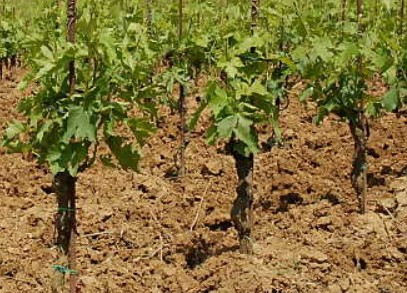
Old vines or new vines; does it make a difference when it comes to making wine? The simple answer is yes, but there are some things to take into consideration. The main sticking point is finding common ground for the definition of ‘old’. The definition is not industry controlled so depending on where you ask, the meaning changes.

Photo credit: lastbottlewines.com

In France, New Zealand and Canada, ‘old’ can mean 30 years. In Australia, California and Spain, the vines are not considered ‘old’ until they are 50 or 60 years of age. A few Californian producers who have vines as old as 80 to 100 years have adopted the designation ‘ancient vines’. If 80 years is considered ancient then by comparison there are several Australian vineyards with vines of such an age they would be considered prehistoric, dating back more than 150 years, the upper limit of longevity. Without a true international standard for identifying the relative maturity of vines from one country to the next, the consumer must beware and take into consideration where the wine was produced.

The lifespan of a vine is determined by several factors. The vines of France and other European nations were destroyed during the 1800s and early 1900s by a sap-sucking root pest called phylloxera that destroyed the plants and necessitated replanting on resistant North American rootstocks. Also, in the relatively rainy parts of Europe, such as much of France, the vines die decades before they tend to in the hot dry regions of South Australia, California, Chile and much of Spain. Harsh winters in countries such as Canada led to vines having only a 30 to 35 year lifespan.

Young grape vines, though productive, deliver variable quality wine from year to year. When the sun shines, they grow a great amount of foliage which can produce bitter grapes. When it rains, these vines bloat with water. The vines require massive pruning to reduce the amount of foliage and encourage ripening. By contrast, old vines are constant, their reduced sap flow naturally yields smaller berries with a higher ratio of solids to liquid.

The deep roots of old vines are a big asset. They tap moisture in drought conditions and guard against bloating during rainy times. Old vines also tend to ripen earlier, a great benefit to growers in cooler climates where cool autumn temperatures reduce the growing season.

Old vine wines provide richness and more complex flavours that build rather than trail off after the up-front fruit fades away.  Young vines produce nice, aromatic wines but lack the complexity of flavour of wine produced from older vines. Wines produced from old vines will often cellar longer than wines produced from young vines.

Wine produced by old vines is generally more expensive than similar young vine wines. Because of the rarity, lower yields and perceived enhancement of wine quality, old vines have become increasingly sought after and valued by both the wine industry and consumers. As a result, old vine grapes typically demand a higher price per tonne. This combined with consumer demand, has resulted in old vine wines being more expensive to purchase in the stores.

It has been said that the appreciation of an old vine wine can be a way to connect with the past and to celebrate an enduring art form, similar to listening to the music of a great composer, reading literature or observing at the art of past masters. Wine made from old vines can reveal the distinctive character of a specific historic place and the artistry of the vintner, both past and present.

Sláinte mhaith
Minerality in Wine

What does “minerality” in wine mean?  While ‘minerality’ is a useful term, there is no definite view on what it actually means.  Many wine labels provide no information about how the soil might affect the wine. Others specify in vague terms about how the soil contributes certain aromas or contains concentrated minerals.

Photo credit: diwinetaste.com

There is often an assumption that a small amount of material from the soil is drawn up through a grapevine’s roots and deposited in the fruit where it remains until the grape juice is fermented into wine. The popular notion is that the minerals can be tasted when we drink the wine.  However, scientific research has established that this is not the case.  It is not possible for us to taste minerals from the soil when we drink wine.

If this is true then why are people tasting minerality in wine?  In essence, the word mineral refers to three things.  The first is geologic minerals that make up the rocks in the ground.  Minerality can also refer to nutrient minerals like potassium, that vines absorb through their roots and use in vital processes. Finally, minerality can be a flavour descriptor where people think of the minerality in a physical sense rather than metaphorically as you would when describing a wine as having hints of lemon or fresh berries.

So, if minerality is not actually real is it still a useful concept?  The simple answer is yes.  Being able to associate imagery of things such as slate, gunflint, chalk or iodine helps us to associate and recognize flavour impressions even though we know we are not tasting the actual minerals.

Wines that are described as mineral are also generally described as ‘lean’, ‘pure’ and ‘acid’. They have a taste of licking wet stones and often a chalky texture. Some argue that it only applies to white wines, but it also occurs in reds.

There is an assumption that mineral wines are superior to mass produced New World fruity wines. They have a romantic image, one that implies they are handmade by artisans and express the mystery of the soil. Typical examples are found in the Old World such as Chablis and Sauvignon Blancs in France, Rieslings from the Mosel and Rheingau in Germany and Wachau and Kremstal in Austria.  This is not just a European characteristic but it does seem more prominent in places where the wines show less fruit and more acidity.

Many producers see it as an expression of the terroir, while some oenology experts (those who study wines) put it down to compounds produced in winemaking. Whatever the origin, there is no agreed definition of minerality, but for many it’s a very useful word.

Sláinte mhaith

The Effects of Histamines in Wine

If you get headaches when drinking wine or your face becomes flushed, chances are you have experienced an allergic reaction to the wine.  Antihistamine medications like Zyrtec, Allegra, Claritin or Benadryl may provide quick relief for your symptoms. This is because histamine has caused an immediate inflammatory response in the body.

Photo credit: therealreview.com

Histamine is part of the immune system that serves to provide a warning to your body of any potential attackers. It causes blood vessels to swell so the white blood cells can quickly find and attack an infection or problem.  The increase in the level of histamine is what causes a headache and leaves a person feeling flushed, itchy and miserable.

Many wines contain components that may react negatively to people with histamine sensitivity.  To begin, the wineries tend to use grapes that are ripe or even overripe; a state which leaves the fruit in the perfect state for excess histamine production.  Sulphur dioxide, which is a common preservative used in winemaking, can cause dermatitis, hives’ and/or flushing.   Another preservative, ammonium sulphates, may cause nausea or vomiting. It also causes histamine release in the body.  Commercial yeasts are also a known histamine trigger.

Lastly, ethanol, which is the alcohol we consume when we drink wine, is a by-product of the bacteria which feed on the sugars in the grapes from which the wine was made.  It is the reason why all alcohol contains histamines. Generally, the higher the alcohol content, the lower the sugar content and vice versa.

The level of histamine in wine varies depending on the processes used when making the wine; things such as the type of barrel used. You won’t find an alcohol completely without histamines and sulfites but there are techniques that will lower the histamine formed in wine.

While both red and white wines contain some trace nutrients, red wine has much higher levels of antioxidants, but all wines contain substances such as sulfites, which can cause mild to severe allergy symptoms to appear in some individuals.  White wine will contain between 3 to 120 micrograms of histamine per glass, whereas red wine will have 60 to 3,800 micrograms of histamine per glass.

Some people claim that natural wines contain low levels of histamine, however this is not always true.  It is not easy to determine which wines are safe as most wine labels do not legally have to show this kind of information and there isn’t a legitimized certificate for low histamine wines.

What works for many people with a sensitivity to histamine is a low histamine wine without sulfates.  White wines such as Sauvignon Blanc or sparkling wines like Cava or Prosecco are often a good choice for people with histamine sensitivity.

Sláinte mhaith

The Use of Oak – Toasted Oak

As I discussed previously, oak will enhance the flavour of wine.  Much of that flavour imparted by the oak occurs naturally from the raw wood but ‘toasting’ the inside of an oak barrel will further enhance these flavours.

Photo credit: vinethos.com

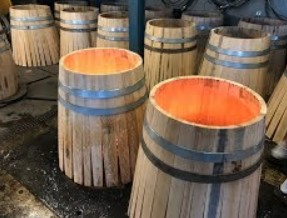
After a barrel is made its inside can be exposed to fire in order to toast it. This is done either over an open flame or by using a hand-held torch. The fire caramelizes the wood’s natural sugars and brings out complex compounds. From this, the wine will take on flavours that are toasty, charred, spicy and sweet depending on the amount of time the wood is toasted.

A lightly toasted barrel will be exposed to flame for about 25 minutes while a heavily toasted barrel may get up to one hour of flame exposure.  Generally, the heavier the toast, the stronger and more varied are the revealed flavours.

Light toasting will impart flavours of subtle vanilla, coconut, caramel, clove and cinnamon.  Medium toasting provides stronger vanilla, honey, caramel, toast, coffee and cocoa flavours.  Finally, heavy toasting provides vanilla, espresso, smoke, crème brûlée, butterscotch, toffee, coffee and molasses flavours.

Oak will interact with wine differently depending on the grape variety. Oak may provide hints of chocolate to a Merlot or vanilla or coconut to a Zinfandel. White wines aged in oak typically develop flavours of vanilla, baked apple, caramel, honey, toasted marshmallow, or buttered toast.

Sláinte mhaith

The Use of Oak – New Oak versus Old Oak

Oak has a major impact on the flavour of the wines we drink; whether it is absent or present; and if it is present, whether it be new oak, old oak or neutral oak.  When wine remains in contact with wood during the fermentation and aging process, changes take place due to extractable organic compounds.  These biochemistry effects translate into the wine’s aroma and flavour.

Photo credit: profilewinegroup.com

All oak wine barrels are toasted when they are made.  Toasting is when the inside of the barrel is exposed to a flame for a specific time and temperature depending on the style of barrel.  I will talk more about the toasting process in an upcoming post.

The impact of the toasting process declines as barrels age with use.  New oak creates aromatic and flavour complexity in the wine whereas old oak becomes more neutral year after year.  Some winemakers use a mix of new and old oak throughout the cellar in order to achieve their desired wine characteristics.

New oak influences red wines differently than white wines. In reds it will adjust the tannic structure while in whites it will open the aromatics of the wine.

The use of a high percentage of new oak barrels can create flavours of toast, vanilla, baking spices, coffee, caramel, maple or smoke.  Neutral barrels no longer generate these flavours or aromas.  New oak is also used to accelerate the softening of high tannin wines like Cabernet Sauvignon.  They can produce a more rounded wine at a younger age.

While neutral oak barrels no longer provide flavour, they still play an important role as they introduce oxygen to the wine.  This oxygen seepage has a big impact on the natural chemical conversions that wine undergoes during maturation.  Neutral barrels help maintain the fruit qualities of more delicate wines and soften wines that have a high amount of tannin.

The size of the barrel affects the oak’s impact on the wine.  The larger the barrel, the less oak lactones and oxygen that are transferred into a wine.  Thus, there is less impact on the flavour and aroma.  Barrels are normally 225 litres but can be as large as 1,000 to 20,000 litres.

The typical winemaking lifespan of a properly maintained barrel is around five years.  However, this may vary depending on the appellation, the type of wine and whether the winemaker is using the barrel for profile influence, oxygenation or storage.

Maintaining enough new oak on hand can be a challenge as there are only a limited number of new barrels available for purchase each year.  As well, the cost can be prohibitive as the price of one barrel can range from a few hundred to a few thousand dollars.

Sláinte mhaith

Use of Oak – Types of Oak

This is the first of a three-part series on the use of oak in the wine-making process.

Photo credit: wordonthegrapevine.co.uk

It’s a well-known fact that oak has become the most accepted way to affect the taste of a wine.  When added to wine, oak combines with the flavours of the grapes to create a wide variety of incredible tasting wines.

Most the world’s finest wines are aged in oak barrels, with French and American oaks being most commonly used.  However, Russian and Eastern European oak are also used, especially in Europe.  All wine barrels are made from white oak but the characteristics of the barrels vary greatly depending on the source of the oak.

French Oak

French oak is historically found in the forests of eastern and central France.  It has more tannin than the other oaks so lighter grape varieties, such as Pinot Noir, are well suited to tannin-rich French oak.  French oak has a tighter-grained wood structure which exposes subtler tastes like aromatic spices, cocoa and coffee. French oak grain is less coarse, contributing to wines with subtle, spicy and smooth, satiny or silky qualities.

American Oak

American oak is twice as dense as French oak, bringing greater spice and wood sugar compounds that slowly extract and fill out a wine’s body.  American Oak has a loose grain and is heavy in lactones, which creates flavours like coconut and banana to finished wines.  It can also provide an impression of a bit of creaminess and a hint of vanilla in wine.  American oak contains a lot of hemicellulose1, which when charred will break down into wood sugars, allowing for some caramelization. 

American oak is widely used in Spain to make Tempranillo. American oak barrels can weigh twice as much as French oak barrels but cost about half the price to purchase.

Russian and Eastern European Oak

Eastern Europe has a vast supply of oak trees. Hungarian oak is richer in eugenols, which impart spice, and tends to create a slightly richer mouthfeel with substantial tannin.   Caucasian oak, on the other hand, releases less tannin and aromatics, which is better for lighter wines desiring a straight-up expression of the grape itself.

Russian oak is used widely throughout Europe. Slavonian oak is used in a variety of Italian wines.  It is known for providing less tannin and more sweetness to the wine.

1 According to ScienceDirect.com, “Hemicelluloses are typically defined as components that can be precipitated by ethanol after extraction from the cell wall by dilute alkali. In such procedures they are extracted after depletion of the pectin content of the walls by aqueous solvents and calcium chelators”.

Sláinte mhaith

Acidity in Wine

What is it?  Can you taste it?  How much acid is in wine? Is it necessary to have acidity? These are many of the commonly asked questions about acidity in wine.  Understanding acidity helps us to identify which wines we like and to better be able to pair wines with our favourite foods.

Photo credit: winefolly.com

If you taste a wine that you find to be refreshing yet slightly tart, this is the result of dominant or prevalent acidity.  When someone says a wine is crisp, bright or fresh, it means the wine has great acidity.  Although these terms are most commonly referred to when discussing white wines, some red wines can be crisp, bright and fresh as well.

The common misconception is that some wines have acidity while others don’t, but all wines have acidity. Even in a wine such as Cabernet Sauvignon, which is normally thought of as deep and mellow, acidity helps blend all the other flavours of the wine. If a wine has no acidity at all, it tastes dull and flat. It is acidity that makes the wine appeal to your taste buds and enable you to recognize all the various flavours.

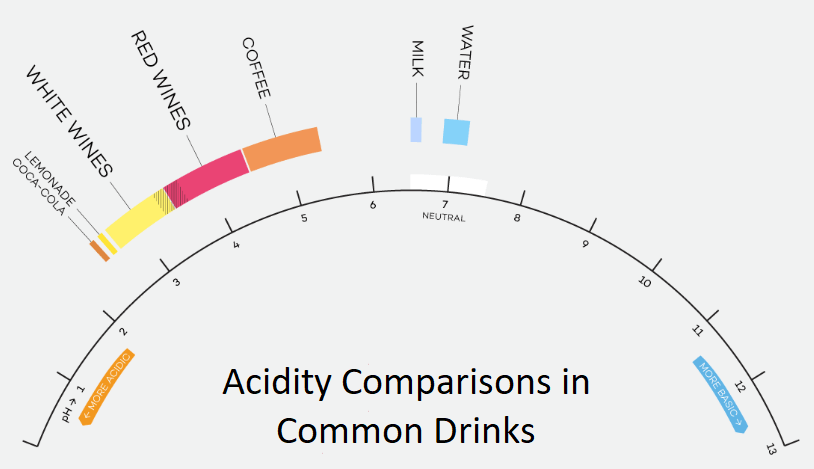
Acids are one of the four fundamental traits in wine; the others are tannin, alcohol and natural sugar. Acidity gives a wine its tartness. The amount of acidity varies depending on the type of wine.  Most range from 2.5 pH to about 4.5 pH on the acidity scale.  The lower the acidity the higher the pH level.

There are several different types of acids found in wine. The most prevalent acids are tartaric acid, malic acid and citric acid.  The amount of these acids in your wine will determine how much of a puckering sensation you experience in your mouth.

In wine tasting, “acidity” refers to the fresh, tart and sour elements of the wine which are evaluated in relation to how well the acidity balances out the sweetness and bitter components such as tannins.

The natural sugar content in a wine can disguise the acidity, making the wine seem smoother with a reduced puckering sensation.  An extreme example of this would be to compare the juice of a lemon with a glass of Coca-Cola.  Both have a pH acidity level of 2.5 but the intense puckering sensation of the lemon is not felt at all when you take a sip of the cola.

Acidity acts as a buffer to preserve the wine longer so high acid wines are more likely to improve with age. The stability of high acid/low pH wines helps during aging. Conversely, high pH wines are more prone to contamination. Microbes or other unstable components can make high pH wines appear hazy.

The type of acid present in a wine can also affect our perception of sourness and the puckering sensation. During the aging process, a wine’s malic acid is often converted to lactic acid, which results in a smoother, less tart-tasting wine.

Another facet of wine that can be confusing is a wine’s total acidity. This is something that’s often noted on a wine tech sheet or in the wine maker’s notes.  Total acidity tells us the concentration of acids present in wine, whereas the pH level tells us how intense those acids taste. For example, if you have a wine with 6 grams per litre total acidity and a pH of 3.2, it will taste more acidic than a wine with 4 grams per litre total acidity with the same pH level.

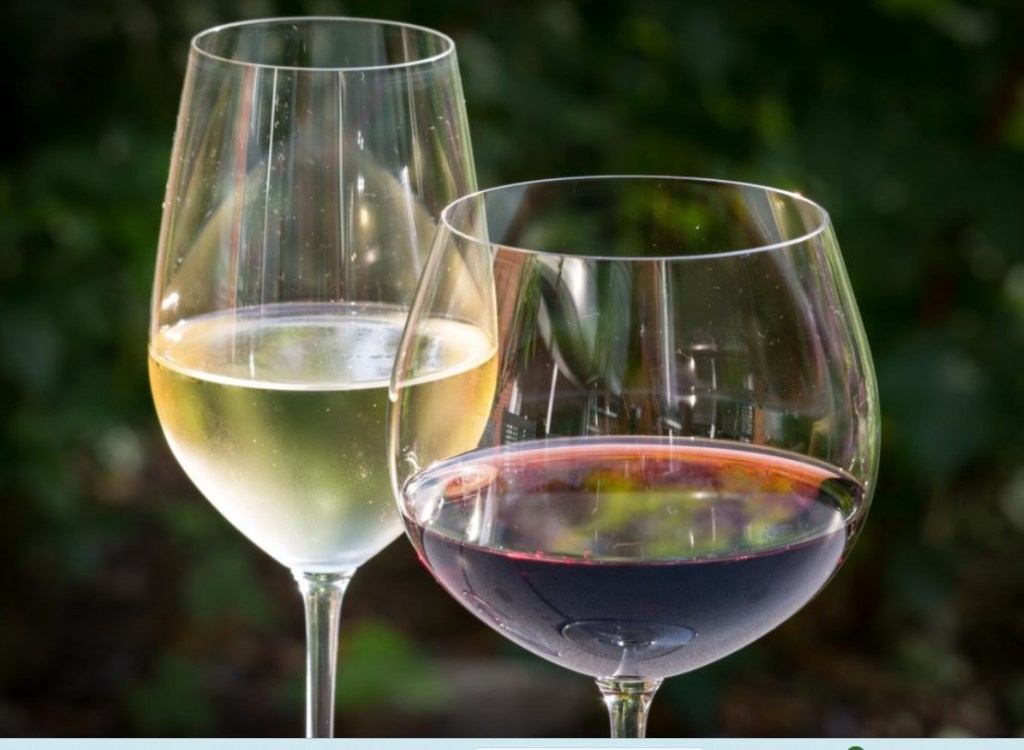
A higher acid white wine will be lemonier in flavour, making your mouth water and pucker a little.  Red wines with higher acidity are more likely to be a bright ruby colour, as the lower pH gives them a red hue. Higher pH, less-acidic red wines can take on a blue or purple hue. Wines with lower acidity can also take on a brown colour because they’re more prone to oxidation. It may not be as noticeable in red wines but can be off-putting in young white wines.

Unripe grapes have high acid levels that decreases as they ripen. Grapes grown in cooler climates usually contain higher acidity because there’s less warmth and sunshine available to increase grapes’ sugar and pH levels.

When pairing wine with food it’s helpful to consider the tastes found in a dish, whether it be sweet, sour, bitter, salty, fatty, etc. With a wine having a higher level of acidity, you’ll notice that sweetness, saltiness and fat balance the sour taste of the acidity.

Sláinte mhaith

The Aromas of Wine

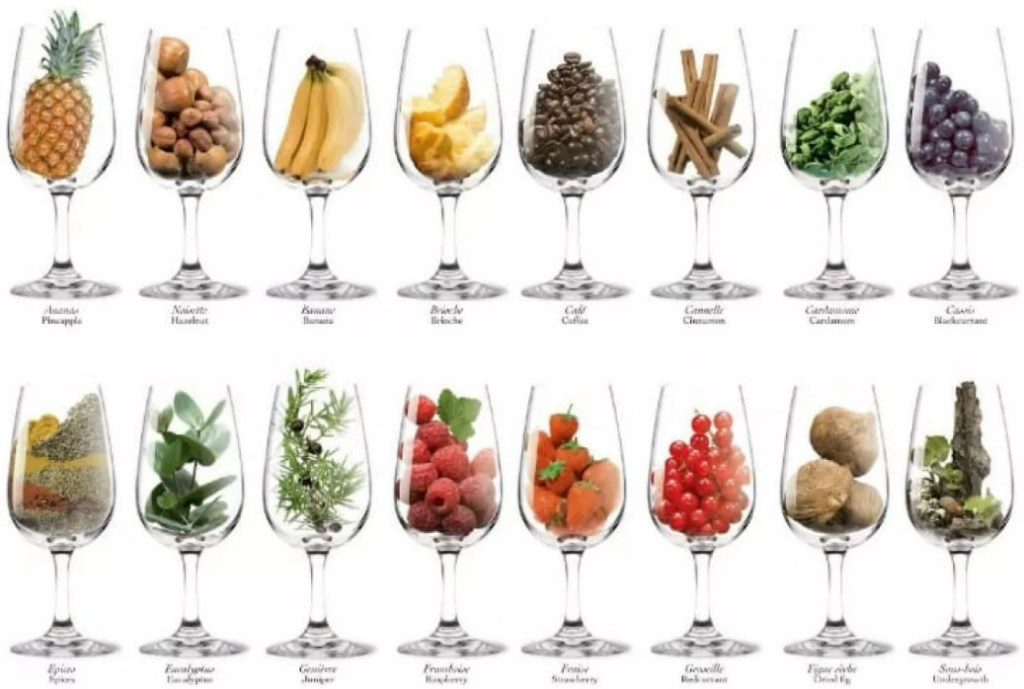
The aromas of wine, which are also referred to as the nose or bouquet, range from simple to very complex, depending on the wine.  The best way to release the aromas is to swirl the liquid around the bowl of the glass.  This will expose the liquid to the air, thus releasing all of the smells.

Photo credit: finedininglovers.com

When you go to smell the wine don’t be bashful; stick your nose as far as you can into the glass and close your eyes. You will notice a lot more scents this way.  Then breathe in deep. As you do, think about what aromas you’re picking up.

If it’s a white wine, you may be reminded of bananas, lemon rind or pineapple. If it’s a red wine, you may smell prunes, cherries, strawberries, peppers, plums or tobacco. Sometimes you may just smell grapes. Your brain will only pick up scents that you are familiar with and have smelled before. Thus, you and I could smell the same wine at the same time and relate a totally different experience.  The aroma is in the brain of the beholder.

When identifying the aromas, the experts will consider them at three levels referred to as primary, secondary and tertiary.  Primary aromas come from the grapes or are created during the fermentation process. A simple wine may show a very limited number of primary aromas whereas a more complex wine may display many more primary aromas.

White wines will display fruity aromas such as lemon, lime, grapefruit, apricot, peach or plum.  Red wines tend to present smells of strawberry, raspberry, blackcurrant or cherry.  There may also be floral, herbaceous scents in both white and red wines.

The secondary aromas in wine are created by the post-fermentation process. The most obvious of these are extracted from the oak that the wine barrels are made of.  Oak is often used when making wines such as Chardonnay, Cabernet Franc, Cabernet Sauvignon and Shiraz.  The oak can create hints of vanilla, cloves, coconut, cedar, chocolate, coffee or smoke.  Non-oak aromas may include cream, butter, cheese, toasted bread or biscuits.

Tertiary aromas occur as the wine ages in the bottle.  Only older mature wines will display these characteristics.  White wines may have aromas of orange marmalade, ginger, nutmeg, honey and stone fruits, such as peaches or plums.  Red wines may show hints of dried fruit, leather, mushroom, meat, tobacco or caramel.

There you have it; the aromas in wine are created at three different levels but how you interpret them will be as unique as you.

Sláinte mhaith

Wine Barrels

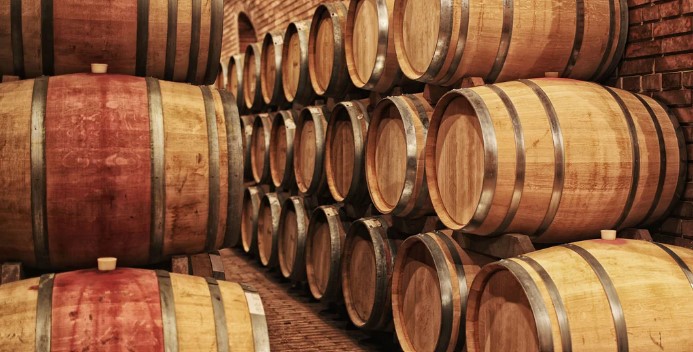
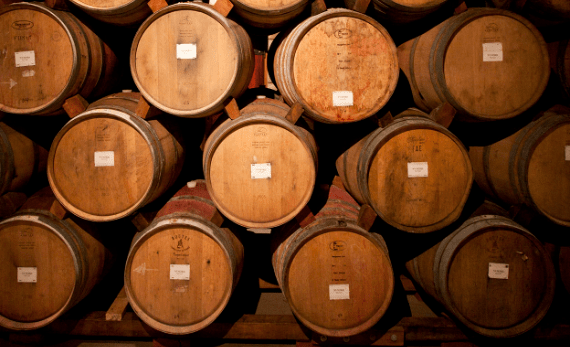
A wine barrel has become one of the most recognized symbols associated with wine. As a society we have romanced the wine barrel to the point where we have turned it into tables, benches, planters and candle holders.  Case in point, I have two barrels in my wine cellar as leg supports for a table and I have a candle holder made from a barrel rib on my bar.

Photo credit: winemag.com

The Romans discovered that oak could be more easily bent into the traditional barrel shape than palm wood; the oak only needed minimal toasting and a barrel could be created much faster. Oak was also the most abundant in the forests of continental Europe and its tight grain made it waterproof.

The Romans learned that oak has a tendency to soften and smooth the flavour of wine and provide it with a more complex taste.  Slight toasting of the wood added scents such as cloves, cinnamon, allspice or vanilla, as well as flavours such as caramel, vanilla or even butter.

Today wine barrels are made from a variety of materials; European oak (often referred to as French oak), American white oak, stainless steel, aluminum and HDPE (high-density polyethylene) plastic.  These barrels typically come in 3 standard sizes:

  • Bordeaux type – 225 litres
  • Burgundy type – 228 litres
  • Cognac type – 300 litres.

Barrel aging is the main element of what is referred to as the élevage process, which is a French term meaning “raising” or “upbringing”. This is what occurs to the wine between fermentation and bottling.  The wine’s élevage can last for a few months to many years, during which time the wine’s flavours integrate and mature.

The winemakers’ choices during the aging process include how long to age the wine for and how much to manipulate it. which has a major impact on the taste of the finished product. One of the most important choices is what type of barrel to age the wine in.

When oak barrels are manufactured they are toasted over a fire to either a light, medium, or dark toast level. New barrels with a light toast will give lots of vanilla and caramel notes, while a darker toast will give smoky, roasted aromas.

An oak wine barrel’s age and size affect the amount of oak flavor that will be transmitted to the wine. Smaller barrels impart more oak flavor because they allow more contact between the wood and the wine. Oak barrels lose their flavour compounds with use so they must be replaced every few vintages.

In addition to adding oak flavours, new oak aging changes the tannin structure of red wines. Tannins from the wood barrel transfer into the wine, giving it a stronger structure. This contributes to a wine’s aging capability, or longevity in the bottle. The wood also helps stabilize the tannins from the grape skins, giving them a silkier texture.

After a few years of use, the oak will no longer provide flavour or tannin to the wine. The older barrels still allow for slow oxygenation, so they can be used to age wine that needs to mellow without the addition of oak flavouring.

Oak influences both red and white wines by adding the aroma of:

  • Vanilla
  • Caramel
  • Baking spices like cinnamon, clove, nutmeg
  • Coconut (especially from American oak)
  • Dill (especially from American oak)

Red wines may also present additional aromas of:

  • Smoke
  • Chocolate
  • Coffee
  • Toffee
  • Burnt sugar

Steel barrels, on the other hand, add no flavour to the wine.  Steel simply stores the wine for a few months while it stabilises and the grape flavours integrate. Steel barrels also don’t let any oxygen come into contact with the wine. This kind of aging helps wines retain the fresh fruit aromas that disappear when exposed to oxygen.

Stainless steel aging is used for wines that would not benefit from the addition of oak flavours or the softening effect that oak has on tannin. It is used for white wines not having tannins to manage. Stainless steel is the usual choice for aromatic and semi-aromatic white grapes including:

  • Albariño
  • Unoaked Chardonnay (often aged in oak as well)
  • Gewürztraminer
  • Grüner veltliner
  • Pinot grigio
  • Riesling
  • Sauvignon blanc

For red wines, stainless steel is a good choice for lower tannin, fruity grapes such as:

  • Baco Noir
  • Gamay
  • Grenache

Red wines aged in stainless steel are straightforward and juicy, with no oak flavours obscuring the flavours of the grapes.

Stainless steel aging is significantly less expensive than using oak because unlike oak barrels, steel barrels can be reused indefinitely and are much easier to clean. Stainless steel aging also takes less time than oak aging which saves winemakers crucial space in the wine cellar.

Since oak barrels can be used only two or three times for the purpose of adding flavour to the wine, the cost of buying new barrels is built into the higher prices of oak-aged wines. Some producers try to mimic the flavours of oak aging by adding less expensive oak chips to wines that are aged in stainless steel vessels. Oak chips add vanilla and spice notes but have no effect on a wine’s texture like oak barrels do.

Sláinte mhaith

Appassimento Style of Wines

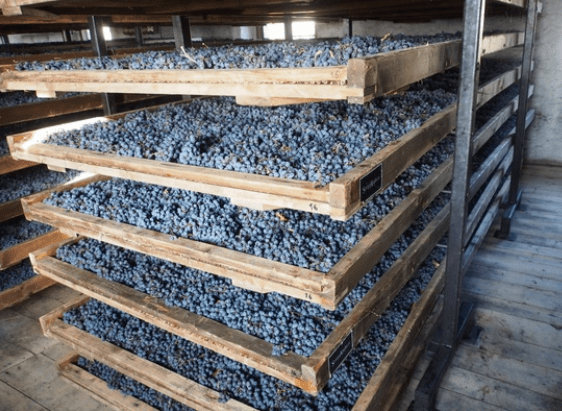
Appassimento is an Italian term that describes the drying of harvested grapes.  Traditionally this was done on bamboo racks or straw mats.  The process took anywhere from a few weeks up to several months to concentrate the sugars and flavours of the grapes. This process is used in making Amarone, Recioto and Sforzato.

Photo credit: WineAnorak.com

The process goes all the way back to the Egyptians or Greeks. The fruit was dehydrated by either leaving them on the vine to dry naturally in the hot sun or by picking and laying the bunches out on straw mats or hanging from rafters.

These types of wines became popular because they provided higher levels of alcohol and sweetness, thus making them not only more stable and complex but appealing to the consumer.

Today, dried grape wines are made in many regions of the world. The most well-known are the Amarone and Recioto wines of Valpolicella in Veneto, Italy.  However, dried-grape wines are also made throughout the rest of Italy and Mediterranean Europe, parts of the southern hemisphere, and even in cool climate regions such as Romania, Moldova, Switzerland, France, Austria, and Germany.

Canada is even now experimenting with these wines. Niagara’s Magnotta’s Enotrium is considered the first of its kind in Canada.

Today the appassimento process consists of harvesting ripe grapes and drying them for a period of several days or months in special rooms where airflow, humidity and temperature are controlled to varying degrees. The process does not ripen grapes like green bananas turning yellow and then brown in a bowl on your kitchen counter. Instead, the process concentrates what already exists in the grapes after they are removed from the vine. The grapes must be very healthy and fully ripe with adequate levels of acidity when harvested.

There are many different approaches to drying in Ontario. Some vintners use ventilated barns or open-air greenhouses while others use kilns.

The drying process will take anywhere from two weeks to over 140 days. Aside from concentrating sugars, acidity and tannins, the drying process will result in important microbiological changes in the grapes that can impart additional unique aromas and flavours adding greater complexity and intrigue to the final product. After the desired period of drying has elapsed, the winemaker will perform a final sorting to eliminate any unwanted fruit from entering the fermentation stage.

Anywhere from 30% to 50% of the original harvested juice yield will be lost using this process. Many of Ontario’s top appassimento-style wines are only made in select, high quality vintages. It is important to inquire as to what percentage of the wine has been dried and to take note of the alcohol percentage and residual sugar present. Knowing this will help you predict the final style of the wine and can help you match your taste preferences to the right product.

A second, less costly by-product of the appassimento process is ripasso wines. Unlike the appassimento wines where dried grapes make up part, or all of the final blend, ripasso wines use fresh, undried grapes to make the base wine which is then re-passed over the used skins leftover from the rarer and expensive appassimento process. This second contact with the skins may start a short re-fermentation adding a slight increase in alcohol to the base wine while adding extra complexity and flavour.

Ontario wineries producing wines using this process include Angel’s Gate, Big Head Winery, Burning Kiln Winery, Kew Vineyards, The Foreign Affair Winery and Rennie Vineyards.

The VQA of Ontario (VQAO) is currently reviewing the use of terms like appassimento and partial appassimento on labels of VQA wines. The VQAO is attempting to update the rules to ensure producers meet all the necessary legal limits for sugar, alcohol content and percentage of dried grapes so consumers will have clarity when buying wines.

As the Canadian wine industry continues to evolve, I believe the inclusion of the Appassimento style will enhance the industry moving forward. Expansion of Canadian viticulture and winemaking provides consumers with an even greater selection of fine wines offering excellent value.

Sláinte mhaith