Appassimento Style of Wines

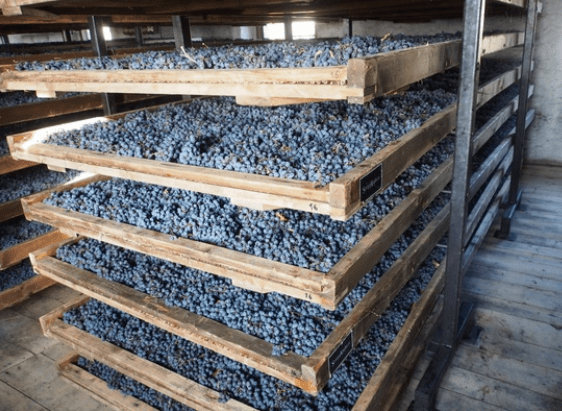
Appassimento is an Italian term that describes the drying of harvested grapes.  Traditionally this was done on bamboo racks or straw mats.  The process took anywhere from a few weeks up to several months to concentrate the sugars and flavours of the grapes. This process is used in making Amarone, Recioto and Sforzato.

Photo credit: WineAnorak.com

The process goes all the way back to the Egyptians or Greeks. The fruit was dehydrated by either leaving them on the vine to dry naturally in the hot sun or by picking and laying the bunches out on straw mats or hanging from rafters.

These types of wines became popular because they provided higher levels of alcohol and sweetness, thus making them not only more stable and complex but appealing to the consumer.

Today, dried grape wines are made in many regions of the world. The most well-known are the Amarone and Recioto wines of Valpolicella in Veneto, Italy.  However, dried-grape wines are also made throughout the rest of Italy and Mediterranean Europe, parts of the southern hemisphere, and even in cool climate regions such as Romania, Moldova, Switzerland, France, Austria, and Germany.

Canada is even now experimenting with these wines. Niagara’s Magnotta’s Enotrium is considered the first of its kind in Canada.

Today the appassimento process consists of harvesting ripe grapes and drying them for a period of several days or months in special rooms where airflow, humidity and temperature are controlled to varying degrees. The process does not ripen grapes like green bananas turning yellow and then brown in a bowl on your kitchen counter. Instead, the process concentrates what already exists in the grapes after they are removed from the vine. The grapes must be very healthy and fully ripe with adequate levels of acidity when harvested.

There are many different approaches to drying in Ontario. Some vintners use ventilated barns or open-air greenhouses while others use kilns.

The drying process will take anywhere from two weeks to over 140 days. Aside from concentrating sugars, acidity and tannins, the drying process will result in important microbiological changes in the grapes that can impart additional unique aromas and flavours adding greater complexity and intrigue to the final product. After the desired period of drying has elapsed, the winemaker will perform a final sorting to eliminate any unwanted fruit from entering the fermentation stage.

Anywhere from 30% to 50% of the original harvested juice yield will be lost using this process. Many of Ontario’s top appassimento-style wines are only made in select, high quality vintages. It is important to inquire as to what percentage of the wine has been dried and to take note of the alcohol percentage and residual sugar present. Knowing this will help you predict the final style of the wine and can help you match your taste preferences to the right product.

A second, less costly by-product of the appassimento process is ripasso wines. Unlike the appassimento wines where dried grapes make up part, or all of the final blend, ripasso wines use fresh, undried grapes to make the base wine which is then re-passed over the used skins leftover from the rarer and expensive appassimento process. This second contact with the skins may start a short re-fermentation adding a slight increase in alcohol to the base wine while adding extra complexity and flavour.

Ontario wineries producing wines using this process include Angel’s Gate, Big Head Winery, Burning Kiln Winery, Kew Vineyards, The Foreign Affair Winery and Rennie Vineyards.

The VQA of Ontario (VQAO) is currently reviewing the use of terms like appassimento and partial appassimento on labels of VQA wines. The VQAO is attempting to update the rules to ensure producers meet all the necessary legal limits for sugar, alcohol content and percentage of dried grapes so consumers will have clarity when buying wines.

As the Canadian wine industry continues to evolve, I believe the inclusion of the Appassimento style will enhance the industry moving forward. Expansion of Canadian viticulture and winemaking provides consumers with an even greater selection of fine wines offering excellent value.

Sláinte mhaith

The Components of Wine

When a wine reviewer completes an assessment, the critic will describe the wine in terms relating to as many as 8 different components.  These include:

  • Acidity
  • Alcohol
  • Anthocyanins (colour)
  • Aromatic compounds
  • Body
  • Sweetness or Sugar
  • Tannins
  • Viscosity

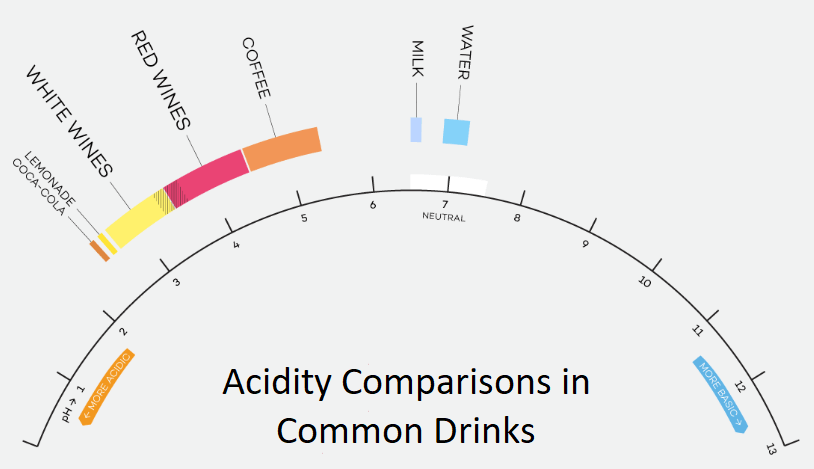
Acidity

Acid is one of the most important elements in the pulp. As a grape ripens, its sugar content increases and its acid content decreases; the challenge is to harvest precisely when the optimal balance is struck.

Acid balances alcohol and sweetness and sometimes adds a crisp, refreshing sensation.  It may cause your mouth to pucker (like if you were biting into a lemon wedge). Grapes grown in cooler regions tend to have higher levels of acidity.

Alcohol

Alcohol is produced during fermentation when yeasts come in contact with the natural grape sugar in the grape pulp.  High-alcohol wines are full-bodied with a richer mouthfeel.  Alcohol generally has a sweet flavour.  A wine with high levels of alcohol sometimes gives off a hot, burning sensation that can be both smelled and tasted.

High levels of alcohol indicate that the grapes were very ripe at harvest.

Anthocyanins (colour)

Observing a wine’s colour can be a valuable clue for determining the vintage and assessing the wine’s quality.

Red wines lose colour as they age, becoming more garnet and eventually turning brown.  As much as 85% of anthocyanin is lost after 5 years of aging, even though the wine may still appear quite red.

Red wines that are more opaque generally contain higher levels of tannin, though Nebbiolo is an exception to this rule. 

There is reduced colour intensity when there is higher sulfite content.  Also, red wines fermented at higher temperatures will have reduced colour intensity.

The hue in red wine is partially affected by the pH level of the wine. There are many variables that will affect the colour but generally wines with a strong red hue have high acidity; wines with a strong violet hue have a mid-range of acidity; and those with a blueish tint (magenta) usually have a low amount of acidity.

White wines darken as they age, becoming a deeper gold or yellow and eventually turning brown.

Rosé wines are stained pink by macerating the skins of red grapes over an average period of 4 hours to 4 days.

Finally, oxidation in wine causes it to become brown in the same way as an apple browns that is left out on the kitchen counter too long.

Aroma

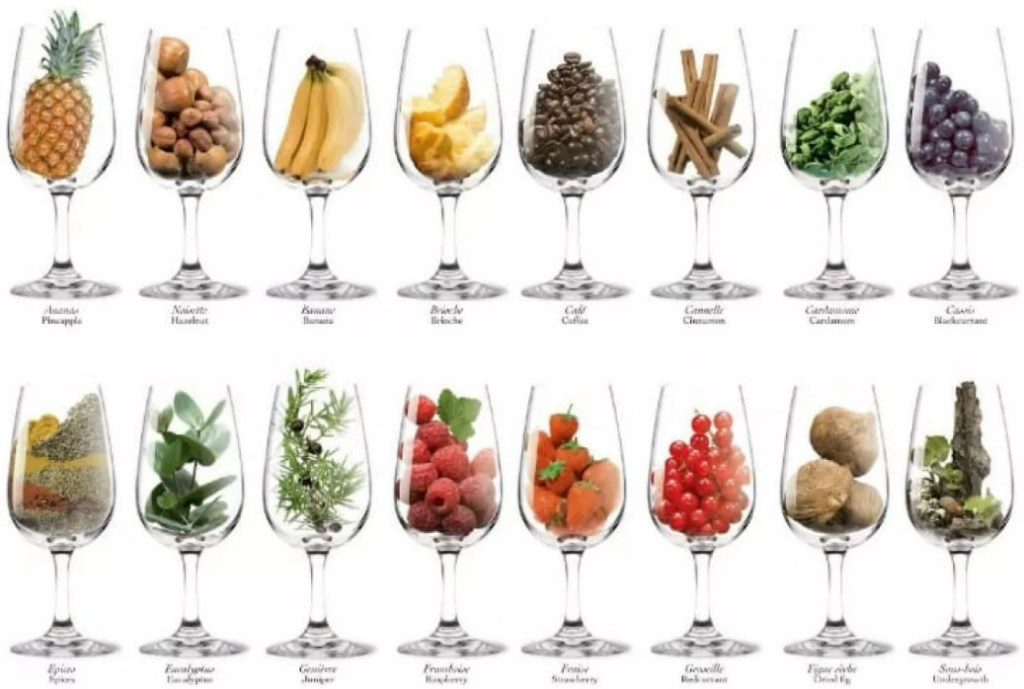
The aromas of wine are more diverse than its flavors. The human tongue is limited to the primary tastes perceived by taste receptors on the tongue – sourness, bitterness, saltiness, sweetness and savouriness.

The wide array of fruit, earthy, leathery, floral, herbal, mineral and woodsy flavours present in wine are derived from aroma or “nose” as it is often referred. In wine tasting, wine is sometimes smelled before being drunk in order to identify some components of the wine that may be present.

Different terms are used to describe what is being smelled. The most basic term is aroma which generally refers to a “pleasant” smell as opposed to odour which refers to an unpleasant smell or possible fault in the wine. The term aroma may be further distinguished from bouquet which generally refers to the smells that arise from the chemical reactions of fermentation and aging of the wine.

Body

It’s all about mouthfeel and weight.  The body of a wine is due to its alcohol content; however it also includes the perception of alcohol in a wine, associating with the balance of a wine.

  • Light wine is often perceived and described as bright and acidic, fresh, citrusy and having fresh fruit notes.
  • A medium bodied wine is one with lower alcohol levels, softer acids, little to no sugar content and little to no tannin.
  • A fuller body wine is the result of several factors. Alcohol content creates viscosity, which adds to the fullness of the body. Tannins give wine structure, creating a thicker sensation in the mouth. Finally, sugar levels increase the viscosity of the wine, making it more syrupy and less watery.

Sweetness / Sugar

Sugar comes from ripe grapes (although some grape varieties naturally contain more sugar than others). It is mostly converted into alcohol during fermentation. Any remaining sugar is referred to as residual sugar.

A wine with high levels of residual sugar generally tastes sweet, has a richer mouthfeel and fuller body.  Grapes grown in warmer climates tend to get riper and contain more sugar.  Those wines having no apparent sweetness are referred to as being “dry”.

Tannins

Tannin belongs to a class of compounds called phenols and comes from grape skins and seeds; it is mostly found in red wines but can be found in some white wines.

Tannin is an important compound that plays a role in the aging of wine; therefore high-tannic red wines such as Cabernet Sauvignon and Nebbiolo are those that can be aged longest.

A good way to understand the effect of tannin is to think of a cup of hot tea in which the tea bag has steeped for too long.  The tea will taste very strong, harsh and rather bitter (tannic).  The flavour of the tea can be softened by the addition of milk. This same concept applies to wine, thus the reason why cheese and wine is a classic pairing.  The protein in cheese neutralizes or balances the tannins in wine.

Viscosity

Viscosity refers to the liquid consistency of wine. Viscosity will make the wine appear thin and watery, or may make it appear thick and syrupy.

Viscosity is affected by the levels of sugar and alcohol found in the wine. Generally speaking, the higher a wine’s levels of sugar and alcohol, the higher the wine’s viscosity will be.

Wines with high viscosity tend to cling to the side of a wine glass longer, and may leave “tears” or “legs” as the wine begin to slide back down into the glass.

Final Thoughts

Reviewer impressions are often very subjective and will reflect personal bias.  However, these descriptions and impressions are our best source for determining whether it is worth our while to invest in a particular wine or even a certain grape varietal.

Sláinte mhaith