Enjoy Easter with Wine

Easter is traditionally a time for family celebrations that end with a scrumptious dinner.   I will look at traditional menu options but given the current climate where traditional family gatherings may not be possible, I will look at adding some glam to an everyday meal.

Also, given the strains being experienced by the local economy, all of my wine suggestions will be Canadian.

Lamb

Starting with the traditional Easter menu, the first option is lamb.  Lamb has a long tradition of being part of Easter celebrations.  It is available in many forms, suitable for any budget, ranging from a leg of lamb, to a loin, to chops, or even burgers. 

Lamb in any form is well complimented with a Cabernet such as Lakeview Cabernet Sauvignon ($29.95) or Featherstone Cabernet Franc ($19.95).

Ham

Ham is another classic Easter dish that can be prepared in a multitude of ways.  It can be baked using cloves and or a number of different glazes, ranging from savory to sweet.  Ham is also available in a variety of cuts ranging from the traditional ham on the bone, to small packaged hams to ham steaks.

Pinot Noir is a good option for serving with ham.  Flat Rock Gravity Pinot Noir ($34.95) or Henry of Pelham Pinot Noir ($16.95) are a couple of options.

Turkey

Turkey is a classic choice for Easter.  Not only is it suitable for large family gatherings but provides options for smaller dinners.  Alternatives to purchasing a full-size bird include, prepackaged turkey thighs or turkey breasts, or you can substitute chicken for turkey.

There are both red, as well as white wine alternatives to have with your turkey or chicken.  White wine suggestions include, Flat Rock Chardonnay ($19.95) or Inniskillen Montague Vineyard Chardonnay ($25.95).  Red wine options include Kew Vineyards Pinot Noir ($23.95) or Tawse Growers Blend Pinot Noir ($25.95).

Roast Beef

Over the years roast beef has been the choice of many for Sunday family dinners and Easter is no exception.  Featherstone Cabernet Franc ($19.95) or The Foreign Affair Dream ($29.95), which is a Merlo, Cabernet Sauvignon and Cabernet Franc blend , are two good choices.

Salmon

Salmon, though less traditional, is a good healthy option for your Easter dinner.  It can be baked, poached, or my favourite, tossed on the grill, wrapped in lemons, onions, and capers.  It can be a great alternative if you are forced to a smaller than usual family gathering.

Sauvignon Blanc or Rosé pairs well with salmon.  Options include Wildass Sauvignon Blanc ($16.95) or Malivoire Vivant Rosé ($19.95).

Vegetarian Alternatives

Vegetarian alternatives to the traditional meat dishes are very popular.  These dishes are obviously a good alternative to meat any time, not just on special occasions.  Wine pairings  for vegetable mains are the same as those for salmon; Sauvignon Blanc or Rosé. 

Non-Traditional Options

No matter what your mood or what you are serving, wine can make the simplest of meals more elegant.   Here are some general options:

White Wine

  • Chicken based soup – Angels Gate Chardonnay VQA ($14.95)
  • White fish  – Sandbanks Summer White VQA ($14.95)
  • Mac and cheese – Peninsula Ridge Pinot Grigio VQA ($15.95)
  • Pasta with a white sauce – Mission Hill Five Vineyard Pinot Blanc VQA ($16.95)
  • Poultry – Tawse Sketches of Niagara Chardonnay VQA ($19.95)
  • Sea food – Cave Spring Riesling Dry VQA ($15.95)

Red Wine

  • Beef ribs – Strewn Rogue’s Lot Cabernet Sauvignon Cabernet Franc VQA ($14.95)
  • Beef based soups – Peninsula Ridge Merlot VQA ($15.95)
  • Hamburgers – 13th Street Burger Blend Gamay Pinot Noir VQA ($14.95)
  • Pasta in a red sauce –  Pelee Island Baco Noir VQA ($21.95)
  • Pork ribs – Pelee Island Pinot Noir Reserve VQA ($17.95)
  • Tomato based soups – Henry of Pelham Pinot Noir VQA ($16.95)

No matter what your Easter has in store, whether it be a family dinner with all the fixings, or a simple affair for only one or two people, make it more elegant with wine.

Sláinte mhaith

Hosting a Wine Party

Are you suffering from the mid-winter blahs?  If so, have you ever given any thought to hosting a wine party?  A wine party provides the opportunity for self-awareness as you may discover you like a wine you never thought you would.  It is a great way to expand your horizons and try different wines.

Depending on the number of participants, ask each person or couple to bring a favourite wine.  It doesn’t need to be expensive and you can even put a price cap on it if you like.

If you will be sampling both whites and reds then follow the standard practice of wine tasting – whites first, reds last.  You could also do a theme tasting, such as have all the wines from the same region or country, or wines made with the same grape varietal.

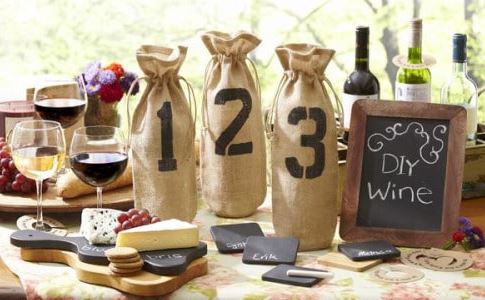
Blind tastings where the labels are covered can be both challenging and fun.  Doing a blind tasting allows your participants to try and identify the wine they brought.  You can try identifying the various types /varietals, and possibly even hazard a guess as to the country/continent of origin that each wine came from. 

When tasting the wine you can see if you can distinguish between the different smells and tastes, such as florals, honey, fruit varieties, cedar, chicory, earthiness, leather, tobacco, etc. and then see whether your perceptions match the wine reviewers’ claims.

Also consider suggesting food pairings that may complement the wines.

The portions for each tasting need not be more than 2 ounces and it isn’t necessary to swallow the wine.  For those who don’t want to swallow, disposable beer pong glasses make great spittoons.

It is also a good idea to provide water and plain crackers, such as Carr’s Water Crackers, so you and your guests can refresh your palate between wines.

I hosted a tasting where I invited several couples, asking each couple to bring a bottle of white and a bottle of red of their choosing.  I made up score sheets where each person indicated what they tasted, how they rated it, and guessed at the varietal of the wine.  I also provided them with a “cheat sheet” to help them organize their thoughts and aid in their decision making.  The rating card and cheat sheet are below.

The person with the highest score was awarded a prize.  The tasting was followed by dinner and each person could then select their own wine pairing from all the wines we had tasted.

If you don’t have an adequate number of wine glasses on hand, I suggest purchasing inexpensive glass ones.   Your local Dollar Store should have a suitable selection to choose from. In addition to being more environmentally friendly, they are also much less flimsy and less susceptible to spills than plastic glasses.

Your wine party can be as simple or elaborate as you want to make it.  The most important thing is to have fun.

Sláinte mhaith

Score Card

Judge # ______            Wine #______                                                                                 

Determine the Sweetness or Level of Dryness

  1. Do you feel a tingling sensation on the tip of your tongue?
  2. Is there a slight oily sensation in the middle of your tongue that lingers?
  3. Wine has a higher viscosity; wine tears on side of glass slowly. (also an indicator of high Alcohol)

WARNING:  A bone-dry wine can often be confused with a wine with high Tannin.

Do you consider this to be a        sweet        or       dry         wine?

Acidity

Acidity is tart and zesty. Tasting acidity can be confused with the taste of higher Alcohol. Wines with higher acidity feel lighter weight because they come across as ‘spritzy.’

Acidity Characteristics:

  1. Tingling sensation that focuses on the front and sides of your tongue. Feels like pop rocks.
  2. If you rub your tongue to the roof of your mouth it feels gravelly.
  3. Your mouth feels wet, like you bit into an apple.

HINT:  It is common for wines grown in cooler climates to have higher acidity.

Do you consider this wine to have a high acid content?       Yes       or        No

Tannin

Characteristics of Tannins

  1. The wine tastes bitter on the front inside of your mouth and along the side of your tongue.
  2. Tannin makes your tongue dry out.
  3. After you swallow you feel a lingering bitter/dry feeling in your mouth.

CAUTION:  Tannin can often be confused with the term “dry” because it dries your mouth out.

Does this wine have a high tannin content?       Yes      or       No

Fruit

Wines are often characterized by their main fruit flavours. Tasting for fruit flavours in a wine can help you better define your preferences. For instance, wines that have strawberry notes lead into a very different set of wines than enjoying wines that taste like blackberries. The level of fruitiness that you taste in a wine leads to very different growing regions.

Tasting for fruitiness in a wine

Red wind characteristics:  red fruits such as raspberry or dark fruits like blackberry and blueberry

White wine characteristics:  lemon and lime or peach and yellow apple

  1. Can you name 3 different fruits easily?  If so, what are they?    ______________________________________
  2. Do you find it difficult to pick out a single fruit flavor?     ___________________________________________
  3. Does the wine give you stronger impressions of other flavors such as grass, bell pepper, black pepper, olive or meat?  ___________________________________________________________________________________

Body: Light to Full-Bodied

Alcohol Level ABV (or Alcohol by Volume) adds body. The wine will have a higher viscosity which is easily seen in watching it bead on the side of the glass. A high alcohol wine typically tastes fuller bodied than a light-alcohol wine.

Tasting body in wine

  1. How does the wine seem       lighter        or           bigger  ?
  2. How long does the taste last in your mouth after you’ve swallowed?     _________ seconds
  3. Is the wine full bodied up front but then drops off at the finish?             Yes                No

YOUR OVERALL RATING

  1. I cannot tell a lie; this wine does not suit my taste in any way, shape or form.
  2. I am not a fan.  It is a bit of a “yawner” if you ask me.
  3. I would be willing to serve this as a house wine for dinner parties.
  4. Yummy, I would be willing to serve this to close friends and/or on special occasions.
  5. Share – no way.  I want to keep this all for myself.

I think this wine came from ______________________________________ (country or continent)

I think the type of wine is

 WHITE RED
 Gewurztraminer Gamay
 Pinot Gris or Pinot Grigio Baco Noir
 Chablis Pinot Noir
 Pinot Blanc Valpolicella
 Riesling Merlot
 Viognier Zinfandel
 Sauvignon Blanc Cabernet (Cab Franc, Cab Sauv)
 Chardonnay Malbec
 Semillon Syrah or Shiraz
 Other  _____________________________ Other  _____________________________

Cheat Sheet

Festive Holiday Selections

Traditionally white wine would be the only choice to serve at Christmas.  However, this is no longer the case.  Today there are many more options available to complement your menu, whether it is brunch, afternoon munchies, dinner, or dessert.

Christmas morning could start off seated around the holiday tree with a flute of Champagne or Prosecco.   The sparkly can also be combined with orange juice to create mimosa.  The same could be included as part of Christmas Brunch. 

When serving hors d’oeuvres such as prawns or seafood, a zesty white is always good, such as Sauvignon Blanc or Pinot Gris.  Rosé, Pinot Noir, or Beaujolais are also viable choices.

For a traditional turkey dinner, white options would include an oaked Chardonnay or White Burgundy.  Red options include Pinot Noir, Baco Noir, Chianti, Beaujolais, a mature Bordeaux or Rioja.

With ham, wines with some sweetness, lots of acidity and bold fruit are in order. These would include Riesling, Moscato, Chenin Blanc, Rosé, Lambrusco, Grenache or Zinfandel.

If you are serving goose or duck during the holidays, these fatty meats should be paired with a white such as an oaked Chardonnay, white Bordeaux, Chenin Blanc or an off-dry Riesling.  Red options would include a mature Châteauneuf-du-Pape, Pinot Noir, or Beaujolais.

When serving sweets or desserts, a Late Harvest Riesling or Ice Wine will suit the bill.  The day can end with a glass of your favourite Port, whether it be a sweet ruby or a dry tawny.

Here’s to the best of the season!

Sláinte mhaith

Hosting a Wine & Cheese Party

If you are thinking of hosting a get together for friends or family this holiday season, a wine and cheese party may be the way to go.  Such an event can be as simple or elaborate as you like.

On the simple side you could offer 2 wines and 4 cheeses.  I would suggest a dry but not overly bold red wine, such as a Pinot Noir, and a dry crisp white wine, such as a Riesling or Pinot Gris.

Cheese selections could include an aged cheddar, a blue, a mild, and a soft and creamy.  To accompany the wine and cheese a baguette, crackers, fruit, olives and nuts are a few suggestions.

If you want to create a more elaborate affair you could provide a selection of 8 to 12 cheeses, along with 3 or 4 different wines.  To make your party a little more unique you could go with a Canadian theme where you include only a selection of Canadian cheese and wine.

There is much disagreement among cheese and wine experts as to which wines are best suited to accompany the various types of cheese.  However, here are some general recommendations.

For a varied cheese plate, almost any dry white or red wine is appropriate.

White wines, such as Gewürztraminer, Pinot Gris, Muscat and Riesling, are good options. However, it is generally best to stay away from an oaked style of Chardonnay.  If you feel the need to include a Chardonnay, be sure it is either a Chardonnay Musque or an Unoaked Chardonnay.  The label will clearly identify both of these wines.

Most red wine is cheese-friendly. Generally speaking, the richer the cheese is, the richer the wine should be. For a cheese plate of mild and medium cheeses, choose a lighter wine, such as Pinot Noir or Gamay; for richer, creamier and full-flavoured cheeses, Cabernet Sauvignon, Merlot or Meritage blends are good choices.  I suggest avoiding heavy bold reds such as Shiraz or Barolo, as these wines may be too overpowering for the foods being offered.

As far as portions go it is recommended to provide 1 to 1 1/2 ounces of each cheese per person.  This equates to about a 1/2 pound of cheeses and 1/2 bottle of wine per person.

Remember, the wine & cheese party is just an enabler to allow friends and family to get together over the holidays.  Therefore it isn’t necessary to plan and present an extremely elaborate affair.  Simple and easy is a good way to go.

All the best for your holiday celebrations!

Sláinte mhaith