Rhine River Cruise

My wife and I recently returned from a Rhine River cruise where we had the opportunity to sample wines from Switzerland, France and Germany during our travels. I was most anxious to try some Swiss wines as I had never had the opportunity of tasting any. These wines are not often available outside of Switzerland (see The Wines of Switzerland from May 1, 2021). 
The first Swiss wine we tried was a 2022 Weinbau Ottiger Pinot Noir. The wine is very similar in character to a French Pinot Noir.  The second sampling was a red blend from Château Constellation sa 1950 Sion, called “Humagne Rouge”.  It has a spicy bouquet characterized by notes of pine and cinnamon. It has accents of black fruit aromas balanced by silky tannins. It was very enjoyable.

We ventured through Strasbourg, France and the Alsace wine region. World-renowned for its viticulture, Alsace has a dry mild climate, favourable soils and ideal exposure to the sun for its vineyards. The white wines produced here rival the Rieslings created in neighbouring Germany.

While in Breisach, Germany, the tour offered a wine tasting at Domaine Albert Seltz, Alsatian Vineyards.  There they follow a rigorous process to preserve the authenticity of their wines, respecting traditional techniques while integrating the most recent advances in technology. Sustainable viticultural practices are followed that promote biodiversity and respect for nature.

The area surrounding Breisach, the capital of Alsatian wines, has the third largest wine co-op in the world, following California and South Africa. Twelve million litres of wine are produced there each year, taking advantage of being the sunniest place in all of Germany.

We also visited Rüdesheim, which is a German winemaking town in the Rhine Gorge, and part of the UNESCO World Heritage Site. It is in the heart of the Rheingau wine region.

Close to Speyer, Germany lies the Roter Hang wine area.  It is considered to be one of the most important vineyard sites in the world, sitting to the south of Mainz, not far from Nierstein and Nackenheim. The soil is red, the result of red slate that exists throughout the region, providing the perfect conditions for outstanding wines that are characterised by unmistakeable flavour.

Further north at the intersection of the Rhine and Moselle Rivers is the town of Koblenz.  Koblenz is a principal seat of the Mosel and Rhenish wine trade. Mosel is best known for growing some of the finest Riesling grapes in the world. 

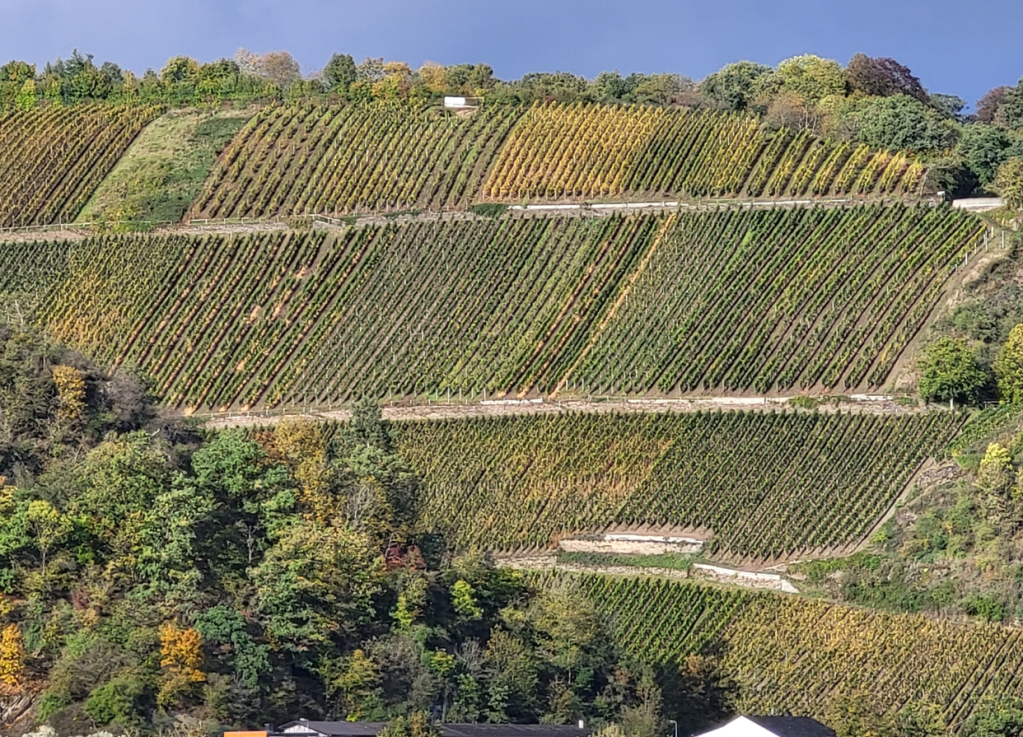
The vineyards are found tiered along the hillsides of the Moselle River. The steepest vineyard slopes in all of Europe are found here. Some of the grape vines are planted in vertical rows while others are in horizontal rows. The grapes planted vertically are machine groomed vines while those planted horizontally are generally on the steepest slopes and are maintained totally by manual labour.

Along the Moselle River in Winningen we visited the Weingut Rüdiger Kröber winery where we sampled four different Riesling wines ranging from dry to sweet; the 2022 “Kröber Weingut Steinig Riesling” dry, the 2022 “Kröber Weingut Uhlen Laubach” dry, the 2022 “Kröber Weingut Winninger Brückstück Riesling Feinherb” semi dry and the 2021 “Kröber Weingut Winninger Röttgen Kahimer Riesling Alte Reben” sweet. I found the Uhlen Laubach to be my favourite as it was robust with character and full of flavour.

The winery’s vineyards are up to 28 terraces in height along the slope of the hills. Weingut Rüdiger Kröber grows 90% Riesling, 5% Pinot Blanc and 5% Pinot Noir varietals. The vines range from 50 to 80 years in age.  The winery produces 60,000 bottles of wine per year and like many of the wineries in the region, it is all sold locally to individuals and restaurants.

Now that we have returned home from the Rhine, my wife and I are in the midst of planning our next wine excursion, which will be along the Rhone River in France during the spring of 2024.

Sláinte mhaith

From One Passion to the Other

People sometimes look at me funny when I tell them I periodically write about whiskey in my wine blog.  However, here is an excellent example of how the world of one is in many ways very similar to that of the other.

Photo credit: thedrinksbusiness.com

Raimonds Tomsons, who is from Latvia, won the ASI (Association de la Sommellerie Internationale) Best Sommelier of the World competition earlier this year in Paris, France.  Prior to winning the championship, Tomsons had already made a name for himself due to his work in wine, being a board member of the Latvian Sommelier Association and having worked with several high-end restaurants and importers in Latvia.

He is now going to be the global brand ambassador for The Craft Irish Whiskey Co. of Dublin, Ireland.  Tomsons will now be applying his expertly trained nose and palate in his new role.  He sees this new endeavor as giving him the opportunity to further enhance his learning by exploring the diverse world of spirits and other beverages.

Tomsons sees that by joining Jay Bradley and his team at The Craft Irish Whiskey Co., he will have an opportunity to explore fine Irish whiskey in depth, and work on innovative whiskey and food pairings.  Bradley feels that Tomsons’’ knowledge and ability to detect nuances and layers of flavour compliments the way he makes whiskeys, each bottle of which offers a unique complexity of flavours.

The Craft Irish Whiskey Co. was founded by Bradley in 2018.  The distillery creates rare and ultra-rare Irish whiskeys, including The Emerald Isle, worth an incredible $2 million US, making it one of the most expensive whiskeys in the world.

Craft Irish Whiskey is made only in a pot still and with hand-selected barrels.  They craft whiskey as it was once made before the rise of blends and mass-production techniques. They are proud to be reviving the art of crafting whiskey.  The Craft Irish Whiskey Co.  considers themselves as being rooted in tradition but with an eye on the future, a modern expression of a historic craft.

It is now also a marriage between the world of wine and that of whiskey.

Sláinte mhaith

The Effects of Climate Change in Bordeaux

Rising summer temperatures are impacting grape growers around the world, however today I will focus on France’s Bordeaux region.  Temperatures are expected to rise between 0.3°C and 1.7°C over the next 20 years. At this point global warming has benefited Bordeaux but that is about to change, especially if the grape crop is not somewhat modified. 

Photo credit: foodandwine.com

Growers are going to need to reconsider their mix of grapes as temperatures continue to rise.  The future of white varietals from the region may become non-existent while the existing proportion of reds, where 60% to 70% is currently Merlot, is already too great an amount.  Merlot is ideal in cooler regions where there is a shorter growing season. However, with temperatures increasing and the growing season getting longer, Merlot now ripens too quickly.  Many of these vines will need to be replaced with varietals such as Cabernet Sauvignon, which perform better in hotter climates with a longer growing season.

At least until now the increase in temperature and the resulting riper fruit have not had a detrimental effect on the quality of the wine. Instead, higher temperatures have made wine quality more consistently better. However, if warming continues the quality of the wine will begin to deteriorate.

It is well known that high temperatures can have harmful effects on grape composition, such as a decrease in anthocyanins (the pigmented molecules that give red wine its colour), as well as other molecules, that could cause unpredictable aromas.  The grape skins are also negatively impacted by higher temperatures.

Growers, scientists, and wine professionals all speculate that continued increases in temperature will negatively impact fruit and wine quality in the future. However, to date Bordeaux has successfully adapted to the quickly changing climate, but experts fear that the danger point is swiftly approaching.

Sláinte mhaith

Challenges for France’s Bordeaux Region

This summer has proven to be especially bad for the grape harvest in France’s Bordeaux region.  The perfect combination of meteorological conditions has led to an alarming spread of mildew throughout the region. The combination of warm weather and rain has resulted in new plant growth being left unprotected as the wet weather has hindered the application of herbicides.

Photo credit: vivino.com

The mildew has been having the greatest impact on the red grape varietals, most notably Merlot.  So far this year the region has been impacted by two separate waves of mildew.   It remains to be seen whether the disease will progress onto the stalks of bunches and if it can be ultimately contained.

Some growers have lost their entire harvest.  As a result, a helpline has been established to help growers cope with the devastation.  Some grape growers are even considering their careers because of the mildew.  It has been quite traumatic for those trying to control it.

This is the second consecutive year where Bordeaux growers have been impacted by the weather.  The 2022 harvest was about 11% less than the ten-year average.

Grape growers are hoping that the region will soon see a return to more uninterruptedly dry, hot weather.  If the dry heat returns, Bordeaux may see the 2023 harvest being within the top three earliest harvests in the past decade.  However, given the devastation caused by the mildew, the harvest yield will be much lower than in previous years.  This will no doubt impact the price when the 2023 vintage of Bordeaux reaches store shelves in a few years’ time.

Sláinte mhaith

Bordeaux’s Left and Right Bank

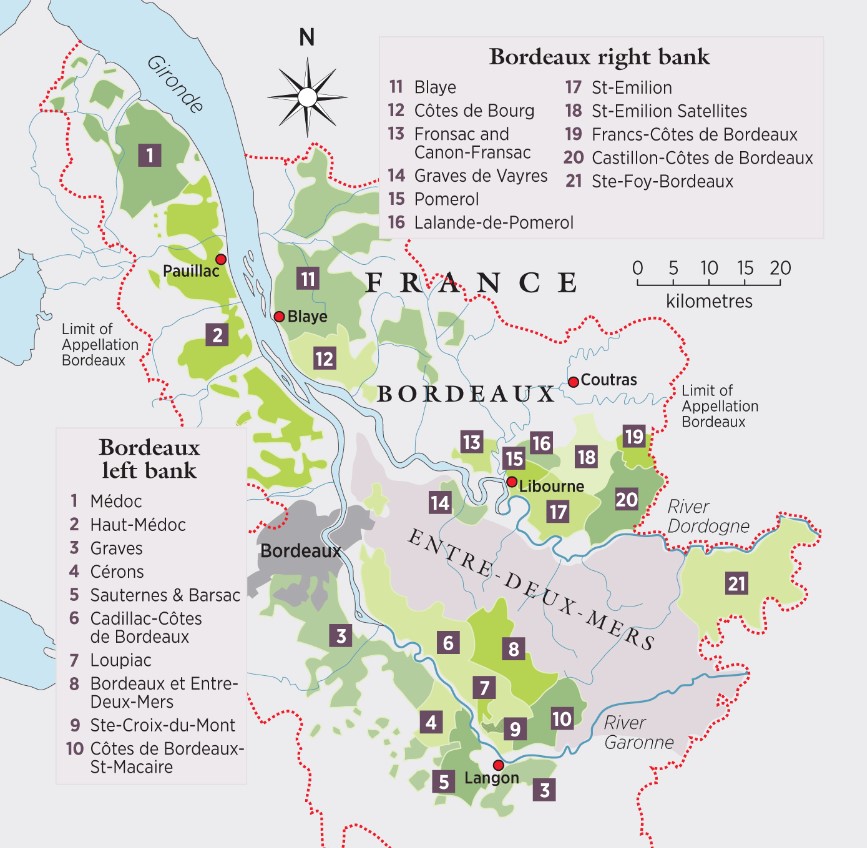
The prestigious Bordeaux wine region is located on the western coast of France. The region is separated into two sub-regions, referred to as the Right Bank and the Left Bank. Each region has its own unique nuances that characterize it from the other.

Photo credit: Decanter.com

The banks refer to the two riverbanks, the land masses on either side of the Gironde Estuary, the place where a river meets the sea. The Gironde Estuary is fed by two rivers, the Dordogne and the Garonne. The Left Bank viticultural region is on the southwest side of the Gironde and the Right Bank is on the northeast side.

The prominent difference between the Left and Right banks is the grape varietal grown.  The Left Bank is famous for its Cabernet Sauvignon while the Right Bank is mainly Merlot, Cabernet Franc, Petit Verdot and Malbec.  The reason for the grape varieties being different is due to the type of soil. The Left Bank is characterized by gravelly soils while the Right Bank is mainly clay soils.

The varietals grown determines the difference in style of wine produced.  The Left Bank’s Cabernet Sauvignon-based blends tend to be more structured, powerful and have a higher presence of tannins, whereas the Right Bank’s Merlot-dominant blends tend to be softer and silkier.  Personally, I am a fan of the wines from the Right Bank.

The most complicated difference between the Left and Right Banks is the way in which the wine is classified. For a detailed explanation of the classification methods see my post, France’s Cru Levels from March 18th.

The most notable vineyards on the Left Bank include Château Latour, Château Margaux, Château Haut-Brion, Château Lafite, and Château Mouton Rothschild.  Estates on the Right Bank include Château Cheval Blanc, Château Angélus, Château Pavie and Pétrus.

Sláinte mhaith

France’s Cru Levels

As I have discussed in the past, French wine labels can be rather puzzling since they indicate the region where the wine was produced rather than the grape varietal contained inside the bottle.  Also, the label will often contain such words as “Grand”, “Premier” or “Cru”.  Even though premier means first in French, you will often find grand appearing on the better quality wines.

Photo credit: Decanter.com

The simple translation for cru is growth.  However, in the world of French wine its reference is for the geographic terrain, specifically the soil type, climate and altitude where the grapes are grown.  It gets complicated by the fact that cru is not applied in the same manner throughout all the wine regions of France.  Further complicating things is that the term cru is also used in Germany and Italy where there are additional variations in the meaning.

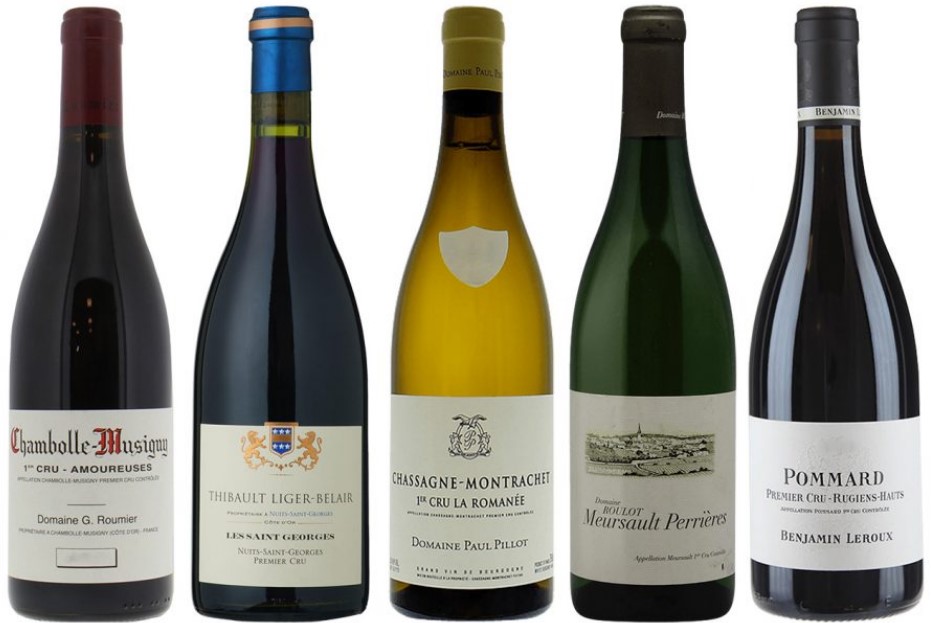
In the Burgundy region of France, the classification of cru is rather simple.  Cru designates a vineyard as being of a certain level of quality.  The classifications originate back to the 12th century and the Cistercian and Benedictine monks in the Côte d’Or.  Every vineyard in Burgundy is classified in the hierarchy where Grand Cru is at the top followed by Premier Cru and then “village” wines, with the generic Bourgogne category at the bottom.

There are 33 Grand Crus with each having its own appellation.  Only Pinot Noir and Chardonnay are grown here, but most appellations only permit one or the other varietal to be grown; very few allow both. Premier Cru wines are less expensive and are often a better value, though their long-term aging potential is typically less.

Chablis has one Grand Cru appellation that includes seven vineyards. These vineyards overlook the town of Chablis and benefit from a southwest exposure that helps ripen the grapes.

The Bordeaux region applies the term cru in a much different manner. Grand Cru Classé classification system forms the basis of the rating system and it’s tied to a specific chateau or estate, rather than adjacent vineyards. It was created in 1855 and is comprised of only left bank chateaus in Médoc, Graves and Sauternes, ranked from first to fifth growths, based on their value at that time. The first growths are called Premiers Crus, while second through fifth growth crus are called Crus Classes.

On the right bank Pomerol isn’t classified but Saint-Émilion is.  St.-Émilion has three chateau-based quality classifications. At the top is Premier Grands Crus Classés, of which there are 18, followed by Grands Crus Classés which contains 64 chateaus. The appellation’s third category is not tied to a specific ‘classed’ chateau or geographical subzone. Wines labeled “St.-Émilion Grand Cru” merely have more stringent production rules.

The Alsace region uses the term Grand Cru in similar fashion as the Burgundy region. Fifty-one vineyards have been designated superior, or Grand Cru, and wine from those vineyards can use the term on their label. There is a great deal of diversity in Alsace’s Grand Cru wines.  There are four grapes approved for use, as well as a wide variation in soils.

The Beaujolais region is where Gamay grapes are grown. Here cru is applied to villages rather than vineyards. There are 10 villages and the wine produced from these villages is called Cru Beaujolais.

The Champagne region also classifies entire villages as Grand Cru or Premier Cru. The Champenois created a system referred to as échelle des crus, or “ladder of the growths” in the early 20th century to fix grape prices for both farmers and buyers at Champagne houses.

At each harvest a price is set and growers with land in one of Champagne’s grand cru village receives 100% of that price. Grapes from the premier cru villages earns from 90% to 99% of the set price, while the rest receive from 80% to 89%.

There you have it; a little more of the puzzle of French wine resolved.

Sláinte mhaith

The Mystery of French Wine

In France the varietal of grape a wine is made of is seldom indicated on the label.  Instead, the French tend to identify flavour by the region from which the wine was produced.  Because of this, people often shy away from buying French wine.  However, the mystery of French wine can be solved by simply knowing which grapes are grown in each region.  To assist you, most wine and liquor stores arrange their French wines by region.

Photo credit: ihmkolkatafoodandbeveragenotes.blogspot.com

ALSACE

The Alsace region is located in the northeastern region of France between the Vosges Mountains and the Rhine River.  Historically, Alsace was part of Germany, which influences the types of grapes grown in the region. It is home to single varietal white wines including Gewurztraminer, Muscat, Pinot Gris, Riesling and Sylvaner.  The wines cover the spectrum, ranging from dry to sweet.

BEAUJOLAIS

The Beaujolais region is known for growing the Gamay grape, which has bright acidity and low tannins.

BORDEAUX

Bordeaux is France’s largest and most renowned wine region.  It is known for its red blends highlighting Cabernet Sauvignon on the Left Bank and Merlot, Pomerol and Saint Emilion on the Right Bank.  The white varietals of Bordeaux include Barsac and Sauternes grapes.

BURGUNDY

Pinot Noir and Chardonnay, referred to as Chablis, are the standard grapes grown in the Burgundy region.

CHAMPAGNE

The Champagne region is renowned for its sparkling wines produced from one or more of Chardonnay, Pinot Noir or Pinot Meunier.

LOIRE VALLEY

The Loire Valley stretches from the Auvergne region to the Atlantic Ocean.  It produces most of France’s white wine. The white varietals of the Loire include Chenin Blanc (called Vouray), Sauvignon Blanc (referred to as Sancerre and Pouilly-Fumé) and Muscadet.  It is also known for the red varietal, Cabernet Franc.

PROVENCE

Provence is the oldest wine region in France.  It is the only region that specializes in Rosé wines.

RHÔNE VALLEY

Syrah and Viognier are the highlights of the northern part of the region while Grenache, Syrah and Mourvèdre are prominent in the south.  Mourvèdre is the dominate grape in Châteauneuf -du-Pape.  Blending of the grapes results in rich reds and vigorous whites and rosé.

Final Thoughts

Once you know which regions grow your favourite grapes, it is much easier to find a suitable bottle of French wine to enjoy.

Sláinte mhaith

The Experts’ List of Underrated Wine Regions

Most wine enthusiasts are familiar with international wine regions such as France’s Bordeaux, California’s Napa Valley or Italy’s Tuscany.  However, there are many other, lesser-known regions, each offering its own unique characteristics.  These regions offer not only good wine but fewer crowds and opportunities to discover places less travelled.  My list is not intended to be all-encompassing; it is merely a list of regions that I have found intriguing for one reason or another.  The regions are presented in alphabetical order by country.

Pedernal Valley, Argentina

Located in the shadow of the Andes mountains, Argentina’s wine country is spectacular.  Situated north of the famous Mendoza region is the lesser-known Pedernal Valley. It is felt that the Pedernal Valley can stand on its own merits as a premium wine region. The region’s Malbec is considered world-class and distinct and represents a unique style.

Mendocino County, California, United States

Mendocino County grows less than four percent of California’s grape yield but contains an impressive one-third of the state’s certified organic vineyards. The number of old vines, post-WWII plantings makes this region unique. Some of the best wineries in California source their grapes from Mendocino. Dry-farming practices were introduced to the region by Italian families in the early 1900s, which resulted in wines that are concentrated, balanced and distinctly Californian.

Okanagan Valley, British Columbia, Canada

Photo credit: dailyhive.com

Canada’s own Okanagan Valley is considered breathtaking as it is situated between two mountain ranges and contains glacial lakes and rolling hills of vineyards. The region produces world-class wines that are difficult to find outside of Canada.  The high-quality wines combined with the beautiful views of the region have attracted top winemakers from France, New Zealand and South Africa.

Chinon, Bugey and Savoie, France

There are three lesser-known regions in France.  Chinon is in the Loire Valley.  It is much less popular than its neighbours, Bordeaux and Burgundy. The Loire Valley is famous for its white Sancerre and Pouilly-Fumés. The red variety is Cabernet Franc.

The wine regions of Savoie and nearby Bugey are nestled in the French Alps and are home to great wines and hospitality. Savoie has both a ski and hiking industry and thus there are quality restaurants, wine bars and a wide range of accommodations.  The vineyards are spread throughout the Auvergne-Rhône-Alpes overlooking both the mountain ranges and fresh bodies of water.

Bugey is situated underneath the alps. There is a group of small producers that have either relocated from other parts of France or are new vintners who are focused on raising the profile of the region.

The Republic of Georgia

Georgia is the world’s oldest continuously producing wine region but it is one of the lesser known.  This is due to The Republic formerly being under the control of the former Soviet Union.   During that time only four grape varieties of the over 500 available were allowed in production. After gaining independence, Georgia rediscovered its wine culture and began sharing it with the world. Traditional Georgia wine production is unique, resulting in the production of some exceptionally distinctive wines.  The wines are produced in underground amphorae called Qvevri.

For additional information about the wines and the region, see my posts The Wines of European Georgia from February 6, 2021 and Traditional Georgian Wine from September 18, 2021.

Szekszárd, Hungary

The Szekszárd wine region is located about 160 kilometres south of Budapest. Not many tourists explore beyond Budapest since the region has not been marketed. However, it is one of the country’s oldest wine regions, dating back around 2000 years.  Wine production is small and the wineries are often family-owned, which equates to limited exports and less awareness about the region.

The region has a wide range wine styles.  The most popular variety is the Kékfrankos grape (aka Blaufränkisch) which produces a tannic and spicy style of wine. There’s also Kadarka grapes which creates a fresh acid red fruit that is meant to be enjoyed without aging.

Mexico

Mexico’s wine history dates back to the1600s but the region remains a virtual unknown for many wine enthusiasts. Although wine grapes have been cultivated there for 400 years, it has only been during the past several decades that there has been a renewed focus on premium and terroir-driven expressions.

Valle de Guadalupe’s boutique wineries are experimenting with a mix of European red grapes such as Cabernet Sauvignon, Nebbiolo and Tempranillo.  The varietals are often blended to create a Bordeaux style of wine.

Middleburg, Virginia, United States

California, Oregon, Washington and New York dominate the U.S. wine industry but there are other regions worth noting.  One of these is Middleburg, Virginia.  Virginia was one of the first places in America to produce wine but it is still a relative unknown. The wine industry there is mostly made up of small artisanal producers who are creating world-class wines.  Some think of the region as a crossroads between Napa Valley and Bordeaux.  The region is situated in the foothills of the Blue Ridge Mountains an hour outside Washington DC.

Final Thoughts

There are many lesser-known wine regions to be explored, either by visiting or merely by sampling the wines they produce.  By expanding our horizons and creating new experiences, we will ultimately find more wines to enjoy.

Sláinte mhaith

Gewürztraminer

Alsace, a region in north-eastern France that borders Switzerland and Germany, is the home of Gewürztraminer. The region has been passed between French and German control several times since the early 1680s.  As a result, Alsatian culture is a unique mix of French and German influences.

Today the varietal is grown in Argentina, Australia, Austria, Bulgaria, Canada, Chile, Croatia, Czech Republic, France, Germany, Greece, Hungary, Italy, Luxembourg, New Zealand, North Macedonia, Romania, Serbia, Slovakia, Slovenia, Spain, Turkey and the U.S.

Gewürztraminer is an aromatic grape variety that grows well in cooler climates.  It has a high level of natural sugar and the wine is white and usually off dry.  Gewürztraminer generally contains a gram or two of residual sugar but because of the heightened aromatics, higher alcohol and lower acidity, many of these wines will taste sweeter than they actually are.

The aroma or “nose” will be that of lychee or ‘sweet rose’.  However, it may also have hints of red grapefruit, allspice, cinnamon or ginger.  The flavour will consist of hints of grapefruit, pineapple, peach, apricot, orange or cantaloupe.

When serving with food, Gewürztraminer is a great compliment to duck, chicken, pork, bacon, shrimp and crab.  Highly spiced and aromatic herbs such as cayenne pepper, ginger, clove, cinnamon, allspice, turmeric, madras curry, sichuan pepper, shallots, soy sauce, sesame, almond, rose water, lime leaf, bay leaf, coriander and cumin are a great match.

Gewürztraminer goes well with less stinky and delicately flavored soft cow’s milk cheese and dried fruit, as well as roasted vegetables and veggies with natural sweetness including red onion, bell pepper, eggplant, tempeh, squash and carrots.

Sláinte mhaith

The Forgotten Grape of the Loire

The Lignage grape was virtually extinct several years ago.  The last known vine was situated in the National Research Institute for Agriculture, Food and Environment (INRAE) nursery at Montpellier, France.  Today, the number has increased but there are still well under a thousand vines in existence.

Photo credit: theglamorousgourmet.com

The revival of Lignage is part of a wider project overseen by a local group, the Union for Genetic Resources of Centre-Val de Loire (URGC).  URGC’s goal is to revitalize old grape varieties linked to the local area prior to the phylloxera infestation in the late 1800s. 

Phylloxera is an insect that can damage grape vines by feeding on the plant sap from the roots. It is often described as an aphid-like sucking insect.

Officially, the project is experimental at this point so the Lignage varietal is not listed on any appellation documentation.  Lignage’s history in the region dates back to 1427. It was also known as Macé Doux,  Macédoux, Massé Doux and Lignage de Blois. By the mid 1800s it had become well established in a winegrowing zone known as the Côte des Grouëts.

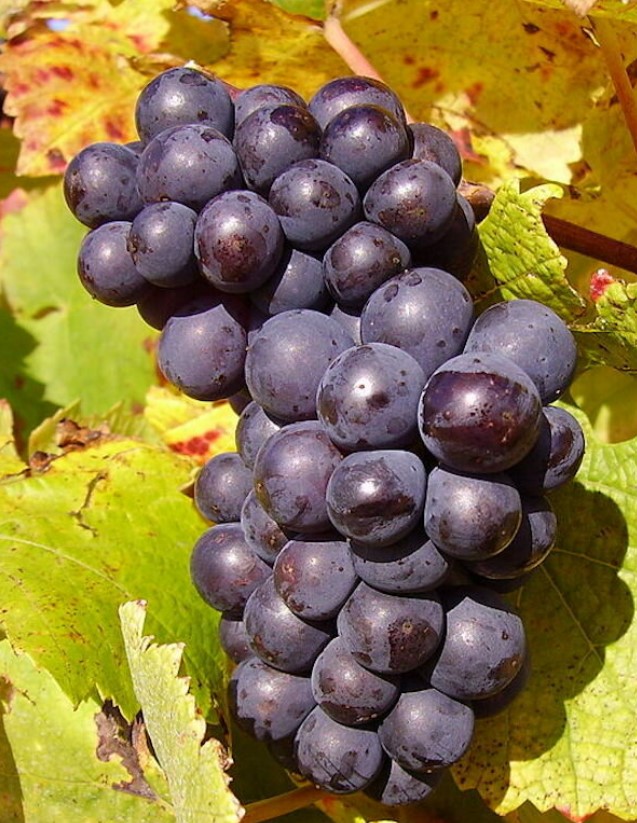
The variety is similar to Pinot Noir in that it produces a light-coloured red wine.  Having purple skin and a green flesh it can also be made into a white wine.

Not much is known about the wine that Lignage produced but according to written accounts the grapes produced a fine, delicate, lightly coloured red wine with fine aromas and a low alcohol content.  More information should be known by 2024 when the first trial wines are expected to be produced. It is anticipated that by 2028 the varietal will return as an official vine and be available for more extensive planting. 

I look forward to perhaps having the opportunity to try Lignage at some point in the future.

Sláinte mhaith