France’s Standard of Quality

In a previous post I described Canada’s VQA standard for helping to ensure the wine you purchase is an enjoyable experience.  Not all countries take this same approach to standard identification.  Many countries, such as Australia and the United States, govern the wine industry with a general set of standards and controls and do not adhere to any particular categorization for wine quality.   However, there are other countries, such as France, Italy & Germany that do have quality standards specific to wine.

To begin I will focus on France, which has 3 primary quality groupings.   The first is AOC (Appellation d’Origine Contrôlée), which indicates the geographical origin, quality and the style of a wine.  The Europe-wide equivalent of AOC is AOP (Appellation d’Origine Protégée). All Grand Cru and Premier Cru wines fall into the AOC category.

Grand Cru is the very highest classification of French wine. The term can refer to a wine in one of two ways, either the plot of land where the grapes are grown or the chateau at which the wine is made. The former applies most famously in Burgundy, Alsace and Champagne but is also used in Languedoc and the Loire Valley; the latter being exclusive to Bordeaux.

Premier Cru denotes either a vineyard plot (most often in Burgundy) of superior quality, or the very highest tier within a Grand Cru classification (such as the ‘Premier Grand Cru Classé chateaux of Bordeaux).

The second wine category is VDP (Vin de Pays), which means ‘wine of the land’, although it is often translated as ‘country wine’. The European equivalent is IGP (Indication Géographique Protégée). This category focuses on geographical origin rather than style and tradition, and gives winemakers greater stylistic freedom than AOC. Vin de Pays was introduced in the 1970s, and by the year 2000 there were more than 150 individual VDP titles, covering about a quarter of French wine production

The final category, Vin de France, replaced Vin de Table in 2010, but remains the most basic quality tier for French wine. This is the least regulated (and least used) of the three categories; Vin de France wines can be made from grapes grown anywhere in France, but their labels do not mention a specific region of origin. Vintage and grape varietal statements are optional.

Some of the French quality scales can be easily identified on the wine label.  For example, if applicable the term ‘Grand Cru’ or ‘Premier Cru’ will appear somewhere on the label.  You will also notice a correlation between the quality rating and the price of the wines.  Generally speaking ‘Grand Cru’ wines are at the top end of the price scale, with ‘Premier Cru’ are somewhat less expensive.

Here are some helpful hints when interpreting a French wine label; some of the terms are more obvious than others.

  • Blanc = White wine
  • Brut = Dry
  • Château = The name of the wine producer
  • Côte/Coteaux = Slope of a hill/hillsides, for example Côtes du Rhône
  • Crémant = A style of sparkling wine different from Champagne
  • Cru = Means ‘growth’ – it is used to denote the status of a winery or vineyard
  • Cru Classé = Classified vineyard, suggesting a certain quality or age of the vines
  • Demi-sec = Medium-dry
  • Domaine = Estate
  • Doux = Sweet
  • Grand Cru = Signifying the highest quality wines
  • Méthode Traditionnelle = Traditional method of sparkling winemaking, like  Champagne
  • Mis en bouteille au château/domaine = Bottled at the winery
  • Premier Cru = First growth
  • Propriétaire = Identifies the estate or vineyard owner
  • Rouge = Red
  • Sélection de Grains Nobles = Sweet wine made from botrytized grapes (grapes containing botrytis fungus, which is seen as being beneficial to the wine)
  • Supérieur = Wine with a higher alcohol content as a result of being made from riper grapes
  • VDQS (Vin Délimité de Qualité Supérieure) = a mid-level classification used between 1949 and 2012
  • Vendange Tardive = Late harvest (sweet) wines
  • Vieilles Vignes = Old vines
  • Vigneron/Viticulteur = Vine grower/grape grower
  • Vignoble = Vineyard
  • Vin = Wine

Hopefully all of this will help take some of the mystery out of how to find an enjoyable French wine.  I have found that the French wines that are exported, especially any of those that appear on the shelves of the Vintages section of my local liquor store, are all worth a try.  I think you will find that French wine does not need to be expensive nor of a specific quality standard to be enjoyable.

In the future I will take a similar look at German and Italian wine classifications.

Sláinte mhaith
Varietals by Region or Name

It is usually quite easy to identify the varietals contained in new world wines, such as those from Australia, North America or South America, and some European countries such as Germany.  These producers often display the varietal or blend as part of the label.  On the other hand some countries and regions, such as France and Italy, do not follow the same practice. 

In France the wines are usually identified by the region in which they are grown.  The same is true for some German, Italian and Spanish wines. This can make it very confusing for you when trying to find a certain type of wine for your drinking pleasure.  The good news is that both France and Italy label their wines in a consistent fashion so once you understand their naming conventions it is easier to determine the varietals the wines consist of.  The effort to understand these naming conventions, which are buried deep in their wine making history, will be well rewarded as it will provide you with great drinking pleasure for years to come.

 In both France and Italy the grapes grown are unique to each geographic region.  By taking note of which regions are renowned for the type of grapes you enjoy, you will be able to select one of these wines with more certainty than by just grabbing a bottle off the shelf randomly, or worse yet, avoiding them altogether.  From there you may find a particular winery or two or ten that you have a craving for.

In the weeks ahead I will tackle unravelling the mysteries many of the European wines and decipher the meaning of what appears on their labels.

Happy exploring!

Sláinte mhaith

The Mighty Grape

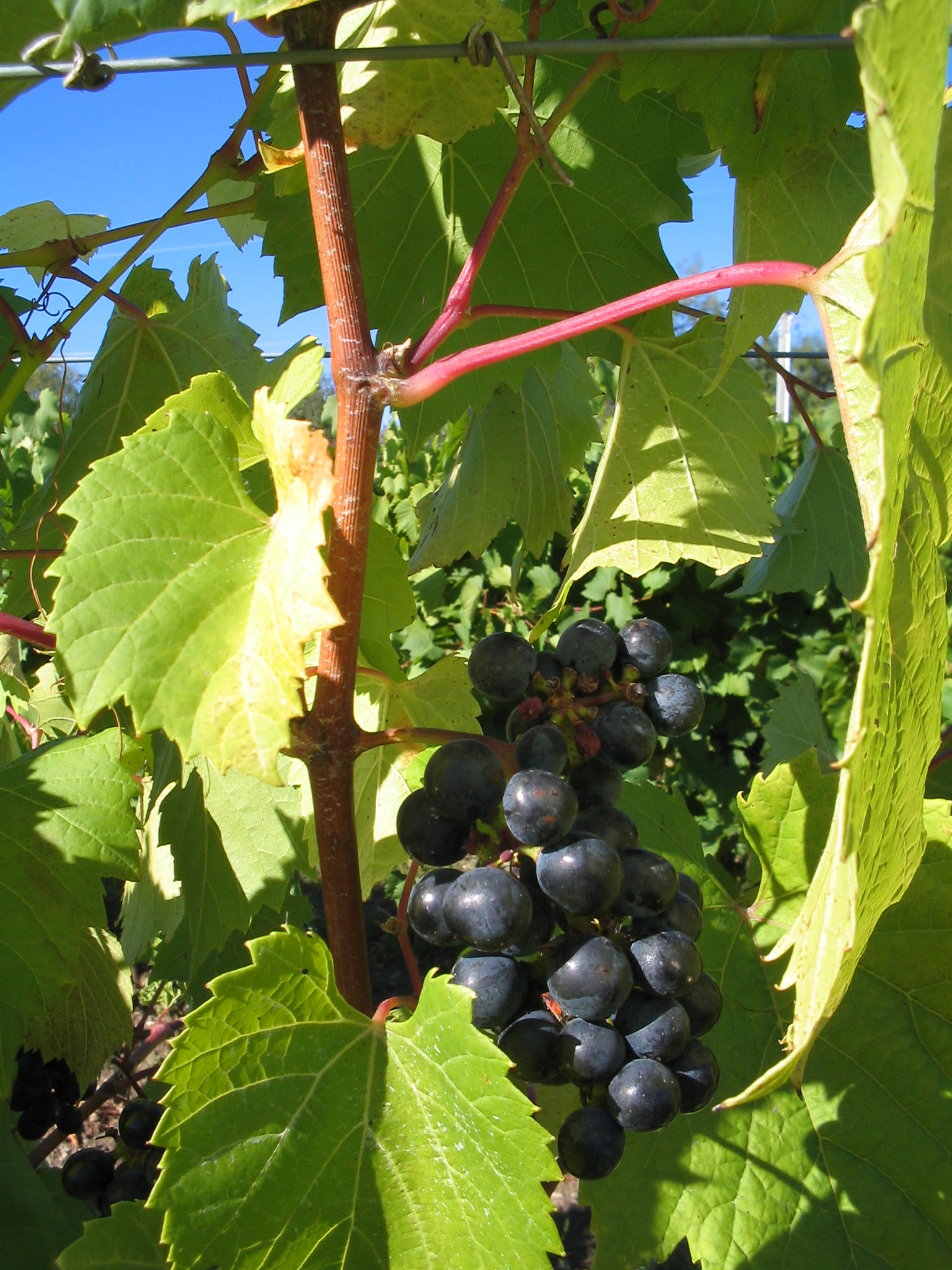
I am sure it is no surprise that the varietal (type of grape) a wine is composed of has the most significant impact on taste.   Generally speaking, white wines are much more subtle and delicate in flavour compared to reds, which are bolder and richer in flavour.

There is also a range of flavour and intensity, as well as sweetness within each of the whites and reds.  The depth of flavour and sweetness of the grapes is impacted by where the grape is grown and to a lesser extent, the characteristics of each individual growing season, whether it being warmer, cooler, wetter, and/or dryer.

The warmer the climate, the more intense the flavour of the grapes.  This is because warmer climates have longer growing seasons, thus giving the grapes more time to develop and enhance their flavour.

There are micro climates within regions as well, which have a comparative effect on the flavour and richness of the wines produced.  For example, within Canada, wines grown in British Columbia will generally have a bolder flavour than those grown in Ontario.  This is because the Okanagan Valley where the bulk of B.C.s grapes are grown is a warmer location with a longer growing season than the wine regions of Ontario.

Wines will sometimes be categorized by dryness while other times they are assessed based on the intensity of their flavour, sometimes referred to as “body”.  Retailers will typically display ratings based on dryness, that is, the amount of natural sugars present in the wine.

Dryness or sweetness does not always relate directly to whether the wine has a bold or mild flavour.  The body or boldness of the flavour will be more dependent on the type of grape, the amount of tannin and acid in the wine, as well as the region the grape was grown in.  For example, an Australian or Chilean Cabernet Sauvignon will most likely have a much more intense flavour than a similar wine from France or Canada.

The more tannin and alcohol content in a wine, the fuller the taste.  The reverse is true for the level of acidity within the wine; the higher the levels of acidity, the less bold the taste of the wine.

Since darker coloured fruit usually has more intense flavour, the darker the colour of the wine, the more intense the flavour will be.  The colour of a wine doesn’t help though when purchasing a wine from a merchant since the bottles are usually coloured preventing you from seeing the natural colour of the wine.

Light bodied wines are considered to be those with an alcohol level of 12.5% or less whereas medium bodied wines have alcohol content between 12.5% and 13.5%.  Finally, any wine with an alcohol level of 13.5% or above is considered full bodied.

The grape content within a wine is not always easily identifiable by simply reading the label.  In France for example, wines are identified only by the region in which they are produced, such as Bordeaux or Burgundy.  An upcoming article will discuss how to identify the varietals contained in wines that are only identified on the bottle only by region or type.

Sláinte mhaith