The Wines of Portugal

Personally, I find Portuguese wines a bit of a mystery.  Although there are some excellent creations being produced, they don’t seem to receive the same notoriety as wines from Italy, Spain or France.

Because Portugal’s wine culture developed in relative isolation, there are many grape varieties that do not grow anywhere else in the world.  There are over 250 indigenous varieties and a few imports that have adapted well to the Portuguese landscape. According to many wine experts, Portugal is the last frontier of wine in Western Europe explored. So with all the excitement this region offers, let’s take a look at what there is to know about the major wines and the regions.

DOC (or DOP) – DOC stands for Denominação de Origem Controlada and means the wine comes from a strictly defined geographical area with recommended and permitted grapes and maximum vine yields (to control quality). Technically there are 31 DOCs in Portugal although 3 of them overlap, making it seem more like 28.

Vinho Regional (or IGP) – Portugal is divided into 14 regional wine  areas which have less strict rules for controlling which types of grapes are used, as well as maximum vine yields. While this implies that the wines will not be as high quality, many producers in Portugal use the Vinho Regional designation to create excellent wines using grapes or blends not allowed in DOC.

Vinho (Wine): The most basic classification of Portuguese table wine. These wines are generally not distributed outside of Portugal.

Each region is managed by a regional “Wine and Vine” commission, the Comissão Vitivinícola Regional (CVR). Each CVR supervises and controls the quality regulations in order to ensure quality and to maintain each region’s individual character.

Portuguese Wine Terms

Vinho Tinto – Red Wine

Vinho Branco – White Wine

Quinta – Wine farm. You’ll often find this word as part of a winery’s name on the label of wines.

The Wine Regions

Douro Region

Port is the most famous, and most copied, wine from Portugal and it grows in the Douro Valley.

Wines of Douro

Port – Fortified sweet wines; specifically LBV Port, Tawny Port, and Vintage Port wines which are the best and made by blending “port grapes” which include Touriga Franca, Touriga Nacional, Tinta Roriz (Tempranillo), Tinta Barrocca and Tinto Cão among many others.

White Port and Pink Port – Beyond the red Port there are also Port wines made with the rare white wine varieties in the region. Rosé Port is relatively new.

Tinto Douro – Full-bodied red wines. The same red grapes of Port wine are used to create full-bodied, tannic, age-worthy red wines.

Douro Branco – Light-bodied white wines. Douro Branco are crisp, minerally white wines with very little fruity flavour, subtle flinty notes and salinity, and high acidity. Douro white wines are a little harder to find and include the white Port varieties of Rabigato, Viosinho, Gouveio, and Folgazão.

Terras de Cister (Távora e Varosa) Region

Terras de Cister – Sparkling wines

This area produces wines with much more elegance and acidity than Douro, making it ideal for sparkling wines. There are a growing number of Chardonnay and Pinot Noir vineyards being planted along with the regional varieties of Malvasia Fina (aromatic white), Cerceal (light white), Gouveio (light white), Aragonês (aka Tempranillo), Tinta Barroca (red) and Touriga Franca (red) among others.

Transmontano (Trás-Os-Montes) Region

Tinto Transmontano – Full-bodied red blends

The most common wine from this area is Transmontano, which is a regional red blend. Wines are full-bodied, punchy, with higher alcohol levels.

Minho (Vinho Verde) Region

Vinho Verde wines are best served young when the wine is at its peak of aromatics and crisp acidity.

Wines of Minho

Branco Vinho Verde – Light-bodied white wines. Wines often have a slight spritz and fruity, lemonade-like flavors with notes of melon, gooseberry and chalky texture. White Vinho Verde wines are made with a blend of several grape varieties including Arinto, Azal, Trajadura, Loureiro and Alvarinho (a.k.a Albariño).

Rosado Vinho Verde – Rosé. The Rosado wines offer red berry flavors with quenching acidity like lemonade. The reds/rosés of Vinho Verde are found primarily in the southern part of Minho in the sub-regions of Amarante and Paiva. Red grape varieties include Alvarelhão, Amaral, Borraçal, Espadeiro, Padeiro (quite rare).

Alentejo Region

The Alentejo region contains many progressive and modern wineries making red wines that offer generous fruit and mocha flavors with refined tannins from careful wood aging strategies. White wines from the Alentejo range from medium-bodied refreshers to full-bodied in a style similar to Chardonnay.

Wines of Alentejo

Tinto Alentejo – Full-bodied red wines that are typically blends made with Aragonês (Tempranillo), Trincadeira, Castelão, Alfrocheiro and Alicante Bouschet.

Branco Alentejo – Light-bodied and full-bodied white wines made with Arinto (fuller in style), Antão Vaz (fuller in style), Roupeiro and Fernão Pires (an aromatic white variety).

Alentejano (IGP/Vinho Regional) – Full-bodied red and white wines from a larger encompassing region that may include non-indigenous grape varieties (Viognier and Syrah are growing in popularity here).

Lisboa Region

There are many wines from the various regions in Lisboa (Alenquer, Bucelas) that are already making their way into stores internationally. While there is great quality found in Lisboa (Bucelas, Colares, Alenquer, Arruda) most of the wines you’ll find available are great for everyday drinking.

Wines of Lisboa

Alenquer – Concentrated, high tannin red wines made with Castelão, Alfrocheiro, Aragonês (Tempranillo) and Touriga Nacional

Bucelas – Light-bodied, citrus and beeswax-driven, age-worthy white wines made with Arinto. .

Arruda – Full-bodied red wines that often include international grape varieties like Cabernet Sauvignon and Syrah

Colares – Very rare find. Golden colored, full-bodied white wines in an oxidative style made with Malvasia Fina

Óbidos and Lourinhã – Light-bodied aromatic white wines particularly with Fernão Pires

Torres Vedras –  simple, low-alcohol refreshing white wines.

Setúbal Region

The region of Setúbal is famous for a fantastic rich, deep gold colored dessert wine called Moscatel de Setúbal

Dão Region

Wines from the Dão are lighter in style than in the Douro but have shown to age very well because of the tannin and acidity development from growing in high altitude areas with rugged soils of decomposing granite and schist (similar to Douro and Priorat).

Wines of Dão

Dão Alfrocheiro – Medium-bodied red wine with red berry flavors, licorice and spice notes

Dão Jaen (a.k.a. Mencía) – Full-bodied red wine. Raspberry and black cherry flavors with moderately high acidity and mouth-drying tannin.

Dão Touriga Nacional – Full-bodied red wine. Deep black fruit flavors with chocolate and mocha with refined tannins and medium plus acidity

Terras do Dão and Terras de Lafões – The Vinho Regional wines of the Dão with more experimentation and blends that include international varieties (Indi blends)

Tejo Region

Tejo plants all kinds of grapes, from Alvarinho (the grape of Vinho Verde) to the full-bodied blackish Alicante Bouschet. This is a good region for getting super value from Portugal.

Wines of Tejo

Red “Indi” Blends – Blends consisting of Cabernet Sauvignon, Syrah, Touriga Nacional, Trincadeira and Castalão

White “Indi” Blends – Consists of blends with Fernão Pires (an aromatic white wine), Arinto, Sauvignon Blanc and Chardonnay

Beira Atlântico (Bairrada) Region

Baga is the highly productive red grape of Beira, grown in Bairrada. From the aromatic and delightfully pink sparkling wines by Luis Pato to the soft, structured light-bodied red wines by Niepoort, this area is one of the new frontiers of winemaking for the Portuguese.

Wines of Beira Atlântico

Tinto Bairrada – Made from Baga and ranging from dense, tar-like, high acid reds to delicate, red fruit-driven wines with finely textured tannins and the ability to age.

Branco Bairrada – Made from the aromatic Fernão Pires (called Maria Gomes here), Bical and Arinto

Sparkling “Brut” Bairrada – Delicious beeswax-driven sparkling wines made with early picked Baga and Fernão Pires.

The Beira Interior

The most mountainous region in Portugal has one of the most challenging climates to produce grapes. With a shorter growing season the reds have red-fruit driven flavors with herbaceous smoky notes and a juicy finish while the white wines tend to be lean with chalky minerality. There are many old vines here as well as producers using native yeasts and organic viticulture.

Wines of the Beira

Tinto Beira – Red fruit-driven wines of Murufo, Bastardo, Alfrocheiro, Trincadeira and Touriga Nacional

Branco Beira – Lean, chalky white wines of Síria, Arinto, Malvasia

Madeira & Pico Island (Azores)

Verdelho is the main regional white wine grape. Wine from Pico is golden, viscous liquid that is hauntingly sweet, tart and somewhat salty with a smokiness from the volcanic landscape. Madeira, on the other hand, has the most collected and appreciated fortified wines in the world.

Algarve Region

There are nearly 2500 acres / 1000 hectares of grapes in the Algarve.  The wines aren’t designed to age, but there is hope in particular for red wines with Alicante Bouschet, Syrah and Aragonês (Tempranillo). These drought-climate varieties still manage to have juicy acidity and create more smoky sweet, dusty notes on the finish somewhat reminiscent to South Australia.

The wines of Portugal are well worth a try.  The wines are both good and available at a favourable price point.

Sláinte mhaith

Canada’s Wine Regions – Part 4 – British Columbia

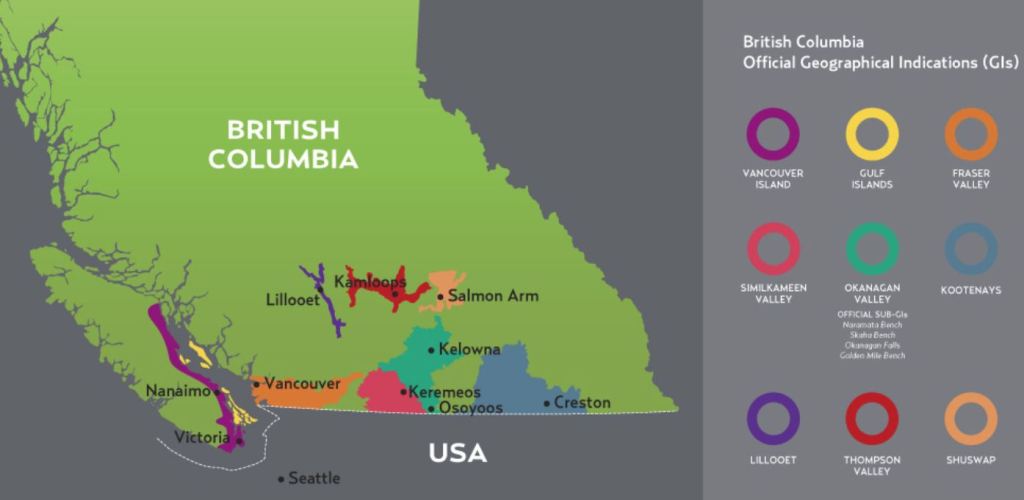
The climate for producing British Columbia wine is very unique. All of the BC vineyards are located at the northern extremes of where grape growing is possible. The vineyards are located in two main areas. About 4 hours’ drive east of Vancouver are the Okanagan and Similkameen Valleys. The second area includes the smaller wine regions of the Fraser Valley, Gulf Islands and Vancouver Island.

British Columbia’s wine industry has seen significant growth over the past 25 years, increasing from 17 wineries and 1,476 acres of vines in 1990 to over 270 wineries and over 10,260 acres today. The B.C. Vintners Quality Alliance (VQA) is the provincially-regulated appellation of origin and quality standard for Wines of British Columbia. BC VQA wines must be made from 100% B.C. grapes and meet standards for origin and production, vintage, varietals and quality characteristics that were discussed in my June 22, 2019 post, “Selecting Canadian Wines”.

Vancouver Island

On Vancouver Island, a provincial government-funded trial, called the Duncan Project, determined that grape production was viable.  The study identified Pinot Gris, Auxerrois and Ortega as having the capability of thriving in this seaside environment.

Vancouver Island is now home to a dedicated community of family grape growers and winemakers. There are now 26 wineries in this appellation.

Common varietals include:

  • Pinot Gris
  • Ortega
  • Siegerrebe
  • Pinot Noir
  • Maréchal Foch

Gulf Islands

The Gulf Islands are situated in the Georgia Strait which separates Vancouver Island from the mainland, and connected by a network of small ferries.  The Gulf Islands are home to about a dozen wineries that are located on each of Salt Spring, Pender, Saturna, Quadra, Gabriola, Hornby and Denman Island.  They display an easygoing lifestyle that allows time to savour the quiet moments with a nice variety of unpretentious wines.

Grape varietals include:

  • Pinot Gris
  • Orteg
  • Pinot Noir
  • Maréchal Foch

Fraser Valley

The Fraser Valley region includes Vancouver, Surrey, Richmond, New Westminster to Delta, Langley, Aldergrove and Abbotsford in the east.  The Fraser Valley region is dedicated to producing high quality, handcrafted wines with diverse varieties and styles.  There are about 25 wineries in this region.

Common varietals include: 

  • Siegerrebe
  • Pinot Gris
  • Bacchus
  • Pinot Noir

Similkameen Valley

The Similkameen Valley includes 15 wineries that are set amongst the dramatic backdrop of rugged and picturesque mountains. Considered the “organic capital of Canada”, the area is known for small farms and producers dedicated to creating quality produce, delectable foods, and award-winning wines.

Due to the tall surrounding mountains, and the reflectivity of the rock, heat remains in the valley late into the evenings. The valley is arid with persistent winds that can reduce the moisture in the vines and the soil. Even above ground irrigation can evaporate before touching the ground. The wind does minimize mildew, so vineyards generally don’t require frequent spraying.

Grape varietals include:

  • Chardonnay
  • Riesling
  • Merlot
  • Cabernet Sauvignon
  • Cabernet Franc

Okanagan Valley

Boasting 185 wineries and 84% of the province’s vineyard acreage, the Okanagan Valley is BC’s premier grape growing region. The valley stretches over 250 kilometres, across sub-regions, each with distinct soil and climate conditions suited to growing a range of varietals from sun-ripened reds to lively fresh and often crisp whites.

The 185 wineries include everything from quiet family-run boutique vineyards to world-class operations.  The Okanagan Valley wineries are rich in tradition and character, consistently ranking among the world’s best at international competitions.

The Okanagan Valley consists of 8 sub-regions – Kelowna / Lake Country, Peachland / Summerland / Penticton, Naramata Bench, Scaha Bench, Okanagan Valley, Oliver, Golden Mile Bench and Osoyoos.

Golden Mile Bench

The Golden Mile Bench was the first sub-Geographic Indication, created in 2015 within the Okanagan Valley wine region followed by Okanagan Falls, Naramata Bench and Skaha Bench.  Grape production in such areas must produce at commercially viable levels.

Located on the western slope of the valley south of Oliver and across from the Black Sage Bench, the Golden Mile Bench’s southerly aspect provides a warm climate. Its location on the west side of the valley is a cooler region than its eastern neighbour.

A wine made exclusively from grapes grown in the sub-appellation can use the term Golden Mile Bench as a Geographical Indication on a BC VQA Wine label. It’s the location the grapes are grown, rather than the location of the winery that is relevant.

Common varietals include:

  • Chardonnay
  • Gewürztraminer
  • Merlot

Kelowna / Lake Country

B.C.’s first vines were planted in Kelowna in 1859. Kelowna also boasts the province’s oldest continually operating winery, Calona Vineyard (est. 1932). Many of the first families of the BC wine industry call this area home: the Heiss family, who established Gray Monk Estate Winery; the Cipes of Summerhill Pyramid Winery; and the Stewart family of Quails’ Gate Winery.

Grape varietals include:

  • Riesling
  • Pinot Gris
  • Gewürztraminer
  • Chardonnay
  • Pinot Noir

Peachland / Summerland / Penticton

This region combines an exciting area of new development with wineries and vineyards that are more than 25 years old. The sub-appellation is renowned for delicious Pinot Gris, Gewürztraminer and Rosé.  There is also an outstanding lineup of sparkling wines.

Grape varietals include:

  • Riesling
  • Gewürztraminer
  • Pinot Noir

Naramata Bench

On May 13, 2019, wineries in the Naramata Bench joined Skaha Bench, Okanagan Falls and Golden Mile Bench, near Oliver, as wineries that meet the requirements of the Wines of Marked Quality Regulation.   B.C. wines and wineries meeting these requirements are certified that they achieve certain wine production standards, and are enabled to use protected labels that are prescribed under this regulation.

Naramata Bench is roughly defined as the bench lands between Penticton Creek and Okanagan Mountain Park on the east side of Okanagan Lake. Nowhere else in the Okanagan Valley are there so many wineries in a single area.

The vineyards of Naramata Bench boast ideal conditions for full-flavoured white varietals, as well as earlier ripening, elegant reds.

Common varietals include:

  • Chardonnay
  • Pinot Gris
  • Merlot
  • Pinot Noir

Scaha Bench

On May 13, 2019, wineries in the Skaha Bench joined the Naramata Bench, Okanagan Falls and Golden Mile Bench, near Oliver, as wineries that meet the requirements of the Wines of Marked Quality Regulation. Skaha Bench covers a 10-kilometre stretch from the outskirts of Penticton and along the eastern shore of Skaha Lake.

Wineries in Skaha Bench include Blasted Church, Black Dog, Painted Rock, Pentage and Crescent Hill.

Common varietals include:

  • Chardonnay
  • Pinot Gris
  • Pinot Blanc
  • Merlot
  • Pinot Noir

Okanagan Falls

On July 27, 2018, the Province named Okanagan Falls a Sub-Geographical Indication within the Okanagan Valley wine region, meaning consumers will now see a confirmation on labels of certified BC wine is from the region.

From the shores of Skaha Lake to the tip of Vaseux Lake, this cluster of award-winning wineries offers unsurpassed winery experiences, and great wines. The wineries in and around Okanagan Falls have been producing some of BC’s most celebrated wines for many years. Warm days and cool nights produce wines with ripe fruit character and acidity. There are a variety of vibrant sparkling wines and crisp Rieslings to complex Pinots and rich Syrahs.

Grape varietals include:

  • Riesling
  • Gewürztraminer
  • Pinot Noir
  • Syrah

Oliver

Oliver has been referred to as the ‘Wine Capital of Canada’.  It is home to nearly half of British Columbia’s vines and more than 40 wineries. To the west, the Golden Mile Bench is ideal for white wines such as Pinot Gris and Chardonnay, and bright fruity reds like Cabernet Franc.

To the east lies the Black Sage Bench which cultivates powerful red wines and full-flavoured whites. The combination of hot days and cool nights produce fruit with a perfect balance of exceptional flavours and vibrant acidity.

Common grape varietals include:

  • Pinot Gris
  • Chardonnay
  • Merlot
  • Cabernet Sauvignon
  • Cabernet Franc

Osoyoos

Osoyoos lies at the southern-most tip of the Okanagan Valley, near the Canada-USA border. Officially Canada’s hottest spot, this is red wine country.

Osoyoos Larose Le Grand Vin red blend has become a favourite of mine after my brother introduced it to me several years ago. I now pick some up whenever I come across it in Ontario.

Grape varietals include:

  • Chardonnay
  • Merlot
  • Cabernet Sauvignon
  • Cabernet Franc
  • Syrah

Kootenays

The Kootenays is situated in the southeastern corner of British Columbia.

In select microclimates, grapes have been grown in the Kootenays since 1995. Although a new viticultural area, ground crops and orchards have been cultivated there for many decades.

6 wineries are located in this region.

Common varieties include:

  • Gewürztraminer
  • Pinot Gris
  • Pinot Noir
  • Maréchal Foch

Lillooet

One of the oldest towns in the province, Lillooet is located at the southern tip of the Cariboo Chilcotin region.  The climate is very similar to the traditional grape growing regions in the Okanagan Valley with long, hot, dry summers. However, nights are cooler, making average summer temperatures slightly lower than the Okanagan, but at the same time preserving the fresh crisp acidity in the wines.  Viticulture is a recent development with  only 2 wineries at present.

Common varieties include:

  • Riesling
  • Chardonnay
  • Pinot Gris
  • Pinot Noir
  • Cabernet Franc

Shuswap

The Shuswap region is located north of the Okanagan Valley.  Wines have been produced here since 1997, predominately of cool climate varieties as it is one of the most northerly grape growing regions in North America. Shuswap Lake is the dominant feature in the region. Each of the 10 vineyards has its own microclimate, giving special character to its wines.

Common grape varieties:

  • Ortega
  • Siegerrebe
  • Gewürztraminer
  • Kerner
  • Maréchal Foch

Thompson Valley

On the edge of cool climate viticulture, the 4 Thompson Valley wineries are pioneering an exciting new region and expanding the boundaries of quality BC winemaking.  It is nestled amongst the North and South Thompson Rivers in and around Kamloops, in the rain shadow of the high coastal mountains, with the semi-arid conditions and diverse microclimates.

Common varieties include:

  • Riesling
  • Chardonnay
  • Marquette
  • Maréchal Foch

Although I have had the pleasure of visiting British Columbia several times I have never had the opportunity to experience any of the wine regions.  In particular, being a huge red fan, I would love to travel to the Osoyoos area and sample the wonderful offerings there.

Sláinte mhaith

Canada’s Wine Regions – Part 3 – Ontario

Ontario is the largest wine grape producing province and recognizes the Vintners Quality Alliance (VQA) as its provincially regulated appellation of origin system.  The VQA is discussed in detail in my June 22, 2019 post, “Selecting Canadian Wines”. 

The province’s three wine-producing appellations are the Niagara Peninsula, Lake Erie North Shore and Prince Edward County. They contain over 160 VQA wineries and 17,000 acres of vineyards.

Niagara Peninsula

The Niagara Peninsula has the largest planted area of the viticultural areas in Ontario with 90 wineries and about 15,000 acres of vines. The Niagara Peninsula has two regional appellations and 10 sub-appellations.

I have made numerous treks to Niagara over the years and have developed an ever changing list of favourite wineries that I like to frequent during my excursions to the region.  I will point those out in the sections below. Given that there are now 90 wineries in the region, I have in no way even come close to visiting all the wineries so my recommendations are based only on my own personal experience and research.

Generally speaking (but there are exceptions) I have found that I favour the whites from the sub-appellations north of St. Catharines, toward Toronto, and the reds from the sub-appellations south of St. Catharines, toward Niagara Falls.

Sub-Appellations

There are 10 unique growing areas within the Niagara Peninsula.  Only wines made from 100% grapes grown in the sub-appellation are permitted to include the sub-appellation name on the label.

Niagara River

This is a small strip of land that runs adjacent to the Niagara River.  The soils in the area are primarily stratified glaciolacustrine fine sand that provides natural drainage and encourages the vines to develop deep roots.

One of my favourite wineries, Two Sisters Winery, is located in this sub-appellation. I enjoy both their Stone Eagle and their Stone Eagle Reserve, which are blends of varying proportions of Cabernet Franc, Cabernet Sauvignon and Merlot

The common grape varietals grown in Niagara River include:

  • Vidal
  • Chardonnay
  • Pinot Noir
  • Cabernet Franc
  • Cabernet Sauvignon
  • Riesling

Niagara Lakeshore

This region follows the Lake Ontario shoreline from the Welland Canal to the Niagara River.  The soil composition and moderate temperatures resulting from the close proximity of Lake Ontario provide a longer growing season which results in mature full bodied wines.

The common grape varietals consist of:

  • Vidal
  • Chardonnay
  • Pinot Noir
  • Cabernet Franc
  • Cabernet Sauvignon
  • Riesling

Four Mile Creek

This is the largest of the sub-appellations that makes up central Niagara-on-the-Lake.  During the growing season this area provides warm days and cool nights providing growers the opportunity of growing many different varieties of grapes.

The common types of grapes grown include:

  • Vidal
  • Chardonnay
  • Pinot Noir
  • Cabernet Franc
  • Cabernet Sauvignon
  • Riesling

St. David’s Bench

This is the natural glacial bench that was carved out of the Niagara Escarpment.  The escarpment provides early spring warming and frost protection for the vines.

There are 2 wineries on my favourites list that are located on St. David’s Bench, Chateau des Charmes and Ravine Vineyard.  I am a fan of the red wines produced by both wineries.

Grape production in St. David’s Bench includes:

  • Vidal
  • Chardonnay
  • Pinot Noir
  • Cabernet Franc
  • Cabernet Sauvignon
  • Riesling

Creek Shores

Creek Shores is bound by Lake Ontario, Twelve Mile Creek, Twenty Mile Bench and Jordan Harbour.  Temperatures are moderated by Lake Ontario.

Grapes grown include:

  • Sauvignon Blanc
  • Pinot Noir
  • Chardonnay

Lincoln Shoreline

Lake Ontario has a major impact on this sub-appellation providing longer, tempered growing conditions and even ripening of the grapes.

The types of grapes grown include:

  • Chardonnay
  • Riesling
  • Cabernet Franc
  • Cabernet Sauvignon
  • Syrah
  • Gamay
  • Semillon

Short Hills Bench

Short Hills Bench is the most easterly of the appellations located between Twelve Mile Creek and Fifteen Mile Creek.  It provides warm days and cool nights which are perfect for enhancing grape flavours.

The varietals grown here include:

  • Riesling
  • Chardonnay
  • Pinot Noir
  • Cabernet Franc
  • Sauvignon Blanc
  • Vidal
  • Gewürztraminer

Twenty Mile Bench

The bench is dissected by Twenty Mile Creek.  There is a high proportion of limestone and shale making the soil quite alkaline.  The sheltered north facing slopes provide year round temperature moderation.

This is a rare situation where I favour white and red wine from the same appellation.  I enjoy the whites of Featherstone Estate Winery and the reds of Rockway Vineyards.

The list of varietals grown on the Twenty Mile Bench includes:

  • Riesling
  • Chardonnay
  • Pinot Noir
  • Cabernet Franc
  • Sauvignon Blanc
  • Vidal
  • Gewürztraminer

Beamsville Bench

This is a narrow bench area that benefits from good air circulation and frost protection.  The air circulation minimizes temperature swings and consistent growing conditions.

Angels Gate Winery produces some great white wines such as Unoaked Chardonnay, Riesling and Gewürztraminer, while Cave Spring Cellars makes a good Chardonnay Musque and Fielding Estate Winery makes great Riesling and Chardonnay.

The varietals grown on the Beamsville Bench include:

  • Riesling
  • Chardonnay
  • Pinot Noir
  • Cabernet Franc
  • Sauvignon Blanc
  • Vidal
  • Gewürztraminer

Vinemount Ridge

This sub-appellation contains shallow south-facing slopes.  The area provides early spring warming with warm days and cool nights.

Grapes grown include:

  • Pinot Noir
  • Chardonnay
  • Pinot Gris
  • Riesling
  • Gewürztraminer
  • Cabernet Franc
  • Vidal

Regional Appellations                            

There are 2 regional appellations in Niagara; each consisting of several sub-appellations.  However, not all of the sub-appellations are included as part of a regional appellation.  This raises the question as to why these regional appellations are necessary since many of the sub-appellations are not included.  However, I digress.

In order to apply for the Regional Appellation designation, the wine must have 85% of the grapes sourced from within an associated sub-appellation with the balance from within the Niagara Peninsula.                    

Niagara-on-the-Lake

Niagara-on-the-Lake is the area bounded by the Niagara River, Niagara Lakeshore, Four Mile Creek and St. David’s Bench.  A minimum of 85% of the grapes must be sourced within these sub-appellations with the balance coming from elsewhere within the Niagara Peninsula.

The common grape varieties of this regional appellation include:

  • Vidal
  • Chardonnay
  • Pinot Noir
  • Cabernet Franc
  • Cabernet Sauvignon
  • Riesling

Niagara Escarpment

The Short Hills Bench, Twenty Mile Bench and Beamsville Bench together form the Niagara Escarpment.  In order to use this designation a wine must consist of 85% of the grapes coming from these sub-appellations with the balance from elsewhere within the Niagara Peninsula.

The grapes grown include:

  • Riesling
  • Chardonnay
  • Pinot Noir
  • Cabernet Franc
  • Sauvignon Blanc
  • Vidal
  • Gewürztraminer

Prince Edward County

Prince Edward County was created as a new growing region in 2007. Some see the future of wine in “The County” in premium wines produced from Pinot Noir and Chardonnay.  There are now in excess of 40 wineries in the region.

Grapes grown in the region include:

  • Pinot Noir
  • Gamay Noir
  • Vidal
  • Chardonnay
  • Cabernet Franc
  • Baco Noir
  • Chambourcin
  • Marechal Foch
  • Seyval Blanc
  • Gewürztraminer
  • Sauvignon Blanc
  • Syrah
  • Merlot

Climate

Most vineyards are located in areas that receive maximum benefit from lake breezes. Prevailing westerly breezes travel steadily across Lake Ontario and the Bay of Quinte to help moderate temperatures. They are especially beneficial during the warm summer months, keeping average temperatures around 22°C, with pleasant cooling during the hotter days and keeping cool nights at bay.

Topography

The County’s topography is irregular, with hills creating various exposures for the vines, and valleys digging into the broad, flat Trenton limestone base. A gradual rise from northeast to southwest is crossed by a number of long, gentle east-west ridges and occasionally steep, rugged escarpments. On the northern and eastern shorelines, rocky bluffs rise to an elevation of 30 m (98 ft) or more above Lake Ontario, while the western shore has many inlets with sandy shores and large sandbars that define bodies of water such as West Lake and East Lake.

Soil

Top soils range from reddish-brown clay loam to sandy loam and overlay limestone bedrock embedded with shale fragments. The stony surface and numerous rock and shale fragments within the soils allow water to drain into the limestone, which ensures good drainage of winter-melt and substantial root penetration for mature vines. This rocky soil also allows good heat conduction and retention and encourages early warming in the spring.

My favourite wineries in Prince Edward County include Keint-He (pronounced “Quinte”) Winery and Vineyards, Sandbanks  Winery, and Stanners Vineyard.  In all cases I am a fan of their reds but Sandbanks has some fun whites as well.

The one thing to note with Sandbanks is that being one of the largest, if not the largest, producer in the region, they purchase a large portion of their grapes from other growers in the area. This limits their ability to control the source grapes and the flavour impacts from the wide range of soil types existing within the County. Therefore, in order to ensure conistency in taste, I have found that the wines produced with grapes grown in Sandbanks own vineyards are well worth seeking out.

The foolproof way to determine which wines contain their own grapes is to ask a member of their knowlegeable staff. However, based on my own experience, wines identifying a bin number or including “Reserve” in the title, have been produced using Sandbanks own grapes.

Lake Erie North Shore

The Lake Erie North Shore appellation contains one sub-appellation, the South Islands, which includes Canada’s southernmost vineyards on Pelee Island, including Canada’s largest estate winery, Pelee Island Winery.

Climate

Lake Erie North Shore has a long growing season. It benefits from the quick summer warming of the shallow waters of Lake Erie as well as from an abundance of sunshine during the growing season. Early harvests are the norm, with picking usually beginning at the end of August and late-harvest varieties often reaching their peak by late October.

Topography

Bounded on the northwest side by Lake St. Clair, to the west by the fast flowing Detroit River, with Lake Erie to the south, and including the nine islands in Lake Erie, which make up the South Islands sub-appellation, Lake Erie North Shore appellation is almost completely surrounded by water. Numerous short, shallow streams found throughout this appellation flow freely in the spring but often dry down to a trickle in the warm summer. The appellation is made up of long, gentle slopes that face in all directions, with elevations ranging from 172 m (564 ft) to 196 m (643 ft) above sea level. With no major topographic barrier to the prevailing southwesterly winds, this appellation enjoys the full effect of the lake breeze that moderates the entire area during the long growing season.

Soil

The soil composition was greatly affected by the glacial lakes, which deposited large amounts of unsorted stony materials in the area. When the glacial lakes elsewhere retreated, this area remained covered in deep waters for a longer period, allowing waves to smooth out the ridges and deposit considerable amounts of sediment. The light-textured, well-drained soils around the lakeshore contain mostly sandy loam and gravel deposits punctuated by small, irregular stony ridges, which overlie shale limestone bedrock. The South Islands have similar soil makeup as the mainland, and the majority of the vineyards are planted on the southwestern corner and centre of Pelee Island (the largest of the islands), where the soils are the deepest and allow for root systems to properly set.

There are currently 15 wineries in the Lake Erie North Shore region.  Personally I am not very familiar with these wineries.  However I can say that over the years I have enjoyed a number of the reds from Pelee Island Winery, in particular their Meritage and Cabernet Sauvignon.

I have not experienced the pleasure of visiting Lake Erie North Shore but have enjoyed a number of the wines produced there.

Sláinte mhaith

Canada’s Wine Regions – Part 2 – Quebec

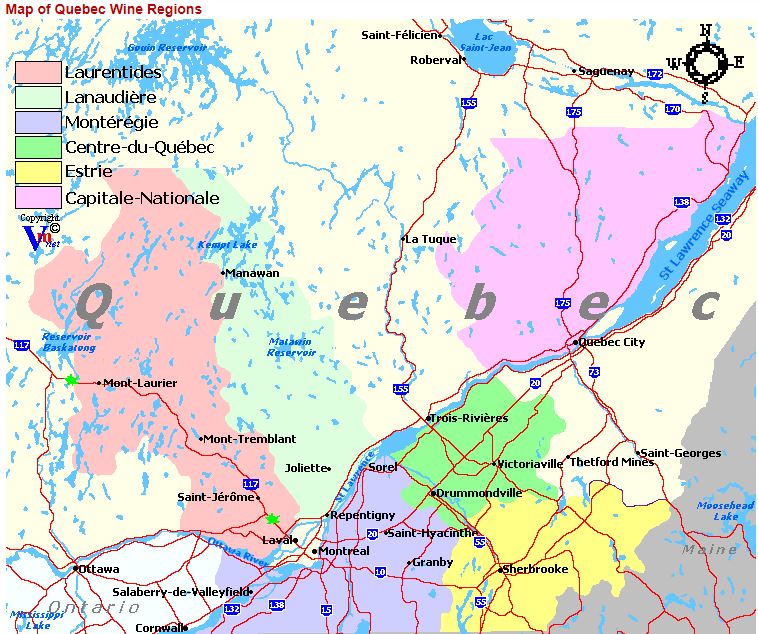
The wine appellations of Quebec are located in the Eastern Townships of Montérégie, Ouest-du-Québec, Est-du-Québec, and Centre-du-Québec.

While the first grapes grown in Québec can be traced to the early days of “New France”, the industry really began to blossom in the 1980s.

Today there are about 140 wineries (most are artisanal) in the province located in six primary wine regions: Laurentides, Lanaudière, Montérégie, Estrie, Capitale-Nationale and Centre-du-Québec.

The Québec wine industry is responsible for a total of 1,975 acres of grapevines and 45 different grape varietals grow across the province.

Over half of Quebec’s wineries are found in the two tourist regions that produce the most wine, namely the Eastern Townships and Montérégie. Various wine routes enable you to discover the secrets of Quebec viniculture.

The vine varieties that seem to grow the best in Quebec are those of Northern France, Germany, and North-Eastern United States. Some 40 varieties are grown in Quebec, with the most commonly planted being,

Red Wine

  • Sainte-Croix
  • Maréchal Foch
  • Frontenac
  • Sabrevois
  • De Chaunac

White Wine

  • Vidal
  • Seyval Blanc
  • L’Acadie Blanc
  • Vandal-Cliche
  • Geisenheim

Vines used in red wine make up 60% of the total planted area.

Several Québec wines are available at SAQ (Société des alcools du Québec) outlets. You may also discover them at the wineries and some public markets throughout Québec.

Sláinte mhaith

The Wines of Spain

Spain seems to fly under the radar compared to neighbouring France when it comes to wine notoriety. Spain is actually the third largest wine producer in the world and has the most land dedicated to vineyards, having over a million acres. Spanish wines range from great value to the highly prestigious.

There are over 60 different regional districts producing everything from light and zesty Albariño to inky black Monastrell.

Spain consists of 7 distinct climate regions which are described as follows:

Northwest “Green” Spain

Galicia is the only sub-region where lush green valleys are plentiful and the common cuisine includes lots of fresh fish. Albariño is the champion grape of the sub-region called Rias Baixas (REE-us BYE-shus), which skirts the coast. The area specializes in zesty white wines and a few aromatic red wines made with Mencía (men-THI-yah) grapes.

Mediterranean Coast

The coast is a very diverse macro-region that contains the sub-regions of Valencia, Catalonia and Murcia. Catalonia is known for Cava (Spanish sparkling wine) and a highly acclaimed red wine sub-zone, Priorat. Valencia and Murcia are warmer growing regions that produce a bulk of value wines from deep red Monastrell to aromatic white Malvasia and the widely planted Airén.

Ebro River Valley

The sub regions of La Rioja and Navarra are found in the Ebro River Valley. Here, Tempranillo is king and long-standing bodegas such as Lopez de Heredia and Marques de Murrieta make age-worthy wines. Navarra is known mostly for rosado (rosé) wine made with the Garnacha (aka Grenache) grape. The region also produces oak-aged white wines of Viura (Macabeo). In Basque country, zesty white wines called Txakoli (pronounced “CHAK-o-li”) are common.

Duero River Valley

The Duero River is the same river as the Douro in Portugal. This region is notable for the minerally white wine, Verdejo, of Rueda and the bold red wines of Toro, Ribera del Duero and Leon. The wine grape of this region is Tempranillo and in Toro it’s called Tinta de Toro, where it is considered to be a slight mutation of the Tempranillo grape.

Central Plateau

The central plateau or Meseta Central is the inner plateau of Spain which is home to the capital city, Madrid. Some of the best value red wines of Spain can be found here made of Garnacha, Tempranillo and even the rare, Petit Verdot.

Andalucía

Andalucía is a very hot and dry region famous for Sherry.  The even hotter, Montilla-Moriles produces fortified dessert wines that are called PX. An aged PX, such as those from Bodegas Toro Abala, have similar nutty-date flavors like Tawny Port.

The Islands (includes The Canary Islands)

The Islands of Spain offer a wide range of wines from Listan Negro-based reds to dessert wines made with Moscatel. The volcanic soils of the Canary Islands add a gritty taste of rustic minerality. Currently, there are very few exporters of the limited wines of the Islands of Spain although you can find a few from places like Tenerife.

My personal favourite Spanish wines include the red wines of Rioja, which are typically developed from the Tempranillo grape and primarily blended with the Garnacha grape.

Rioja wines are classified by the amount of time spent aging in barrels and bottles before they are offered for sale.  The classifications are legal terms that indicate the quality level and aging requirements.

Crianza wines are aged in oak barrels for a minimum of one year.  They then must be bottled a few months before being available for sale.

A Reserva wine must be oaked for a minimum of a year followed by at least 2 years in the bottle before being sold.

Lastly, Gran Reserva wines are made only with the best grapes, which have been hand-picked.  These wines must spend a minimum of 2 years in an oak barrel with an additional 3 years in the bottle before being sold.

Generally speaking, Rioja wines have a much better price point than similar quality wines from other countries.  Spain produces excellent wines at an affordable price and are well worth considering the next time you are shopping for wine.

Sláinte mhaith

France’s Wine Regions

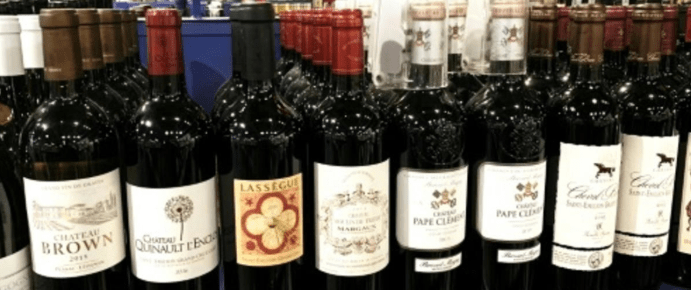
People sometimes shy away from French wine because they are unable to determine what type of wine they are selecting.  No where will you see the varietal of grape identified.  This is because France identifies its wines using the Appellation System, a complex system of laws that define each wine region and its boundaries and imposes strict rules around winemaking practices.  

Most appellations take the form of place names, such as Champagne or Bordeaux. What this means is that the grapes grown in each region are consistent with all of the wine producers within that region.  This becomes the key to understanding what grapes are contained within a particular French wine.

Here is a brief explanation of what grapes are grown in each of the appellations.  Hopefully this will help you crack the code to identify the varietals found in French wines.

Alsace

Alsace is the only French wine region to grow significant quantities of Riesling and Gewurztraminer grapes, as well as Pinot Gris.

Alsace Grand Cru wines are general only allowed to be made from these three varieties but may also contain some Muscat.

Chasselas, Pinot Blanc and Auxerrois are also grown although these three varietals tend to be used only in blends.

There are some red wines produced in the region as well, mainly from Pinot Noir.  Alsace Pinot Noirs are typically lighter-bodied and more rustic than the majority of Pinot Noir wines produced in France.

Bordeaux

Bordeaux is produced in the southwest of France.  The majority of Bordeaux wines are the dry, medium- and full-bodied red Bordeaux Blends. There are some high-quality white wines as well, both dry styles and the sweet, botrytized varieties.  Botrytis is a type of fungus that generates sugar and sweetness in the grapes.

Most Bordeaux reds are made from a blend of Merlot and Cabernet Sauvignon.  Merlot is the most common red wine grape in Bordeaux, followed by Cabernet Sauvignon and then Cabernet Franc. Petit Verdot, Malbec and Carmenère are also permitted, but only make up around two percent of the red grape total.

Bordeaux’s white wines are generally blends of Semillon, Sauvignon Blanc and Muscadelle. Sauvignon Gris the only other white variety that is permitted.

Burgundy

The two key grape varieties of Burgundy are Pinot Noir and Chardonnay. Gamay and Aligote are also grown throughout the region, producing more rustic styles of wine. Gamay is used in the red and rosé wines.

Beaujolais

Beaujolais is famous for its vibrant, fruity red wines made from Gamay.

Pinot Noir is used in small quantities in red and rosé wines, but is being phased out. Although best known for its red wines, the region also produces white Beaujolais Blanc, from Chardonnay and Aligote.

Champagne

Champagne is the name of the world’s most famous sparkling wine. While it has been used to refer to sparkling wines from all over the world, Champagne is a legally controlled and restricted name.

Pinot Noir, Pinot Meunier and Chardonnay are the primary grape varieties used to make Champagne.

The key Champagne styles differ in their color, sweetness, base grape varieties, and whether they are the product of a single vintage or several (referred to as Non-Vintage). The whites may be either Blanc de Noirs (made from black-skinned grapes), Blanc de Blancs (made from green-skinned grapes) or just plain Blanc (made from any combination of the permitted varieties). Pink Champagne Rosé is made either by adding red wine to a white blend or sometimes by fermenting the juice in contact with the skins. These types all come with varying degrees of sweetness.

Cognac

Cognac is the world’s most famous brandy.  It is graded in three official tiers, which reflect how long the spirit spent in barrel. VS (Very Special) is the lowest tier and means the brandy has been stored for a minimum of two years in casks. VSOP (Very Special Old Pale) is the middle tier and denotes Cognac that has been aged for at least four years. XO is the finest grade and is reserved exclusively for those cuvees aged for six years or more.

Corsica

Corsica is an island in the Mediterranean Sea, located between the southeast coast of Provence and the west coast of Tuscany. Although it is closer to Italy, Corsica is governed by France. The island’s Italian origins are evident in its wines, which are made predominantly from the Italian classics Vermentino and Sangiovese.

Corsica’s wines have both a French and Italian influence. Pinot Noir, Grenache, Tempranillo and Barbarossa are all grown there alongside one another.

Grenache is a primary ingredient in many Corsican red wines and Syrah, Mourvedre, Cinsaut and Carignan all play a variety of supporting roles.

The only white varietal is Vermentino/Rolle.

Coteaux du Lyonnais

These wines are of a lighter style similar to those produced in Beaujolais. The red wines are produced from Gamay grapes.

A small amount of white wine is made from Chardonnay and Aligoté. Occasionally some Pinot Blanc is added to the blend. These are traditionally dry, floral styles, some of which are matured in oak barrels for up to a year to produce a slightly more structured, weighty version.

Jura

Jura is a small wine region in eastern France.

The five main grape varieties used in the region are Poulsard, a red grape which accounts for about one-fifth of the region’s plantings; Trousseau, the other local red variety, covers only the warmest 5% of Jura’s vineyards; White Savagnin, which is responsible for the idiosyncratic vins jaunes (‘yellow wines’);  Pinot Noir; and Chardonnay.

Dry white wines are also made in Jura, increasingly from Chardonnay as are dry red wines produced from Pinot Noir.

Loire

The Loire Valley is a key wine region in western France.

White wines are the Loire Valley’s best wines, and account for the vast majority of production. The key white-wine grape varieties used to make Loire Valley whites are Sauvignon Blanc, Chenin Blanc, Melon de Bourgogne and, more popular than traditional, Chardonnay.

Loire reds are of increasingly high quality.  The number one red-wine variety is Cabernet Franc. Lighter-bodied red wines are made from Pinot Noir, Malbec (known here as Côt) and Gamay.

Moselle

Moselle is an appellation covering white, red and rosé wines.  While Auxerrois Blanc, Muller-Thurgau and Pinot Gris are the principal varieties set out in the appellation law, Gewurztraminer, Riesling and Pinot Blanc are permitted in the white wines in limited amounts.

The reds must be made entirely of Pinot Noir, but Moselle rosés may have a proportion of Gamay.

Provence

Provence is a wine region in the far southeastern corner of France, best known for its rosé wines.

Traditional varieties such as Carignan, Barbaroux (Sardinia’s Barbarossa) and Calitor are being replaced by more commercially viable grapes like Grenache, Syrah and Cabernet Sauvignon.

The more successful local varieties Mourvèdre, Tibouren and Vermentino are incorporated in Provence’s red, rosé and white wines respectively.

Rhône

The Rhône Valley is a key wine-producing region in the southeast of France.  The smaller, more quality-driven northern section focuses on Syrah for red wines and Viognier, Marsanne and Roussanne for whites.  The larger south region contains a much longer list of varieties; the most notable of these are the red Grenache Syrah and Mourvedre, which are combined to produce the ‘GSM’ blend.

Savoie

Savoie is a wine region in eastern France.  Around three-quarters of the region’s wines are white.  Jacquère is the most widely planted white grape variety.  Altesse, known traditionally here as Roussette, is used to produce some of Savoie’s finer wines.

As in many other areas of France, Chardonnay is increasingly being planted in Savoie. It is used in still and sparkling wines.

Although Savoie is dominated by white wines, it does have a standout red variety, Mondeuse. Gamay and Pinot Noir are also grown. These are lighter in style than their respective counterparts in Beaujolais and Burgundy.

Personally, I am most attracted to the reds of the Rhône.  I find them to be very versatile, being both full bodied and flavourful while at the same time being smooth.  They are suitable for pairing with a favourite meal or simply enjoyed on their own.

No matter what your likes or dislikes, don’t allow yourself to be intimidated by foreign wine labels.  Be adventurous and go exploring.

Sláinte mhaith

Wine Production in Austria

Before jumping into this week’s post, I just want to explain why I haven’t published anything in the past few weeks. On September 1st I sufferred a hemorrhagic stroke. My recovery is expected to take some time though I plan to continue to write as much as possible during this challenging time. Now on to the business at hand.

During a trip to Austria this past summer I was excited by the prospect of visiting the acclaimed wine capital, Winzer Krems.  Winzer Krems prides itself in its claim that the grapes grown by the 960 grape growers on 990 hectares (2,450 acres) of land are hand-picked.

The grape varietals in Winzer Krems include,

  • Grüner Veltliner, which is the most important indigenous grape variety in Austria.
  • Riesling, the most important white wine variety in the Wachau and Kremstal regions after Grüner Veltliner.
  • Blauer Zweigelt, the most widespread red wine variety in Austria.

The grapes are transported from the vineyards to the Winzer Krems winery where they are separated according to the varietal, quality, and the particular locations of origin, to enable a wide range of individual wine qualities and specialities to be bottled.

The grapes are gently pressed to extract the juice in the whole cluster pressing. This process is to ensure the quality produced in the vineyard is maintained in the wine. The juice is then fed into stainless steel tanks and fermented in a temperature-controlled process. Only perfect bottles with the necessary quality features are marketed.

The kicker is that the wine production process is operated as a co-op.  All of the producers ship their grapes to a single wine making facility where each varietal of grape is combined with other grapes of the same varietal using a single type of process.  Because of this, any subtleties in flavour that would result from the soil characteristics and the fermentation process are lost.  All wine of the same varietal will taste the same.  There is no opportunity for a vintner’s expertise or unique growing conditions to shine.

The advantages are that you have a consistent product with no surprises or variation.  On the other hand, I for one like to taste the uniqueness of wines produced in different soils, using different fermentation processes.  I like to see the vintner’s skills to be able to stand out.

Since the wines are produced in the same manner by a single producer, the consumer of Austrian wines has very limited choice of product.

I was told that these Austrian wines are good quality “table wine”, which means that all of the wines produced are intended for immediate consumption.  None of the wines are produced with the intention of laying them down, unlike neighbouring Germany where wines are developed by independent wine producers, each with its own characteristics.  Personally speaking, I have purchased and laid down some wonderful German Rieslings that I have been rewarded with some well-aged flavourful wines.

The advantage of the co-op manufacturing approach is that the individual grape growers don’t have to concern themselves with marketing, as the co-op takes on that responsibility.  However, from the way I see it, there are no opportunities or incentive for producers to develop their own personality, quality and uniqueness that can then be rewarded on an individual financial level.  It is a very socialistic approach and I feel that individual entrepreneurial uniqueness is lost, as well as the opportunity to create superior quality wine.

Sláinte mhaith

France’s Standard of Quality

In a previous post I described Canada’s VQA standard for helping to ensure the wine you purchase is an enjoyable experience.  Not all countries take this same approach to standard identification.  Many countries, such as Australia and the United States, govern the wine industry with a general set of standards and controls and do not adhere to any particular categorization for wine quality.   However, there are other countries, such as France, Italy & Germany that do have quality standards specific to wine.

To begin I will focus on France, which has 3 primary quality groupings.   The first is AOC (Appellation d’Origine Contrôlée), which indicates the geographical origin, quality and the style of a wine.  The Europe-wide equivalent of AOC is AOP (Appellation d’Origine Protégée). All Grand Cru and Premier Cru wines fall into the AOC category.

Grand Cru is the very highest classification of French wine. The term can refer to a wine in one of two ways, either the plot of land where the grapes are grown or the chateau at which the wine is made. The former applies most famously in Burgundy, Alsace and Champagne but is also used in Languedoc and the Loire Valley; the latter being exclusive to Bordeaux.

Premier Cru denotes either a vineyard plot (most often in Burgundy) of superior quality, or the very highest tier within a Grand Cru classification (such as the ‘Premier Grand Cru Classé chateaux of Bordeaux).

The second wine category is VDP (Vin de Pays), which means ‘wine of the land’, although it is often translated as ‘country wine’. The European equivalent is IGP (Indication Géographique Protégée). This category focuses on geographical origin rather than style and tradition, and gives winemakers greater stylistic freedom than AOC. Vin de Pays was introduced in the 1970s, and by the year 2000 there were more than 150 individual VDP titles, covering about a quarter of French wine production

The final category, Vin de France, replaced Vin de Table in 2010, but remains the most basic quality tier for French wine. This is the least regulated (and least used) of the three categories; Vin de France wines can be made from grapes grown anywhere in France, but their labels do not mention a specific region of origin. Vintage and grape varietal statements are optional.

Some of the French quality scales can be easily identified on the wine label.  For example, if applicable the term ‘Grand Cru’ or ‘Premier Cru’ will appear somewhere on the label.  You will also notice a correlation between the quality rating and the price of the wines.  Generally speaking ‘Grand Cru’ wines are at the top end of the price scale, with ‘Premier Cru’ are somewhat less expensive.

Here are some helpful hints when interpreting a French wine label; some of the terms are more obvious than others.

  • Blanc = White wine
  • Brut = Dry
  • Château = The name of the wine producer
  • Côte/Coteaux = Slope of a hill/hillsides, for example Côtes du Rhône
  • Crémant = A style of sparkling wine different from Champagne
  • Cru = Means ‘growth’ – it is used to denote the status of a winery or vineyard
  • Cru Classé = Classified vineyard, suggesting a certain quality or age of the vines
  • Demi-sec = Medium-dry
  • Domaine = Estate
  • Doux = Sweet
  • Grand Cru = Signifying the highest quality wines
  • Méthode Traditionnelle = Traditional method of sparkling winemaking, like  Champagne
  • Mis en bouteille au château/domaine = Bottled at the winery
  • Premier Cru = First growth
  • Propriétaire = Identifies the estate or vineyard owner
  • Rouge = Red
  • Sélection de Grains Nobles = Sweet wine made from botrytized grapes (grapes containing botrytis fungus, which is seen as being beneficial to the wine)
  • Supérieur = Wine with a higher alcohol content as a result of being made from riper grapes
  • VDQS (Vin Délimité de Qualité Supérieure) = a mid-level classification used between 1949 and 2012
  • Vendange Tardive = Late harvest (sweet) wines
  • Vieilles Vignes = Old vines
  • Vigneron/Viticulteur = Vine grower/grape grower
  • Vignoble = Vineyard
  • Vin = Wine

Hopefully all of this will help take some of the mystery out of how to find an enjoyable French wine.  I have found that the French wines that are exported, especially any of those that appear on the shelves of the Vintages section of my local liquor store, are all worth a try.  I think you will find that French wine does not need to be expensive nor of a specific quality standard to be enjoyable.

In the future I will take a similar look at German and Italian wine classifications.

Sláinte mhaith

Varietals by Region or Name

It is usually quite easy to identify the varietals contained in new world wines, such as those from Australia, North America or South America, and some European countries such as Germany.  These producers often display the varietal or blend as part of the label.  On the other hand some countries and regions, such as France and Italy, do not follow the same practice. 

In France the wines are usually identified by the region in which they are grown.  The same is true for some German, Italian and Spanish wines. This can make it very confusing for you when trying to find a certain type of wine for your drinking pleasure.  The good news is that both France and Italy label their wines in a consistent fashion so once you understand their naming conventions it is easier to determine the varietals the wines consist of.  The effort to understand these naming conventions, which are buried deep in their wine making history, will be well rewarded as it will provide you with great drinking pleasure for years to come.

 In both France and Italy the grapes grown are unique to each geographic region.  By taking note of which regions are renowned for the type of grapes you enjoy, you will be able to select one of these wines with more certainty than by just grabbing a bottle off the shelf randomly, or worse yet, avoiding them altogether.  From there you may find a particular winery or two or ten that you have a craving for.

In the weeks ahead I will tackle unravelling the mysteries many of the European wines and decipher the meaning of what appears on their labels.

Happy exploring!

Sláinte mhaith

The Mighty Grape

I am sure it is no surprise that the varietal (type of grape) a wine is composed of has the most significant impact on taste.   Generally speaking, white wines are much more subtle and delicate in flavour compared to reds, which are bolder and richer in flavour.

There is also a range of flavour and intensity, as well as sweetness within each of the whites and reds.  The depth of flavour and sweetness of the grapes is impacted by where the grape is grown and to a lesser extent, the characteristics of each individual growing season, whether it being warmer, cooler, wetter, and/or dryer.

The warmer the climate, the more intense the flavour of the grapes.  This is because warmer climates have longer growing seasons, thus giving the grapes more time to develop and enhance their flavour.

There are micro climates within regions as well, which have a comparative effect on the flavour and richness of the wines produced.  For example, within Canada, wines grown in British Columbia will generally have a bolder flavour than those grown in Ontario.  This is because the Okanagan Valley where the bulk of B.C.s grapes are grown is a warmer location with a longer growing season than the wine regions of Ontario.

Wines will sometimes be categorized by dryness while other times they are assessed based on the intensity of their flavour, sometimes referred to as “body”.  Retailers will typically display ratings based on dryness, that is, the amount of natural sugars present in the wine.

Dryness or sweetness does not always relate directly to whether the wine has a bold or mild flavour.  The body or boldness of the flavour will be more dependent on the type of grape, the amount of tannin and acid in the wine, as well as the region the grape was grown in.  For example, an Australian or Chilean Cabernet Sauvignon will most likely have a much more intense flavour than a similar wine from France or Canada.

The more tannin and alcohol content in a wine, the fuller the taste.  The reverse is true for the level of acidity within the wine; the higher the levels of acidity, the less bold the taste of the wine.

Since darker coloured fruit usually has more intense flavour, the darker the colour of the wine, the more intense the flavour will be.  The colour of a wine doesn’t help though when purchasing a wine from a merchant since the bottles are usually coloured preventing you from seeing the natural colour of the wine.

Light bodied wines are considered to be those with an alcohol level of 12.5% or less whereas medium bodied wines have alcohol content between 12.5% and 13.5%.  Finally, any wine with an alcohol level of 13.5% or above is considered full bodied.

The grape content within a wine is not always easily identifiable by simply reading the label.  In France for example, wines are identified only by the region in which they are produced, such as Bordeaux or Burgundy.  An upcoming article will discuss how to identify the varietals contained in wines that are only identified on the bottle only by region or type.

Sláinte mhaith