France’s Cru Levels

As I have discussed in the past, French wine labels can be rather puzzling since they indicate the region where the wine was produced rather than the grape varietal contained inside the bottle.  Also, the label will often contain such words as “Grand”, “Premier” or “Cru”.  Even though premier means first in French, you will often find grand appearing on the better quality wines.
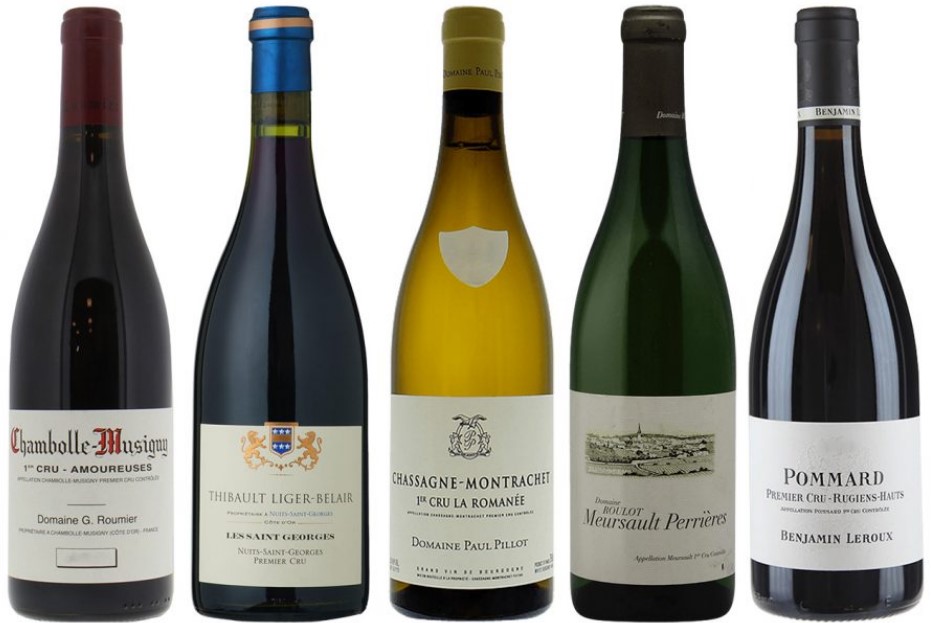
Photo credit: Decanter.com

The simple translation for cru is growth.  However, in the world of French wine its reference is for the geographic terrain, specifically the soil type, climate and altitude where the grapes are grown.  It gets complicated by the fact that cru is not applied in the same manner throughout all the wine regions of France.  Further complicating things is that the term cru is also used in Germany and Italy where there are additional variations in the meaning.

In the Burgundy region of France, the classification of cru is rather simple.  Cru designates a vineyard as being of a certain level of quality.  The classifications originate back to the 12th century and the Cistercian and Benedictine monks in the Côte d’Or.  Every vineyard in Burgundy is classified in the hierarchy where Grand Cru is at the top followed by Premier Cru and then “village” wines, with the generic Bourgogne category at the bottom.

There are 33 Grand Crus with each having its own appellation.  Only Pinot Noir and Chardonnay are grown here, but most appellations only permit one or the other varietal to be grown; very few allow both. Premier Cru wines are less expensive and are often a better value, though their long-term aging potential is typically less.

Chablis has one Grand Cru appellation that includes seven vineyards. These vineyards overlook the town of Chablis and benefit from a southwest exposure that helps ripen the grapes.

The Bordeaux region applies the term cru in a much different manner. Grand Cru Classé classification system forms the basis of the rating system and it’s tied to a specific chateau or estate, rather than adjacent vineyards. It was created in 1855 and is comprised of only left bank chateaus in Médoc, Graves and Sauternes, ranked from first to fifth growths, based on their value at that time. The first growths are called Premiers Crus, while second through fifth growth crus are called Crus Classes.

On the right bank Pomerol isn’t classified but Saint-Émilion is.  St.-Émilion has three chateau-based quality classifications. At the top is Premier Grands Crus Classés, of which there are 18, followed by Grands Crus Classés which contains 64 chateaus. The appellation’s third category is not tied to a specific ‘classed’ chateau or geographical subzone. Wines labeled “St.-Émilion Grand Cru” merely have more stringent production rules.

The Alsace region uses the term Grand Cru in similar fashion as the Burgundy region. Fifty-one vineyards have been designated superior, or Grand Cru, and wine from those vineyards can use the term on their label. There is a great deal of diversity in Alsace’s Grand Cru wines.  There are four grapes approved for use, as well as a wide variation in soils.

The Beaujolais region is where Gamay grapes are grown. Here cru is applied to villages rather than vineyards. There are 10 villages and the wine produced from these villages is called Cru Beaujolais.

The Champagne region also classifies entire villages as Grand Cru or Premier Cru. The Champenois created a system referred to as échelle des crus, or “ladder of the growths” in the early 20th century to fix grape prices for both farmers and buyers at Champagne houses.

At each harvest a price is set and growers with land in one of Champagne’s grand cru village receives 100% of that price. Grapes from the premier cru villages earns from 90% to 99% of the set price, while the rest receive from 80% to 89%.

There you have it; a little more of the puzzle of French wine resolved.

Sláinte mhaith

The Mystery of French Wine

In France the varietal of grape a wine is made of is seldom indicated on the label.  Instead, the French tend to identify flavour by the region from which the wine was produced.  Because of this, people often shy away from buying French wine.  However, the mystery of French wine can be solved by simply knowing which grapes are grown in each region.  To assist you, most wine and liquor stores arrange their French wines by region.

Photo credit: ihmkolkatafoodandbeveragenotes.blogspot.com

ALSACE

The Alsace region is located in the northeastern region of France between the Vosges Mountains and the Rhine River.  Historically, Alsace was part of Germany, which influences the types of grapes grown in the region. It is home to single varietal white wines including Gewurztraminer, Muscat, Pinot Gris, Riesling and Sylvaner.  The wines cover the spectrum, ranging from dry to sweet.

BEAUJOLAIS

The Beaujolais region is known for growing the Gamay grape, which has bright acidity and low tannins.

BORDEAUX

Bordeaux is France’s largest and most renowned wine region.  It is known for its red blends highlighting Cabernet Sauvignon on the Left Bank and Merlot, Pomerol and Saint Emilion on the Right Bank.  The white varietals of Bordeaux include Barsac and Sauternes grapes.

BURGUNDY

Pinot Noir and Chardonnay, referred to as Chablis, are the standard grapes grown in the Burgundy region.

CHAMPAGNE

The Champagne region is renowned for its sparkling wines produced from one or more of Chardonnay, Pinot Noir or Pinot Meunier.

LOIRE VALLEY

The Loire Valley stretches from the Auvergne region to the Atlantic Ocean.  It produces most of France’s white wine. The white varietals of the Loire include Chenin Blanc (called Vouray), Sauvignon Blanc (referred to as Sancerre and Pouilly-Fumé) and Muscadet.  It is also known for the red varietal, Cabernet Franc.

PROVENCE

Provence is the oldest wine region in France.  It is the only region that specializes in Rosé wines.

RHÔNE VALLEY

Syrah and Viognier are the highlights of the northern part of the region while Grenache, Syrah and Mourvèdre are prominent in the south.  Mourvèdre is the dominate grape in Châteauneuf -du-Pape.  Blending of the grapes results in rich reds and vigorous whites and rosé.

Final Thoughts

Once you know which regions grow your favourite grapes, it is much easier to find a suitable bottle of French wine to enjoy.

Sláinte mhaith

The Experts’ List of Underrated Wine Regions

Most wine enthusiasts are familiar with international wine regions such as France’s Bordeaux, California’s Napa Valley or Italy’s Tuscany.  However, there are many other, lesser-known regions, each offering its own unique characteristics.  These regions offer not only good wine but fewer crowds and opportunities to discover places less travelled.  My list is not intended to be all-encompassing; it is merely a list of regions that I have found intriguing for one reason or another.  The regions are presented in alphabetical order by country.

Pedernal Valley, Argentina

Located in the shadow of the Andes mountains, Argentina’s wine country is spectacular.  Situated north of the famous Mendoza region is the lesser-known Pedernal Valley. It is felt that the Pedernal Valley can stand on its own merits as a premium wine region. The region’s Malbec is considered world-class and distinct and represents a unique style.

Mendocino County, California, United States

Mendocino County grows less than four percent of California’s grape yield but contains an impressive one-third of the state’s certified organic vineyards. The number of old vines, post-WWII plantings makes this region unique. Some of the best wineries in California source their grapes from Mendocino. Dry-farming practices were introduced to the region by Italian families in the early 1900s, which resulted in wines that are concentrated, balanced and distinctly Californian.

Okanagan Valley, British Columbia, Canada

Photo credit: dailyhive.com

Canada’s own Okanagan Valley is considered breathtaking as it is situated between two mountain ranges and contains glacial lakes and rolling hills of vineyards. The region produces world-class wines that are difficult to find outside of Canada.  The high-quality wines combined with the beautiful views of the region have attracted top winemakers from France, New Zealand and South Africa.

Chinon, Bugey and Savoie, France

There are three lesser-known regions in France.  Chinon is in the Loire Valley.  It is much less popular than its neighbours, Bordeaux and Burgundy. The Loire Valley is famous for its white Sancerre and Pouilly-Fumés. The red variety is Cabernet Franc.

The wine regions of Savoie and nearby Bugey are nestled in the French Alps and are home to great wines and hospitality. Savoie has both a ski and hiking industry and thus there are quality restaurants, wine bars and a wide range of accommodations.  The vineyards are spread throughout the Auvergne-Rhône-Alpes overlooking both the mountain ranges and fresh bodies of water.

Bugey is situated underneath the alps. There is a group of small producers that have either relocated from other parts of France or are new vintners who are focused on raising the profile of the region.

The Republic of Georgia

Georgia is the world’s oldest continuously producing wine region but it is one of the lesser known.  This is due to The Republic formerly being under the control of the former Soviet Union.   During that time only four grape varieties of the over 500 available were allowed in production. After gaining independence, Georgia rediscovered its wine culture and began sharing it with the world. Traditional Georgia wine production is unique, resulting in the production of some exceptionally distinctive wines.  The wines are produced in underground amphorae called Qvevri.

For additional information about the wines and the region, see my posts The Wines of European Georgia from February 6, 2021 and Traditional Georgian Wine from September 18, 2021.

Szekszárd, Hungary

The Szekszárd wine region is located about 160 kilometres south of Budapest. Not many tourists explore beyond Budapest since the region has not been marketed. However, it is one of the country’s oldest wine regions, dating back around 2000 years.  Wine production is small and the wineries are often family-owned, which equates to limited exports and less awareness about the region.

The region has a wide range wine styles.  The most popular variety is the Kékfrankos grape (aka Blaufränkisch) which produces a tannic and spicy style of wine. There’s also Kadarka grapes which creates a fresh acid red fruit that is meant to be enjoyed without aging.

Mexico

Mexico’s wine history dates back to the1600s but the region remains a virtual unknown for many wine enthusiasts. Although wine grapes have been cultivated there for 400 years, it has only been during the past several decades that there has been a renewed focus on premium and terroir-driven expressions.

Valle de Guadalupe’s boutique wineries are experimenting with a mix of European red grapes such as Cabernet Sauvignon, Nebbiolo and Tempranillo.  The varietals are often blended to create a Bordeaux style of wine.

Middleburg, Virginia, United States

California, Oregon, Washington and New York dominate the U.S. wine industry but there are other regions worth noting.  One of these is Middleburg, Virginia.  Virginia was one of the first places in America to produce wine but it is still a relative unknown. The wine industry there is mostly made up of small artisanal producers who are creating world-class wines.  Some think of the region as a crossroads between Napa Valley and Bordeaux.  The region is situated in the foothills of the Blue Ridge Mountains an hour outside Washington DC.

Final Thoughts

There are many lesser-known wine regions to be explored, either by visiting or merely by sampling the wines they produce.  By expanding our horizons and creating new experiences, we will ultimately find more wines to enjoy.

Sláinte mhaith

The Mysteries of the Wine World

Given the severe winter storm that is expected to arrive later today and the power outages that are anticipated to accompany it, I am publishing the blog earlier this week.

The world of wine can be intimidating, appear complicated and very mysterious.  Understanding the flavours of the large number of grape varieties and complicated regional appellations can be somewhat daunting.

Photo credit: theundergroundbottleshop.com

If you’ve been firmly staying within your comfort zone and continually drinking the same type of wine, it’s time for a change.  Although it’s great to have a safe choice or two, it is good to explore new horizons. There is an exciting world of wine ready to be discovered.

If you insist on staying with the same grape variety, then try wines from different regions and styles. For example, if you normally drink a California Chardonnay, try an Australian one or a French Chablis.  If an Australian Shiraz is your preference, sample a French Syrah. For great Merlot, consider lesser-known varieties with similar flavour profiles, such as Spanish Mencía or Saperavi, an ancient red grape from Georgia. Pinot Noir enthusiasts should explore those wines of Burgundy France, Oregon, New Zealand, Australia or Argentina.  Region can have a great influence on character and flavour.

The total experience, from purchase to consumption, can affect your perception of the wine you are drinking.  Grocery stores are great for picking up a few cans or bottles of your favourite coolers or beer, but not a great option when purchasing wine.  To best ensure that you have a good buying experience, always go to a good quality liquor store or specialty wine shop that has knowledgeable staff. You can ask for advice and receive suggestions, especially if you become a regular at a place with experienced and well-trained employees.

To help you select a good bottle, don’t be afraid to ask about new products or releases, innovative winemakers and local wines, or ask for pairing suggestions for an upcoming dinner. You can help the staff understand your likes by revealing your favourite varieties and styles.  One thing to remember is that there are good wines in every price range so don’t be intimidated by wanting to stay within a specific price range.

Regarding price, it is one of the most common misconceptions about wine. People often have the perception that more expensive wines taste better.  Purchasing wine varietals that you like from less familiar locations can save you money.  Instead of buying wine from the most popular regions, discover reasonably priced quality wines from new, smaller or less popular regions.  For example, Chardonnay (Chablis) from France or California tends to be more costly than a wine of the same varietal from Australia or South Africa. 

When reading the label on the bottle, resist the urge to simply purchase one with an attractive label or an intriguing name.  Neither of these are an indicator of the quality and character of the wine. 

The label will tell you whether it is an Old World or New World wine.  Old World wines are from Europe whereas New World wines are from anywhere but Europe.  New World wine labels will generally identify the actual varietal or varietals that the wine consists of.  In contrast, Old World European wines indicate the regional appellation where it was produced.  Examples would include Bordeaux or Burgundy from France, Chianti from Italy or Rioja from Spain.  However, there are many more appellations.  Back in the blog archives are posts on the various wine regions of France, Italy, Spain, Portugal, etc. that identify which grape varietals are produced in each region.

Recognizing the name of the wine producer or importer may give you a hint about the quality of the wine, but location and grape variety will provide the best idea of what to expect in a bottle.

The labels will also display the vintage, which indicates the year the grapes were harvested. When purchasing a wine to be enjoyed in the immediate or near future, the vintage doesn’t reveal much about quality.   There is a common misconception that older wines are always better.  Though this applies to some bold wines that need time to rest before reaching their full potential, it represents only about ten percent of wines produced.

Whether a wine bottle has a cork stopper or screw cap is not an indicator of a wine’s quality.  Though cork has been the traditional method for sealing bottles, it is not necessarily the best way.  There are both pros and cons to both methods and neither comes out as a clear winner.  My blog, Cork versus Screw Cap from January 8, 2022, presents the arguments for both.

Lastly, when selecting a wine at a restaurant, don’t be afraid to ask the wine steward or sommelier for advice.  These are typically well-informed individuals who are there to share their knowledge so take advantage of their presence to receive expert advice.  They will help you select a wine that will both suit your palate and complement the food.

Sláinte mhaith

British Columbia’s Movers and Shakers for 2022

Here is my list of what I consider to be British Columbia’s most noteworthy wineries for 2022.  My opinions are based on several factors: the winery’s performance at both the National Wine Awards and the All Canadian Wine Championships, environmental and sustainability practices of each winery and my own personal impressions.

However, there are many more great wineries in the province.  These are just the ones that I paid particular attention to this year.

I have listed my choices in alphabetical order and have included several of each winery’s 2022 award winning wines. 

Black Hills Estate Winery

Black Hills Estate Winery vineyards have some of the most favourable grape growing conditions in the country, located in the middle of Canada’s only official desert. The resulting microclimate provides one of the hottest, driest and sunniest sites in the country.

Black Hills irrigation techniques and viticulture practices provide ideal growing conditions for the Bordeaux and Rhone varietals.

Black Hills grows four clones of Cabernet Sauvignon, two clones of Cabernet Franc and four clones of Merlot. Each clone has a unique flavour profile. When they are blended together, this Clonal diversity gives multi-faceted depth and complexity to the wine.

Black Hills is committed to sustainable, environmentally friendly farming and winemaking practices. All the vines are hand picked, hand pruned and manually maintained. They have been awarded Environmental Farm Plan Status by the British Columbia Environmental Farm Plan, which is administered by the Federal and Provincial Departments of Agriculture, as well as the BC Agriculture Council and the Investment Agriculture Foundation.

Black Hill’s 2022 award winning wines include:

  • Black Hills 2020 Addendum
  • Black Hills 2020 Chardonnay
  • Black Hills 2020 Ipso Facto
  • Black Hills 2020 Per Se
  • Black Hills 2020 Roussanne
  • Black Hills 2021 Alibi

CedarCreek Estate Winery (Ranked 1st at The National Wine Awards)

CedarCreek was named Winery of the Year at the 2022 National Wine Awards. The award was earned based on the number of wines receiving awards as well as for their approach to growing grapes and producing their wine.

CedarCreek works to build a healthy ecosystem, utilizing animals and plants to naturally combat disease or pests. Cover crops, like alfalfa and crimson, keep the soil healthy while animals bring a diversity and balance to the land.

Bees pollinate cover crops and wildflowers contributing to the diversity of the vineyard and helping eliminate the need for synthetic pesticides and fertilizers.  Chickens eat many unwanted pests and help scratch and aerate the soil and their eggs are served in the winery’s restaurant.

There are three Scottish Highland cows that wander the vineyard rows breaking up the soil.  Also, their manure is good for compost and attracting beneficial bugs and birds. Their Scottish roots make them a hearty stock, comfortable in the cool Okanagan winters and known for their friendly temperament.

CedarCreek’s 2022 award winning wines include:

  • CedarCreek 2019 Aspect Collection Block 5 Chardonnay
  • CedarCreek 2020 Aspect Collection Block 3 Riesling
  • CedarCreek 2020 Platinum Jagged Rock Chardonnay
  • CedarCreek 2020 Platinum Jagged Rock Syrah
  • CedarCreek 2021 Pinot Noir Rosé
  • CedarCreek 2021 Platinum Home Block Riesling

La Frenz Estate Winery (5th at The National Wine Awards)

La Frenz was the Small Winery of the Year at the 2017 National Wine Awards. They are located on the Naramata Bench in the heart of the Okanagan Valley.  Over time the winery has grown to encompass 17 hectares across four different vineyard sites, each with its own distinctive soils and aspects.

Their 2022 award winning wines include:

  • La Frenz 2018 Aster Brut
  • La Frenz 2019 Cabernets Rockyfeller Vineyard
  • La Frenz 2019 Grand Total Reserve
  • La Frenz 2019 Malbec Rockyfeller Vineyard
  • La Frenz 2019 Syrah Rockyfeller Vineyard
  • La Frenz 2020 Pinot Noir Desperation Hill Vineyard
  • La Frenz 2020 Reserve Vivant
  • La Frenz 2021 Riesling Cl. 49 Rockyfeller Vineyard
  • La Frenz 2021 Semillon Knorr Vineyard
  • La Frenz Liqueur Muscat

Mission Hill Family Estate (4th at The National Wine Awards)

Mission Hill is the only winery to appear on both my 2020 and 2021 Movers and Shakers list.

Mission Hill follows organic farming practices.  Bees, falcon, and chickens replace pesticides and insecticides. Cover crops, earthworms and compost are used in place of chemical fertilizers.

Their practices are fundamentally rooted in Old World techniques supported with modern technology.  The winemaking team continuously innovates, combining fermentation and maturation vessel traditions with future trends.

The 2022 award winning wines includes:

  • Mission Hill 2020 Perpetua Chardonnay
  • Mission Hill 2020 Reserve Cabernet Sauvignon
  • Mission Hill 2020 Reserve Merlot
  • Mission Hill 2020 Terroir Collection Jagged Rock Syrah
  • Mission Hill 2021 Reserve Riesling

SpearHead Winery (3rd at The National Wine Awards)

SpearHead was named Best Performing Small Winery at this year’s National Wine Awards.  Their focus is on premium quality wine produced from grapes grown on their estate vineyard and from selected Okanagan Valley vineyards. The hand harvested grapes are sorted at the winery and fermented in small lots.

Approximately 80% of the 15 acres of vines is comprised of Pinot Noir, including four different Dijon clones, 2 California heritage clones and Pommard.  This combination of plantings enables their wine maker to select from the different characteristics exhibited by the clones in order to create a harmonious, complex Pinot Noir from the home vineyard.  They also draw from several other vineyards in the Okanagan including Golden Retreat in Summerland and Coyote Vineyard in West Kelowna.

They have extended their wine making methods to other varietals including Chardonnay, which is made from a single clone. 

Spearhead’s 2022 award winning wines include:

  • SpearHead 2019 Botrytis Affected Late Harvest Riesling
  • SpearHead 2019 Coyote Vineyard Pinot Noir
  • SpearHead 2019 Golden Retreat Pinot Noir
  • SpearHead 2019 Pinot Noir Cuvée
  • SpearHead 2020 Clone 95 Chardonnay
  • SpearHead 2020 Club Consensus Pinot Noir
  • SpearHead 2020 Pinot Gris Golden Retreat Vineyard
  • SpearHead 2020 Riesling
  • SpearHead 2020 Saddle Block Chardonnay

Sláinte mhaith

Italy’s Sangiovese Grape

The Sangiovese varietal is the most planted wine variety in Italy and has made the Tuscany region renowned for its Chianti wine.  In Chianti, Sangiovese must account for 70% of the blend and in Chianti Classico the minimum rises to 80%.  Other better-known Tuscan wine blends made mainly from Sangiovese grapes include Morellino di Scansano, which must contain 85% and Vino Nobile di Montepulciano, with 70% Sangiovese grapes.

Photo credit: blog.suvie.com

Beyond Tuscany, Sangiovese is widely planted in Lazio, Umbria, Marche (all of which border Tuscany) and Corsica. In Corsica the variety is known as Nielluccio or Niellucciu.

In addition to being a mainstay in many varieties of red wines, Sangiovese is often used for Vin Santo wines, which are a style of Italian dessert wine. Vin Santo is traditionally found in Tuscany.

Sangiovese can come in different stylistic expressions based on where it grows.  There are many different mutations of the variety found throughout Italy, which results in very different tasting wines. From the delicate, floral strawberry aromas of Montefalco Rosso to the intensely dark and tannic wines of Brunello di Montalcino, Sangiovese wines have wide appeal.

Sangiovese is seldom found outside of Italy. Of the approximate 70,800 hectares of Sangiovese grown worldwide, almost 63,000 hectares are grown in Italy, followed by about 1,940 in Corsica, and 800 hectares in each of Argentina and the United States.

Sangiovese is savory and offers a wide range of tastes.  Flavours can vary from very earthy and rustic, as in many Chianti Classico, to round and fruit-forward options. Regardless of where it is grown, it always contains hints of cherry and subtle notes of tomato.

The range of flavours include tart cherry, red plum, strawberry, roasted pepper, tomato, leather, tobacco, smoke, oregano and thyme. 

Sangiovese is often lightly oaked in oak barrels.  The tannin and acidity level is usually quite high with ageability ranging normally from 4 to 7 years, with some varieties from the Brunello di Montalcino region being aged from 10 to 18 years.

Sangiovese pairs with a wide range of foods because of its medium weighted body and savory character. Use Sangiovese wine as a congruent flavour with herbs and tomatoes. This technique will bring out more fruity flavors in the wine.

A Sangiovese with high tannins will pair well with rich roasted meat, cured sausages and hard cheeses.  Vegetarian pairings include butter and olive oil; the richness in the fat helps cut through the wines’ tannins.

Sangiovese is a long-time personal favourite of mine, whether on its own or as the mainstay in a Chianti blend.  If you have never tried Sangiovese, it is well worthwhile seeking it out in the Italian Tuscany section of your local wine store.

Sláinte mhaith

The Wine of the North

When you think of Ontario wines, Niagara and Prince Edward County usually come to mind, but there is one of international notoriety near Tweed.  Potter Settlement Artisan Winery has award-winning wine and has been putting Tweed on the map as a good place to grow grapes.

Owner Sandor Johnson says the winery is very small but has been making great strides to create high-end, boutique quality wines.  His team produces more than a dozen different wines, most of which are made with grapes grown on the Tweed property.  The winery only purchases grape varieties that can’t be grown in the cooler climate of Tweed and they never buy finished wine from elsewhere.  If the grapes are not grown on site, the wine label will indicate where they were grown.

As one of the northernmost vineyards in Canada, the temperature is known to drop to -27o C during the winter.  However, being further north has its benefits, as the soil is rich in minerals.  

Potter Settlement makes a unique wine that was accidently discovered during the McClure Arctic Expedition in 1850.  The wine, referred to as Portage, was named in honour of the sailors who pulled barrels of Port across the ice after their ship’s passage through the Northwest Passage was halted by winter weather.

One of the expedition’s participants was Henry Gaun, at that time the ship’s carpenter, and who eventually settled near Tweed in Ivanhoe, and is the founder of Ivanhoe cheese.  Gaun had recorded in his diaries how he and the other sailors created Portage.  The Port that they had taken with them on their journey froze.  They discovered that when the Port froze due to the extreme cold, the bitter acids disappeared making the port very smooth to drink.  Then the Arctic summertime midnight sun cooked the port in the barrels.  According to the diaries, the resulting wine was fit for Queen Victoria’s consumption.  Based on what Johnson read he felt compelled to recreate Portage.

Another example of Potter Settlement’s creativity is their Triple Rare Ferment Chardonnay, which was aged in barrels made of wood from Ontario butternut and extinct American chestnut trees.  In order to make the chestnut barrels, logs had to be salvaged from the bottom of Lake Superior.

At Great Britain’s 2022 London Wine Competition, Potter Settlement was awarded gold medals for the Potter Settlement Cabernet Franc and Potter Settlement Portage fortified wine. Each received 92 out of a possible 100 points.  Last year Potter Settlement won two gold medals and a silver in a competition in Bordeaux, France, at the Challenge International Du Vin competition.  They were the only Canadian winner of the 3,579 wine entries from 27 countries.  They won gold for their Marquette and Pinot Noir, and silver for their Cabernet Franc.

Construction has started to make a cave in the rock on the property that will be used to store the wine.  Once completed Potter Settlement will be the only winery in Ontario with a real cave.  They plan to rent storage space to high-end wineries.

Unfortunately, I have not been able to find any indication of Potter Settlement wines ever being for sale in wine stores.  However, their wines are available on their website at pottersettlementwines.ca or by visiting them, as I did, at the winery near Tweed, Ontario.  I found the wine tasting, which was hosted by Sandor Johnson, to be both entertaining and educational.  As well, I got to sample some excellent, unique wines; several of which have now found a home in my cellar.

Sláinte mhaith

Syrah or Shiraz?

Syrah and Shiraz are the same grape with two different names.  Syrah is the original name while Shiraz is how it became known in Australia and the Americas.  The terms have become associated with a particular style of wine.

Syrah is the term that is associated with the Old-World expressions found throughout Europe.  It is lighter in body and alcohol, with finer tannins. Shiraz, on the other hand, refers to New World, intense wines, which are generally richer, with riper aromas and fuller in both body and alcohol.

The distinct styles first emerged as a natural consequence of the different growing conditions and microclimates.  The grapes in Australia have the potential of having higher levels of alcohol and more aromas than their European counterparts.

The varietal is believed to have originated in the Rhône region of France.  Some winegrowers in the northern Rhône distinguish between a small-berried, more concentrated version of Syrah, referred to as Petite Syrah, and the larger-berried Grosse Syrah. 

Until the 1970s, French Syrah plantings were mostly concentrated in and around the vineyards of the northern Rhône valley. Since then Syrah has had an extraordinary surge in popularity throughout southern France and has become France’s third most planted red wine.

Australia’s history with the grape began in the 1830s.  It flourished and was quickly adopted by New South Wales and from there to the whole country, eventually becoming Australia’s most planted variety.  The country makes a range of styles, the most recognisable is the distinctively rich, ripe styles from both traditional Barossa Valley and newer Heathcote regions.

There is now a growing trend towards more subtle, elegant, cool-grown Rhône style wines that are less concentrated and have a lighter touch. These are often labelled as Syrah instead of Shiraz. These wines are most likely to be found in the Adelaide Hills region.

The grape was introduced to California in the 1990s.  A group of vintners, known as the “Rhône Rangers”, eagerly promoted the grape as being equally suited to California as Cabernet Sauvignon. Californian winemakers consistently produce very vibrant, refined wine.

In addition to California, Washington State also produces Syrah.  Further afield, Chile, South Africa and New Zealand’s Hawke’s Bay are producing interesting varieties. It is worth noting that some of those who make the finest South African examples label them Syrah.

There are some noteworthy Syrahs found in Italy, the Castilla-La Mancha region of Spain and the Alentejo region of Portugal. Another unexpectedly successful site for mature, concentrated Syrah is the Valais in Switzerland, particularly around the upper reaches of the Rhône valley.

Some Canadian wine makers are growing the Syrah grape as well, though the cool climate limits the growing season and thus the intensity of the flavour. Some winemakers label their offering as Syrah while others choose Shiraz.  While some would argue that British Columbia’s Okanagan Valley has a long, hot growing season that supports the Shiraz style of wine, most of Canada’s wine regions cannot.  Wines made in the majority of the country only truly support the Syrah style of wine. 

One of my pet peeves is to see an Ontario winemaker labelling their wine as Shiraz and not Syrah.  I pity the unexpecting consumer who purchases a Shiraz, expecting the bold peppery flavour of a true Shiraz.  Unfortunately, the wine will not live up to its name.

Sláinte mhaith

Wine From the Canary Islands

Wine is probably not the first thing that comes to mind when someone mentions the Canary Islands.  The Islands are a popular European tourist destination but they also have a thriving wine industry.

Photo credit: foodandwine.com

Wine production has a long history in the Canary Islands, but the modern era didn’t start until about the mid 1980’s. Since then wine exports have been increasing as more people discover these wines.

The Canary Islands are in the Atlantic Ocean about 100 kilometres west of Morocco. The main islands, from largest to smallest, are Tenerife, Fuerteventura, Gran Canaria, Lanzarote, La Palma, La Gomera, El Hierro and La Graciosa. They are a popular tourist destination because of their subtropical climate.  However, it is the distinctive volcanic wines that have been gaining global attention and critical acclaim over the past 3 decades.

Six of the eight islands, Tenerife, Lanzarote, Gran Canaria, La Palma, El Hierro and La Gomera produce wine.  The soils vary from island to island, formed by volcanic eruptions, landslides and erosion.  The soil ranges from light stone to very heavy basalt rock.

The climate also varies across the archipelago. The eastern islands consist of older geological formations with lower, more uniform altitude and a dry, desert-like climate. The western islands are higher, steeper and have a greater variation of microclimates.

There are 20 unique grape varieties found in the Islands along with more than 20 new varieties that are currently being studied.  Listán Blanco (aka Palomino) and Listán Negro are the most widely planted grapes on the Islands. Others include white wine grapes Malvasía Volcánica, Malvasía Aromática and Albillo Criollo, along with red wine grapes Negramoll, Vijariego Negro and Baboso Negro. There are a few plantings of international varieties, such as Syrah.  Each of the Islands has its own specialities.

Dry, high-acid whites and light, fruity reds are typical of the Islands but richer, oak-aged options exist as well.

The wine industry is very focused on gaining international recognition based on the unique and ancient grape varieties grown. The aim is for these wines to reach markets where they can gain more exposure and have the opportunity to grow in popularity.

In 2020, around 15 million gallons of wine (51% red and 49% white) were produced in the Canary Islands.

Some of the grapes from the Canary Islands can be found in South America. They were brought there by Spanish settlers in the 16th century.  One of the varieties was Listán Prieto, which can now be found in California (known as Mission), Chile (País) and Argentina (Criolla Chica).

Wine from the Canary Islands is occasionally available in the specialty section of wine stores in Canada.  These wines will be included with the other wines from Spain.

Sláinte mhaith

An Italian Region Revival

The ancient Italian wine region of Basilicata is undergoing a revival thanks to a new generation of wine makers. Although wine has been commercially produced there for over a century it is not well known, but that may be about to change.

Photo credit: winefolly.com

Basilicata is a mountainous region located in the south, stretching north from the arch of Italy’s boot.  Its climate is dominated by the Alps of the north rather than the warmer climate of the south.  The region’s wineries are scattered around the extinct Monte Vulture volcano.

The region is primarily a red grape growing region predominately consisting of:

  • 42% Aglianico del Vulture
  • 8% Sangiovese
  • 5% Aglianico
  • 4% Primitivo
  • 3% Montepulciano
  • 3% Italica
  • 2% Malvasia
  • 2% Trebbiano Giallo
  • 1% each of
    • Malvasia Bianca di Basilicata
    • Barbera
    • Malvasia Nera di Brindisi
    • Moscato Giallo
    • Merlot
    • Cabernet Sauvignon

Basilicata has two major wines: Aglianico del Vulture Denominazione di Origine Controllata (DOC), established in 1971, and the Superiore Denominazione di Origine Controllata e Garantita (DOCG), which was established in 2010.  In total there are only four DOC wines and one DOCG wine produced in the region.

If you are interested in trying the wines of Basilicata, keep an eye for any of these though they are often difficult to come by:

  • Aglianico del Vulture Superiore DOCG
  • Aglianico del Vulture DOC
  • Matera DOC
  • Grottino di Roccanova
  • Terre dell’Alta Val d’Agri DOC

You are more apt to find these wines in the specialty section of your wine store as they will not be available on a day-to-day basis.  Happy hunting!

Sláinte mhaith