British Columbia’s Movers and Shakers for 2025

This week I present my annual list of British Columbia wineries that most impressed me this year. This is not to suggest that these are the only great wineries in the province but simply those that attracted my attention this year.  The list varies in length from year to year as I like to focus on achievements rather than listing a specific number of wineries. The wineries are presented alphabetically as follows:

Laughing Stock Vineyards

Laughing Stock was recognized as the Best Performing Small Winery of the Year at this year’s National Wine Awards where they earned 2 Platinum, 3 Gold, 1 Silver and 2 Bronze medals. The winemaking team is led by winemaker Sandy Leier.

They aim to continually improve their wines and have been exploring a variety of fermentation vehicles over the past few years, including temperature regulated stainless tanks and the addition of eight concrete eggs. Six clay Amphorae have been acquired from Italy, in which a variety of limited production wines are produced. Complexity is added to the red wines through an extended barrel-aging program using 100% French oak in both standard barrel sizes and 500 liter puncheons.

Laughing Stock has 2 separate vineyards:

  • Naramata Bench Vineyard – The estate winery vineyard is home to all the Bordeaux grape varieties (Merlot, Cabernet Sauvignon, Cabernet Franc, Malbec & Petit Verdot) that are included in their flagship wine, Portfolio.
  • Perfect Hedge Vineyard – Osoyoos – Since acquiring this 22-acre vineyard in 2007, it has become home to Bordeaux varieties (Merlot, Malbec & Cabernet Sauvignon) as well as Viognier and Syrah

This is Laughing Stock’s first appearance on the Movers and Shakers list.

Meyer Family Vineyards (2021, 2024

This is Meyers Family Vineyards third time on the Movers and Shakers List, having appeared previously in 2024 and 2021.

Meyer aims to produce the finest quality wines in the traditions of the Burgundy region of France. The grapes are hand-harvested, with great attention to detail and minimal winemaking intervention. The wines are produced from three main vineyards: the 6.9-hectare McLean Creek Road Vineyard in Okanagan Falls; the 1.62-hectare Old Main Road Vineyard on the Naramata Bench; and the 1.5-hectare Lakehill Road Vineyard in Kaleden. They also work with passionate quality-minded growers in Naramata and Osoyoos area to round out their portfolio of terroir-driven wines.

Winemaker Chris Carson’s philosophy is to care for the grape on the vine and maintain as much as possible a hands-off approach in the cellar to allow the true expression of the terroir. Each wine reflects the single vineyard of its origin, the soil, the climate and the slope.

The three main vineyards are:

  • McLean Creek Road Vineyard Okanagan Falls – This is the home vineyard. The vineyard was originally planted in 1994. Varietals grown include Chardonnay, Pinot Noir and Gewurztraminer.
  • Old Main Road Vineyard Naramata Bench – This vineyard was originally planted in 1996 with 100% Chardonnay vines which is still the case today.
  • Lakehill Road Vineyard Kaleden – The vineyard was planted with 3 acres of Pinot Noir in 2009 and another 0.75 acres in 2019.

Mission Hill Family Estate

Mission Hill was named Winery of the Year earlier this year at the National Wine Awards, making it Canada’s only six-time winner. This is reflected in the fact that Mission Hill appeared as a Mover and Shaker previously in 2022, 2021 and 2020.

This year Mission Hill Family Estate was awarded top honours with two platinum and seven gold awards. The award winning wines are:

  • 2022 Perpetua: Platinum
  • 2022 Terroir Cabernet Franc – Member Exclusive: Platinum
  • 2023 Terroir Chardonnay – Member Exclusive: Gold
  • 2020 Compendium: Gold
  • 2022 Terroir Cabernet Sauvignon – Member Exclusive: Gold
  • 2021 Oculus – Member Release Fall 2025: Gold
  • 2020 Quatrain: Gold
  • 2023 Perpetua – Coming Spring 2026: Gold
  • 2022 Terroir Meritage – Member Exclusive: Gold

Fostering an ecosystem natural to the region supports quality grape growing, which in turn creates wine of depth and character. Bees, falcons and chickens replace pesticides and insecticides. Cover crops, earthworms and compost are used in place of chemical fertilizers.

Their practices are fundamentally rooted in Old World techniques which they now support with modern technology.

Stag’s Hollow Winery

This is Stag’s Hollow’s first appearance as a Mover and Shaker.

Larry Gerelus and Linda Pruegger started with a 10 acre vineyard in 1992 that was planted with Vidal and Chasselas varietals. The winery was later constructed in 1995. At that time, Stag’s Hollow Winery was one of only 30 wineries in British Columbia. Initially Merlot, Pinot Noir, Chardonnay and Vidal were grown.

In 2011, another 18 acres of land was purchased which became Shuttleworth Creek Vineyard.

The vineyards are managed sustainably, which refers to conservation, pest management, responsible water usage and efficient energy use. To maintain good biodiversity and soil health in the vineyard, chemical fungicides are not used. Instead, only organic products are applied. All canopy management is performed by hand, which reduces energy consumption as well as allowing for far more precision. A natural vegetation buffer zone is used to provide breeding grounds for beneficial insects to control unwanted pests.

The winery’s two vineyards are:

  • Stag’s Hollow Estate Vineyard – Merlot and Pinot Noir blocks, now exceeding 30 years of age, are on the southwest facing slopes of the Hollow. 
  • Shuttleworth Creek Vineyard – This land, a former hay field, was purchased in 2011, recognizing that Pinot Noir was likely to be an excellent variety for its terroir. In addition, two Spanish varieties were planted – Albariño and Tempranillo, and two Italian varieties – Dolcetto and Teroldego.

Happy New Year!

Sláinte mhaith

The Left Bank’s Margaux Appellation

On my recent excursion to Bordeaux, France, I travelled to the Left Bank’s Margaux appellation where I visited Château Dauzac, which is a Margaux Grand Cru Classé according to the 1855 classification. Their vineyards span 49 hectares.

All the wines utilize gravity-flow vatting. Fermentation takes place in wooden vats with transparent double staves. The wine was aged in 100% French oak barrels (including 65% new barrels) for 15 months with racking based on tasting results.

Dedicated to the expression of terroir and dominated by Cabernet Sauvignon, Château Dauzac reveals a nicely complex bouquet that slowly unfolds during aeration. On the palate, it strikes a subtle balance between the richness of its tannins and the aromatic diversity of its supple fruits, emblematic of great wines for ageing.

Cabernet Sauvignon dominates with its complexity, elegance and minerality, while Merlot adds roundness and silkiness. Always deep in colour, Château Dauzac expresses a subtle balance where fruits, flowers and spices are combined, with a complex body and tannins ensuring an emotional tasting experience.

Like many of the wineries in the region, Château Dauzac is committed to reducing its carbon footprint. They have formed a partnership with Bioboon Agrology. Together they are working toward the ecological transition of agricultural activities that promote plant health while preserving the surrounding biodiversity.

They have also planted bamboo on the estate. The bamboo acts as an essential carbon sequestration mechanism, offsetting the residual emissions of their carbon-neutral wine. This initiative reduces the environmental impact of the winery’s activities.

Château Dauzac is also investing in research and development to fight against mildew. The aim is to use natural products free of heavy metals to preserve the health of their vines and the balance of the surrounding ecosystem.

The terroir is a clay-based soil that contains deep gravel outcrops. The vines have an average age of 35 to 40 years. The grape varietals consist of 69% Cabernet Sauvignon, 29% Merlot and 2% Petit-Verdot. The grapes are harvested by hand in small crates and sorted on tables before and after de-stemming.

The first wine that I sampled at Château Dauzac was the 2021 “Aurore de Dauzac Margaux”, which is a blend of 62% Cabernet Sauvignon, 37% Merlot and 1% Petit Verdot. It is bright red with ruby hues and a nose of red fruit with a slightly floral expression. The flavour displays a pleasant concentration with notes of black fruit.

The second wine I tasted was the 2019 Margaux Grande Cru Classé. Château Dauzac 2019 is a wine that expresses exceptional fruit vibrancy. It is very well-balanced and composed of dense tannins that exhibit finesse and elegance. It consists of a blend of 73% Cabernet Sauvignon and 27% Merlot.

I was surprised to see how much my wife enjoyed this wine as she usually prefers the Right Bank Merlot concentrated wines over the Left Bank Cabernet Sauvignon dominant wines. In fact, she enjoyed it so much that we decided to have some shipped home. When making the shipping arrangements we were told that the 2022 vintage would be more superior to the 2019, given the climate conditions that existed that year. The only caveat was that the 2022 would not reach its full potential for another 10 years.

We then decided that we would purchase some of the 2022 vintage as well to ship home. The 2022 wine consists of 63% Cabernet Sauvignon and 37 % Merlot. The overall yield was small due to the lack of water but the remarkable quality will make the 2022 vintage one of the greatest ever experienced in Bordeaux.

I was pleased to learn that Château Dauzac wines are occasionally available in Ontario liquor stores. I will be eagerly awaiting the next vintage to appear on store shelves.

Sláinte mhaith

The Blaye Côtes de Bordeaux Appellation

On the Right Bank, near the village of Bourg, I had the opportunity to visit Chateau Monconseil-Gazin, a third-generation family preserved estate winery owned by the Baudet family. The wines produced are part of the Blaye Côtes de Bordeaux appellation.

The vineyard’s hilly terrain benefits from a microclimate caused by the proximity of the estuary and the Atlantic Ocean. The clay-limestone soils rest on a soft rock substrate that is very favorable to the roots of the vines and perfect for drainage.

The 35 hectares of gentle slopes facing south and southwest predominantly grow the Merlot grape variety, complemented by Cabernet Sauvignon, Cabernet Franc and Malbec.

The first wine that I tasted was the 2023 “Blaye Côtes De Bordeaux”, a white Sauvignon. The vines are cultivated according to the sustainable agriculture charter for the development and protection of the terroir. No chemical fertilizers are used.

The wine consists of 100% Sauvignon Blanc that is aged on fine lees, which are the smaller, more gradual sediment that settles at the bottom of a fermentation vessel after winemaking. The fine lees age with the wine, adding complexity, texture, and flavour. The wine is bottled at the Château.

The terroir is a clay-limestone on stony subsoil, providing excellent drainage and deep roots. The slopes face south-southwest, ensuring optimal maturity of the grapes.

This wine’s aroma contains notes of citrus and flowers and has a smooth crisp palate. The finish is long, fresh and fruity.

The second wine I had was the “Blaye Côtes De Bordeaux – Blanc Prestige”, made of 80% Sauvignon Blanc and 20% Sémillon. This wine releases an elegant nose of lychee and citrus fruit complemented by a light oakiness. The palate is dense and smooth, with a freshness that lingers through to the finish.

The third wine I sampled was the 2020 “Blaye Côtes De Bordeaux” red. Once again, the vines are cultivated according to the sustainable agriculture charter for the development and protection of the terroir, using no chemical fertilizers.

The wine is produced from 70% Merlot, 20% Cabernet Sauvignon and 10% Malbec grapes. It is aged in French oak barrels for 12 months, then blended and lightly filtered before being bottled at the Château.

The terroir is clay-limestone hillsides on a stony subsoil, excellent for drainage and rooting.  The vineyard slopes are south/southwest facing, ensuring optimal maturity of the grapes.

The flavour has hints of woody and toasty accents accompanied by notes of violet, blackberry, crème de cassis, tobacco leaf and sage. There is an abundance of young fruit with tannins and acidity.

This wine has had more than twenty years of recognition by the most prestigious competitions in France and internationally: Mâcon, Paris, Aquitaine, Challenge International du Vin, Brussels and London.

The last wine I tasted was the 2019 “Grande Réserve”, which is made from 50% Merlot, 20% Cabernet Sauvignon, 20% Malbec and 10% Cabernet Franc. The wine was matured in French oak barrels (50% new) for 18 months, blended and lightly filtered and then bottled at the Château.

This wine offers ripe fruit and notes of mocha, toast and vanilla. The tannins are tight and the flavours are full.

This wine has been recognized by the most prestigious competitions and specialist magazines such as the HACHETTE Guide, the Revue des Vins de France, Decanter and In Vino Veritas.

My wife and I enjoyed this one enough that we purchased a bottle to drink after our day’s explorations. Unfortunately, Chateau Monconseil Gazin wines are not currently available in Ontario liquor stores.

Sláinte mhaith

The Médoc Area of Saint-Émilion

The first area I explored on my recent trip to France’s Bordeaux region was Médoc, which is situated on the Right Bank. The name Médoc is synonymous with exceptional wines. Considered as one of the world’s leading red wine producers, Médoc has been a winemaking region since the 18th century, with more than 16,000 hectares of vineyards across eight sub-appellations.

In Médoc, which is part of the Saint-Émilion appellation that has over 800 Chateaux, I visited the family-owned winery, Château Fleur Cardinale. The terroir consists of a mix of clay and limestone. Typical of Right Bank wineries, their wines consist of a blend of around 70% Merlot, 20% Cabernet Franc and 10% Cabernet Sauvignon. The blended portions vary slightly from year to year depending on the yield of each grape varietal.

La Maison Cardinale was established in 2001, when Dominique and Florence Decoster acquired Château Fleur Cardinale. In 2017, their son Ludovic and his wife Caroline took the reins of the family estate. In 2024, they created La Maison Cardinale, an entity that brings together Château Fleur Cardinale, a Saint-Émilion Grand Cru Classé, and Château Croix Cardinale, a Saint-Émilion Grand Cru.

They have two estates, Château Fleur Cardinale and Château Croix Cardinale. Château Fleur Cardinale covers 27.6 hectares on the northern slope, producing a Saint-Emilion Grand Cru Classé. The northern slope is also ideal to produce Fleur Cardinale white, in the Bordeaux appellation. Château Croix Cardinale covers 4 hectares on the southern slope, producing a Saint-Emilion Grand Cru.

While there I had the opportunity to sample 2023 “Cardinal Flower Intuition Saint-Emilion Grand Cru” and the 2019 “Grand Cru Classé, Saint-Emilion Grand Cru”. The Intuition had an intense aromatic profile of ripe black fruits. There were subtle tannins and a supple, fresh texture. The Grand Cru Classé had a sensation of fresh and intense fruit, both on the nose and in the mouth. In my opinion it was much smoother and better balanced than the Cardinal Flower Intuition.

The grapes for both wines are picked by hand. There are about 15,000 bottles of Cardinal Flower Intuition produced each year and 105,000 bottles of the Grand Cru Classé. About 80% of the wine is sold to wine agents for export with the balance being sold from the winery. Unfortunately, Château Fleur Cardinale wines do not appear to be available in Ontario liquor stores.

Sláinte mhaith

BC Wineries 2024 “Crafted in BC” Wines

Photo credit: orchardandvine.net

British Columbia wineries are now beginning to bottle and debut wines that are classified in the new wine category, “Crafted in BC”. This is a limited time offering that was authorized by the Vintage 2024 Relief and Support Program. This program was introduced by the British Columbia government in the summer of 2024 to help offset the devastating losses that resulted from last year’s extreme climate effects. For more information, see my November 9, 2024 post 2024: A Year to Remember in British Columbia.

This support program is enabling B.C.’s winemakers to use out-of-province grapes thus allowing wineries to keep their doors open and staff employed. This is also providing winemakers with the unique opportunity to think beyond the realms of their own vineyards by using different varietals of grapes from various climates and terroirs.

The “Crafted in BC” title is not a designation or certification but instead, a messaging approach. VQA wines, made from 100% B. C. grapes, remain the focus and the future for B.C. wineries. There is still plenty of supply in the market from previous vintages and those areas unaffected by the 2024 climate events. The “Crafted in BC” wines from the 2024 vintage will help to bridge the gap while vines recover or vineyards are replanted and B.C. wineries can return to producing wines produced from 100% British Columbia grapes.

Sláinte mhaith

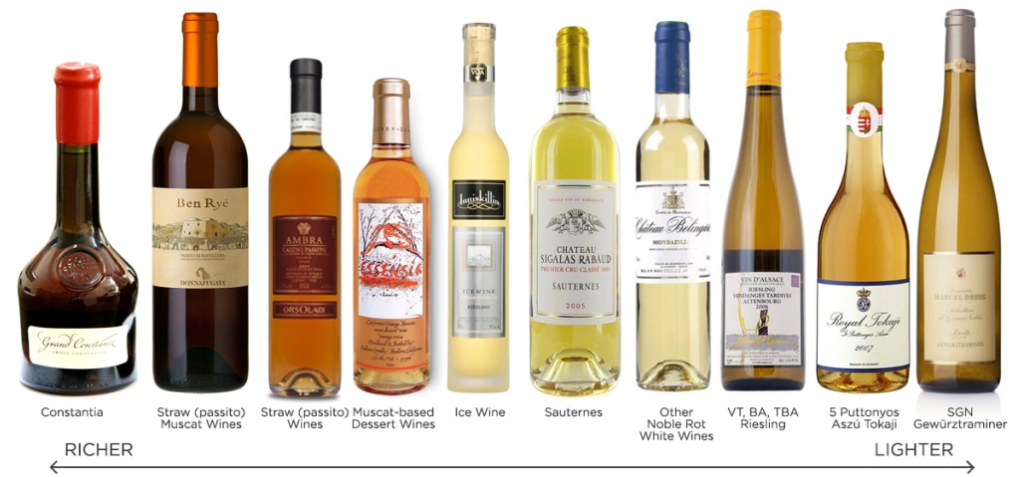
Dessert Wine Trends

As the name suggests, dessert wine is a sweet wine that is intended to be served alongside dessert. These wines are often rich in flavour and have a high sugar content.

Photo credit: varuninamdar.wordpress.com

There has been a growing demand for premium dessert wines aimed at satisfying consumer demand for high-quality and unique flavours. This has driven market growth by enticing wineries to improve and enhance their product offerings and release new artisanal options, which in turn command higher price points and increased revenue.

There is rising interest in low-alcohol dessert wines by health-conscious Millennials and the Gen Z population who desire lighter wines. These wines also appeal to a broad range of wellness seekers, thus enhancing market growth.

Again, health-conscious and ethically driven drinkers are creating demand for vegan and allergen-free wine alternatives. By excluding animal-derived fining agents, which are added to wine to alter its colour, flavour, texture, and clarity, new dessert wine markets become available. These agents include additives such as casein or gelatin.

There are generally five types of dessert wine. Thirty percent of the market is made up of fortified wines, consisting of Port, Sherry, Madeira and Marsala.

Late harvest wines are next, consisting of twenty-five percent of the dessert wine market. Included in this category are Late Harvest Riesling, Late Harvest Sémillon and Late Harvest Gewürztraminer.

Controlling twenty percent of the market is Ice Wine. Included are Eiswein and Ice Cider.

Botrytized Wines, also referred to as Noble Rot, consist of fifteen percent of the market. For an explanation of this type of wine, refer to my post, Dessert Wines from April 18, 2020. Wines in tis group include Sauternes and Tokaji Aszú.

The “Other” wine category make up the remaining ten percent of the dessert wine market. Included in this catch-all category is Recioto della Valpolicella, Vin Santo and Muscat / Moscato.

Sláinte mhaith

Maritimes Adventure

During a recent trip to the maritime provinces of Canada, I made a point of seeking out local wines to try. The first I came across while in St. Andrews by the Sea, New Brunswick; the second I found in North Rustico, Prince Edward Island and two while in Nova Scotia.

The first wine my wife and I tried was a 2019 Marquette from the Magnetic Hill Winery of Moncton, New Brunswick. It was a light bodied red wine similar to a Pinot Noir. It had aromas of cherries, blackcurrants and blackberries. The wine was a pleasure to drink and reasonably priced at $20.00 CDN.

The Marquette varietal is the cousin of the Frontenac varietal, which is a well-known French North American hybrid, and a descendant of Pinot Noir. This wine pairs well with pub foods such as cheeseburgers, bangers (sausages) and mash and chili con carne.

The second wine we tried was a $21.99 CDN Gamay from Matos Winery & Vineyards of St. Catherines, PEI. Until then I was not aware that there is a winery on PEI.

Matos Winery & Vineyards is a family-owned and run business that was initiated in 2007.  They utilize the French concept of terroir whereby they found a location where the combination of soil, slope, sun exposure and the peculiar weather patterns allow certain grape varieties to thrive.  They consulted with European vintners who visited PEI to provide their skill and knowledge.

Their Gamay has won a bronze medal at the National Wine Awards in 2016, 2014, 2012 and silver in 2011.

The first wine from Nova Scotia that we tried was the 2022 Baco Noir from Blomidon Estate Winery, of the Annapolis Valley, near Canning.

The 2022 Baco Noir has a nose of bright berry fruit accentuated by vanilla and notes of spice. Unfortunately for us, we found the wine to be slightly harsh and not quite as smooth and mellow as we have become accustomed to for Baco Noir. The price of this wine is $23.00 CDN.

Given the structure of this wine it would be best suited for pairing with barbecued beef or pork.

Blomidon Estate produces 100% Nova Scotia grown grapes and wines. Over the years they have earned several national and international awards.

The 2nd wine from Nova Scotia we experienced was Founders’ Red from Jost Winery, which is made from a blend of Leon Millot and Marechal Foch grapes. We experienced this wine during a quiet afternoon at our B&B outside of Cap-Pelé, New Brunswick. Like the day, this wine was very smooth and mellow. It had wonderful fruit flavours and was well worth the $17.19 CDN we paid for it. 

Founders’ Red is a well-balanced blend of Nova Scotian-grown grapes with deep colour and intensity. This wine pairs well with barbequed meats and roasted pork.

Sláinte mhaith

Pizza and Wine

Homemade pizza and wine are the standard Friday night fare at our house. The topping choices are numerous, ranging from veggies to savoury cured meats and cheese. The options seem to be only limited by the imagination.

Photo credit: vinointeriano.wordpress.com

No matter what type of pizza you enjoy there will be a suitable wine to complement it. Here are some suggestions to pair with your pizza whether you create it yourself or order it from your favourite restaurant.

Let’s start with the simple Cheese pizza. This straightforward pie goes well with a light red wine, such as Pinot Noir or Chianti.

Building on that foundation we progress to the Pepperoni pizza. Pepperoni is the culmination of cured meats and spices such as cayenne, anise and garlic. It pairs well with either two of my favourite wines, Cabernet Franc or Sangiovese. These bold, spicy reds complement the flavours of the pepperoni.

The combination of veggies and assorted meats creates an assortment of flavour found in the Supreme pizza. It may seem strange but Prosecco makes a great pairing as it won’t overpower the delicate flavours of the veggies but can still balance the taste of the savory ham, sausage and pepperoni.

Speaking of meat, the Meat Lovers pizza needs to be matched with a bold and robust wine, such as a Cabernet Sauvignon or Malbec. These wines have a bold richness, as well higher tannins and acidity to offset the fattiness of the meat.

Tangy, sweet BBQ Chicken pizza pairs well with a fruity Malbec or Pinot Noir. The wine will complement the tangy notes of the barbeque sauce in the pizza.

Heading in the opposite direction is the Veggie pizza. This type of colourful pizza needs a light, chilled red or full-bodied white to let the taste of the vegetables be revealed. A sparkling red wine, such as Lambrusco, or a Chenin Blanc or a Chardonnay would be a good match.

During my Italian adventure last year, I enjoyed a Margherita pizza on several occasions. A Margherita is a light pie consisting of tomato sauce, fresh mozzarella and fresh basil. It pairs well with a light wine, such as a dry Rosé or Prosecco.

If pineapple on pizza is your thing, then Hawaiian pizza is for you. The sweet and salty flavours will be complemented by a German Riesling or a New World Sauvignon Blanc. The wine’s acidity and sweetness will complement the sweetness of the pineapple.

No matter what your choice of pizza is, there is a wine to go along with it.

Sláinte mhaith

Old Vines Versus New Vines

Old vines or new vines; does it make a difference when it comes to making wine? The simple answer is yes, but there are some things to take into consideration. The main sticking point is finding common ground for the definition of ‘old’. The definition is not industry controlled so depending on where you ask, the meaning changes.

Photo credit: lastbottlewines.com

In France, New Zealand and Canada, ‘old’ can mean 30 years. In Australia, California and Spain, the vines are not considered ‘old’ until they are 50 or 60 years of age. A few Californian producers who have vines as old as 80 to 100 years have adopted the designation ‘ancient vines’. If 80 years is considered ancient then by comparison there are several Australian vineyards with vines of such an age they would be considered prehistoric, dating back more than 150 years, the upper limit of longevity. Without a true international standard for identifying the relative maturity of vines from one country to the next, the consumer must beware and take into consideration where the wine was produced.

The lifespan of a vine is determined by several factors. The vines of France and other European nations were destroyed during the 1800s and early 1900s by a sap-sucking root pest called phylloxera that destroyed the plants and necessitated replanting on resistant North American rootstocks. Also, in the relatively rainy parts of Europe, such as much of France, the vines die decades before they tend to in the hot dry regions of South Australia, California, Chile and much of Spain. Harsh winters in countries such as Canada led to vines having only a 30 to 35 year lifespan.

Young grape vines, though productive, deliver variable quality wine from year to year. When the sun shines, they grow a great amount of foliage which can produce bitter grapes. When it rains, these vines bloat with water. The vines require massive pruning to reduce the amount of foliage and encourage ripening. By contrast, old vines are constant, their reduced sap flow naturally yields smaller berries with a higher ratio of solids to liquid.

The deep roots of old vines are a big asset. They tap moisture in drought conditions and guard against bloating during rainy times. Old vines also tend to ripen earlier, a great benefit to growers in cooler climates where cool autumn temperatures reduce the growing season.

Old vine wines provide richness and more complex flavours that build rather than trail off after the up-front fruit fades away.  Young vines produce nice, aromatic wines but lack the complexity of flavour of wine produced from older vines. Wines produced from old vines will often cellar longer than wines produced from young vines.

Wine produced by old vines is generally more expensive than similar young vine wines. Because of the rarity, lower yields and perceived enhancement of wine quality, old vines have become increasingly sought after and valued by both the wine industry and consumers. As a result, old vine grapes typically demand a higher price per tonne. This combined with consumer demand, has resulted in old vine wines being more expensive to purchase in the stores.

It has been said that the appreciation of an old vine wine can be a way to connect with the past and to celebrate an enduring art form, similar to listening to the music of a great composer, reading literature or observing at the art of past masters. Wine made from old vines can reveal the distinctive character of a specific historic place and the artistry of the vintner, both past and present.

Sláinte mhaith

2023 National Wine Awards

This year was the 22nd addition of the WineAlign National Wine Awards of Canada (NWAC), which took place in Penticton, British Columbia.  There were 1,930 entries from 255 wineries. All entries to the competition are 100 percent grown and produced in Canada.

Photo credit: winealign.com

The National Wine Awards presents four major awards: The Canadian Winery of the Year, The Best Performing Small Winery, Icewine of the Year and Cider of the Year. Within each of the 37 categories, wines are eligible to compete for Gold, Silver or Bronze medals, all topped by Platinum medals, which are presented to the highest one percent of wines across all competition categories.

The major award winners and the Platinum and Gold medal winners from the top 25 wineries are presented below:

The Winery of the Year is Hidden Bench Estate Winery in Beamsville, Ontario.  Being one of the most respected Niagara wineries since its inception 20 years ago, Hidden Bench has finally won Winery of the Year honours by earning 12 medals – two Platinum, five Gold and five Silver.  Congratulations to proprietor Harald Thiel and his team, including winemaker Alex Baines and viticulturalist Joel Williams.

The Platinum and Gold winning wines were:

Platinum

  • Hidden Bench Pinot Noir Felseck Vineyard 2020
  • Hidden Bench Chardonnay Tete De Cuvée Rosomel Vineyard 2020

Gold:

  • Hidden Bench Estate Riesling 2020
  • Hidden Bench Natur Zero Dosage 2017
  • Hidden Bench Chardonnay Felseck Vineyard Unfiltered 2020
  • Hidden Bench Nuit Blanche Rosomel Vineyard 2021
  • Hidden Bench Chardonnay Beton 2021

The remainder of the top 25 wineries are as follows:

2. Tawse Winery, Ontario

Awards:  2 Platinum, 4 Gold, 8 Silver, 5 Bronze

Platinum

  • Tawse 2020 Carly’s Block Riesling
  • Tawse 2020 Tawse Riesling

Gold

  • Tawse 2020 Quarry Road Riesling
  • Tawse 2020 Cabernet Merlot
  • Tawse 2020 Limestone Riesling Spark!
  • Tawse 2021 Sketches Riesling

3. Megalomaniac, Ontario

Awards:  1 Platinum, 5 Gold, 1 Bronze

Platinum

  • Megalomaniac N/V Bubblehead Limited Edition Brut

Gold

  • Megalomaniac 2020 To Be Frank Cabernet Franc
  • Megalomaniac 2020 Reserve Cabernet Franc
  • Megalomaniac 2021 Narcissist Riesling
  • Megalomaniac 2020 Sonofabitch Pinot Noir
  • Megalomaniac NV Bubblehead Rosé

4. Deep Roots Winery, British Columbia (2023 Best Performing Small Winery)

The details regarding Deep Roots are presented  under the heading regarding the Best Performing Small Winery below.

5. Corcelettes Estate Winery, British Columbia

Awards:  1 Platinum, 7 Gold, 5 Silver, 1 Bronze

Platinum

  • Corcelettes 2020 Syrah Corcelettes Estate Vineyard

Gold

  • Corcelettes 2021 Reserve Pinot Noir Micro Lot Series
  • Corcelettes 2022 Oracle Rosé
  • Corcelettes 2020 Cabernet Franc
  • Corcelettes 2020 Cabernet Sauvignon Corcelettes Estate Vineyard
  • Corcelettes 2020 Merlot
  • Corcelettes 2019 Reserve Cabernet Sauvignon
  • Corcelettes 2019 Merlot

6. Road 13 Vineyards, British Columbia

Awards:  1 Platinum, 5 Gold, 7 Silver, 2 Bronze

Platinum

  • Road 13 2020 Select Harvest GSM

Gold

  • Road 13 2013 Jackpot Sparkling Chenin Blanc
  • Road 13 2020 John Oliver Cabernet Franc
  • Road 13 2021 Viognier
  • Road 13 2020 John Oliver Petit Verdot
  • Road 13 2022 Honest John’s Bright Rosé

7. SpearHead Winery, British Columbia

Awards:  1 Platinum, 5 Gold, 2 Silver, 4 Bronze

Platinum

  • SpearHead 2020 Club Consensus Pinot Noir

Gold

  • SpearHead 2021 Saddle Block Pinot Noir
  • SpearHead 2021 Cuvée Pinot Noir
  • SpearHead 2021 Golden Retreat Pinot Noir
  • SpearHead 2021 Clone 828 Pinot Noir
  • SpearHead 2022 Pinot Gris

8. CedarCreek Estate Winery, British Columbia

Awards:  1 Platinum, 6 Gold, 3 Silver, 6 Bronze

Platinum

  • CedarCreek 2021 Aspect Collection Block 3 Riesling

Gold

  • CedarCreek 2020 Platinum Haynes Creek Malbec
  • CedarCreek 2021 Estate Cabernet Franc
  • CedarCreek 2021 Aspect Collection Block 5 Chardonnay
  • CedarCreek 2021 Estate Chardonnay
  • CedarCreek 2022 Estate Pinot Noir Rosé
  • CedarCreek 2022 Estate Riesling

9. Thirty Bench Wine Makers, Ontario

Awards:  1 Platinum, 4 Gold, 3 Silver, 4 Bronze

Platinum

  • Thirty Bench 2020 Small Lot Riesling Wood Post Vineyard

Gold

  • Thirty Bench 2020 Small Lot Riesling Wild Cask
  • Thirty Bench 2020 Small Lot Cabernet Franc
  • Thirty Bench 2020 Benchmark Red
  • Thirty Bench 2020 Small Lot Cabernet Sauvignon

10. Township 7 Vineyards & Winery, British Columbia

Awards:  7 Gold, 2 Silver, 3 Bronze

Gold

  • Township 7 Seven Stars 2019 Aurora Stoneridge Vineyard
  • Township 7 Seven Stars 2019 Polaris
  • Township 7 2019 Riesling
  • Township 7 Benchmark Series 2019 Syrah Fool’s Gold Vineyard
  • Township 7 Infinite Series 2015 Sirius
  • Township 7 Benchmark Series 2019 NBO Blue Terrace Vineyard
  • Township 7 2019 Syrah

11. Quails’ Gate Estate Winery, British Columbia

Awards:  10 Gold, 4 Silver, 5 Bronze

Gold

  • Quails’ Gate 2020 Pinot Noir
  • Quails’ Gate 2020 Richard’s Block Pinot Noir
  • Quails’ Gate 2020 Queue
  • Quails’ Gate 2020 The Boswell Syrah
  • Quails’ Gate 2021 Chardonnay
  • Quails’ Gate 2021 Rosemary’s Block Chardonnay
  • Quails’ Gate 2021 Stewart Family Reserve Chardonnay
  • Quails’ Gate 2021 Chenin Blanc
  • Quails’ Gate 2021 Clone 220 Chenin Blanc
  • Quails’ Gate 2021 Three Wolves Vineyard Pinot Gris

12. Trius Winery, Ontario

Awards:  7 Gold, 4 Silver, 4 Bronze

Gold

  • Trius 2020 Grand Red
  • Trius 2020 Showcase Cabernet Franc Red Shale
  • Trius 2020 Showcase Chardonna
  • Trius 2021 Showcase Pinot Noir Clark Farm
  • Trius 2021 Distinction Sauvignon Blanc
  • Trius N/V Showcase Blanc de Blancs Watching Tree Vineyard
  • Trius N/V Brut

13. Blasted Church Vineyards, British Columbia

Awards:  6 Gold, 7 Silver, 4 Bronze

Gold

  • Blasted Church 2019 Merlot
  • Blasted Church 2019 Cabernet Merlot
  • Blasted Church 2019 Nothing Sacred
  • Blasted Church 2020 Nectar of the Gods
  • Blasted Church 2020 Holy Moly Petit Verdot
  • Blasted Church 2022 Small Blessings Blanc de Noir

14. Painted Rock Estate Winery, British Columbia

Awards:  5 Gold

Gold

  • Painted Rock 2019 Red Icon
  • Painted Rock 2019 Syrah
  • Painted Rock 2019 Malbec
  • Painted Rock 2019 Estate Grown Merlot
  • Painted Rock 2019 Cabernet Franc

15. Mission Hill Family Estate, British Columbia

Awards:  9 Gold, 9 Silver, 2 Bronze

Gold

  • Mission Hill 2019 Legacy Collection Quatrain
  • Mission Hill 2021 Legacy Collection Perpetua
  • Mission Hill 2021 Reserve Merlot
  • Mission Hill 2021 Terroir Collection Pine Hill Chardonnay
  • Mission Hill 2022 Reserve Pinot Blanc
  • Mission Hill 2022 Reserve Pinot Gris
  • Mission Hill 2022 Reserve Riesling
  • Mission Hill 2022 Reserve Rosé
  • Mission Hill 2022 Terroir Collection Border Vista Rosé

16. 13th Street Winery, Ontario

Awards:  6 Gold, 8 Silver, 4 Bronze

Gold

  • 13th Street Winery 2017 Premier Cuvée
  • 13th Street Winery 2022 Expression Cabernet Rose
  • 13th Street Winery 2022 Expression Riesling
  • 13th Street Winery 2021 Syrah
  • 13th Street Winery 2021 Whitty Vineyard Gamay
  • 13th Street Winery 2022 Expression Riesling

17. Nk’Mip Cellars, British Columbia

Awards:  6 Gold, 10 Silver, 1 Bronze

Gold

  • Nk’Mip Cellars 2019 Qwam Qwmt Syrah
  • Nk’Mip Cellars 2021 Qwam Qwmt Chardonnay
  • Nk’Mip Cellars 2020 Qwam Qwmt Cabernet Sauvignon
  • Nk’Mip Cellars 2020 Qwam Qwmt Merlot
  • Nk’Mip Cellars 2021 Merriym White Meritage
  • Nk’Mip Cellars 2020 Merriym Red Meritage

18. Van Western Vineyards, British Columbia

Awards:  5 Gold, 2 Silver

Gold

  • Van Westen 2021 Viscous
  • Van Westen 2020 V
  • Van Westen 2022 Vino Grigio
  • Van Westen 2022 Viognier
  • Van Westen 2020 Violeta

19. Two Sisters Vineyards, Ontario

Awards:  1 Platinum, 2 Gold, 5 Silver, 1 Bronze

Platinum

  • Two Sisters Vineyards 2020 Riesling

Gold

  • Two Sisters Vineyards 2020 Chardonnay
  • Two Sisters Vineyards 2020 Lush Sparkling Rosé

20. Ravine Vineyard Estate Winery, Ontario

Awards:  1 Platinum, 2 Gold, 7 Silver, 2 Bronze

Platinum

  • Ravine Vineyard 2020 Cabernet Franc

Gold

  • Ravine Vineyard 2020 Reserve Cabernet Sauvignon
  • Ravine Vineyard 2011 Vintage Brut

21. Orofino Estate Vineyards, British Columbia

Awards:  4 Gold, 5 Silver, 2 Bronze

Gold

  • Orofino 2022 Old Vines Riesling Home Vineyard
  • Orofino 2022 Gamay
  • Orofino 2020 Syrah
  • Orofino 2021 Zinfandel

22. TIME Family of Wines, British Columbia

Awards:  4 Gold, 6 Silver, 5 Bronze

Gold

  • McWatters Collection 2020 Meritage
  • Chronos 2020 Merlot
  • Chronos 2020 Cabernet Franc
  • Evolve 2022 Brut Rosé

23. River Stone Estate Winery, British Columbia

Awards:  4 Gold, 1 Silver, 2 Bronze

Gold

  • River Stone Estate Winery 2019 Corner Stone
  • River Stone Estate Winery 2019 Stones Throw
  • River Stone Estate Winery 2022 Splash
  • River Stone Estate Winery 2022 Sauvignon Blanc

24.  Moon Curser Vineyards, British Columbia

Awards:  5 Gold, 1 Silver, 2 Bronze

Gold

  • Moon Curser 2022 Arneis
  • Moon Curser 2022 Roussanne Marsanne
  • Moon Curser 2022 Viognier
  • Moon Curser 2022 Dolcett

25. Peller Estates Niagara-on-the-Lake, Ontario

Awards:  4 Gold, 4 Silver, 1 Bronze

Gold

  • Peller Estates Niagara 2020 Andrew Peller Signature Series Cabernet Franc
  • Peller Estates Niagara 2021 Private Reserve Late Harvest Vidal
  • Peller Estates Niagara 2022 Private Reserve Sauvignon Blanc
  • Peller Estates Niagara 2021 Andrew Peller Signature Series Rieslin

The 2023 Best Performing Small Winery of the Year was presented to Deep Roots Winery of Naramata, British Columbia.  Deep Roots had the best-scoring top five wines in the competition among wineries producing fewer than 10,000 cases. Their 2020 Reserve Chardonnay earned a platinum medal, one of only three Chardonnays to do so, as well as four gold medals for:

  • Deep Roots Parentage Red 2020
  • Deep Roots Gamay 2022
  • Deep Roots Syrah 2020
  • Deep Roots Sauvignon Blanc 2022

British Columbia wineries dominated the Small Winery category, claiming nine of the top ten rankings.  The remaining top 10 small wineries are as follows:

2. Corcelettes Estate Winery, British Columbia

3. SpearHead Winery, British Columbia

4. Township 7 Vineyards & Winery, British Columbia

5. Painted Rock Estate Winery, British Columbia

6. Van Westen Vineyards, British Columbia

7. Orofino Vineyards, British Columbia

8. River Stone Estate Winery, British Columbia

9. Moon Curser Vineyards, British Columbia

10. The Organized Crime Winery, Ontario

Note: A minimum of five wines must have been entered to be eligible for Winery of the Year and the Top Wineries lists. Ranking was determined by the total score of their top five wines, not total number of medals.

The complete listing of all the winning wines from this year’s event is available on the Canadian Wine Awards website, www.winealign.com/awards.

Sláinte mhaith