LEED Certification in the Wine Industry

Many Canadian vintners and wineries are working to reduce both our carbon footprint and reduce negative environmental impact.  They are finding ways to reduce energy consumption, lessen dependency on pesticides, herbicides and chemical fertilizers, as well as lessen the need for water.

Stratus Vineyards and Tantalus Vineyards

In the past I have discussed the impacts of climate change on the wine industry but today I will talk about the actual buildings and their design.  Leadership in Energy and Environmental Design or LEED, is the most widely-used green building rating system in the world, available for virtually all building, community, and home-project types.  In Canada LEED is a proven path to addressing climate change, and to creating buildings that are more resource-efficient, healthy and resilient.

LEED certification provides independent, third-party verification that a building was designed and built using strategies aimed at achieving high performance in key areas of human and environmental health. This includes location and transportation, sustainable site development, water savings, energy efficiency, materials selection and indoor environmental quality.

There are two wineries in particular that have been leaders in adapting change.

Stratus Vineyards, Niagara-on-the-Lake, Ontario

Stratus was the first winery in Canada to earn LEED certification.  In order to qualify for LEED certification, the winery had to meet numerous criteria that reduced the negative impact on the environment both during construction and on a permanent, operational basis.

The facility was designed in a way to minimize the amount of equipment needed and where possible it is designed in a way where it can be reconfigured in response to the need. Even the table where the grapes are sorted can be set up in at least 17 different ways.

The winery was built using recycled materials where possible. The building also includes a super-insulated roof and geothermal heating and cooling.  There is a resource and energy efficient electrical and plumbing system as well as a toxin-free waste management program.

They also chose native plants and flowers for the landscaping because they can thrive without the use of chemical fertilizers or pesticides. Even the pavement for the parking lot was made of stone that reduces light-reflected heat.

Tantalus Vineyards, Kelowna

Tantalus takes great care in everything they do, from farming to winemaking. Riesling is the real focus but their Pinot Noir shines as well. 

Being a successful winery and needing to increase production, Tantalus found themselves in a situation where they needed to replace their original building. The new facility earned them the distinction of being British Columbia’s first LEED-certified winery. 

The building is environmentally friendly and energy efficient. There are natural sky lights, an unpaved driveway and parking area to avoid heat reflection and a highly efficient dual-exchange heating and cooling system.  The wine shop features custom handcrafted wooden cabinetry sourced from native Alder and the landscaping surrounding the winery has been planted with bee-friendly flowers and shrubs.

The wastewater treatment system processes the winery’s effluent and domestic sewage. It is the first of its kind for a British Columbia winery and allowed them to be completely non-reliant on municipal or private waste disposal providers.

Final Thoughts

LEED certifications is just one way of helping preserve and protect our environment. Both of these wineries, along with many others, are also following sustainability practices and some are even aiming to convert to dry-farming.  One thing for certain is that the wine industry is helping to lead the way to improve our environmental health.

Sláinte mhaith

Ripasso Style Wines

Ripasso is an ancient wine making technique used for centuries in Italy’s Valpolicella wineries. Ripasso, also known as double fermentation, is a method used to give more structure, body and flavours to the basic Valpolicella wine.  Ripasso is an Italian word meaning “review“, “re-pass” or “go over again“.

Photo credit: VinePair.com

Once harvested in autumn, selected grapes to be used in both Amarone and Recioto wines remain in lofts above wineries to dry for about four months. All the rest of the harvested grapes are squeezed and fermented to make the basic Valpolicella Classico wine.

At the end of January or beginning of February the semi-dried grapes for Amarone and Recioto are squeezed and fermented together with grape skins. Once the fermentation is complete the grape skins are removed and wine is then stored for ageing.

The Valpolicella wine that was fermented back in the fall is then put over these Recioto and Amarone skins which, being still full of un-fermented sugars, starts a second fermentation. These skins still contain aromatic compounds and tannins that are transferred to the Valpolicella wine.

Valpolicella Ripasso shares the freshness and lightness of basic Valpolicella wine but has more of the structures and flavours of the more expensive Amarone.  This is kind of a happy medium between the other two. There is cherry fruitiness of a classic Valpolicella but it will have more tannins and flavours from the dried grape skins; providing flavour of darker fruits, spice and leather and will have a longer finish.

Valpolicella Ripasso wine will be identified in one of several ways.  On the label beside the words ‘Valpolicella Classico DOC’, will appear an additional description such as Ripasso, Double Fermentation or Second Fermentation.

You can count on the wine being a medium bodied wine, fruity and having tertiary flavours and aromas.  Some will have flavours similar to a basic Valpolicella wine, while others will be closer to an Amarone wine.  Each vintner has their own style of making it as they use varying percentages of fresh to dried grapes.  It is worth while trying several different ones to find your own preference.

Sláinte mhaith

Wine Storage Options

I have read articles that have suggested that there are two types of “wine people” – those who collect it and those who buy it to drink. 

In my mind a collector is someone who purchases elite wines as an investment.  In other words, this is someone who buys wine with the intention of later reselling it for a profit.  The cellaring requirements for these collectors could range from a few weeks to many years, depending on the situation.  Generally speaking, these individuals will need space to store a significant number of bottles at any one time.

Wine drinkers, on the other hand, I see as being those who purchase wine for the pure enjoyment gained from consuming it.   Some of whom follow the ‘just in time’ manufacturing process whereby a bottle of wine is purchased on or about the date it will be consumed.  Others like to keep some wine on hand ahead of when it will be consumed, to be prepared for occasions that come up unannounced.  Cellaring requirements in this situation range from not being required at all to where a wine fridge with space for ten to twenty bottles will provide sufficient storage.

However, I would like to suggest that there is a third category of wine people that I would categorize as a longer term wine consumer.   Like the collector, long term storage capability is essential as these individuals purchase both wines that are drinkable in the present, like the wine drinkers described above, but they also purchase wines that need to mature and won’t be at their optimum for several years in the future.  Unlike the collector, the pedigree of the wines purchased are less likely to be on the list of famous wine producers, and more likely to be less expensive but good quality wines.  

Whether you are looking to retain a few bottles or a large number of cases, the storage requirements are the same; you need to have a sealed fridge with high humidity, consistent temperature, no UV rays, and minimal vibration.

Storage Unit

The temperature of the storage unit should be in the neighbourhood of 13o C or 55o F.  If you elect to construct a wine room or cellar, the room needs to be insulated with a minimum of R13 insulation.  The door must be well insulated and sealed to prevent the cold air from escaping. A simple exterior door will suffice but the sky is the limit when considering more elaborate options.

Cooling options range in size and cost depending on the room size and cooling option chosen.

The cellar should be designed in a way to allow for storage, display and tasting.  It has been suggested that when determining your storage requirements you should consider the number of bottles you think you would like to retain and then double it.  Otherwise you may find you quickly run out of storage and be forced (sounds harsh when considering wine) to drink your wine sooner than you intended.

Not all wine bottles are the same size so that must be considered when looking at racking solutions.  Typically Burgundy bottles are fatter than Bordeaux bottles; new world wine bottles (e.g. Australia, South America) may be longer than those of the old world ( e.g. France, Italy, Germany).

Depending on your personal preferences and budget, racking options can be either wood, metal or wire cable and be either custom made or created from modular kits of varying sizes and styles.  If a wood solution is selected, cedar or redwood is the best option given that the humidity level in the cellar will be relatively high.

Personally, on two occasions I have used modular racks that I purchased from Rosehill Wine Cellars.  I was able to incorporate the racks into the design so that they appear to have been customized for the space.

Return on Investment

A wine fridge will cost upwards from about $200 to in excess of $2,000. A cellar will cost from about $7,000, depending on design and materials chosen.

Some real estate experts say that home buyers looking at homes valued at $850,000 or more expect that the home will have at least a wine fridge.  However, a wine cellar may or may not add value, depending on the preferences of each particular buyer.

Sláinte mhaith

Dry-Farming Vineyards

Dry-farming or dryland farming occurs when the vines are not irrigated. Natural rainfall alone provides the necessary moisture to promote the growth of the vine and ripen the grapes.

Photo credit: WineMag.com

This practice is particularly common in Europe. It is how vineyards have always been cultivated in Burgundy, Bordeaux and other European wine growing locations. The only allowances for irrigation in areas of France, Italy, Germany and Spain would be when starting young vines or when there are extreme drought conditions and the health of the vines is threatened.

Advocates, such as California’s Frog’s Leap and Moss Wood in Western Australia, maintain dry-farming yields higher-quality grapes with more fruit and aromatic intensity. Dry-farmed grapes are typically smaller in size compared to ones that have been irrigated, which means more concentration and character in the resulting wine.

Members of Oregon’s Deep Roots Coalition, which include top producers such as Evening Land, Eyrie Vineyards and Trisaetum, believe irrigation prevents wineries from capturing the true essence of their vineyards.

One of the major benefits of irrigation is the ability for grape growers to increase yields. Many of the value-priced wines from Australia, Argentina, Chile, California and South Africa couldn’t exist without a high volume of fruit.

Technological advances and research means it’s not as simple an equation as decreasing quality to increase quantity. A considerable amount of highly collected, top-scoring wines come from irrigated vineyards.

Some wine regions couldn’t exist without irrigation. Grape vines need water. Vineyards surrounded by trees or containing other crops need to compete for water.  Some grape varieties are more dependent on water than others. The water holding capacity of the soils is also a significant consideration for whether the yearly average rainfall is enough to sustain the vineyards.

Dry-farming practices have become more common as climate change and the need for water conservation force the hands of wine growers to become more sustainable, especially in arid areas prone to drought conditions. Some producers now use their irrigation systems only in extreme circumstances. Irrigated vines have shallow roots as they have never needed to develop root systems in search of moisture below the top layers of soil, making it a risky venture.

Montes Winery in Chile’s Colchagua Valley began to embrace dry farming in 2009. By 2012, Montes curtailed irrigation across 300 hectares, including vineyards responsible for its flagship M, Folly and Purple Angel labels. However, the irrigation lines have been left in place in case they are needed.

Owner Aurelio Montes has said that the vines produce half of the crop compared to the expected yields when they were regularly irrigated. Irrigation continues for the vineyards that provide the fruit for Montes’ more affordable wines.

Further south, in Maule, Chile’s oldest wine-growing region, a large number of family owned vineyards never introduced irrigation and have unwittingly found themselves ahead of the trend. The local Vigno movement, an association of producers looking to market the robust red wines made from old Carignan vines, displays “dry-farmed” on all of its labels.

The meaning of ‘dry-farming doesn’t necessarily have the same meaning to all producers, so “dry-farmed” on a label can lead to confusion. It is certainly a factor to consider as you look at the range of wines available, but it should not be interpreted as an indication of the wines quality.

Sláinte mhaith

Myths About Irish Whiskey

As I had mentioned in the past I would occasionally change things up and talk about my other spirited passion. This is one of those weeks.

Irish whiskey has been becoming more popular in recent years. During the last decade the category has boomed. According to Forbes, U.S. sales of Irish whiskey increased by 9% in 2019, and rose over 13% in the five years prior to that. The number of distilleries in The Republic of Ireland has increased from only four in 2010 to more than 30 by 2020.

Scotch Is Better

There is no objective answer to this statement but there are a few subjective considerations if you decide to take a side. Scotch has had an advantage in that the selection of single malts and blends available in North America far out-weigh the number of Irish whiskeys.  This is largely due to there being 130 distilleries in Scotland compared to just over thirty in Ireland. However, that trend is now changing because of a range of interesting Irish whiskeys becoming available to the North American market.

Another argument for scotch supremacy is that it’s generally distilled twice, while Irish whiskey is usually distilled three times. Because of this some people think the whiskey tastes too light. For this same reason others consider Irish whiskey to be more approachable and versatile.  Having said this, not all Irish whiskey is triple distilled as some distilleries opt for only a double distillation.

It’s Only Good for Shots

It is true that Irish whiskey is ordered as shots but it also works in a number of cocktails such as Irish Coffee, Whiskey & Ginger or a Zesty Irishman. Many of the whiskeys are also very palatable being sipped neat, with a splash of water, or on the rocks.

All Irish Whiskeys Taste the Same

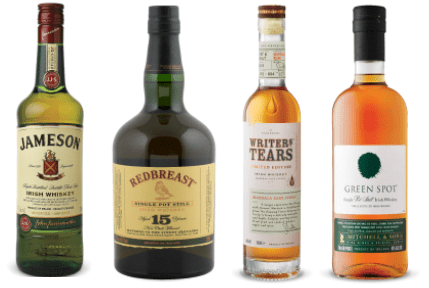
This is anything but true but since Jameson’s domination of the North American market for so long this became the perception. Now there is a large range of Irish whiskeys that feature very different flavour profiles. The classic Irish pot still style of whiskey is readily available, including such brands as Green Spot and Redbreast. There are also Irish single malts like Writers’ Tears, Knappogue Castle and Tyrconnell, which both offer whiskeys that have been finished in sherry or other wine casks. There is even the peated Connemara.

Final Thoughts

There will always be those who favour Scotch Whisky over Irish Whiskey and vice versa. To me it is more important to appreciate the unique qualities of both whether or not you have a personal preference of one over the other. For me, depending on the occasion and my mood I have several single malt scotch favourites, as well as several single malt and single pot Irish whiskeys that I am partial to.

My scotch go-to’s include Islay’s Lagavulin and Bowmore, and Speyside’s Glenlivet.  From the emerald isle I find Sexton to be smooth and calming and Green Spot more complex and robust.

Sláinte mhaith

Traditional Georgian Wine

A friend recently told me about a wonderful Georgian wine she had tried that had been created using a container that had been buried in the ground.  She asked me if I was aware of this process but I was not so I set out to discover what it is.

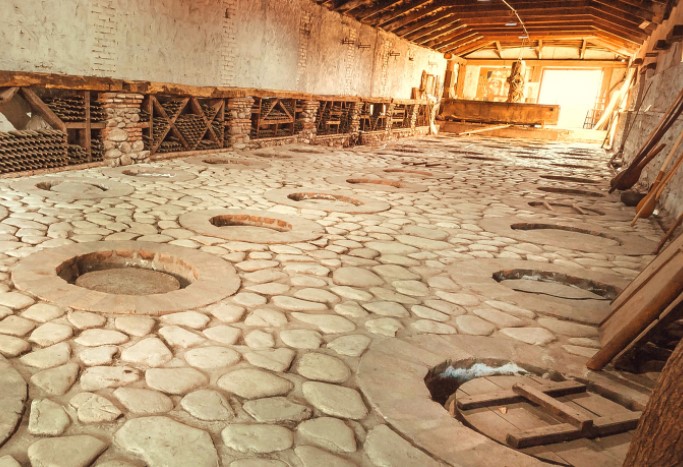
Photo credit: InternationalWineChallenge.com

Georgia is arguably the oldest wine producer in the world, dating back 8,000 years.  Its wine production relied on the qvevri (pronounce “kway-vree”), which is an egg-shaped cavernous terracotta pot.  It is lined with beeswax and buried to the mouth underground.

Use of the qvevri was halted by the Soviets after they invaded Georgia in 1921 and throughout their 70 year occupation.  During that time the Soviets ripped up the hundreds of grape varieties grown on Georgia’s many family vineyards, replacing them with just a few grape varietals.  They nationalized viniculture, resulting with the production of some 200 million litres of mediocre, mass-produced wine each year.

In 2006, the Georgian wine industry faced a grave threat when Vladimir Putin banned exports to Russia. Putin claimed it was to avoid rampant health violations in the Georgian wine industry but Georgia believed they were being punished for developing economic ties with the West.

A saving grace was that at the end of the Soviet occupation Georgian vintners began to return to using the qvevri method, rekindling a return to Georgia’s traditional wine industry.   There are no barrels, vats or monitoring systems used in producing wine when using this ancient method.

White wine produced in a qvevri creates a unique flavour. Grapes, skins and stems all go into the qvevri in October each year where they are left to ferment with natural yeast for two weeks before being sealed in the qvevri and left buried underground for six months.  The lids are then opened the following April and the developing wine is transferred to a smaller set of qvevri for a further half year of aging before bottling.

The extended skin contact gives the white qvevri wine an orange tint and a deep tannin flavour. Red qvevri wine is made utilizing the same process.

With the loss of the Russian market Georgia’s wine industry virtually collapsed.  In 2009 production was only 22 million litres a year.  However, by 2014 production had quadrupled since Georgia has developed more foreign ties.

Today qvevri wine still only represents less than 1 percent of the total Georgian output. However, the number of qvevri winemakers is growing as at least 30 artisanal winemakers use the ancient vessels exclusively, and larger wineries are adding qvevri wines to their inventory.

Other nations are now experimenting with this type of fermentation process, copying the qvevri using semi-porous materials such as concrete, ceramic, terracotta, and permeable plastic, to make egg-shaped fermenters.

The qvevri method ages the wine gradually, developing more flavour, softening tannins, and improving mouthfeel but it is not yet certain how popular this style of wine will become.  The answer will likely come down to a matter of taste, but if my friend’s reaction to it is any indication, qvevri produced wines will have a bright future. 

Sláinte mhaith

Sustainability of the Wine Industry

Sustainability is defined from an environmental perspective as “the avoidance of the depletion of natural resources in order to maintain an ecological balance”.  The objectives include a desire to improve environmental performance, improve the quality of wine growing and winemaking in an environmentally responsive manner, provide information to consumers and add value to the wine industry and the community. 

Because of climate change, people are more willing than ever to go “green” with their eating habits, from going more plant-based to cutting back on food waste. Many people have become interested in making their beverages more eco-friendly, including drinking sustainable wine.

Wine Growers Canada (WGC) supports a selection of appropriate environmental sustainability programs for both winery and vineyard operations, underlining a widespread awareness of environmental sustainability and a commitment to implementation. WGC’s Environmental Sustainability Principles were developed in cooperation with FIVS, a worldwide organization designed to serve the alcohol beverage industry. FIVS also collaborates with the International Organization of Wine and Vine (OIV) on sustainability, and both have been adopted by the World Wine Trade Group. These principles ensure flexibility in achieving environmental sustainability objectives, while preserving the programs of individual wineries and providing an ability to achieve success within a company’s particular operating environment.

Vineyards

The vineyards are where sustainable practices are the most obvious.  The main objective is to reduce the need for the use of chemicals and create a healthy viable biodiversity where the vineyard can survive. 

Some vintners are using sheep to mow and fertilize their vineyards.  Sheep along with ducks work to control pests and weeds.

Cover crops such as grasses, legumes, mustard and radishes may be planted between the rows of vines to assist with soil fertility, enhance microbial activity and protect against soil erosion.  These plants attract desirable predatory insects that can help control the species that can damage the vines and fruit.

Use of alternative energy sources such as solar panels are also helpful.

Wineries

The proximity of the vineyard to the winery can have a sustainable impact.  The closer the two are together the less physical stress the grapes will have between harvesting and wine making.

A winery having a significant portion underground reduces heating and cooling energy requirements.  Underground cellars naturally maintain a consistent level of temperature and humidity.

Geothermal heating and cooling systems, as well as using gravity rather than pumps to transport the wine from crushing to fermentation and cellaring are also effective practices.

Sustainable Wine

In order to become a certified sustainable winery, it must be evaluated by a credited independent third party.  This helps insure that a sustainability symbol or logo (usually found on the back label) truly indicates that a wine is produced using sustainable methods.

These standards include composting waste to make fertilizer, conserving water and reducing energy consumption and pesticide use. To qualify, wineries must provide records of energy use and greenhouse gas emissions as well as water management and employee health and safety.

Sustainable wine-grape growing is a journey, not a destination.

Identifying Sustainable Wine

If you want to choose good-quality sustainable wine, take time to learn more about where the wine came from and how the grapes are produced. The easiest way to do this is to look for third-party labels, such as EMS, LIVE or SWO (Sustainable Wines Ontario) on bottles of wine when you shop.

Canadian Wineries Practicing Sustainability

Ontario

Many Ontario wineries have chosen to become a Sustainable Winemaking Ontario Certified Winery (SWO).  To be certified, the wineries are audited annually to ensure they are adhering to environmentally sustainable practices in their winemaking operations. Best practices include conservation of water, reduction in waste and wastewater and implementation of energy efficiency programs, including the use of sustainable power sources.

Certified Ontario wineries must also produce VQA wines, which are made from 100% locally grown grapes. Local wines inherently have a smaller carbon footprint and also play a vital role in preserving local economies. They are an integral part of a community’s economic health.

SWO Certified wineries must also cultivate positive relationships within their community. They must be leaders in social responsibility and be committed to producing authentic regional wines.  

SWO wineries and wines can be identified by the green leaf icon found on labels and in the Wine Country Ontario Travel Guide.

Participating SWO wineries are listed below:

SWO Winery & Vineyard Certified

  • Cave Spring Vineyard
  • Château des Charmes
  • Flat Rock Cellars
  • Henry of Pelham Family Estate
  • Hidden Bench Estate Winery
  • Malivoire Wine Company
  • Pelee Island Winery & Pavilion
  • Southbrook  Organic Vineyards
  • Stratus Vineyards

SWO Winery Certified

  • Reif Estate Winery
  • Strewn Winery
  • Vineland Estates Winery

Some wineries also have additional certifications:

  • Certified Organic wineries use 100% grapes grown without the use of chemical pesticides, herbicides or synthetic fertilizers.  Instead, they fertilize with compost, compost teas, green manure and cover crops;
  • Biodynamic wines are generally certified through the Demeter Farm Standard, which reflects the biodynamic principle of the farm as a living organism: self-contained and self-sustaining, following the cycles of nature; and
  • Leadership in Energy and Environmental Design (LEED) is a green building rating system. It promotes global adoption of green building and development practices through the implementation of universal performance criteria. It is administered in Canada by the Canada Green Building Council (CaGBC).

British Columbia

The first wines certified under a new made-in-BC sustainability program should be on shelves this year.  The certification process, Sustainable Winegrowing BC (SWBC), was originally scheduled to launch in April 2020, but was delayed by COVID-19. With the program up and running, BC vineyards and wineries are now able to apply for a third-party audit, receive certification and describe their wine as “made from grapes grown in a certified sustainable vineyard” or “made in a certified sustainable winery.”

Program development began more than 10 years ago, driven mostly by industry volunteers under the auspices of the BC Wine Grape Council.  The wineries involved include large wineries such as Arterra and Andrew Peller, medium-size wineries like Quails’ Gate and Hillside Estate, as well as some boutique wineries like Tantalus and Le Vieux Pin/La Stella.  Vineyard owners, consultants and Summerland Research and Development Centre scientists round out the membership.

To date, 68 vineyards and 37 of the province’s 280 wineries have completed the self-assessments.

In Closing

Sustainability is the way of the future.  Supporting these wineries is an investment in our own future and well-being.  The quality and flavour of these wines is equal to, or superior to non-sustainable wines.  Here’s to the future!

Sláinte mhaith

New York State Wines

New York is the third largest wine producer in the United States, following California and Washington. New York produces roughly 3.5% of the U.S.’s wine production compared to California at over 84% and Washington at slightly over 5%.

There are eleven designated American Viticultural Areas (AVA).  An AVA is a designated wine grape-growing region in the United States as identified by the Alcohol and Tobacco Tax and Trade Bureau, and the United States Department of the Treasury. The AVAs are Champlain Valley, Long Island, North Fork of Long Island, The Hamptons Long Island; Hudson River Region; Finger Lakes, Seneca Lake, Cayuga Lake; Niagara Escarpment , Upper Hudson and Lake Erie.

Wine production began in New York in the 17th century with Dutch and Huguenot plantings in the Hudson Valley. Today the two dominant wine regions are the Finger Lakes and Long Island.  In 1976 the Finger Lakes and Long Island regions had 19 wineries. By 1985 this number increased to 63 wineries.

The climate differs amongst the eleven regions because of regional influences, such as the Atlantic Gulf Stream and the numerous bodies of water and mountainous regions around the state. The annual precipitation ranges from 76 cm to 127 cm. The growing season in the Lake Erie and Finger Lakes regions ranges from 180 to 200 days a year, while on Long Island the season extends to 220 days.

Today there are over 450 wineries throughout the state.

Riesling grapes consist of less than 10% of New York’s wine production but are used to make some of the highest quality wines. Other varietals include French hybrids, American hybrids and Vitis Labrusca, which are vines native to eastern North America.

American hybrids grown include Catawba, Delaware, Niagara, Elvira, Ives and Isabella. French hybrids consist of Aurore, Baco Noir, De Chaunac, Seyval Blanc, Cayuga, Vidal and Vignoles, which is used to make late harvest wines and ice wines.

I find it interesting that even though I can see New York State from a Muskoka chair in my yard I can very seldom find New York wine in my local liquor store.  On the other hand I can find California, Washington and even Oregon (ranked 5th in U.S. production at only 1.5%) wines all the time.  Especially in the case of Oregon, I am left to think that either Oregon wines are superior in quality and flavour to New York wines or they have a much more aggressive marketing plan, or both.  I can vouch for the quality of Oregon wine but have not had the opportunity to do the same for New York wine.

Sláinte mhaith

Whisky or Whiskey

Today I am taking a break from my usual subject, the sweet nectar of the Greek gods, otherwise known as wine, to talk a little about my second passion, which I am equally as fond of; whisky, or is it whiskey? The fact of the matter is that whether it is whisky or whiskey is dependent on where the brew was made.  Whisky hails from Scotland while whiskey originated in Ireland. Whiskey is also the normal spelling used for North American varieties.

Both Scottish whisky and Irish whiskey make use of the same grain, barley, but the similarity ends there. The two beverages do not taste at all alike.  In fact the taste can vary dramatically by region within each of the countries.

The common North American whiskies are made with rye, wheat or corn, or a combination of two or all three.  Again, regional differences may impact the composition and flavour of the whiskey.

My beverage of choice, whether it is whisky or whiskey, depends on my mood.  I don’t have a single favourite, not because I can’t make up my mind but because my favourite of the day depends on my mood. What do I mean by this?  If I find my mind overstimulated the last thing I want to do is try to relax by sipping on a very complex and robust whisky that attempts to challenge me.  That just generates more unsettledness.  Instead, in that situation I want something very mellow and smooth, such as Sexton or Bruichladdich’s ‘The Laddie’.

However, the reverse is also true.  If I am relaxed and decide to sip on a whisky I will select one that is more complex and bold; one that is robust and will stimulate my mind, perhaps Bowmore or Lagavulin. 

Being the family’s historian and an avid genealogist for the past 40 years, I have been asked on more than one occasion whether I place my allegiance behind my father’s Scottish heritage and whisky, or my mother’s Irish ancestry and whiskey. My answer is “definitely”.  I must admit that I have a prejudice for the Scottish and Irish varieties over those from North America.

Going forward I will occasionally inject a whisky or whiskey musing just to keep life interesting, but my main focus will continue to be the grape.

Sláinte mhaith

Impact of Climate Change on the Wine Industry

Here is a sobering thought; if the industrialized world continues to produce greenhouse gases at its current rate, the United Nations predicts that there will be an increase in the global mean temperature of about 3.2˚C between now and the end of this century. This is a similar increase to the change that resulted in the most recent ice age.

Photo credit: Guado al Melo Winery

Wine, which is among the most sensitive agricultural products, demonstrates how climate change is transforming traditions and practices, many of which are centuries old.  Around the globe, producers have contemplated and experimented with adaptations, not only to hotter summers, but also to warmer winters, droughts and the sort of unexpected, sometimes violent events such as spring frosts, forest fires, and flooding, to name a few, that are a result of climate change.

Original archives compiled from 664 years of harvest dates and weather conditions from Beaune (pronounced: ​[bon]) in the Burgundy region of France, is the longest known homogeneous series of grape harvest dates available.  These records indicate that temperatures have climbed enough that harvests now begin an average of 13 days earlier than they did prior to 1988.

Grape growers have been noting significant changes in weather patterns since the 1990s.  Places such as England, that were traditionally unsuited for producing fine wine, have been given the opportunity to become part of the global wine world, transforming local economies in the process.

In areas like Burgundy, Barolo, Champagne and the Mosel and Rhine Valley, where great vintages were once rare, warmer growing seasons have made it much easier to produce exceptional wines on a consistent basis. This good fortune has increased both land values and wine prices giving grape growers and winemakers fame and fortune.  The character of these wines has evolved in part as a result of climate change.

If the growing season becomes too hot, the grapes will advance through their life cycle too quickly.  As a result tannins and anthocyanins, the compounds responsible for giving grape skins their color, won’t develop properly. Subdued acid and increased alcohol levels are also possible and often undesirable.

Variations between daytime and nighttime temperatures are in jeopardy as well. In warmer growing regions, that difference can be crucial to achieving freshness and encouraging certain flavour and aroma development.

Intense heat or too much direct sunlight can lead to dried fruit notes or create dull wines. Fruit that’s left too long on the vine can be damaged from sunburn or may simply shrivel.

Wine growers in northern Italy have already experienced more regular occurrences of sun-damaged crops.

The summer of 2019 in Southern Australia was the hottest since keeping national records began in 1910, and it ushered in an 8% loss of white wine varieties, with Chardonnay dropping 12% to its lowest yield in the past five years. Growers in Priorat, Spain reported devastating vine damage, scorched leaves and desiccated grapes when temperatures shot up to a record 42˚C.

Freezes during the winter or extreme frost in the spring may become less frequent in the years ahead but they have the potential of being much more severe.  A decrease in regular winter frosts may also encourage the spread of pests and insect-borne diseases that would normally die off during cold seasons.

The amount of moisture is pivotal. Too much rain approaching or during harvest can lead to watery grapes and a weak vintage. Similar to mild winters, damp, soggy and humid conditions make the vines susceptible to a variety of pests, fungi, mildew and disease.

Rising sea levels, which according to NASA are expected to surge by about 66 centimetres by the beginning of the next century will have the capability of altering or destroying coastlines.  Severe floods are also possible and could destroy many vineyards in Portugal, New Zealand and California.

Drought can be another challenge for grape growers.  Even though vines may be more tolerant to water deficiency than other crops, the resulting stress can even be desirable, spurring root growth. However, too much stress can hinder photosynthesis, delay or inhibit bud ripening, lower winter hardiness or cause the vine to stop producing altogether.  In these situations the soil could be eroded away by wind.

While irrigation can be beneficial, it is not always possible. The recent 3 year drought in South Africa resulted in a decline in vineyard area, improper berry set, hindered vine growth overall and produced  the smallest yield since 2005.

The fast moving effects of climate change are forcing the wine industry to take decisive steps to counter or adapt to the changing climate.  For example, some growers are pursuing higher altitude locations, which provide shorter periods of intense heat or are better at sustaining day-night temperature swings.

A group of Chilean winemakers, who recently cultivated Patagonia, are advancing into wild territory where nothing is guaranteed. Their hope is that the patchwork of microclimates and terroirs will provide future reprieve from some of nature’s elements, even if it means risk in the short term.

In order to minimize the effects of the intense sunlight, producers are rethinking canopy management, pruning techniques, developing cover crops and extensive shading methods, increasing vineyard biodiversity and finding ways to reuse water.

New World wine producers are experimenting with different grape varieties. In South Africa, growers are testing more drought-resistant varieties. In Australia, vintners are now growing Italian grapes like Fiano, Vermentino and Nero d’Avola varietals that can thrive in a warmer environment.  In California, new varieties are being introduced to the Napa Valley.

In Old World regions as well, where many grapes and blends have been historically prescribed by law, the idea of moving to different vines is gaining momentum.  For example, in Bordeaux the Union of Bordeaux AOC and Bordeaux Supérieur winemakers have unanimously approved a list of seven “varieties of interest for adapting to climate change”, those being Arinarnoa, Castets, Marselan, Touriga Nacional, Alvarinho, Liliorila and Petit Manseng.

Implementation of each of these solutions requires a great deal of time, research and testing.  Unfortunately, the methods being devised now may not work in the future as the climate continues to change.

In the short term, it may appear that there is currently better wine from regions we know and new wine from previously uncharted areas, but the reality is we are going to experience ever-worsening and unpredictable viticultural challenges in the near future. 

Sláinte mhaith