I am always seeing articles about ‘TheTen Best this’ or a list of ‘The Best that’. When I read those articles I am always left with the question, “What makes these ones the best? To me beauty is in the eye of the beholder. Whether it be whisky or wine, I have tasted some that I love and others that are so-so, or even worse, that I detest. Just because someone tells you this one is fantastic doesn’t mean that you will agree. Does this mean you are less learned than the author or lacking in your ability to recognize great flavour? Absolutely not. After all, what makes the author’s opinions any better than our own? Nothing.
Another thing I find interesting is that often many of the selections found on these lists are not available in Canada and many are not even accessible to order via the internet. Thus, the information becomes basically useless. It would be like searching for a unicorn.
Lastly, the price point on some of these choices is out of reach for many as prices may reach well into four digits to obtain a bottle of the golden nectar. In my opinion, a steep price doesn’t automatically equate to it being a fantastic wine or whisky. It only means that it is expensive. A high price is better equated to the economic and production factors associated with making the wine or spirit.
To me these articles provide mere opinions and are nothing more than casual reading entertainment. I find it interesting to compare these lists to see whether there are any that I have tried. Of those that I have tasted, I compare the writer’s opinion to my own. If there is agreement, then I am more interested in what the writer has to say since there is then a stronger likelihood that we have similar tastes.
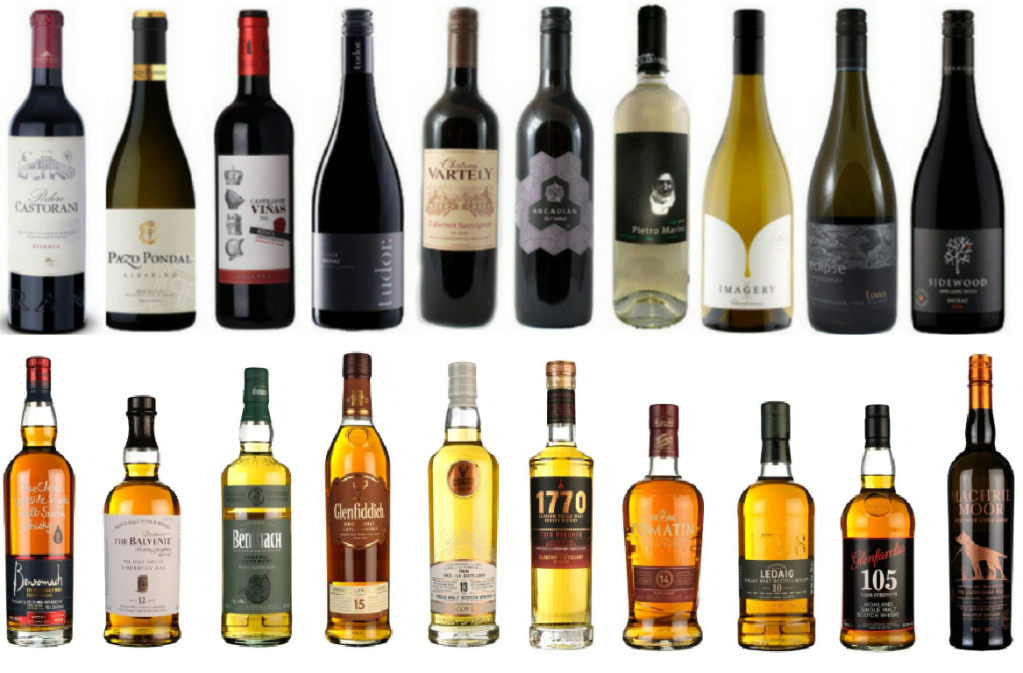
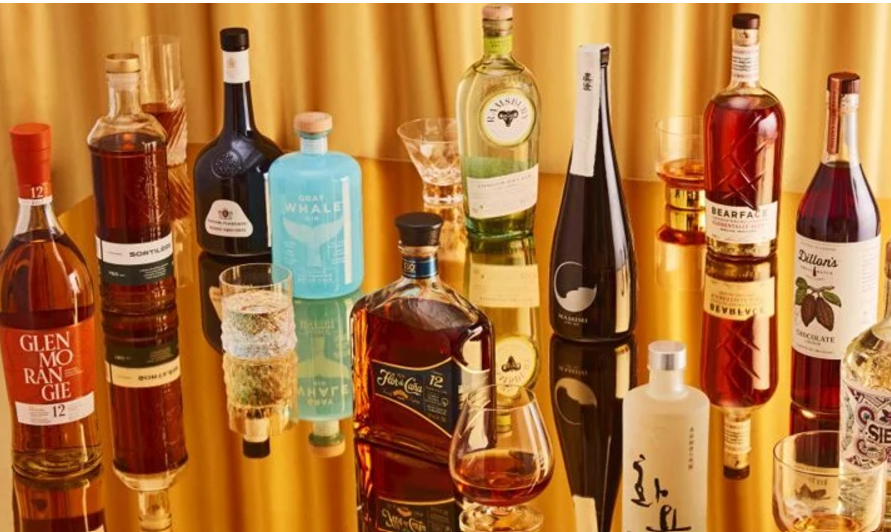
Looking for ideas on what wine or whisky to give this year? Here are some of my favourite suggestions that should be available at your local liquor store or online.
FOR THE WINE FANS
Under $20
Fantini Sangiovese $11.45 CDN – Expressive ripe fruit, supple tannins, and well-balanced acidity contribute to an inviting and versatile wine, making it an easy choice any night of the week. Serve it alongside braised meat dishes or with tomato-based pasta dishes.
This is a wine my wife discovered while browsing the aisles of our local liquor store and it is now our go-to house wine.
Famille Perrin Réserve Côtes du Rhône $16.95 CDN – With floral, red plum, chocolate and spice notes, this wine goes well with Mediterranean-style pizza or hearty lamb stew.
France’s Côtes du Rhône region is one of my personal favourites.
Featherstone Black Sheep Riesling $19.95 CDN – Vibrant, with honey, fresh fig, herbs and citrus, this wine consistently delivers the fine, pure mineral for which both great Riesling and Ontario are so renowned. It may be cellared for up to 5 years and will be superb with lightly grilled or smoked fish.
This has been one of my standards when guests come over or to pair with barbecued fish.
Under $50
Fontanafredda Barolo DOCG $34.95 CDN – With aromas and flavours of red fruit, floral tones, berry, plum and a touch of licorice, this wine is extra-dry with balanced acidity, firm tannins and fruit flavours that linger on the finish. Barolo pairs well with game meats and mushroom risotto.
Barolo is my favourite type of Italian wine and to find one with a price tag under $50 is uncommon.
Famille Perrin Les Sinards Châteauneuf-du-Pape $43.95 CDN – Perrin is among the finest producers in the southern Rhône. Some grapes for this rich, age-worthy red come from their legendary Château de Beaucastel estate. Drink over the next decade with roast duck, roast lamb or grilled game meats.
I have been intrigued by Châteauneuf-du-Pape wine ever since a close friend brought me a bottle from the French district quite a few years ago. After visiting there myself earlier this year and sampling the wines I am even more smitten with them. To find a bottle for less than $50 is a true find.
For That Special Someone
Mazzetti Grappa di Nebbiolo da Barolo in Decanter $199.95 CDN – Crafted from the pomace of Nebbiolo from Barolo, Italy, this is pure quality and elegance. The decanter and stylish gift box make it as breathtaking on the outside as it is on the inside. It is the perfect gift for any grappa enthusiast.
FOR THE WHISKY DRINKERS
Under $50
Jameson Irish Whiskey $39.95 CDN – Jameson Irish Whiskey is a versatile, smooth blend of pot still and fine grain whiskeys. Bright, pale amber with subtle aromas of white flower, nectarine, ripe pear and clove. Mellow and approachable on the palate, with spicy vanilla, wildflower honey and ginger flavours.
This is a great introduction for anyone who is being introduced to the world of whisky. It was one of my initial favourites.
Under $100
Bowmore 12 Year Old Islay Single Malt Scotch Whisky $65.95 CDN – This Islay whisky expresses the essence of Bowmore with rich amber colour; subtle notes of citrus and honey with typical peaty smokiness; the flavours are sweet and delicious with heather and honey; a soft peat smoke note lingers on a long and mellow finish.
My initiation to Bowmore 12 was at a friend’s cottage. It provides a wonderful Islay experience at a better price point than many of its competitors.
Green Spot Irish Whiskey $89.95 CDN – This single pot still whiskey from Ireland uses malted and unmalted barley to give it a unique spiciness. Clove, apricot and oak toast aromas evolve to flavours of cedar, clove, apple and ginger. The long finish echoes spicy notes of clove, nutmeg, and ginger.
This is my go-to Irish Whiskey and I try to always have some on my bar shelf.
Under $200
Lagavulin 16 Year Old Islay Single Malt Scotch Whisky $174.95 CDN – Considered by many to be the benchmark for Islay malts, this classic pours a golden amber colour and wafts from your glass with intense smoky peat and iodine. The palate is full flavour, rich and smooth with peat, figs, dates and vanilla followed by an enduring smoky and dry finish.
I was introduced to Lagavulin 16 by my wife’s uncle during a trip to the distillery several years ago. Even though he was a descendant of the original owners of the Laphroaig distillery he wanted me to try Lagavulin, his favourite whisky. I tried it and it has been a staple on my bar ever since.
The Glenlivet French Oak Reserve 15 Year Old Single Malt Scotch Whisky $114.95 CDN – The unique use of French Oak increases the intensity of the whisky, resulting in a richer and creamier finish along with a distinctive spiciness. Deep golden in colour, expect aromas and flavours of crème brûlée, sweet apple, gentle smokiness and peat alongside of lavender notes followed by a rich and complex finish.
This is another whisky that I like to always have on hand as one of my regular Scotch whisky choices.
For That Special Someone
The Glenlivet 18Year Old Single Malt Scotch Whisky $214.95 CDN – Distiller Alan Winchester takes this malt through a combination of cask types, including both first and second-fill American oak (for tropical fruitiness) and ex-sherry oak (for spiciness). The result is this golden-coloured dram with rich spicy aromas, toasty grain, vanilla and almond flavours and a long smooth finish.
This whisky I save for special occasions or when I want to treat myself.
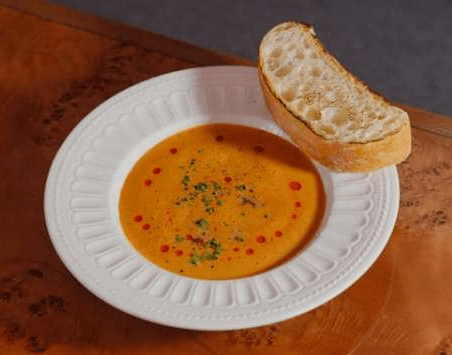
With summer now behind us, it is once again time to focus on winter comfort foods, such as soup. That started me thinking about the possible pairings of wine with soup. If I am having a bowl of soup on its own, accompanying it with a glass of wine isn’t appealing to me. Why serve a hot liquid with a cold liquid?
Photo credit: lafatacellars.com
However, if the soup is being served as part of a multi course meal at home or in a restaurant, a glass of wine may have more appeal. In general, when picking a wine to go with soup, consider the consistency and main flavours. If you break down your soup’s ingredients and view them as you would a pasta sauce, the task may become less intimidating.
Overall, creamy soups pair well with a wine that contains a fair amount of acidity, whether that be red or white wine. Then look at the dominant flavours of the soup. Savory vegetables generally pair well with a fruit-forward wine. Ginger goes well with an aromatic white wine like Gewürztraminer. Spicy soups pair well with wines having a lower level of alcohol.
Lastly, consider the protein. Light vegetarian or chicken-based soups often pair well with white wine while red meats pair best with medium to full-bodied red wine.
Very thin soups, such as French consommé go well with a dry sherry or dry Madeira. Tomato consommé pairs well with a French Sauvignon while broths flavoured with fish sauce, coriander and lime will be complimented by an Austrian Grüner Veltliner or dry German Riesling.
Creamy vegetable soups generally go well with dry Italian whites such as Pinot Grigio or Soave or a French Pinot Blanc. Fennel and cauliflower soups pair with a white Burgundy or lightly oaked Chardonnay, white Bordeaux, Viognier or Chenin Blanc.
Mushroom soup will go well with a lightly oaked Chardonnay. A darker soup with more earthy varieties of mushrooms such as portabella or cremini, will match well with a Pinot Noir.
Chicken soup will go with a lightly oaked Chardonnay. A Thai style soup made with coconut milk will go with a Riesling or Verdelho. Chicken and dumplings will pair well with a lightly oaked Chardonnay or a light red wine like Pinot Noir.
Classic Provençal fish soup with flavours of garlic, tomato and saffron pairs well with a very dry, crisp white like a Picpoul de Pinet or a strong dry Rosé. Rich crab or lobster bisques match well with white Burgundy or a Chardonnay, while clam chowder goes well with a well-oaked Chardonnay. Corn chowder, on the other hand, goes along side a dry German Riesling.
Sweet vegetable soups, such as butternut squash and pumpkin, fair well with Chardonnay, Viognier or Gewürztraminer.
Tomato soups made from fresh tomatoes go well with a crisp white wine such as a Sauvignon Blanc or an Albariño. A chilled sherry could be used as well. However, if the soup has a richer, roast or cooked tomato flavour or is mixed with roast peppers, a medium bodied Italian or southern French red or a young Rioja will work well.
French onion soup is traditionally served with French Beaujolais, Beaujolais Nouveau or a white Burgundy.
Chunky, rustic soups with beans, such as minestrone or lentil soup match well with medium bodied reds like Côtes du Rhône, a young Syrah or a Sangiovese. Chickpea soup pairs with a Chianti Classico.
Beef or lamb stew will be well complimented with a Cabernet or Shiraz. If you prefer a white wine instead, Gewürztraminer is a good choice.
Beef and barley soup matches well with a bold red wine like Zinfandel or Cabernet Franc.
Cold soups go well with light, crisp dry whites such as Albariño. Gazpacho can be paired with an unoaked white Rioja, Rueda or a Fino Sherry.
There are no hard and fast rules for pairing wine with foods. However, there are some wines that will enhance your soup better than others. Don’t be afraid to experiment with some of these suggestions but don’t be afraid to try your own.
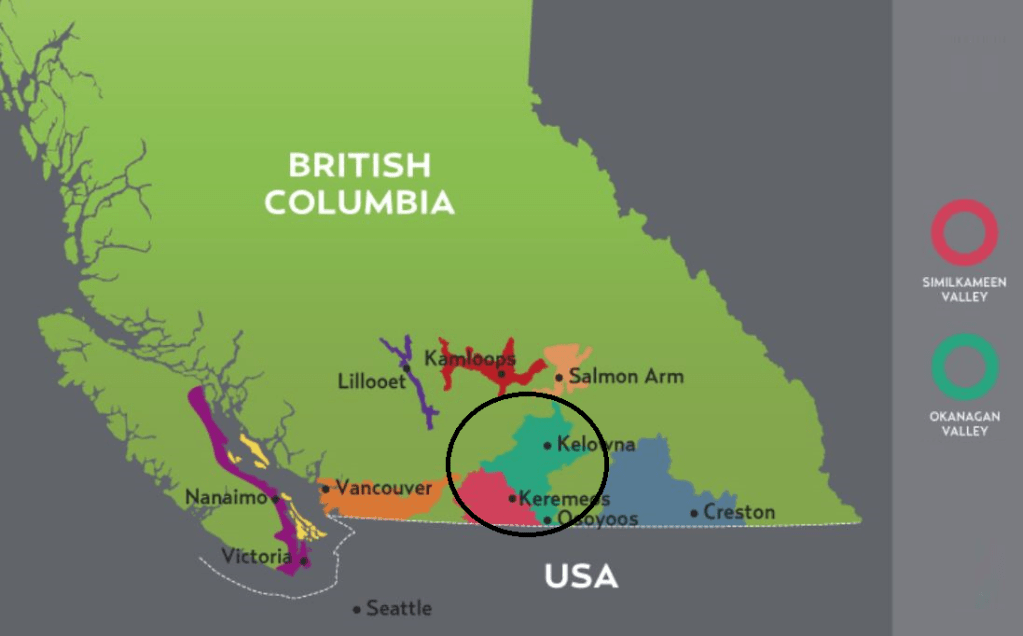
It would be an understatement to simply say that Mother Nature has been unkind to the B.C. wine industry this year. In January the extreme cold caused devastating damage to the vast majority of the grapevines in both the Okanagan and Similkameen Valley. It is estimated that 90% of this year’s grape crops were lost and 15% of the vines were destroyed.
Further devastation resulted because of the hot dry summer consisting of heatwaves and wildfires. The good news is that because of the heat, the remaining grapes ripened quickly, resulting in an early harvest with smaller but more concentrated fruit.
Lifelong workers in B.C.’s wine industry cannot recall a year that has been as devastating as this one. The provincial government has established a 26 million dollar vine replant program with an additional 92 million dollars to be paid through the Production Insurance and AgriStability program.
B.C.’s wine industry generates approximately 3.75 billion dollars annually for the province and employs more than 14,000 full-time workers. There are about 350 licensed grape wine wineries in the province that receive nearly 1.2 million visitors annually.
In order to help the wine industry recover from the lost grape harvest, the province is permitting the impacted wineries to import grapes and grape juice in order to produce the 2024 vintage. However, the imported products will not be eligible to carry the B.C. Vintners Quality Alliance (VQA) label. Without these unprecedented concessions, many wineries would face potential financial ruin resulting in cuts to thousands of direct and indirect jobs, including the loss of highly specialized wine makers and cellar masters whose expertise is essential to the industry.
So, what will all this mean for the wine drinker when comes to the 2024 vintage of BC wines? Because of the intense heat and early ripening of those grapes that did survive, they will provide very concentrated and flavourful wines. However, given the scarcity of the wines that will carry the VQA designation, you can expect the price of the 2024 vintage to be higher than most years.
You can also rest assured that the wines that will be created from imported grapes will meet the established standards of the winery producing them. After all, their hard established reputations are at stake here and no one is willing to jeopardize that. British Columbia’s talented winemakers will deliver great results.
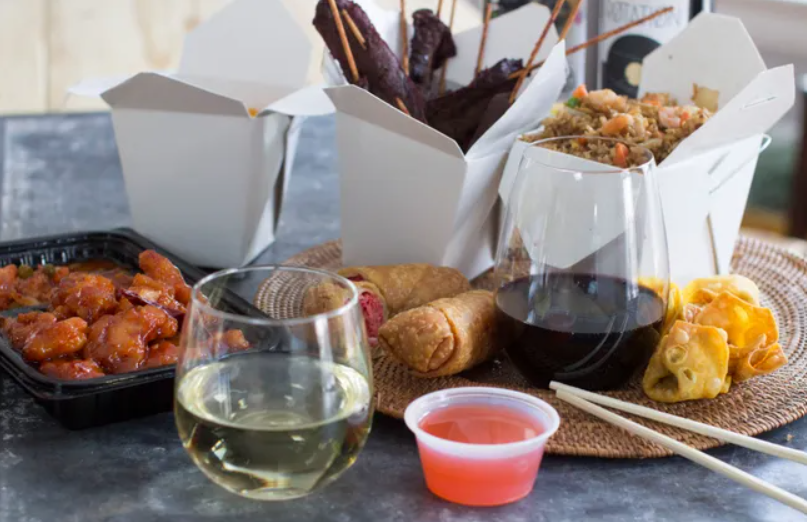
Pairing wine with Chinese food can seem overwhelmingly difficult due to the wide range of flavours; everything from spicy to sweet, tangy, salty and bitter. An example of this is an authentic Chinese feast that will consist of dishes with distinct ingredients and clashing flavours.
Photo credit: tuscaloosanews.com
To accommodate such a dinner a well-rounded wine is optimal. Refreshing sparkling wines such as a chilled Champagne, Cava or Prosecco are well suited, as well as aromatic whites with a touch of residual sugar, such as Riesling or Gewürztraminer. Foods with red-braised seasoning pair well with fruity red wines such as Pinot Noir, Italian Nerello, Mascalese or Barbera.
If you are headed to your local westernized eat-in or take-out Chinese restaurant here are some wine suggestions to go along with your food selections.
Generally, dishes that are salty or fried will pair well with a wine with high acidity. Foods with a sweet and sour elements go well together with fruit forward wines. If having food with stronger flavours, such as a dark sauces, duck or pork, a sweeter Spätlese wine works well for balance.
Cantonese Dim Sum offers a wide assortment of food choices in small portions. The most common selections include steamed dumplings, spring rolls, scallops, streamed fish and soy-seasoned meats. Since these foods have relatively mild, savoury flavours Champagne is always a good choice, as well as a young Chablis, a white Burgundy or a German Riesling.
Gruner Veltliner pairs well with mild vegetable-filled spring rolls or egg rolls.
Steamed barbecued pork buns will go well with an off-dry Riesling, Moscato d’Asti or Gamay.
Light red wines such as Gamay, Pinot Noir or Baco Noir will go well with braised pork bellies.
Beef and broccoli, as well as lo mein pair well with a French Syrah.
Orange chicken or lemon chicken goes well with a French Chenin Blanc.
Vegetable Chow Mein is a classic stir-fried noodle dish with onions, peppers, mushrooms, ginger and garlic along with a rice vinegar and soy sauce. It pairs well with Muscat or Moscato, which is an aromatic wine. A German Riesling or French Chablis are also good options.
Crispy duck and pancakes served with hoisin sauce pairs well with Pinot Noir, Gamay, Merlot or even Spätlese Riesling.
Traditional Peking Duck will be well complimented by a French Burgundy or a Pinot Noir.
General Tao’s Chicken is a spicy, deep-fried, aromatic, sweet and sour chicken dish that goes well with an aromatic white wine such as Gewürztraminer or Torrontes, or a fruity Rosé.
Szechuwan-style foods pair well with a variety of wines. Chilled sparkling wine, whether it be Prosecco, Asti or Brut Champagne go well, but also aromatic white wines, or even sweeter wines, such as an Auslese Riesling or Sauternes. A fruity Rosé or off-dry Riesling also works well. Even reds, such as Gamay or Pinot Noir make good pairing partners.
Pork ribs marinated in a sweet and smoky sauce made of soy, hoisin, honey, garlic, rice vinegar, ginger and chili will pair well with Grenache. The flavour intensity of strawberries and plums, leather, dried herbs and blood oranges make these wines pair well with tangy Chinese spareribs.
Kung Pao Chicken is a sweet, sour and spicy dish. It is flavoured with chili, garlic, soy sauce, peanuts, vinegar and sugar. A French Pinot Gris compliments this well.
Enjoy exploring the world of wine with these Asian food specialties.
You may have seen the ads suggesting that you snack on a bag of potato chips while indulging in a glass of wine. I initially found the thought laughable but then later came across an article published by Wine Enthusiast suggesting that wine and potato chip pairings are actually a thing. Investigating further I found some statistics suggesting that 50% of Canadians eat potato chips while watching TV and that 61% of Canadians have a glass of wine with their snacks at least once or twice a month.
Potato chips pair well with wine because of the salt and fat content of the chips. Following the basic principles for pairing food flavours with wine, the following combinations complement each other:
Original classic flavour chips with Champagne or other sparkling wine. The sparkling wine is great at offsetting the salt and fat of the potato chips.
Barbeque flavoured chips with Pinot Noir or Zinfandel wine. The chips have a sweet coating that goes well with one of these fruity, crisp reds. These same wines go well with ribs brushed with real BBQ sauce.
Salt and vinegar chips with Pinot Grigio or Sauvignon Blanc. The sharp and tangy vinegar on the chips needs to be balanced with a fresh bright wine.
Sour cream and onion chips with oaked Chardonnay. The sharp, tangy chips pair well with this buttery white wine as the tropical fruit flavours and acidity contrast with the saltiness of the chips.
Lime and black pepper flavoured chips with Sauvignon Blanc. The crisp bright tropical notes of the wine are a good balance for the lime and black pepper flavour of the chips.
Balsamic vinegar and onion flavour chips with Merlot. The Merlot offsets the tangy sweetness of the chips.
There are a variety of other flavours of chips available in the marketplace, but this will provide the basic idea for pairing your favourite potato chips with wine.
It seems that many people are not aware that Peru produces a variety of quality wines. In fact, it is the oldest wine producing country in South America, ahead of the more familiar wine nations of Chile and Argentina.
Photo credit: heinens.com
Because of the early Spanish settlers, Peru has a strong Spanish influence. During the 16th century Spanish conquistadors planted grape varieties that came from the Canary Islands. The 17th and 18th centuries were the golden age of wine production with Peruvian wine being sold throughout South America.
Unfortunately, during the 19th century viticulture suffered as a result of earthquakes, volcanic eruptions and phylloxera, an insect pest of grapevines worldwide. There were also economic restrictions imposed by Spain resulting in growers refocusing and producing crops other than grapes.
Those vineyards that remained changed their focus from wine making to producing pisco. Pisco is a pale yellowish to amber coloured spirit. It is produced by distilling fermented grape juice into a high proof spirit. Alternatively, grapes were used to make Borgoña, which is a sweet wine made from Isabella hybrid grapes.
Today Peruvian winemakers are once again focused on producing fine wine. They have modernized their wineries and repurposed their vineyards with the help of international consultants.
Producers are following one of two different paths. One is to grow European grape varieties, notably Malbec, Cabernet Sauvignon, Syrah, Merlot, Tannat, Sauvignon Blanc and Chardonnay. The other choice is to raise heritage grapes that have historically been used to make pisco. These include Quebranta, Mollar, Negra Criolla, Torontel, Muscatel Negro del Perú, Albilla and Italia. Some of these have been around since viticulture first began in South America, while others were bred there.
Production of wines from heritage grapes is a way to differentiate Peruvian wines from the other South American counties. On the other hand, there is plenty of potential to produce unique expressions using international varieties such as Malbec, Syrah, Cabernet and Muscat.
Whether you select a Peruvian wine made with heritage grapes or European varieties, the taste experience is well worth the effort to find one of these treasures along your wine store shelves.
Is taking the time to serve wine at the proper temperature worth the fuss? Absolutely! Temperature can significantly impact the way a wine smells and tastes. Cooler serving temperatures can suppress the aromatics of a wine and accentuate its structure, making the acidity more noticeable, but also enhancing the wine’s tannins and bitterness. Therefore, aromatic wines, such as Sauvignon Blanc, Riesling and Gamay benefit from being chilled. These wines have the necessary strength to persist through cold temperatures.
Photo credit: empirecool.com
On the other hand, wines having high levels of tannin, including many orange and red wines, are best served at a higher temperature as chilling them can make them unpleasant to drink.
Generally speaking, there is a range of proper serving temperatures for wine. Most red wines should be served at a temperature that is slightly cooler than room temperature, that is between 15 and 20°C. White wines should be served at a temperature slightly warmer than fridge temperature, that is 7 and 12°.
Below are some basic guidelines to follow when serving various types of wine.
Sparkling, Light-Bodied White Wines and Icewine – Serve ice cold between 3 and 10°C. This can be accomplished by placing the bottle -0n ice or in the freezer for about 30 minutes.
Full-Bodied White, Late Harvest and Rosé Wines – Remove from the fridge a few minutes prior to serving. Serve at a temperature between 7 and 12°C.
Light and Medium-Bodied Red Wines and Orange Wines – Serve at a temperature between 12 and 15°C.
Bold Red Wines – Place in fridge for about 20 minutes prior to serving. The temperature should be between 15 and 20°C.
Don’t be afraid to experiment on your own to find the temperature that best suits your palate. If you have never tried drinking wine at the recommended temperature, give it a try; otherwise you will never know the experience you may be missing.
During a recent trip to the maritime provinces of Canada, I made a point of seeking out local wines to try. The first I came across while in St. Andrews by the Sea, New Brunswick; the second I found in North Rustico, Prince Edward Island and two while in Nova Scotia.
The first wine my wife and I tried was a 2019 Marquette from the Magnetic Hill Winery of Moncton, New Brunswick. It was a light bodied red wine similar to a Pinot Noir. It had aromas of cherries, blackcurrants and blackberries. The wine was a pleasure to drink and reasonably priced at $20.00 CDN.
The Marquette varietal is the cousin of the Frontenac varietal, which is a well-known French North American hybrid, and a descendant of Pinot Noir. This wine pairs well with pub foods such as cheeseburgers, bangers (sausages) and mash and chili con carne.
The second wine we tried was a $21.99 CDN Gamay from Matos Winery & Vineyards of St. Catherines, PEI. Until then I was not aware that there is a winery on PEI.
Matos Winery & Vineyards is a family-owned and run business that was initiated in 2007. They utilize the French concept of terroir whereby they found a location where the combination of soil, slope, sun exposure and the peculiar weather patterns allow certain grape varieties to thrive. They consulted with European vintners who visited PEI to provide their skill and knowledge.
Their Gamay has won a bronze medal at the National Wine Awards in 2016, 2014, 2012 and silver in 2011.
The first wine from Nova Scotia that we tried was the 2022 Baco Noir from Blomidon Estate Winery, of the Annapolis Valley, near Canning.
The 2022 Baco Noir has a nose of bright berry fruit accentuated by vanilla and notes of spice. Unfortunately for us, we found the wine to be slightly harsh and not quite as smooth and mellow as we have become accustomed to for Baco Noir. The price of this wine is $23.00 CDN.
Given the structure of this wine it would be best suited for pairing with barbecued beef or pork.
Blomidon Estate produces 100% Nova Scotia grown grapes and wines. Over the years they have earned several national and international awards.
The 2nd wine from Nova Scotia we experienced was Founders’ Red from Jost Winery, which is made from a blend of Leon Millot and Marechal Foch grapes. We experienced this wine during a quiet afternoon at our B&B outside of Cap-Pelé, New Brunswick. Like the day, this wine was very smooth and mellow. It had wonderful fruit flavours and was well worth the $17.19 CDN we paid for it.
Founders’ Red is a well-balanced blend of Nova Scotian-grown grapes with deep colour and intensity. This wine pairs well with barbequed meats and roasted pork.
Wings and beer are pretty much standard fare, a pairing seemingly made in heaven. When it comes to pairing drink with wings, usually the last thing to come to mind is wine. However, I am here to talk about wine, not beer, so here are some fun and interesting wine pairing suggestions for the next time wings are on the menu. The only challenge will be keeping the sticky sauce off your wine glass.
Photo credit: mapleleaffarms.com
When it comes to pairing wine with wings, it is all about the sauce. The wine needs to match the spice, heat and acid found in the wing sauces. Therefore, the wine must calm the heat, highlight the sauce’s acidity with its own acidity and complement the spiciness – a relatively easy task.
Here are some of the more typical wing varieties and corresponding wine recommendations:
BBQ
There are many varieties and interpretations of BBQ sauce. But when it comes to wings, the sauce is likely to be sweet and heavy. Such big bold sauces call for a big bold red wine, such as Cabernet Franc, Tempranillo, Zinfandel or Carménère. The intense red and black fruit you find in these wines will complement the tomatoes and spices found in BBQ wing sauce. The high tannins will offset the heat of chili and cayenne.
Savory, herbal notes found in these reds will go well with the garlic and onions in the sauce. And the wine’s dry nature will offset the sweetness of brown sugar and molasses.
Buffalo
This is a classic made from butter and hot sauce with heat levels ranging from mild to super hot. A sweeter wine such as Riesling, Vouvray or Gewürztraminer is just the thing to pair with spicier foods. The higher acidity of these wines will cut through the buttery sauce and the fatty chicken beneath.
Garlic Parmesan
The light, stone fruit flavours of Pinot Grigio will pair well with the taste of garlic and hit of flavour of the Parmesan cheese.
Honey Garlic
Sweet and savory, honey garlic wings tend to forego heat for a big aroma, along with a tangy flavour. Honey and garlic are both strong flavours so the wine needs to support the aromas and flavours. Sparkling Rosé, Crémant d’Alsace, Chenin Blanc or Prosecco will work well in this regard.
Honey Mustard
The sweet tang of honey mustard wings will go well with an unoaked or slightly oaked Chardonnay.
Jerk
Rosé is the perfect pairing for quelling the lingering heat of chicken wings coated with a peppery jerk rub.
Korean-Style
The bright acidity of a Grüner Veltliner is a great pairing for crispy Korean-style wings.
Lemon Pepper
Whether you’re trying a dry rub or a sauce, lemon pepper wings offer a light, zingy flavour that is typically less spicy. It will pair well with wines with lots of citrus flavour and acidity. A French Sauvignon Blanc, Chablis or Dry Riesling are good choices. These wines typically have brilliant lemon aromas, along with a strong sense of minerality that will go with the hit of pepper.
Sweet Chili
Thai-inspired wings are both the sweet and the spicy. Generally, a Thai Chili sauce packs less heat than other wing sauces so an overly sweet wine is not required. An off-dry white or light red can easily offset the spice. Good wine pairings include Chenin Blanc, a sweet Riesling, Zweigelt or Pinot Gris.
Teriyaki
A light fruit forward Spanish Garnacha will complement the sweet glaze of teriyaki wings.
I strongly suggest having a glass of wine along side your next feed of finger-licking good chicken wings. It may surprise you.




 A Layman's Wine Musings