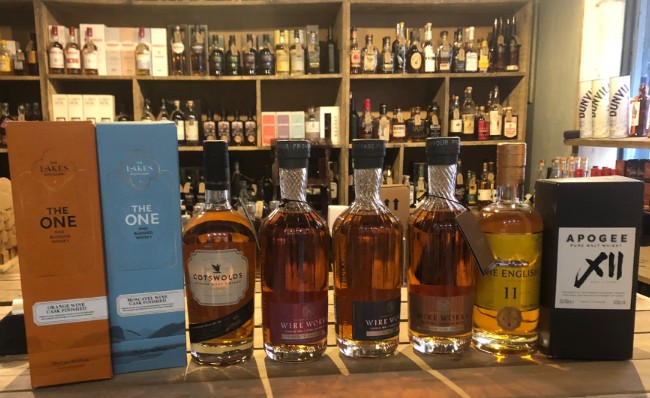
English Whisky (whisky spelled without an ‘e’ like the Scots) is categorized as a “new world” spirit produced from malt, grains and water. It has become known for its many styles of single malt and blended choices. Brands include Cotswolds, The Lakes, Bimber and The English Distillery. They make whiskies with unique mash bills, regional ingredients and cask finishes, offering sweeter, spicier or smoky profiles that separate them from their Scottish counterparts because there are less regulations surrounding production. English Whisky may include fruit, spices or herbs that are not allowed in Scotch Whisky.
English whisky saw a revival starting in the early 2000s, with many new distilleries opening across England, gaining international recognition. In 2022, the English Whisky Guild was established to protect and promote English whisky. As of last year, there were 24 English Whisky brands.
The English are working to develop a statutory definition for English whisky, including a requirement where the grains and water must be locally sourced. Currently, English whisky producers adhere to European Union Regulation that established the criteria for whisky and specifies that whisky must be matured in wooden casks for three years, contain no additives or sweeteners except for E150a, be matured to a minimum alcohol by volume (ABV) of 40% with a maximum less than 94.8% ABV. English single malt must also be made using malt barley from England and distilled in copper pots at a single distillery in England.
Types of English Whisky include:
Malt Whisky – Produced with malt barley, distilled in copper pots twice and matured in wooden casks for a minimum of three years.
Grain Whisky – Produced at least partly from grains other than barley, such as maize, wheat or rye.
Rye Whisky – Produced using rye grain.
Cornish Whisky – Produced using local produce and is distilled, matured and bottled in Cornwall.
Bourbon – Produced to the same specifications as the USA but with ingredients sourced from the United Kingdom.
Styles include:
Single Malt – Produced using 100% single malt barley within a single distillery.
Triple Malt – Aged in three types of casks but not blended.
Blended Whisky – A combination of malt and grain whisky within a single whisky.
Single Cask – Bottled from a single cask or barrel without blending the whisky.
Small Batch – Produced by mixing the contents of a relatively small number of premium selected barrels.
Peated – Produced using malt barley that has been dried over a fire; this gives the whisky a smoky flavour.
Cask Strength – Bottled from the barrel without any additional water.
The flavour profiles of English Whisky range from sweet and fruity to spicy and smoky.
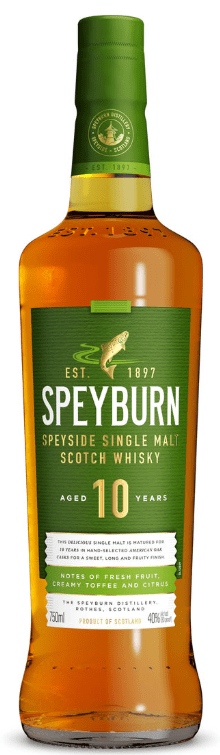
For the second year in a row, I had the opportunity to enjoy Speyburn 16 while traveling through France. Upon returning home, I once again searched Ontario’s liquor stores to see if it was possible to acquire a bottle, but to no avail.
However, unlike when I searched last year, I discovered that this year Speyburn 10 was available. Eager to try it, I immediately ordered a bottle. When it arrived a few days later, I was excited to see how well it compared to the Speyburn 16; though I expected it to be somewhat less impressive given the 16 had the benefit of six additional years of aging.
I was pleasantly surprised to find how good the 10 year is. Speyburn 10 is matured in a combination of American oak and ex-sherry casks. Its colour is pale gold with amber highlights and the flavour contains notes of fresh citrus fruit with hints of toffee, butterscotch and vanilla. The palate is medium bodied with a smooth, long finish. Given its younger age, Speyburn 10 is surprisingly deep, complex and well-balanced.
After tasting Speyburn 10, I was not surprised to learn that it was a Gold medal winner at both the 2022 and 2023 San Francisco World Spirits Competition, as well as the 2021 New York International Spirits Competition.
After trying the Speyside 10 I quickly ordered a second bottle while it is still available in Ontario. At a price of $72.75 it can’t be beat.
To me, Scotch whisky, especially a heavily peated one, is a beverage best enjoyed in the cool, damp spring and fall months or while cozied up next to a warm fire during the depths of winter. So, when Islay distiller Ardbeg began promoting their whisky offerings as a good summertime drink, I was skeptical to say the least. At best I saw it as a gutsy marketing plan by their promoters.
Photo credit: ardbeg.com
When it comes to peated whisky, people generally have strong opinions. The flavours used to describe such whisky include medicinal, campfire smoke, iodine, tire fire and seaweed. You either love the taste or hate it. Ardbeg’s offering of single malts capture all of these characteristics but there’s much more to it than just peat.
The French mega-giant parent company JVMH owns both the Ardbeg and Glenmorangie distilleries. Glenmorangie is located in the Highlands whisky region at Tain, Ross-shire, Scotland.
There’s a long history behind Ardbeg, but it’s only been operating in its present capacity since the late 1990s. Nevertheless, it has managed to make a big impact on the world of heavily peated single malt scotch under the direction of master distiller and whisky expert, Dr. Bill Lumsden and more recently, master blender and head of whisky creation Gillian Macdonald.
It was Macdonald who came up with the notion that you can and should enjoy smoky scotch during the hot summer months. She based her idea on the fact that Ardbeg’s complex flavours include hints of baked pineapple and banana, as well as the surprising level of sweetness.
Bartenders are using Ardbeg as a base in their cocktails as they claim that it works well with a variety of ingredients. Included in the list of cocktails is Whisky Sour, Scotch Margarita, Highball, Negroni and Expresso Martini.
Who would ever have thought such a smoky Scotch whisky would be popular in the sunny warm weather? Certainly not me. Bring on the summer!
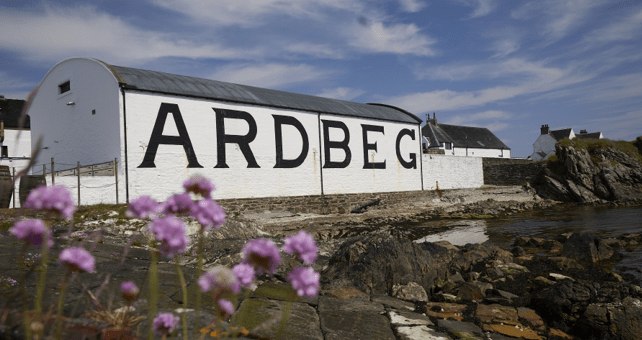
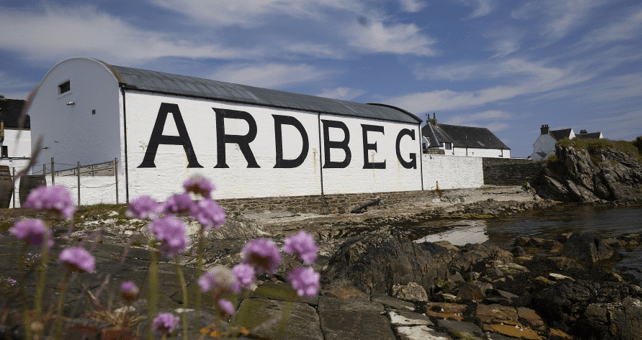
On the small remote Hebridean island of Islay (pronounced ‘eye-lah’), that lies off the western Scottish mainland, is where you will find the 200 year old Ardbeg distillery. The abundance of soft water, fertile soil and acres of precious peat makes Islay a place of pilgrimage for the single malt whisky faithful. I must admit that I have visited the island on two separate occasions and would love to return.
Photo credit: ardbeg.com
Ardbeg claims to produce the most peated of all the Islay malts and having tried it I would not disagree. It achieves this by using the most phenolic malt in the industry. Phenols are a class of organic compounds that contribute to the aroma and taste of whisky. They are often associated with smokiness and medicinal notes commonly found in peated whiskies. Ardbeg’s malt is peated to a level of 50 ppm (parts per million).
The casks used to mature the whisky come from a variety of sources. The vast amount of whisky matures in ex-Bourbon oak barrels. However, there is ongoing experimentation with different types of oak casks.
During the maturation process only 1st and 2nd fill casks are used. All of the new first fill Bourbon casks come from suppliers in the United States. Other casks come from Speyside Cooperage, and Craigellachie in Scotland.
As with many of the Islay distilleries, Ardbeg is situated next to the ocean. As a result, the whisky receives a certain salty, iodine character while it matures.
Here are the stats on Ardbeg’s three main whiskies:
Ardbeg 10 Year Old
Alcohol by Volume (ABV) = 46%
Appearance = Light Gold
Details = Revered for its balanced smoke and fruit character. Shows aromas of lemon, smoke, peat and brine with a kiss of sweet cereal. On the palate, it is warm and smoky with bold, yet balanced flavours that resonate with the aromas. The finish is long, sweet and smoky. Serve neat or with a few drops of pure water.
Price = $120 CDN
Ardbeg Uigeadail
ABV = 54.25
Colour = Deep gold
Details = With special vatting, this Ardbeg combines deep traditional smoky notes with sweet, raisiny tones of old, ex-Sherry casks. Rich and weighty with aromas of warm Christmas cake, fresh ocean spice, cedar and pine. Sweet and spicy with deep, smoky flavours, lingering raisins and smoke on the lengthy well-integrated finish.
Price = $190 CDN
Ardbeg Corryvreckan
ABV = 46.2%
Colour = Light gold
Details = Expect an intense nose of cedar, brine, and creosote, with caramel, smoky bacon, vanilla and clove; very complex aromas. The palate is also intense, but it is round and finely balanced with outstanding length. The lingering finish shows smoky, black tarry coffee with chocolate. Not for the fainthearted.
Price = $238 CDN
If you have a liking for peaty Scotch Whisky, and you haven’t done so already, you should try one or more of Ardbeg’s offerings.
According to the Scottish government, about eighty percent of Scotch whisky includes some amount of peat in the production process. Peat creates the smoky and medicinal flavour of the whisky. When burned during the malting process, the peat releases compounds called phenols. The phenols are measured in parts per million (ppm) which infuse the spirit with its earthy, charred character.
In general terms, the greater the phenol level the smokier the whisky. However, all the phenols are not necessarily transferred from the barley to the final product. The quantity of phenols in the liquid can often be much less than what is measured in the barley, and the smoke’s influence can be reduced during the maturation process.
Those Scotches with the highest concentrations of phenols generally range between 35 and 55 ppm and will have flavours and aromas of campfire smoke, tar, leather and earthiness. However, some distilleries have created whisky that far exceeds those levels. Here is a sampling of those whiskies below. Unless you are a really big fan of highly peated whiskies, many of these offerings are probably not for you.
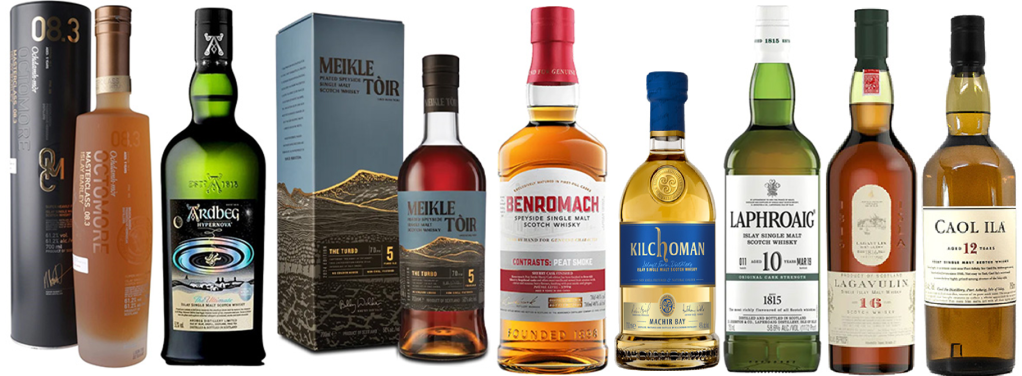
Bruichladdich Octomore 8.3
It is no surprise that Bruichladdich Distillery is on Islay, the island renowned for its peated whisky. Phenol levels in Octomore consistently exceed 100 ppm. The brand releases three or four distinct expressions every year, each using different aging techniques. The 2017 collection included the most heavily peated Scotch ever made. The whisky was bottled at 61.2 percent ABV (Alcohol by Volume) and contained a whopping 309 ppm. Unfortunately, this whisky is not available in Ontario.
Ardbeg Hypernova
Ardbeg, another Islay distillery, is famous for its peated whiskies. Hypernova has a phenol level of 170 ppm. It was bottled at a level of 51 percent ABV. This non-age-statement expression is the smokiest Ardbeg released. It is available in liquor stores at a price of about $375 CDN.
The GlenAllachie Meikle Toir The Turbo
Distilled in Speyside, GlenAllachie’s whiskies are usually unpeated. That changed in 2023 when the distillery announced Meikle Toir, a new brand of heavily peated whiskies. The Turbo, which is a limited edition, annual release, is the peatiest, being distilled from malts with 70 ppm of phenol. The 2024 expression was matured in a combination of American oak and oloroso hogshead casks and bottled at 50 percent ABV. It is not currently available in Ontario.
Benromach Distillery is a Speyside distillery that generally produces only lightly peated whisky at around the 12 ppm level. However, this expression pushes the envelope to a level of 55 ppm. Exclusively distilled in small batches and aged solely in first-fill sherry hogshead casks, the whisky provides a delicate balance of smoke and rich fruit flavours. This particular offering from Benromach is not available in Ontario.
Kilchoman Machir Bay
Being located on Islay, Machir Bay is Kilchoman’s flagship whisky having the tone for Islay’s signature style. Intensely smoky, the single malt Scotch is distilled from barley peated at 50 ppm before it’s laid down to mature in a combination of bourbon and sherry casks. It is available in liquor stores for $100 CDN.
Laphroaig 10 Year Cask Strength
Islay’s Laphroaig Distillery has been exclusively producing peated whisky since its birth in 1815. The smokiest expression in the Laphroaig lineup is Laphroaig 10 Year Cask Strength, which is peated at around 45 ppm of phenol. It is available in liquor stores at a price of $110 CDN.
Lagavulin 16 Year Old Single Malt Scotch Whisky
The most popular offering from Islay’s Lagavulin distillery is one of my personal favourites, the 16 Year Old Single Malt. It is a 43-percent ABV whisky that has been aged in ex-bourbon and ex-sherry casks. The whisky is distilled from malts peated at 35 ppm and contains flavours of caramel, vanilla and saltwater. It is available in liquor stores for $175 CDN.
Caol Ila 12 Year Single Malt Scotch
Another Islay distillery that has been described by some as providing the best peated Scotches for beginners, Caol Ila delivers a sweeter smokiness than some of the more heavily peated Scotches on this list. Distilled from barley at approximately 35 ppm, the whisky carries citrus and potpourri notes combined with subtle peat influence. It is available in liquor stores for $100 CDN.
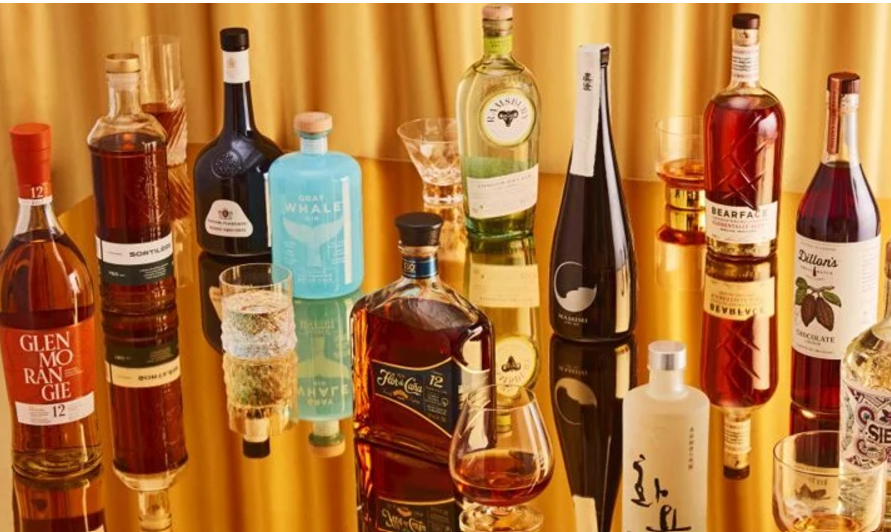
Whiskey has been and continues to be, one of the world’s most favourite spirits. It is both a symbol of tradition and an area for continued innovation. From single malts to blended varieties, whiskey’s rich history that dates back several hundred years, is accompanied by a dynamic, evolving market that attracts both connoisseurs and casual drinkers.
Photo credit: nationalgeographic.com
Whiskey’s deep-rooted craftsmanship, with its complex aging processes and diverse production methods, continues to attract consumers. Distilleries are preserving traditional techniques while embarking on new technologies that help to enhance flavour profiles.
While countries like Scotland, Ireland and North America remain as key players in the industry, whiskey’s appeal is expanding globally, with countries such as Japan and India gaining significant recognition for their increased demand and innovative whiskey production.
Globally the demand for premium and supreme whiskeys is on the rise. This shift is pushing brands to offer a variety of variably priced, exclusive, limited-edition releases to attract whiskey enthusiasts, as well as collectors. These offerings range greatly in price from a few hundred dollars to well into the four-to-five-digit range. A few rare whiskeys have sold for prices even beyond that!
During recent years, producers have been experimenting with new barrel finishes; making use of barrels that were formerly used to store other spirits, such as cognac, sherry, bourbon or brandy. Distillers have found that maturing whiskey in these types of barrels will infuse new flavour from the wood of these barrels into the whiskey. Distillers have also experimented with combining multiple flavour infusions.
The popularity of whiskey-based cocktails and the craft cocktail movement is also expanding whiskey’s appeal. The industry is now attracting younger generations and enhancing market versatility.
Whiskey continues to be a beverage of choice for those who appreciate both tradition and innovation, offering endless possibilities for consumers, whiskey enthusiasts and collectors alike.
Looking for ideas on what wine or whisky to give this year? Here are some of my favourite suggestions that should be available at your local liquor store or online.
FOR THE WINE FANS
Under $20
Fantini Sangiovese $11.45 CDN – Expressive ripe fruit, supple tannins, and well-balanced acidity contribute to an inviting and versatile wine, making it an easy choice any night of the week. Serve it alongside braised meat dishes or with tomato-based pasta dishes.
This is a wine my wife discovered while browsing the aisles of our local liquor store and it is now our go-to house wine.
Famille Perrin Réserve Côtes du Rhône $16.95 CDN – With floral, red plum, chocolate and spice notes, this wine goes well with Mediterranean-style pizza or hearty lamb stew.
France’s Côtes du Rhône region is one of my personal favourites.
Featherstone Black Sheep Riesling $19.95 CDN – Vibrant, with honey, fresh fig, herbs and citrus, this wine consistently delivers the fine, pure mineral for which both great Riesling and Ontario are so renowned. It may be cellared for up to 5 years and will be superb with lightly grilled or smoked fish.
This has been one of my standards when guests come over or to pair with barbecued fish.
Under $50
Fontanafredda Barolo DOCG $34.95 CDN – With aromas and flavours of red fruit, floral tones, berry, plum and a touch of licorice, this wine is extra-dry with balanced acidity, firm tannins and fruit flavours that linger on the finish. Barolo pairs well with game meats and mushroom risotto.
Barolo is my favourite type of Italian wine and to find one with a price tag under $50 is uncommon.
Famille Perrin Les Sinards Châteauneuf-du-Pape $43.95 CDN – Perrin is among the finest producers in the southern Rhône. Some grapes for this rich, age-worthy red come from their legendary Château de Beaucastel estate. Drink over the next decade with roast duck, roast lamb or grilled game meats.
I have been intrigued by Châteauneuf-du-Pape wine ever since a close friend brought me a bottle from the French district quite a few years ago. After visiting there myself earlier this year and sampling the wines I am even more smitten with them. To find a bottle for less than $50 is a true find.
For That Special Someone
Mazzetti Grappa di Nebbiolo da Barolo in Decanter $199.95 CDN – Crafted from the pomace of Nebbiolo from Barolo, Italy, this is pure quality and elegance. The decanter and stylish gift box make it as breathtaking on the outside as it is on the inside. It is the perfect gift for any grappa enthusiast.
FOR THE WHISKY DRINKERS
Under $50
Jameson Irish Whiskey $39.95 CDN – Jameson Irish Whiskey is a versatile, smooth blend of pot still and fine grain whiskeys. Bright, pale amber with subtle aromas of white flower, nectarine, ripe pear and clove. Mellow and approachable on the palate, with spicy vanilla, wildflower honey and ginger flavours.
This is a great introduction for anyone who is being introduced to the world of whisky. It was one of my initial favourites.
Under $100
Bowmore 12 Year Old Islay Single Malt Scotch Whisky $65.95 CDN – This Islay whisky expresses the essence of Bowmore with rich amber colour; subtle notes of citrus and honey with typical peaty smokiness; the flavours are sweet and delicious with heather and honey; a soft peat smoke note lingers on a long and mellow finish.
My initiation to Bowmore 12 was at a friend’s cottage. It provides a wonderful Islay experience at a better price point than many of its competitors.
Green Spot Irish Whiskey $89.95 CDN – This single pot still whiskey from Ireland uses malted and unmalted barley to give it a unique spiciness. Clove, apricot and oak toast aromas evolve to flavours of cedar, clove, apple and ginger. The long finish echoes spicy notes of clove, nutmeg, and ginger.
This is my go-to Irish Whiskey and I try to always have some on my bar shelf.
Under $200
Lagavulin 16 Year Old Islay Single Malt Scotch Whisky $174.95 CDN – Considered by many to be the benchmark for Islay malts, this classic pours a golden amber colour and wafts from your glass with intense smoky peat and iodine. The palate is full flavour, rich and smooth with peat, figs, dates and vanilla followed by an enduring smoky and dry finish.
I was introduced to Lagavulin 16 by my wife’s uncle during a trip to the distillery several years ago. Even though he was a descendant of the original owners of the Laphroaig distillery he wanted me to try Lagavulin, his favourite whisky. I tried it and it has been a staple on my bar ever since.
The Glenlivet French Oak Reserve 15 Year Old Single Malt Scotch Whisky $114.95 CDN – The unique use of French Oak increases the intensity of the whisky, resulting in a richer and creamier finish along with a distinctive spiciness. Deep golden in colour, expect aromas and flavours of crème brûlée, sweet apple, gentle smokiness and peat alongside of lavender notes followed by a rich and complex finish.
This is another whisky that I like to always have on hand as one of my regular Scotch whisky choices.
For That Special Someone
The Glenlivet 18Year Old Single Malt Scotch Whisky $214.95 CDN – Distiller Alan Winchester takes this malt through a combination of cask types, including both first and second-fill American oak (for tropical fruitiness) and ex-sherry oak (for spiciness). The result is this golden-coloured dram with rich spicy aromas, toasty grain, vanilla and almond flavours and a long smooth finish.
This whisky I save for special occasions or when I want to treat myself.
The Glenturret is Scotland’s oldest working distillery, being officially established in 1763. The distillery is located in The Hosh, Crieff, Perthshire. This Highland distillery is one of the smallest in Scotland.
Photo credit: theglenturret.com
Over the decades Glenturret has been visited by writers and poets (including Robert Burns), Prime Ministers and Princes, including the present Duke and Duchess of Cambridge. The Glenturret brings together the hard-won wisdom of generations of distillers.
In 2019, the French-based crystal house, Lalique, purchased a controlling interest in The Glenturret. Since then Lalique has taken a lead in the product design.
In February 2022, Glenturret became the world’s first Michelin Star whisky distillery. That same year it also announced the release of its oldest single malt to date; a 50-year-old expression packaged in a specially designed Lalique crystal decanter. Only 150 bottles of the sherry cask-matured whisky were available for sale at a price of £40,000 each.
The restaurant was launched in 2021 with the support of their French owners and crystal house, Lalique. Their Executive Sommelier provides an extensive international wine list to complement the restaurant’s menus, comprising over 400 bins. The Glenturret staff are passionate about taste and flavour profiles of both their whiskies and in their food.
Lalique’s portfolio also includes two Michelin-starred restaurants, Villa René Lalique in Alsace, and Château Lafaurie-Peyraguey, in the region of Bordeaux.
Glenturret produces a series of both peated and unpeated whiskies. Unfortunately, none of which are available through the LCBO. However, there are a couple of Canadian websites where a limited variety of Glenturret products may be obtained.
I recently read an article where wine and spirits were likened to various breeds of dogs. Cute idea? Well maybe. Wine, Rum and Vodka were all associated with golden retrievers, being referred to as friendly, comfortable and universally liked. Scotch, on the other hand, was compared to a Doberman Pincher, considered as being beautiful and refined but aloof and requiring a great amount of effort to tame. A fair analogy? Not necessarily so. In my opinion not all Scotch is the same. There are several types, some being peated, others being smooth and silky. As a result, all Scotch should not be universally tarred with the same brush.
Photo credit: etsy.com
I have been told that Scotch is an acquired taste and that only a limited percentage of drinkers will in fact learn to like it. This may be true, but in my opinion, the same can be said about any other liquor. A person who appreciates Scotch is often perceived as being a snobby, upper-class intellectual with a certain knowledge and understanding of the dram. However, reality is that no special knowledge or perspective about Scotch is required to appreciate it. You just need to be willing to try it and not let the aura intimidate you.
In fact, if you love wine, you are already a great candidate for appreciating Scotch. Anyone who enjoys a variety of flavour profiles like those found in wine, should feel comfortable exploring the world of Scotch and its many varieties (although my wife would disagree).
You don’t need to spend a lot of money or purchase an aged Scotch to find a delightful drink. Although older Scotches tend to seem like the highest quality, that is not always the case. Neither older nor expensive necessarily means it is better. The best Scotch for you is simply the one you like the best.
Another common misconception is that it should be drunk straight or ‘neat’ as they say. In fact, drinking it straight is not necessarily best. It has been proven that by adding an ice cube or a splash of water (no more than a teaspoon full), will release all of the true flavours of the whisky, making it even more enjoyable.
It is often recommended to introduce yourself to the world of Scotch by trying a blended variety. These Scotches are created to be very approachable. If you like it, then find out what malt whiskies the blend consists of and use that as a guide to gravitate toward exploring other varieties or single malts.
Regardless of the age of your Scotch, or whether you enjoy it straight, on ice, with a splash of water or even soda water, most importantly enjoy your whisky your way. Don’t put so many rules around it that it prevents you from enjoying your dram.
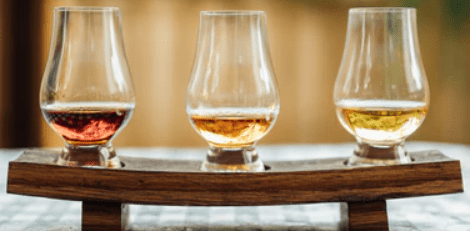
This is a good time of year to have a whiskey tasting party. A whiskey tasting can be done in a couple of different ways. The simplest method is to just get a few bottles together and let everyone help themselves while they sit around and chat about the ways of the world. However, it can be more interesting if everyone is tasting together and there’s a progression of styles to sip from. This technique is similar to that of a wine tasting party.
Photo credit: southerndrinkingclub.com
If following the second approach, first determine how many people will attend and then how many whiskies you want to sample. If everyone is tasting the same whiskey at the same time it is probably best to keep the number of attendees to under a dozen. This will make it easier to keep organized and maintain a well-structured group conversation about each sample.
When deciding on which whiskies to try, you could follow a specific theme or make your selections based on ones you personally enjoy. The experts suggest that the number of whiskies should range from five to eight with each pour being about ½ an ounce. Following this guideline, you will only require one bottle of each whiskey. Depending on your approach, you can either provide the whiskies yourself or ask each guest to bring a bottle.
Regarding the number and type of glasses to use, some enthusiasts only use snifter or Glencairn style glass but white wine glasses with small to medium bowls work equally as well. Your guests only need a glass or two at a time, so you can either dispose or finish the remains after each tasting, rinse out the glass and proceed to the next. This saves on glassware plus the clean-up time afterwards.
Allow people to taste each sample first without adding any water. Then give them the option to add a couple of drops of water to see if that affects the taste. It is a good idea to provide a pitcher of filtered or bottled water served at room temperature and liquid droppers, which can be obtained from most pharmacies. When adding water, it is important not to dilute the whiskey, thus no more than a teaspoon should be added. Whiskey flavours are easier to identify as you lower the relative alcohol content, thus diluting your whiskey a few drops at a time helps open up new flavours to experience.
On the topic of water, each participant should be provided with drinking water to cleanse the palate between tastings, as well as to keep themselves hydrated. Crackers or plain bread, such as a baguette are also good ways to cleanse the palate between tastings.
It is a good idea to have a container available for your guests to pour out whiskies they don’t care for. The goal here is to experience a range of whiskies, not encourage anyone to drink something they don’t like.
The best way to progress through a tasting is to sip the lightest whiskey first and end with the richest and/or most heavily flavoured/smokiest one. As host, it’s a good idea to taste everything yourself prior to the event in order to know which order the whiskies should be served in. Keep in mind that lighter coloured whiskey doesn’t necessarily mean it is lighter in flavour.
If you decide to select your whiskies using a theme, options include selecting by country, such as all American, all Irish, all Scottish, all Japanese, etc. Another option is selecting all single malts, whether from Scotland or a selection from different parts of the world. Comparing whiskies of the same age or from a single region are a couple of other options.
When it comes time to sample each whiskey, begin by “nosing” or smelling the whiskey. When it comes to tasting, hold the first sip in your mouth for several seconds before swallowing. On subsequent sips, concentrate on discovering the flavours and aromas. Then after adding a few drops of water explore the flavours again.
With all the discussions, nosings, water additions and subsequent re-tastings, you can expect to spend at least a couple of hours exploring your selections. Most importantly, the experience should be enjoyable for everyone. It’s a bonus if either you or your guests discover a new favourite whiskey along the way.



 A Layman's Wine Musings