Wings and beer are pretty much standard fare, a pairing seemingly made in heaven. When it comes to pairing drink with wings, usually the last thing to come to mind is wine. However, I am here to talk about wine, not beer, so here are some fun and interesting wine pairing suggestions for the next time wings are on the menu. The only challenge will be keeping the sticky sauce off your wine glass.
Photo credit: mapleleaffarms.com
When it comes to pairing wine with wings, it is all about the sauce. The wine needs to match the spice, heat and acid found in the wing sauces. Therefore, the wine must calm the heat, highlight the sauce’s acidity with its own acidity and complement the spiciness – a relatively easy task.
Here are some of the more typical wing varieties and corresponding wine recommendations:
BBQ
There are many varieties and interpretations of BBQ sauce. But when it comes to wings, the sauce is likely to be sweet and heavy. Such big bold sauces call for a big bold red wine, such as Cabernet Franc, Tempranillo, Zinfandel or Carménère. The intense red and black fruit you find in these wines will complement the tomatoes and spices found in BBQ wing sauce. The high tannins will offset the heat of chili and cayenne.
Savory, herbal notes found in these reds will go well with the garlic and onions in the sauce. And the wine’s dry nature will offset the sweetness of brown sugar and molasses.
Buffalo
This is a classic made from butter and hot sauce with heat levels ranging from mild to super hot. A sweeter wine such as Riesling, Vouvray or Gewürztraminer is just the thing to pair with spicier foods. The higher acidity of these wines will cut through the buttery sauce and the fatty chicken beneath.
Garlic Parmesan
The light, stone fruit flavours of Pinot Grigio will pair well with the taste of garlic and hit of flavour of the Parmesan cheese.
Honey Garlic
Sweet and savory, honey garlic wings tend to forego heat for a big aroma, along with a tangy flavour. Honey and garlic are both strong flavours so the wine needs to support the aromas and flavours. Sparkling Rosé, Crémant d’Alsace, Chenin Blanc or Prosecco will work well in this regard.
Honey Mustard
The sweet tang of honey mustard wings will go well with an unoaked or slightly oaked Chardonnay.
Jerk
Rosé is the perfect pairing for quelling the lingering heat of chicken wings coated with a peppery jerk rub.
Korean-Style
The bright acidity of a Grüner Veltliner is a great pairing for crispy Korean-style wings.
Lemon Pepper
Whether you’re trying a dry rub or a sauce, lemon pepper wings offer a light, zingy flavour that is typically less spicy. It will pair well with wines with lots of citrus flavour and acidity. A French Sauvignon Blanc, Chablis or Dry Riesling are good choices. These wines typically have brilliant lemon aromas, along with a strong sense of minerality that will go with the hit of pepper.
Sweet Chili
Thai-inspired wings are both the sweet and the spicy. Generally, a Thai Chili sauce packs less heat than other wing sauces so an overly sweet wine is not required. An off-dry white or light red can easily offset the spice. Good wine pairings include Chenin Blanc, a sweet Riesling, Zweigelt or Pinot Gris.
Teriyaki
A light fruit forward Spanish Garnacha will complement the sweet glaze of teriyaki wings.
I strongly suggest having a glass of wine along side your next feed of finger-licking good chicken wings. It may surprise you.
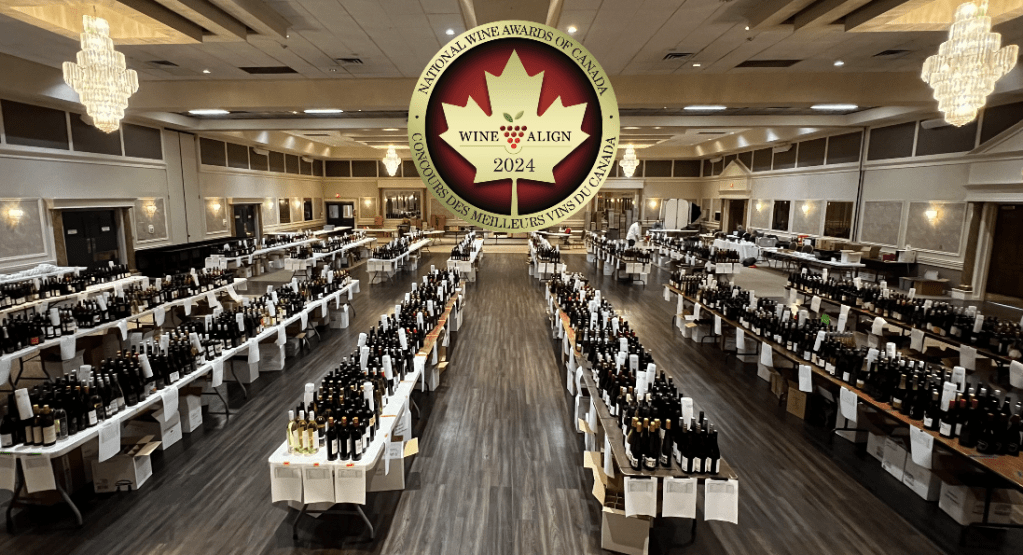
Here is what the organizers and judges were seeing, hearing and thinking at this year’s WineAlign National Wine Awards of Canada (NWAC). Their narrative has been separated by each judging category and presented below.
Photo credit: winealign.com
Sparkling Wine
While global wine consumption has decreased over the past two years. Sparkling wine, except for costly Champagne, has progressed upwards. In Canada, the Sparkling category burst during the pandemic, especially with accessible and affordable selections. The quality of Canadian sparkling wine continues to improve.
Red Blends
Red blends are abundant in both British Columbia and Ontario, making it the second largest category at the National Wine Awards. There is a variety of styles and grape varieties.
Bordeaux blends and Rhone blends continue to be important, but winemakers are increasingly evolving beyond the traditional French classic style. The next frontier is beginning to appear where blends consisting of Malbec, Carménère and Syrah are part of a new wave of Okanagan red blends.
White Blends
Winemakers continually mix and match with several varietal combinations. There are many permutations made with traditional varietals, as well as hybrid grapes.
There are no firm rules other than those set out by VQA which says that all the grapes in a labeled bottle must come from the province, an appellation and sub-appellation. Beyond this, the choices are endless, allowing white blends to vary from the traditional to the eclectic. Concepts include the Bordeaux combination of Sauvignon Blanc and Sémillon, Rhône blends that may include Marsanne, Roussanne and Viognier, but also Grenache Blanc, Clairette Blanche, Bourboulenc, Picpoul and Ugni Blanc. This year, British Columbia has continued to set the trends for blending and styles.
Rosé
There is a great deal of flexibility with respect to producing Rosé wine. Extraction levels and pigmentation can vary, many red or combination of red and white grape varietals can be used and there are no rules overseeing sweetness levels or oak aging.
Most Rosés are not meant for extended aging and are often best consumed in the year in which they are made. In Canada, most Rosés are bottled from March to June and make it to the stores between April and July.
Pinot Gris/Grigio
This white wine grape is a mutation clone of the black Pinot Noir grape. The skin colour varies greatly, and the wines produced from Pinot Gris also vary in hue from palest yellow to deep golden to blushing salmon. Pinot Gris also goes by its Italian name, Pinot Grigio. Wines made in the fresh, crisp and unoaked style of Italy’s Veneto region are called Grigio, while those in a richer, riper version go by Gris.
Orange
Orange wines are skiin contact white wines. There is no rule as to the length of the contact period or the grape varietals used. These wines range widely in colour and style.
Niagara’s popular Vidal grape responded well to skin contact, bringing texture and complexity to its tropical fruit profile. However, aromatic Gewürztraminer, with its subtly oily mouthfeel and subtle tannic framework, also showed well.
Gamay
Things change each year as there are new entries from newer wineries making Gamay. Some things also remain the same as many long-time advocates and committed Gamay producers continue to make excellent wines.
Pinot Noir
No other grape causes more of a stir. For many, there is no other grape variety. Pinot Noir has found enormous global success and Canadian soils are largely responsible for that. From agile, transparent, high-toned, red berry charmers to darker, seriously ripe and often tannic iterations, Pinot Noir succeeds with harmony and balance.
Chardonnay
This is always one of the largest categories in the competition. Chardonnay always leads or equals the greatest number of medals from platinum to bronze. Prices ranged from $87 for the most expensive medal winner to $11.95 for the least costly.
While the most expensive wine was not a platinum winner, there is a correlation between price and medal earned, establishing that top quality wine sells for more money. The average price for the platinum winners came in at just over $45, $40 for gold, $39 for silver and $33 for Bronze.
Malbec and other Red Single Varieties
Malbec represented 18 of the 41 medal winners in this category and accounted for 7 of 8 of the gold medals. It accounted for just 1.4% of entries in the competition but earned 4.1% of all gold medals.
This trend is almost entirely driven by British Columbia. There is something special about Okanagan Malbec. Much like Syrah, it does well up and down the valley.
Other White Single Varieties
Chardonnay and Riesling are often singled out as the signature grapes when it comes to top quality Canadian white wine. There are many other white varieties producing spectacular results including Grüner Veltliner wines from British Columbia.
Chenin Blanc is another consistent performer in BC and Ontario, making vibrant, fruit- forward wines.
Sleek, elegant Sémillon wines are also cropping up with increased frequency from coast to coast, as single variety wines and in classic Sauvignon blends.
Pinot Blanc proved its merit for good value, easy drinking white wine.
Gewürztraminer and Viognier
Viognier and Gewürztraminer remain minor varieties on the Canadian wine scene. Both grapes are particularly unreliable in Ontario, where Gewürztraminer accounted for just 2% of total production in 2023. Viognier is so rare that it is in the “other” category in the VQA’s annual report. In B.C. Gewürztraminer places a respectable 4th among white varieties in 2023, behind Pinot Gris, Chardonnay and Riesling. Viognier sits in ninth position alongside other Rhône varieties suitable to the West Coast’s unique conditions.
Sauvignon Blanc
At this year’s competition, Sauvignon Blanc took great strides and gained increased favour from judges and wine lovers. There were 32 medals awarded, with 20 going to Ontario and 12 to British Columbia. Of impressive interest is the average price of the 16 Silver Medal winners. These are wines that scored 90 points with an average cost of $23.40.
Syrah
“Syrah” above “Shiraz” is the key style in Canada. Reflective of a French Rhône style “Syrah”, as opposed to “Shiraz”, wines labelled as such tend to be distinctively peppery, with more sharp tannins, lower alcohol and exhibit more freshness than “Shiraz”. Yet in Canada, there is no enforcement over the use of these terms. Vintage variation and place do play a deterministic role, but the style of Syrah in Canada is heavily influenced by winegrowing and winemaking decisions that vary from producer to producer.
Ontario can produce excellent Syrah, but the category has forever been dominated by British Columbia.
Riesling
Canada has many great and quality examples of Riesling. It is a variety that truly expresses the place where it is grown. Riesling also counts among some of Canada’s oldest planted vinifera varieties, with plantings dating back to the mid 1970’s and early 1980’s in both Niagara and the Okanagan Valley.
Icewine & Late Harvest
Icewine, is the most important wine export. Now more than ever, due to erratic weather patterns, production is being threatened. Since the start of Icewine production in the 1970’s, a harvest has never been missed despite coming close a few times because of a mild winter in Ontario.
VQA regulations require the grapes to be naturally frozen on the vine, harvested, and pressed while the air temperature remains at or below -8 degrees Celsius. Recurrent periods of freezing and thawing can cause grapes to split, increasing unpredictable acidity in the wine. Production is a physically demanding task for both for the vines, that must bear their fruit into the cold of winter, as well as for the winemaker, who often harvests on the coldest of winter nights.
Cabernet Sauvignon
The number of gold medals has dropped from 13 in 2022 to 10 in 2023 to 7 this year. Despite the results, it is the category that has the most potential.
Cabernet Sauvignon is the most widely planted grape in the world, but such is not the case in Canada. It is the third most planted red variety in British Columbia, with 7.7% of total grapes grown. In Ontario, Cabernet Sauvignon represents only 5.9% of the grape harvest. There’s been a consistent downward trend, as a percentage of tonnage, over the last five years.
Cabernet Franc
Ontario has historically had a slight edge over the Okanagan Valley, given Ontario’s generally cooler and wetter climate, which suits the lighter, aromatic style that the judges tend to favour. However, the margin of difference has always been slim.
This year Ontario captured 38 out of 53 medals in total. However, British Columbia’s representation was impacted by the wildfires that severely impacted the Okanagan Valley in 2021, which resulted in smoke-tainted wines from some parts of the valley. Since these wineries did not submit any smoke-tainted wines, the number of submissions from B.C. was reduced significantly.
Merlot
Merlot remains the number one red planted grape in British Columbia.
There you have it; and that’s a wrap on the 2024 National Wine Awards.
The WineAlign National Wine Awards of Canada (NWAC) is the country’s largest competition, involving only 100 percent Canadian-grown and produced wines. The judging involves a select group of Canadian wine writers, educators, sommeliers and two international judges who spend a week assessing some 2000 wines and ciders. This year’s competition took place near Niagara Falls, Ontario.
Double Honour
The Winery of the Year and Small Winery of the Year is Kelowna British Columbia’s SpearHead Winery. In addition to the twin honours this year, they also had unprecedented success in an individual category (Pinot Noir), winning a total of seven medals for their Pinots, including three platinum, one gold, three silvers and a bronze. In total they earned a total of twelve medals.
Top 10 Wineries
Six of the top ten wineries this year are from British Columbia, with the remaining four from Ontario. The top ten are:
SpearHead Winery, British Columbia
Meyer Family Vineyards, British Columbia
Henry of Pelham, Ontario
Black Hills Estate Winery, British Columbia
Thirty Bench Wine Makers, Ontario
Quails’ Gate Estate Winery, British Columbia
Nostalgia Wines, British Columbia
Peller Estates Niagara-on-the Lake, Ontario
Lake Breeze Vineyards, British Columbia
Vieni Estates, Ontario
The Top 10 Small Wineries
Seven of the top ten small wineries are from British Columbia, with the remainder from Ontario. The top ten are:
SpearHead Winery, British Columbia
Meyer Family Vineyards, British Columbia
Nostalgia Wines, British Columbia
Lake Breeze Vineyards, British Columbia
The Organized Crime Winery, Ontario
Corcelettes Estate Winery, British Columbia
Black Bank Hill, Ontario
Kismet Estate Winery, British Columbia
Fort Berens Estate Winery, British Columbia
Lailey Winery, Ontario
Regional Top 10 Winners
British Columbia
SpearHead Winery
Meyer Family Vineyards
Black Hills Estate Winery
Quails’ Gate Estate Winery
Nostalgia Wines
Lake Breeze Vineyards
Corcelettes Estate Winery
Nk’Mip Cellars
Burrowing Owl Estate Winery
Kismet Estate Winery
Ontario
Henry of Pelham
Thirty Bench Wine Makers
Peller Estates Niagara-on-the-Lake
Vieni Estates
The Organized Crime Winery
Black Bank Hill
Two Sisters Vineyards
Lailey Winery
Hidden Bench Estate Winery
Marynissen Estates
Platinum and Gold Medal Winners
Only 1% of the wines entered earn a Platinum Medal. This year, 18 out of 1,800 wines received this recognition. Every Platinum winner has passed through a minimum of two tastings and a review by a minimum of five judges. These wines must be put forward by at least three judges in the first round and re-considered by at least five judges in the second round.
Earning a Platinum Medal greatly increases a winery’s performance score based on the mathematical degree of difficulty in reaching Platinum. This helps to decide the Winery of the Year and the Top 25 list.
Platinum and Gold medals were awarded in the following categories, presented alphabetically below:
Cabernet Franc
Platinum Medal
Black Bank Hill 2020 Cabernet Franc, Lincoln Lakeshore, Niagara Peninsula, Ontario
Vieni Estates 2022 Cabernet Franc, Vinemount Ridge, Niagara Peninsula, Ontario
Gold Medal
Bordertown 2020 Cabernet Franc Reserve, Okanagan Valley, British Columbia
Domaine Queylus 2022 Cabernet Franc Réserve du Domaine, Niagara Peninsula, Ontario
Before I begin let’s be clear on what ‘vintage wines’ are. Vintage wines are wines that are produced from grapes harvested during a single growing season as opposed to non-vintage wines, which can be produced from grapes grown in two or more growing seasons.
Photo credit: stlukes-glenrothes.org
Vintage wines that are cellared go through ongoing chemical effects that will continue until a bottle is uncorked. These outcomes are the result of continuous interactions between the wine’s alcohol, sugar and acid compounds, which combine in the bottle to create new complex flavours, textures and aromas. However, these results are not random. Skilled winemakers understand the chemistry behind aging wine and will manipulate the cellar environment to encourage various flavours and aromas that result in an appealing good vintage.
During cellaring the varietal’s natural flavours do not significantly change. A wine’s primary flavours will always be preserved regardless of cellaring timelines. These flavours are a result of the grape varietal and the conditions the grapes grew in.
However, aging a vintage varietal will affect the secondary and tertiary flavours and aromas. Both notes result from the winemaker’s techniques as well as the chemical interactions between a wine’s natural compounds. These activities define an aging wine.
White wines, especially dry whites like Sauvignon Blanc or Chardonnay, tend to become oily, heavy and stickier over time. Red wines, particularly those with naturally high tannin levels such as Nebbiolo, Syrah or Cabernet Sauvignon, tend to soften with time. This creates sediment that collects at the bottom of a bottle. As a result, the wine becomes smoother and less sharp, resulting in a gentler drinking experience.
The final characteristic affected by aging wine is colour. To see if a red wine has been properly aged, first look at the outer edge where the poured wine meets the glass. At that meeting point, which is referred to as the rim, the wine will appear lighter in colour. A young red wine, on the other hand, will have a rim that appears murky or opaque.
As red wines oxidize with age, their colours often change to deep shades of ruby-purple to softened mauves and then finally to tawny, deep browns. As white wine ages it tends to move from paler, straw-yellow shades to deeper golden hues. White vintages aged three or more years can eventually darken to the point of turning a golden amber color.
These changes in colour are the result of oxidation. When a wine bottle is properly sealed the only oxygen in a bottle will be the small amount trapped in the bottle’s neck, as well as what little oxygen passes through the cork or seal. Most cellared red and white vintages will be sealed with a traditional cork, which allows minimal oxygen to permeate. However, given that cork is itself a natural non-uniform product, oxygen permeation will vary significantly even between bottles cellared and cased at the same time.
Not all wines are created with the ability to be aged. The wine maker’s notes are often a good indication of a wine’s aging capability. Red wines that generally age well include:
Bordeaux and Loire Valley Cabernet Franc, aged 2 to 4 years
Chianti Riserva, aged 2 to 4 years
Petite Syrah, aged 2 to 5 years
New World Nebbiolo, aged 2 to 6 years
Australian and Californian Grenache, aged 2 to 10 years
Italian or Californian Cabernet Sauvignons, aged 3 to 15 years
Italian Barolo, aged 3 to 15 years
White wines with aging capability include:
Dry White Bordeaux, aged 2 to 3 years
Alsace Pinot Gris, 2 to 5 years
White Rioja, aged 2 to 5 years
Alsace Gewürztraminer, aged 2 to 10 years
Californian Fume Blanc, aged 2 to 10 years
New Zealand Sauvignon Blanc, aged 3 to 10 years
Australian Chardonnay, 3 to 10 years
German Riesling, 3 to 15 years
These lists are only a suggested guideline, not an exclusive list.
On the surface, the difference between vintage and non-vintage wines is simple. Vintage wines are made from grapes harvested during a single growing season, while non-vintage wines can blend a few different harvests. Non-vintage wine, sometimes referred to as stylized wine, is where the winemaker often aims to match the flavour of the wine to be the same as previous years. On the other hand, vintage wines are based on the characteristics of the vineyard and climate. Due to climatic conditions, some years produce wines that are considered better than others.
Photo credit: vinepair.com
Finding a bottle’s vintage is relatively straightforward. Simply look for the year printed on the label of the bottle. This tells you when the grapes were grown and the wine produced was made. Wine labels containing the description “single vintage” indicate that the wine was produced exclusively from grapes from a single harvest. Depending on the producing country, that ratio must be comprised of 75% to 95% of same-crop grapes. As long as a producer abides by that percentage, they can label their bottle as vintage.
The vintage is an indication of the quality of the wine. The wine flavours, textures, mouthfeel, aroma and bouquets are fundamentally determined by the weather and climate conditions during its specific growing season. Since vintage tells you what year those grapes were grown, you are provided with an accurate distinction between “good” crop years yielding delicious, balanced wines from “bad” crop years hindered by poor weather.
Non-vintage wines are wines created by blending grapes from multiple crops. As a result, they will not have a year printed on the label or will simply have “N.V.” to denote the fact its contents are not from a single harvest. Non-vintage wine quality will vary, as with vintage wines. Many are raved about for their consistency and cost-consciousness and represent good value for more casual wine drinking.
Which is better? The answer depends on what you are looking for from your drinking experience. There are wonderful single vintages and non-vintages available. Non-vintages will offer more diversity and flexibility, particularly when it comes to blends combining several complementary grape varietals. In contrast, vintages provide the opportunity to discover a specific wine region, a micro-climate and even a winemaker’s bottling skills and expertise in ways non-vintages cannot.
While visiting a winery in the Beaujolais district of France a few weeks ago I was introduced to a new term. I was told that the winery I was visiting was a biodynamic winery. This was a description I had not heard before, so I decided to research the topic in more depth when I returned home from my trip.
You may be familiar with what organic farming entails (if not, see my post Organic Wine from August 8, 2020), however the biodynamic movement is somewhat different. According to the Biodynamic Farming and Gardening Association, biodynamics is “a spiritual-ethical-ecological approach to agriculture, gardens, food production and nutrition.” Biodynamic wine is made with a set of farming practices that views the vineyard as one solid organism. The ecosystem functions with each portion of the vineyard contributing to the next. Conceptually, everything in the universe is interconnected and gives off a resonance or ‘vibe’. This interconnectivity even includes celestial bodies like the moon, planets and stars. Biodynamic viticulture is the practice of balancing this resonance between vine, human, earth and stars. Biodynamics is a holistic view of agriculture.
As with organic farming, natural materials, soils, and composts are used to sustain the vineyard. Chemical fertilizers and pesticides are not permitted. A range of animals from ducks to horses to sheep live on the soil and fertilize it, creating a rich, fertile environment for the vines to grow in. Biodynamic farming also seeks sustainability, leaving the land in as good or better condition.
Biodynamic farming has been met with skepticism by many scientists as some of the practices are difficult at best to prove they work. In addition to organic practices, biodynamic farming takes other factors into account, such as the lunar calendar and astrology. This method of farming considers all aspects of life in the vineyard — other plants, insects and animals. It’s not just about the grapes.
Photo credit: winefolly.com
Farming practices from pruning to harvesting are controlled by the biodynamic calendar. It breaks all the tasks associated with farming into four types of days: root days, flower days, fruit days and leaf days. Each of these categories has certain tasks associated with it that are reflective of the earth’s four classical elements. Fruit days are meant for harvesting, leaf days for watering, root days for pruning. On flower days, nothing is done in the vineyard.
Biodynamic farming calls for specific and sometimes strange compost and field preparations. One of these is known as cow horn manure. Cow horns are stuffed with manure compost and buried into the ground all through the winter, then excavated the following spring. When excavated, the stuffed material is spread throughout the vineyard.
Biodynamic wines must be certified and adhere to strict rules and regulations. The wineries are overseen by 2 governing bodies, Demeter International and Biodyvin.
Biodynamic wines can be found in the United States, France, Germany, Spain, Italy, Eastern Europe, Chile, Argentina, India and Australia. Those who believe in the philosophy feel that the wines are more characteristic to the terroir where they originate. However, wine experts say there is no noticeable difference in the taste of biodynamic wine from organically produced wines. Is the difference worth the additional effort? You be the judge.
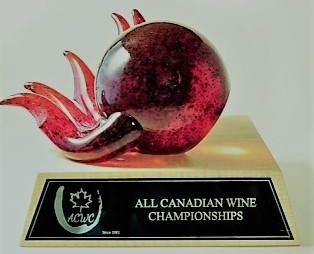
The All Canadian Wine Championships (ACWC) were held earlier this month. It is open to all Canadian licensed wineries, cideries and meaderies and content must be grown and made in Canada. This year there were 995 entries submitted by 173 wineries.
The panel of judges consisted of wine writers, sommeliers, and professional wine judges from the Wine Judges of Ontario. There were 10 judges from Ontario, 2 from Alberta and 1 from each of Quebec and New Brunswick.
The 2024 trophy winners were as follows:
The Best Sparkling Wine of the Year was presented to British Columbia’s (BC) Bench 1775 Winery, for their 2020 Blanc de Blanc ($39.75 CDN).
The Best Red Wine of the Year was BC’s Sunrock Vineyard’s 2021 Shiraz ($40.24 CDN).
The Best White Wine of the Year was awarded to BC’s Van Westen Vineyards, for their 2022 Viscous ($27.40 CDN).
The Best Dessert Wine of the Year was Quebec’s Vignoble du Marathonien, for their 2021 Vin de glace ($50.00 CDN).
The Best Rosé Wine of the Year was awarded to yet another BC winery, Hester Creek Estate Winery, for their 2023 Rosé Noir ($32.19 CDN).
The Best Fruit Wine of the Year was presented to another BC winery, Maan Farms Winery, for their N/V Raspberry Dessert ($29.99 CDN).
The Best Cider of the Year was Nova Scotia’s Domaine de Grand Pré, for their N/V Vintage Sparkling Cider ($29.00 CDN).
The Best Mead of the Year was presented to Manitoba’s Shrugging Doctor Beverage Co, for their N/V Apple Cinnamon Mead ($18.47 CDN).
Double Gold, Gold, Silver and Bronze medals may be awarded in each category. Double Gold and Gold medals were presented to the following participants:
Sparkling Wine-Traditional Method
Gold
Two Sisters Vineyards, ON – 2021 Lush Sparkling Rosé – $57.80
Two Sisters Vineyards, ON – 2020 Blanc de Franc – $63.80
Ravine Vineyard Estate Winery, ON – N/V Brut – $44.80
Sparkling Wine–Charmat Method
Double Gold
Bella Terra Vineyards, ON – N/V Sparkling Rose – $24.95
Gold
Three Dog Winery, ON – 2023 Debut Sparkling – $27.80
Harbour Estates, ON – 2023 Sparkling Riesling – $25.00
Sparkling Wine–Frizzante Method
Double Gold
Planters Ridge Winery, NS – 2022 SEK – $22.43
Gold
Jost Vineyards, NS – N/V Luvo Sparkling White – $5.89
Chardonnay, Unoaked
Double Gold
Calamus Estate Winery, ON – 2023 Unoaked Chardonnay – $18.95
Gold
Kacaba Vineyards and Winery, ON – 2023 Select Series Unoaked Chardonnay – $15.95
Chardonnay Under $35.00
Double Gold
Wending Home, ON – 2021 Chardonnay Estate Vineyards – $34.95
An American wine club operator from Napa Valley, California had arranged for a group of his members to take part on our recent river cruise aboard the Scenic Sapphire, through the Burgundy and Rhône wine regions. The group excursion included the CEO of Cuvaison Estate Wines of Napa, California, Dan Zepponi.
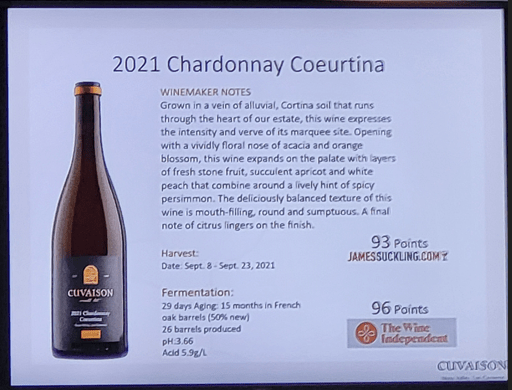
While sailing down the Rhône River between ports, Zepponi treated the passengers to two seminars; the first was an exploration of Chardonnay wine. The presentation included tastings of two different Chardonnays from Cuvaison which were compared to two French Chardonnays that are regularly served as part of dinner service on the ship.
The tastings were conducted as a head-to-head comparison. First, his unoaked Methibiton Chardonnay, was compared to an unnamed, unoaked French wine. The second comparison was between two oaked Chardonnays, Coeurtina from his winery against a second unidentified French.
In each comparison I found the flavours of the Napa wines to be extremely close to the French, though to me the French was slightly more mellow and smoother. The Cuvaison wines are priced at $70 US each and are only available directly from the winery. In comparison, the ships wines would have an equivalent price of approximately $15 – $20 US per bottle.
During the second seminar Zepponi discussed micro-lots as they pertain to the wine industry. When a winery wants to produce a type of wine but does not have enough of the varietal in their own vineyard they may purchase the varietal from another grape grower. The purchased grapes are then used to make a specific wine exclusively from that purchased micro-lot. This allows the winemaker to better control the grapes being used and the wine produced, in a similar manner that would be done if the vintner was using their own estate grown grapes.
Two taste comparisons were conducted, the first was with Cuvaison’s 2022 En Cigar Chardonnay Blanc and the ship’s undisclosed Sauvignon Blanc house wine. The second comparison was conducted using their 2022 Fiddlestix Pinot Noir and an undescribed French Pinot Noir. I favoured the French Sauvignon Blanc over the Cuvaison but did find Cuvaison’s Pinot to be smoother and less fresh that the French Pinot. Once again though, the price between the American and French wines was significantly different – $70 US for both Cuvaison’s versus under $20 US for the French wines.
Unfortunately, the two seminars lacked substance and honesty as they were actually marketing presentations for Cuvaison wines. Zepponi would have had more credibility in my eyes if he had presented his talks as being an introduction to Cuvaison wines. There was no value in conducting taste comparisons with wines that are not even identified by name, let alone any information about where or how the wines were produced. He should have simply talked about how his wines are produced.
Based on information presented about the various Cuvaison wines, they are producing decent wines at a reasonable price point. However, the feeble attempt at conducting product comparisons was an insult to the intelligence of the ship’s passengers.
According to the most recent statistics, the following countries have the highest negative net exports for wine. Net exports are defined as the value of a country’s total exports minus the value of its total imports. Thus, the statistics below present the deficit between the value of each country’s wine import purchases and its wine exports (in U.S. dollars).
Photo credit: bkwine.com
United States: -$6.2 billion
United Kingdom: -$4.4 billion
Canada: -$2.2 billion
Japan: -$1.9 billion
Germany: -$1.8 billion
China: -$1.4 billion
Switzerland: -$1.2 billion
Netherlands: -$1 billion
Russia: -$882.3 million
Sweden: -$793.9 million
Belgium: -$750.2 million
Hong Kong: -$727.8 million
South Korea: -$581.1 million
Denmark: -$580.1 million
Norway: -$499.4 million
The combined North American deficit of $8.4 billion in international wine trade has a strong demand for both Old World and New World brands. In turn, this negative cashflow highlights North America’s strong competitive disadvantage for wine sales but also indicates opportunities for other wine-supplying countries to contribute toward satisfying North America’s consumer thirst and wide-ranging tastes for different types of wines.
The natural method of winemaking is the result of a series of biochemical transformations caused by the action of several enzymes. Many of these enzymes originate from the grapes themselves. However, the enzymes found in the grapes, yeasts and other microorganisms are often not sufficient so commercial enzymes are often added to supplement winemaking requirements.
Enzymes are used in winemaking to break down certain components in the grape juice, such as pectin and proteins, which help clarify the wine and improve its flavour, as well as improve the quality and efficiency of the fermentation process. Enzymes are also used to remove unwanted substances such as tannins.
To accomplish all this several different types of enzymes are used.
Pectinases are enzymes that break down pectin, which is a complex carbohydrate found in the cell walls of the plants. The result is simpler sugars that can be fermented by yeast.
Beta-glucanases break down beta-glucans, which are complex sugars found in the cell walls of yeast and can cause problems during fermentation.
Proteases are enzymes that break down proteins into smaller peptides and amino acids, which can also be utilized by yeast during fermentation.
Glucosidases help to release aromatic compounds from the grape juice, which can enhance the flavour and aroma of the wine. The selection of active yeast, fungal and bacterial glycosidases enhance the wine aroma.
Lipases are enzymes that break down fats and lipids, which can improve the clarity, filtration and stability of the wine. They also assist with improving the pressing efficiency and juice extraction.
Anthocyanins contribute greatly to red wines because these molecules and their interactions with other compounds are responsible for the colour and the stability of red wine during ageing.
Exogenous enzymes are often used to accelerate the extraction of anthocyanins from the berry skin increasing the colour intensity of the wine.
The diagram below demonstrates where enzymes may be injected into the wine making process. It is an excellent illustration as to why vintners require a strong biology or bio-chemical background.







 A Layman's Wine Musings