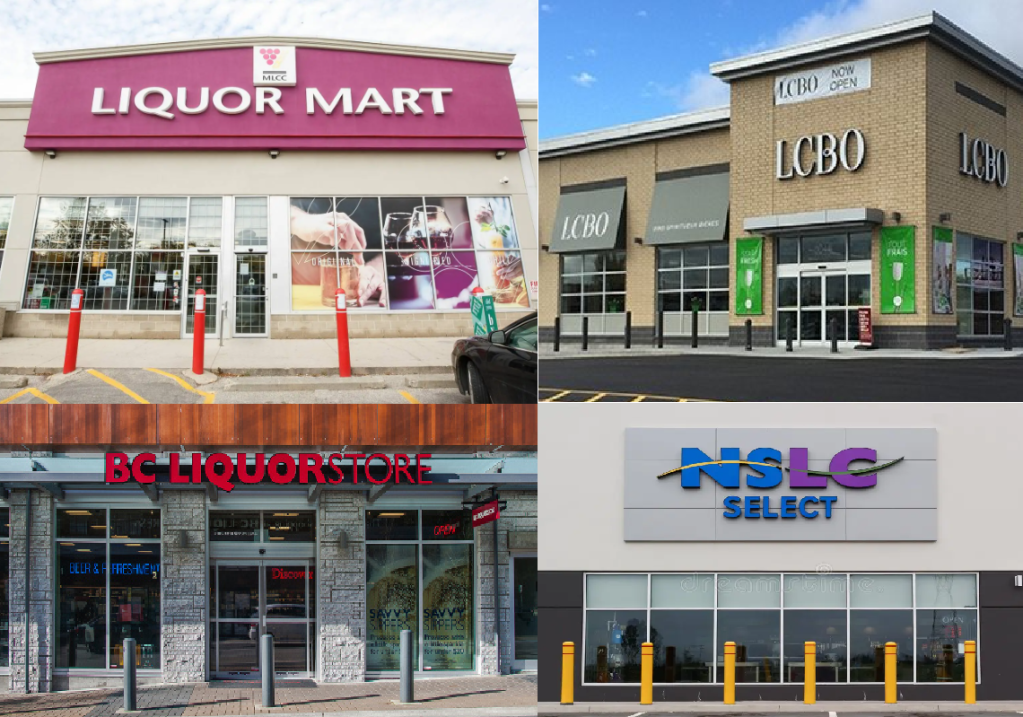
Further to my previous post on the question of whether liquor sales should be privatized (see Should the LCBO be Privatized? April 19, 2025), today I want to look at the difference between government-controlled retail outlets versus government regulated ones. Examples of government operated retail outlets include Ontario’s LCBO, Nova Scotia’s NSLC, British Columbia’s BC Liquor Store and Manitoba’s Liquor Mart.
I can see where privately owned retail outlets could provide benefits in large cities where there is a sufficient population to support specialty wine or whiskey shops. Each store could have an expert who could provide insight on each of the various products sold. It could be a great opportunity for niche marketing and the customization of the sales environment.
However, in small centres, selections could be much more limited with options being dictated solely by profit margins. In this case, the run-of-the-mill wine and whiskey choices could be sold along side soda pop and potato chips. Store staff would be much less likely to have the expertise to assist customers making their selections.
Small wineries, distilleries and breweries could find independent liquor stores beneficial, potentially providing them with more market exposure. Government operated outlets limit retail shelf space to producers who can meet minimum production volumes, leaving many small estate wineries and private distilleries with very limited market exposure. Independent retailers could provide these wineries and distilleries with the consumer exposure that they are currently lacking.
Even though the government could continue to collect taxes on liquor sales, some fear that the revenue generated from government operated retail operations could be lost, impacting the government services currently supported by those revenues. As well, there would be job losses from the public sector if private companies take over retail operations.
Government operated liquor outlets have been instrumental in supporting the domestic alcohol beverage industry. Privatization could potentially weaken that support.
It could be argued that private liquor companies might prioritize profits over public health and safety, potentially leading to conflicts of interest. However, if sufficient regulations are put in place, private enterprise could be made to follow the same principles and practices as the government operated retail outlets adhere to.
As you can see, there is no simple solution as to which alternative is best. You will have to weigh the odds for yourself before deciding which side to support in this age-old debate.
Sláinte mhaith
 A Layman's Wine Musings