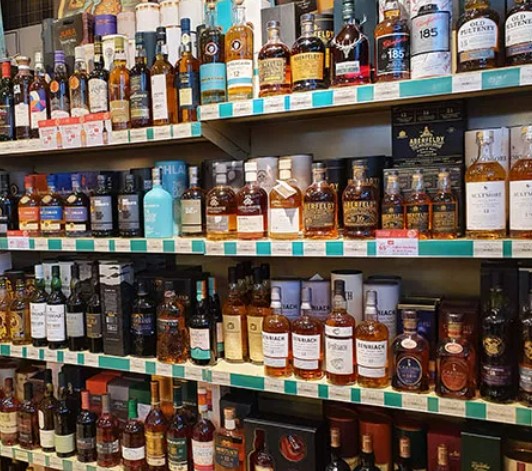
Whisky and whiskey sales are booming as these beverages have steadily been increasing in popularity since the 1990s. Both the quality and variety of products and styles have peaked consumer interest and demand.
Photo credit: comptoir-irlandais.com
This increase in popularity made me think, and ask the question, “Who are the largest consumers of whisky/whiskey?” Well, the answer will change depending on whether you are talking about consumption per capita, volume or market share. The latter two categories are related to a nation’s overall population size and are rather predictable. Therefore, I decided to investigate consumption per person on an annual basis.
The information presented is based on statistical information completed by Euromonitor, an international market research and analysis company, together with Quartz, a global business news organization. The information is presented in litres consumed per inhabitant per year.
France – 2.15 litres per person
Uruguay – 1.77 litres per person
United States – 1.41 litres per person
Australia – 1.3 litres per person
Spain – 1.29 litres per person
United Arab Emirates – 1.27 litres per person
United Kingdom – 1.25 litres per person
Ireland – 1.24 litres per person
India – 1.24 litres per person
Canada – 1.19 litres per person
I found some of the results surprising, such as France as number 1. I always considered the French only as great wine enthusiasts. On the other hand, based on reputation, I would have thought Ireland to have been ranked much higher. Who knew?
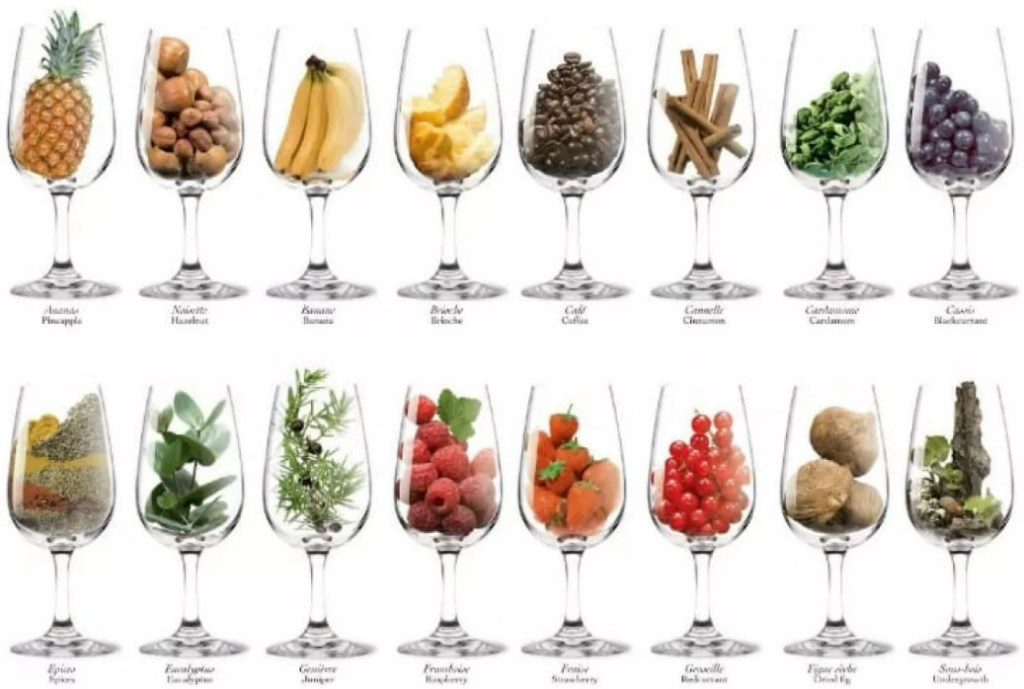
The aromas of wine, which are also referred to as the nose or bouquet, range from simple to very complex, depending on the wine. The best way to release the aromas is to swirl the liquid around the bowl of the glass. This will expose the liquid to the air, thus releasing all of the smells.
Photo credit: finedininglovers.com
When you go to smell the wine don’t be bashful; stick your nose as far as you can into the glass and close your eyes. You will notice a lot more scents this way. Then breathe in deep. As you do, think about what aromas you’re picking up.
If it’s a white wine, you may be reminded of bananas, lemon rind or pineapple. If it’s a red wine, you may smell prunes, cherries, strawberries, peppers, plums or tobacco. Sometimes you may just smell grapes. Your brain will only pick up scents that you are familiar with and have smelled before. Thus, you and I could smell the same wine at the same time and relate a totally different experience. The aroma is in the brain of the beholder.
When identifying the aromas, the experts will consider them at three levels referred to as primary, secondary and tertiary. Primary aromas come from the grapes or are created during the fermentation process. A simple wine may show a very limited number of primary aromas whereas a more complex wine may display many more primary aromas.
White wines will display fruity aromas such as lemon, lime, grapefruit, apricot, peach or plum. Red wines tend to present smells of strawberry, raspberry, blackcurrant or cherry. There may also be floral, herbaceous scents in both white and red wines.
The secondary aromas in wine are created by the post-fermentation process. The most obvious of these are extracted from the oak that the wine barrels are made of. Oak is often used when making wines such as Chardonnay, Cabernet Franc, Cabernet Sauvignon and Shiraz. The oak can create hints of vanilla, cloves, coconut, cedar, chocolate, coffee or smoke. Non-oak aromas may include cream, butter, cheese, toasted bread or biscuits.
Tertiary aromas occur as the wine ages in the bottle. Only older mature wines will display these characteristics. White wines may have aromas of orange marmalade, ginger, nutmeg, honey and stone fruits, such as peaches or plums. Red wines may show hints of dried fruit, leather, mushroom, meat, tobacco or caramel.
There you have it; the aromas in wine are created at three different levels but how you interpret them will be as unique as you.
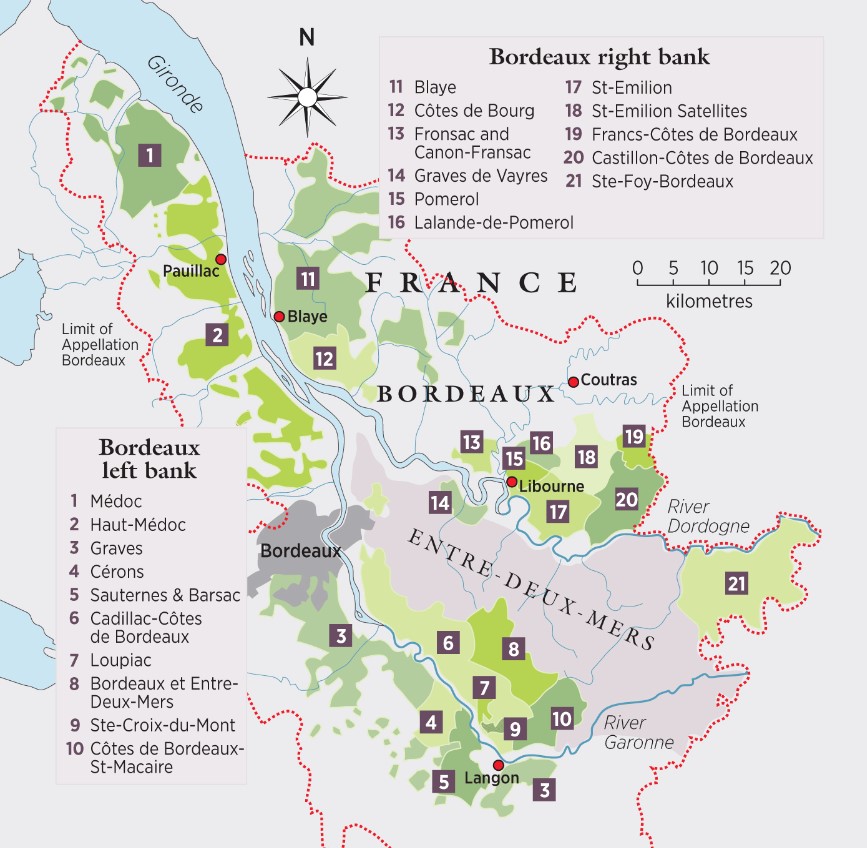
The prestigious Bordeaux wine region is located on the western coast of France. The region is separated into two sub-regions, referred to as the Right Bank and the Left Bank. Each region has its own unique nuances that characterize it from the other.
Photo credit: Decanter.com
The banks refer to the two riverbanks, the land masses on either side of the Gironde Estuary, the place where a river meets the sea. The Gironde Estuary is fed by two rivers, the Dordogne and the Garonne. The Left Bank viticultural region is on the southwest side of the Gironde and the Right Bank is on the northeast side.
The prominent difference between the Left and Right banks is the grape varietal grown. The Left Bank is famous for its Cabernet Sauvignon while the Right Bank is mainly Merlot, Cabernet Franc, Petit Verdot and Malbec. The reason for the grape varieties being different is due to the type of soil. The Left Bank is characterized by gravelly soils while the Right Bank is mainly clay soils.
The varietals grown determines the difference in style of wine produced. The Left Bank’s Cabernet Sauvignon-based blends tend to be more structured, powerful and have a higher presence of tannins, whereas the Right Bank’s Merlot-dominant blends tend to be softer and silkier. Personally, I am a fan of the wines from the Right Bank.
The most complicated difference between the Left and Right Banks is the way in which the wine is classified. For a detailed explanation of the classification methods see my post, France’s Cru Levels from March 18th.
The most notable vineyards on the Left Bank include Château Latour, Château Margaux, Château Haut-Brion, Château Lafite, and Château Mouton Rothschild. Estates on the Right Bank include Château Cheval Blanc, Château Angélus, Château Pavie and Pétrus.
As I have discussed in the past, French wine labels can be rather puzzling since they indicate the region where the wine was produced rather than the grape varietal contained inside the bottle. Also, the label will often contain such words as “Grand”, “Premier” or “Cru”. Even though premier means first in French, you will often find grand appearing on the better quality wines.
Photo credit: Decanter.com
The simple translation for cru is growth. However, in the world of French wine its reference is for the geographic terrain, specifically the soil type, climate and altitude where the grapes are grown. It gets complicated by the fact that cru is not applied in the same manner throughout all the wine regions of France. Further complicating things is that the term cru is also used in Germany and Italy where there are additional variations in the meaning.
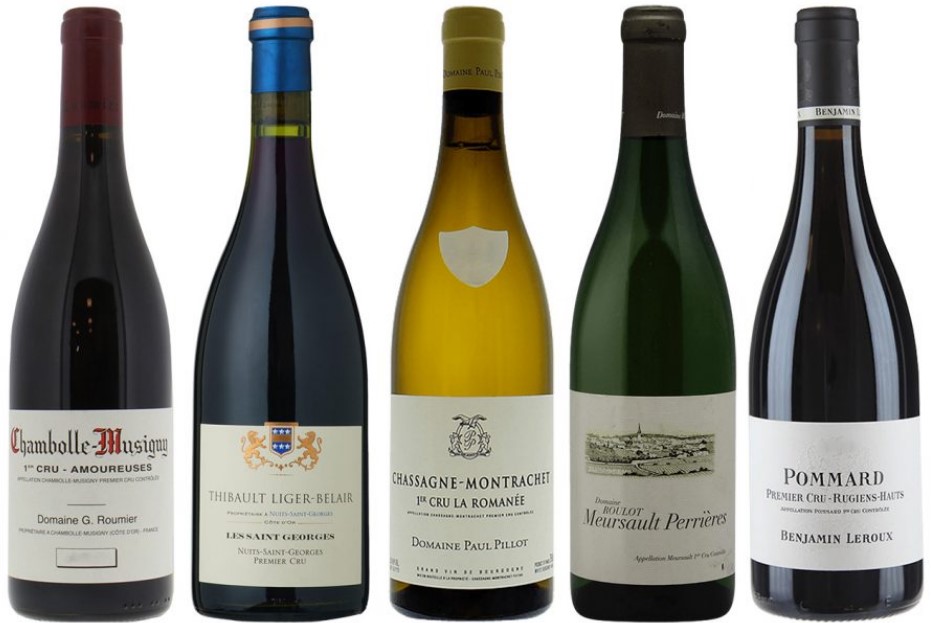
In the Burgundy region of France, the classification of cru is rather simple. Cru designates a vineyard as being of a certain level of quality. The classifications originate back to the 12th century and the Cistercian and Benedictine monks in the Côte d’Or. Every vineyard in Burgundy is classified in the hierarchy where Grand Cru is at the top followed by Premier Cru and then “village” wines, with the generic Bourgogne category at the bottom.
There are 33 Grand Crus with each having its own appellation. Only Pinot Noir and Chardonnay are grown here, but most appellations only permit one or the other varietal to be grown; very few allow both. Premier Cru wines are less expensive and are often a better value, though their long-term aging potential is typically less.
Chablis has one Grand Cru appellation that includes seven vineyards. These vineyards overlook the town of Chablis and benefit from a southwest exposure that helps ripen the grapes.
The Bordeaux region applies the term cru in a much different manner. Grand Cru Classé classification system forms the basis of the rating system and it’s tied to a specific chateau or estate, rather than adjacent vineyards. It was created in 1855 and is comprised of only left bank chateaus in Médoc, Graves and Sauternes, ranked from first to fifth growths, based on their value at that time. The first growths are called Premiers Crus, while second through fifth growth crus are called Crus Classes.
On the right bank Pomerol isn’t classified but Saint-Émilion is. St.-Émilion has three chateau-based quality classifications. At the top is Premier Grands Crus Classés, of which there are 18, followed by Grands Crus Classés which contains 64 chateaus. The appellation’s third category is not tied to a specific ‘classed’ chateau or geographical subzone. Wines labeled “St.-Émilion Grand Cru” merely have more stringent production rules.
The Alsace region uses the term Grand Cru in similar fashion as the Burgundy region. Fifty-one vineyards have been designated superior, or Grand Cru, and wine from those vineyards can use the term on their label. There is a great deal of diversity in Alsace’s Grand Cru wines. There are four grapes approved for use, as well as a wide variation in soils.
The Beaujolais region is where Gamay grapes are grown. Here cru is applied to villages rather than vineyards. There are 10 villages and the wine produced from these villages is called Cru Beaujolais.
The Champagne region also classifies entire villages as Grand Cru or Premier Cru. The Champenois created a system referred to as échelle des crus, or “ladder of the growths” in the early 20th century to fix grape prices for both farmers and buyers at Champagne houses.
At each harvest a price is set and growers with land in one of Champagne’s grand cru village receives 100% of that price. Grapes from the premier cru villages earns from 90% to 99% of the set price, while the rest receive from 80% to 89%.
There you have it; a little more of the puzzle of French wine resolved.
Scotch whisky is produced in over 130 distilleries and comes in a wide variety of flavours, types and price points. It can be overwhelming to be surrounded by similar-looking bottles, only to find that they are very different from each other, particularly in how they taste. The flavour will be dependent on a variety of factors such as whether the scotch is peated or non-peated; the type of barrel used during the distilling process, whether that be a plain oak cask, sherry cask, bourbon cask, etc.; or whether the Scotch is a malt, blend or single grain.
I have congregated my list of suggestions and recommendations based on my own research acquired from visiting a number of Islay, Highland and Speyside distilleries, as well as from trying a variety of assorted whiskies.
I recommend starting with a less expensive malt or blend but at the same time not the cheapest one on the liquor store shelf. Keep in mind that you get what you pay for. Also, I suggest starting with a non-peated Scotch, as the flavour will be less intense and less smoky.
Not all varieties are available all the time. Some whiskies, especially those from smaller distilleries or special batches, are only available outside of Scotland in limited quantities a few times each year. Therefore, to avoid disappointment when starting off, it may be best to try those whiskies that are more consistently available.
Based on all these criteria, here are my suggestions of whiskies to try when first exploring the world of Scotch:
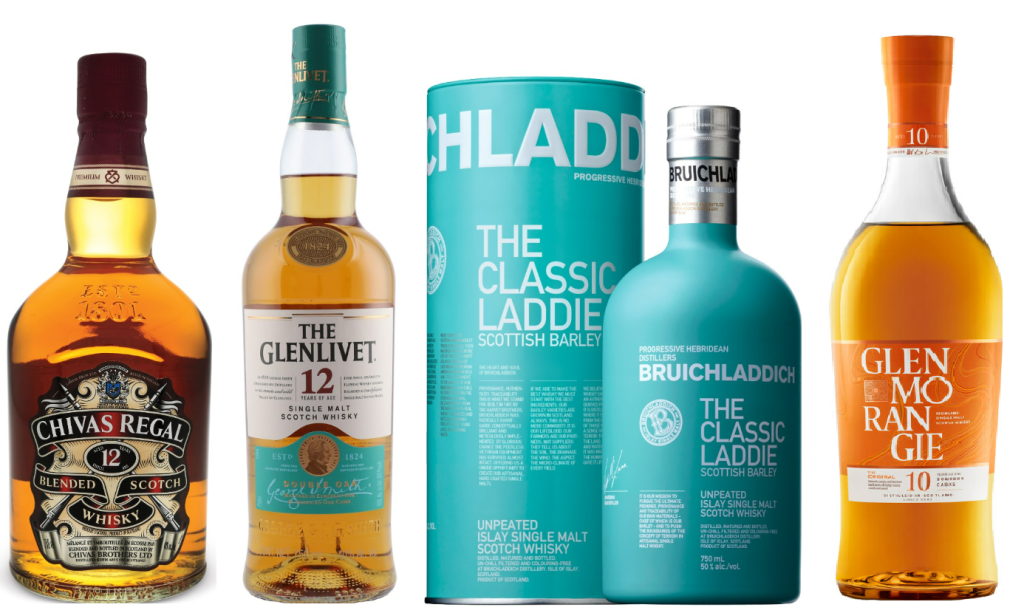
The Glenlivet 14 Year Old Single Malt ($80 CDN)
Bruichladdich (pronounced “Brook law dee”) The Classic Laddie Scottish Barley ($86 CDN)
Glenmorangie Original Highland Single Malt ($73 CDN)
The Glenlivet 12 Year Old Single Malt ($70 CDN)
Tomatin 12 Year Old Single Malt ($70 CDN)
Glenfiddich (pronounced Glen fiddick) 12 Year Old Single Malt ($70 CDN)
Chivas Regal 12 Year Old blend ($83 CDN)
Johnny Walker Black Label blend ($70 CDN)
As with wine, to enjoy the optimum tasting experience, the whisky should be served in the correct glass. If drinking your whisky neat or with a splash of water, a tulip-shaped whisky glass is ideal. If you elect to enjoy your whisky with ice, then a rocks glass is optimal.
Streaks and water spots can make your stemware look dirty even when it’s not. It can be frustrating and difficult to get wine glasses clean and worse, if not done properly, odors can penetrate the crystal and interfere with the aroma and flavour of your wine.
Photo credit: AdvancedMixology.com
According to many experts it is perfectly safe to put your crystal stemware in the dishwasher. They claim that the reason people fear doing it is because traditionally crystal often had a gold rim or other decorations that made it unsafe for machine washing and that reputation has stuck. However, it is still important to remain cognizant of the length of any stems on your glasses. Many a glass has been “de-stemmed” by either the machine’s rotating spray mechanism or the top of the dishwasher when the tray has been slid back in.
If you do elect to use the dishwasher it is suggested that you wash the stemware on its own to minimize the risk that a dish or utensil may shift during the wash and crack a glass. Also use the air-dry setting as heat drying can dull glasses over time due to miniscule detergent particles that will be contained in the steam.
Those who oppose cleaning crystal stemware in the dishwasher claim dishwashers can cause hard water stains to appear on the glass. They also say that some detergents can etch the surface of the glass. Lastly, there is a possibility that vibration of the dishwasher can cause a piece to shatter.
If you wash your glasses by hand the experts recommend you hold each glass by the bowl, not by the stem, which is the most fragile part of the glass and may easily break. Using hot water, swirl the water over the whole glass and use only a minuscule amount of dishwashing liquid on the outside, including the rim. Then rinse inside and out with hot water to remove any soap.
Once done, dry the glasses immediately in order to avoid water spots. For best results it is recommended that you use microfibre towels, one in each hand. This will void any spots, lint or finger marks being left on the glass. Use two towels; hold onto the glass’s base with one towel-covered hand and the bottom of the glass’s bowl with the other. Then turn gently in one direction and rub lightly on any water spots.
No matter which method you choose for washing your glassware, immediately following use be sure to rinse the glassware in hot water to remove any leftover wine or sediment.
My own experience has been that wine glasses can get broken using either method. My only word of caution is I would avoid putting any family heirlooms in the dishwasher. Most of today’s crystal manufacturers will indicate whether their product is dishwasher safe.
Earlier this month it was announced that, after 16 years, British Columbia’s Harper’s Trail Winery will be closing by June of this year. Owners Ed and Vicki Collett will open their tasting room in May for one final month before retiring and moving on to the next stage of their lives. Along with the current vintage, Harper’s Trail will now be releasing an exclusive collection of library wines.
Having previously visited both Australia and Chile’s wine regions and seeing how similar their climates are to that of the Thompson River Valley, Ed recognized the possible success of starting a vineyard in the Kamloops area.
The Colletts were the first participants in the development of the Thompson River Valley wine region, even though they had no previous vineyard or winemaking experience. The couple relied on advice from several industry veterans who helped set them on the right path. As a result, the Thompson Valley wine industry emerged and developed into an official wine appellation.
The Colletts purchased the property in 2007, planted the first vineyard block in 2008, and opened Harper’s Trail, which was Kamloops’ first winery, in 2012. Since then, Harper’s Trail has become a 5,000-case producing winery that generates 100% estate grown wines on the vineyard’s 25.5 acres. The winery has earned many top honours in prominent national and international wine competitions. Most recently, at the 2022 National Wine Awards, Harper’s Trail won a gold medal for its 2019 Chardonnay Sparkling and a silver medal for their 2020 Silver Mane Block Riesling. At this past year’s All Canadian Wine Awards, Harper’s Trail received gold for their 2019 Chardonnay and silver for their Field Blend White.
In preparation for their pending retirement, the Colletts hope to find a successor to purchase the winery and further enhance it. In case you have a desire for taking on such a challenge, the winery is listed with realtors Cushman & Wakefield.
In France the varietal of grape a wine is made of is seldom indicated on the label. Instead, the French tend to identify flavour by the region from which the wine was produced. Because of this, people often shy away from buying French wine. However, the mystery of French wine can be solved by simply knowing which grapes are grown in each region. To assist you, most wine and liquor stores arrange their French wines by region.
The Alsace region is located in the northeastern region of France between the Vosges Mountains and the Rhine River. Historically, Alsace was part of Germany, which influences the types of grapes grown in the region. It is home to single varietal white wines including Gewurztraminer, Muscat, Pinot Gris, Riesling and Sylvaner. The wines cover the spectrum, ranging from dry to sweet.
BEAUJOLAIS
The Beaujolais region is known for growing the Gamay grape, which has bright acidity and low tannins.
BORDEAUX
Bordeaux is France’s largest and most renowned wine region. It is known for its red blends highlighting Cabernet Sauvignon on the Left Bank and Merlot, Pomerol and Saint Emilion on the Right Bank. The white varietals of Bordeaux include Barsac and Sauternes grapes.
BURGUNDY
Pinot Noir and Chardonnay, referred to as Chablis, are the standard grapes grown in the Burgundy region.
CHAMPAGNE
The Champagne region is renowned for its sparkling wines produced from one or more of Chardonnay, Pinot Noir or Pinot Meunier.
LOIRE VALLEY
The Loire Valley stretches from the Auvergne region to the Atlantic Ocean. It produces most of France’s white wine. The white varietals of the Loire include Chenin Blanc (called Vouray), Sauvignon Blanc (referred to as Sancerre and Pouilly-Fumé) and Muscadet. It is also known for the red varietal, Cabernet Franc.
PROVENCE
Provence is the oldest wine region in France. It is the only region that specializes in Rosé wines.
RHÔNE VALLEY
Syrah and Viognier are the highlights of the northern part of the region while Grenache, Syrah and Mourvèdre are prominent in the south. Mourvèdre is the dominate grape in Châteauneuf -du-Pape. Blending of the grapes results in rich reds and vigorous whites and rosé.
Final Thoughts
Once you know which regions grow your favourite grapes, it is much easier to find a suitable bottle of French wine to enjoy.
The recipes for a Hot Toddy seem to be as numerous as the legends telling the tale from which it originated. One suggestion is that it began in Edinburgh, Scotland where pubs began mixing Scotch whisky with a splash of hot water. The water was said to have come from the largest well in the area, Tod’s Well, thus supposedly giving the drink its name. This form of Toddy was very popular during the 18th century when it was often used to help counter the cold weather.
Photo credit: marthastewart.com
The English from the times of Charles Dickens also seem to lay claim to the origins of the Hot Toddy, with images of cozy firelit parlors in Dickensian London, as well as flu remedies being conjured up by little old grandmothers in shawls.
Yet another theory is that the Toddy was invented by an Irishman, Dr. Robert Bentley Todd, who, according to legend, had a cheerful view of medicine, prescribing his patients a mixture of hot brandy, water, cinnamon and sugar as a general cure-all. If nothing else, his patients were most likely a happy lot.
Although these all make for great stories, the history of the toddy can be traced to India and a 17th-century Hindi drink called “taddy” that is made from fermented palm sap. The oldest record of the recipe is from 1786, where it was described as liquor mixed with hot water, spices and sugar. British Food History suggests that taddy was used by British officials in India to water down expensive imported English beer. Over time, spirits, sugar, ginger and lime were adapted into the mix. The recipe then seems to have traveled to Scotland and England, ever changing along the way.
Today there are many versions of the Hot Toddy. Here are a couple to consider:
Traditional Hot Toddy
Hot water
2 ounces whisky or rum
½ teaspoon sugar (or more or less to taste)
Scrape of nutmeg (optional)
Heat water to boiling.. Measure whisky into a tall mug. Fill to the top with hot water and spoon in sugar, stirring to blend. Grate some nutmeg on top if desired. Drink hot.
Classic Hot Toddy
1 shot (25-30 ml) whisky (or rum or brandy)
2 tsp honey or sugar
Juice of quarter of a lemon
75-100 ml hot water (or tea)
1 cinnamon stick (optional)
1 slice of lemon
Freshly grated nutmeg (optional)
Put whiskey, honey or sugar, lemon juice and most of the hot water, or tea, into a small glass or coffee cup. Stir with a cinnamon stick or a spoon to dissolve the honey.
Taste and see if you need to add more water.
Garnish with a lemon slice, the cinnamon stick and a few rasps of freshly grated nutmeg.
One of the more notable wine trends during the last few years has been the resurgence of fortified wines such as sherry. Sherry is no longer viewed with the stuffy Old-World sentiment as it once was. I personally remember as a child seeing sherry being served in tiny ornate crystal glasses to elderly visitors.
Photo credit: thewinesociety.com
Sherry is a unique wine that is exclusively produced in the wine-growing region of Jerez, Spain, located in a triangle of land formed by the towns of Jerez de la Frontera, Sanlúcar de Barrameda and El Puerto de Santa María. Sherry has been produced in the region since the 8th century but it was the British who began exporting it after conquering Cádiz in 1587. They called it sherry since it was easier to pronounce than “Jerez”.
The process of producing sherry is very complex. The wine is fermented and placed in a ‘solera system’ which are barrels that are stacked up on their sides in a pyramid-like shape. Yeast develops on the wine, known as flor, which stops the wine turning to vinegar and adding extra spice and flavour to the wine. The wine gets transferred from the top of the Solera system down through each layer over time, blending with older wine each time to create a complex ageing process. Alternatively, sherry can be aged oxidatively, by being left in contact with the air.
The ancient ageing process combined with the diverse fortification methods and the microclimate within each town is what creates the different sherries. Most dry sherries use the Palomino grape variety, where the sweet ones tend to use Moscatel or the Pedro Ximénez grapes. Below are the most famous sherry styles.
Dry Sherry Wine
Dry sherries are good to drink as an apéritif and should be served chilled. The dryer the wine, the cooler the temperature should be. Finos and Manzanillas generally remain around five years in the solera system, whereas Amontillados and Olorosos spend ten or more years.
Fino
Fino is the driest of sherries. Fino sherries have a light body and a low alcohol content, which ranges between 15 to 17%. It tends to lose its flavour after it’s opened, so it’s best to drink it straight away and is best chilled.
Fino pairs well with salty foods such as olives, almonds and Spanish jamón. It also goes well with seafood and sushi.
Manzanilla
Manzanilla is a type of fino made exclusively in the town of Sanlúcar de Barrameda. The ageing process is similar to Fino, but the proximity to the sea and the humidity results in a paler wine with salty notes. It should be served chilled and within a day or two after opening.
Recommended food pairings are similar to Fino. It goes well with olives, almonds, Spanish jamón, fried fish and seafood such as shrimp or raw oysters.
Amontillado
This wine begins as a Fino, ageing first under the velo de flor (protects the wine from air and imparts its own crisp, saline flavour) for four to six years and then through oxidation. This last stage allows the wine to develop more nutty flavours such as almond and hazelnut. The wine has an amber colour and it can vary between dry or medium-dry if mixed with a small amount of Pedro Ximénez grapes. It has an alcohol level of 16% to 18%.
Amontillado will pair well with pork and rabbit or bird meats such as chicken, turkey or quail.
Oloroso
This sherry has more of a full body. It has a dark golden colour and notes of dried fruit and spices. Olorosos spend about six to eight years in the solera and has an alcohol content of between 18% to 20%.
It pairs well with grilled red meats, game, aged cheeses and mushrooms.
Palo Cortado
Palo Cortado is a rare kind of sherry that usually occurs by accident. It begins as a Fino and then develops more like an Oloroso. The result is a dark-coloured wine with great body. It has an alcohol level of between 18% to 20%.
Suggested food pairing include the same foods that compliment oloroso or amontillado, as well as game meats, nuts, vegetables and blue cheese.
Sweet Sherry Wine
Regarding sweet sherry, the name of the grape is often used along with the word “crema”. Sweet wines can range from pale cream, which is sweetened Fino, to cream, which is sweetened Oloroso. There’s also “medium” which is usually referring to a sweetened Amontillado. All these wines contain around 15.5% to 22% alcohol.
Sweet sherries pair well with desserts, foie gras or mature cheeses such as blue cheese.
Within the sweet sherry realm, there are two other sherries, Pedro Ximénez and Moscatel (also spelled Muscatel), which are named after the grapes used in their production.
Pedro Ximénez
This is a sweet sherry with a honey-like consistency. It is the product of 85% of Pedro Ximénez grapes which are dried in the sun for about a week. It is considered to be a dessert wine and has an alcohol level of 15% to 22%. It will pair well with blue cheese, almond tart or vanilla ice cream.
Moscatel
Like Pedro Ximénez, Moscatel sherry will consist of a minimum of 85% of Moscatel grapes. The grapes are dried in the sun before being pressed and added to a solera. Moscatel goes well with ice cream or a fruit tart.
Sherry wine cellars are referred to as bodegas. Some of the best bodegas are located in:
Jerez De La Frontera
Bodegas Fundador: Established in 1730, it’s the oldest bodega in Jerez.
Gonzalez Byass: Also known as Tio Pepe. It began in 1835 and produces a variety of sherries, but it’s renowned mostly for its Fino styles with salty and citrus notes.
Emilio Lustau: Lustau is a large bodega in Jerez founded in 1896. It produces a wide selection of sherries.
Bodegas Tradicion: The wine making process follows traditional guidelines, with sherries kept in their natural state, without additives or filtering.
Located in Sanlúcar De Barrameda
Barbadillo: This bodega has existed since 1821.
Hidalgo: Sherry has been produced at Hidalgo since 1792, and since then the business has been passed down through the same family.
In Closing …
It’s time to move on beyond the former stereotype that sherry is only for our elders. It is in fact a drink for all.