Sugar in Wine

As the population ages and our good health versus sugar becoming a concern, wine lovers are becoming more troubled about whether they can reduce their sugar intake and still enjoy wine. As I have stated before, there continue to be many health benefits from wine and many are naturally low in sugar.
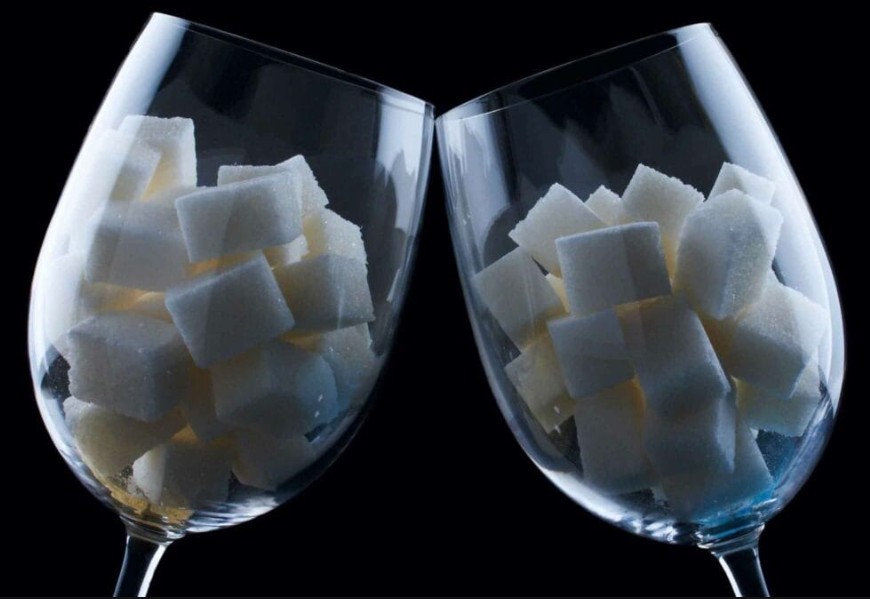
Photo credit: wineflavorguru.com

Wine contains natural sugar that comes from the grapes. The varietal and climate that it is grown in determine the amount of sugar in the wine. Grapes produced in warm climates tend to generate more sugar, which in turn leads to wines with a higher alcohol content. In comparison, grapes from cooler climates do not ripen as quickly or as much and therefore generate less sugar and lower levels of alcohol. Thus, a single grape varietal can produce wine with differing levels of sugar and alcohol, depending on where it is grown.

Winemakers can also impact sugar levels through the making of the wine. If the fermentation process is stopped before the yeast has converted all the sugars into alcohol, the wine will be higher in residual sugar.

High-sugar wines also result when the grapes are left on the vine for a longer period before harvesting. The resulting wines are often referred to as “Late Harvest” wines. Another example of grapes being left on the vine for an extended period making it very sweet is “Icewine”.

Because no wine is alcohol free, it can never be completely sugar free. However, be sure to avoid less-expensive, mass-produced wines as these are known to be higher in residual sugars. These cheaper wineries often utilize tricks such as adding artificial acids to help balance overly sweet wines or adding artificial sugars to add balance to overly sour grapes.

Instead, opt for wines made in small, high-quality wineries that don’t intervene with the natural process of the grapes. Make sure they focus on traditional winemaking techniques. It is best to look for organic, biodynamic and natural wines.

Fundamentally, the dryer a wine, the less sugar it contains. Dry wines have lower levels of sugar, ranging from 1 to 3 grams per litre of wine or between 0.9 to 2 grams per 150 ml or 5 oz glass.

Dry white wine options include:

  • Muscadet (bone dry)
  • Sauvignon Blanc (dry)
  • Chablis (bone dry)
  • Chardonnay (dry)
  • Grenache Blac (bone dry)
  • Pinot Gris (dry)
  • Pinot Grigio (bone dry)
  • Chenin Blanc (dry)
  • Viognier (dry)
  • Dry Riesling (dry)
  • Moscato

Dry red wine options include:

  • Barolo (bone dry)
  • Cabernet Sauvignon (dry)
  • Chianti (bone dry)
  • Pinot Noir (dry)
  • Sangiovese (dry)
  • Tempranillo (dry)
  • Merlot (dry)
  • Malbec (bone dry)
  • Nebbiolo (bone dry)
  • Syrah (dry)
  • Valpolicella (dry)

Sparkling wines such as Champagne and Prosecco come in a range of sweetness levels. While there is a market for very sweet sparkling wines, with plenty of residual sugar, there are a number of dry and extra-dry varieties. Check the label for terms like “Brut Nature”, “Extra Brut,” or “Dry”.

One final point to contemplate; the higher the alcohol content of the wine, the less residual sugar it contains, but the more calories the wine has.

Sláinte mhaith
Bolivia’s Wines

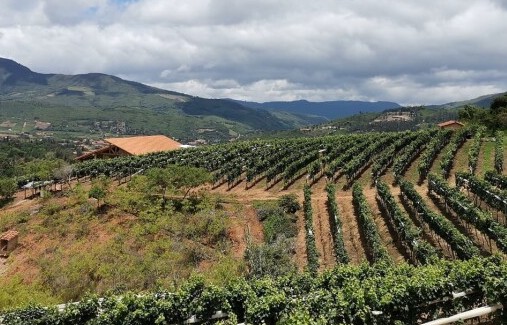
As with other South American countries, Bolivia’s winemaking began in the 1500s with the arrival of the Spanish. Bolivia is situated at a very high altitude. Seventy-five percent of the grapes grown produce red wine, while twenty percent are used in white wine with the remaining five percent split between dessert wine, sparkling wine and fortified wine.

Photo credit: winetourism.com

The dominant red grape is the Muscat. Cabernet Sauvignon, Merlot, Syrah, Malbec and Tannat grapes are also grown. White wines are creäted using mainly Torrontés, Chenin Blanc and Riesling varietals.

There are some grape vines dating back several hundred years that are still used in wine production today, though efforts continue to be made to identify the specific varietals. These plants are grown in the traditional manner being planted around the trunks of molle and chanar trees.

Bolivia’s wine industry is small compared to Chile and Argentina. However, the vines are growing at the highest elevation of any country in the world. Almost all its vineyards are located at an elevation of between 1,600 and 3,000 metres above sea level.

There are about 3,000 hectares of vineyards in the country, eighty percent of which are situated in the Central Valley of Tarija in the south-central region. Conditions there are temperate and semi-arid due to the altitude. Because of the elevation, there is more exposure to sunlight, which concentrates aromas and flavours in the wine. The skins of the grapes get thicker and the grapes grow smaller due to the increased sun exposure.  This higher skin to pulp ratio makes the flavours more intense. At the same time, the sun exposure serves to accelerate the ageing of the wines, which are often fully mature only a couple of years after harvesting.

Bolivian wines are worthwhile seeking out at your local wine store, not only for their rich bold flavours but also because it is estimated that with every hectare of land planted with grapevines, a Bolivian family is lifted out of poverty.

Sláinte mhaith

Wine Decanting Times

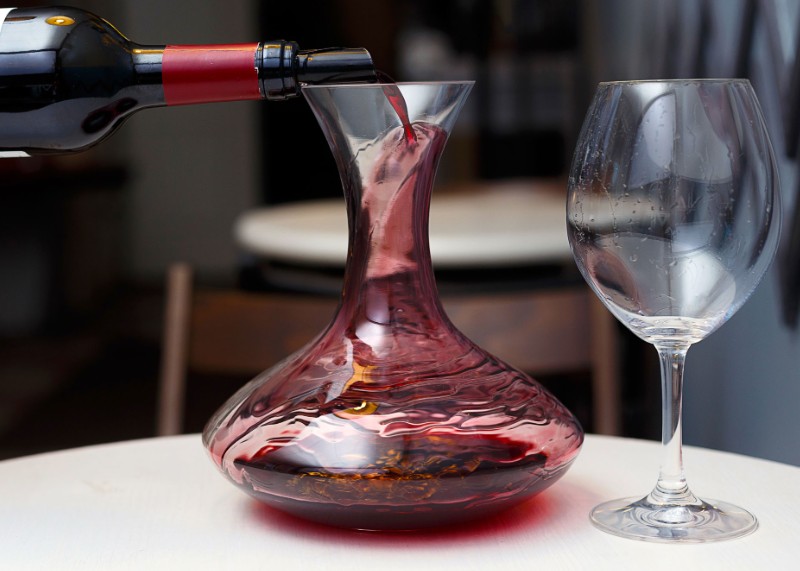
I have written quite a few posts about wine decanters and the practice of decanting over the years but until now I have never addressed the question of how long various varietals should be decanted for. Decanting times vary depending on the varietal and the age of the wine. Generally, young, bold reds need 1 to 3 hours to soften tannins while lighter reds benefit from just 30 to 60 minutes. Mature wines only need enough time to separate out any sediment that has collected in the bottle – generally no more than 20 minutes. In this case, too much oxygen can quickly weaken the flavour. White wines and sparkling wines don’t often benefit from decanting, but some full-bodied whites will benefit from up to 30 minutes.

Photo credit: idvip.edu.pe

Here is a more detailed guideline to help you achieve the optimum amount of decanting:

Light-bodied red wines – 20 to 30 minutes

  • Beaujolais
  • Gamay
  • Pinot Noir

Medium-bodied red wines – 30 to 60 minutes

  • Barbera
  • Cabernet Franc
  • Grenache
  • Malbec
  • Merlot
  • Sangiovese
  • Syrah
  • Tempranillo
  • Zinfandel

Full-bodied red wines – 60 minutes or more

  • Cabernet Sauvignon
  • Mourvèdre
  • Nebbiolo
  • Petit Sirah
  • Shiraz

Most Rosé wines don’t need to be decanted. For those that do, the time should be limited from 15 to 20 minutes. Ask the wine expert where you buy your wine or check the winery’s website to determine if decanting is suggested.

Sparkling wines very rarely benefit from decanting. If they do require decanting, limit the time to no more than 5 minutes. Again, the wine expert where you purchase your wine, or the winery’s website will help you decide.

Orange wines are basically white wines that have had skin contact during the winemaking process. As a result, these wines contain tannins and therefore may benefit from 15 to 30 minutes of decanting.

There you have it, a quick and easy guide for how long various wines should be decanted for.

Sláinte mhaith

Your Own Whisky or Wine Club

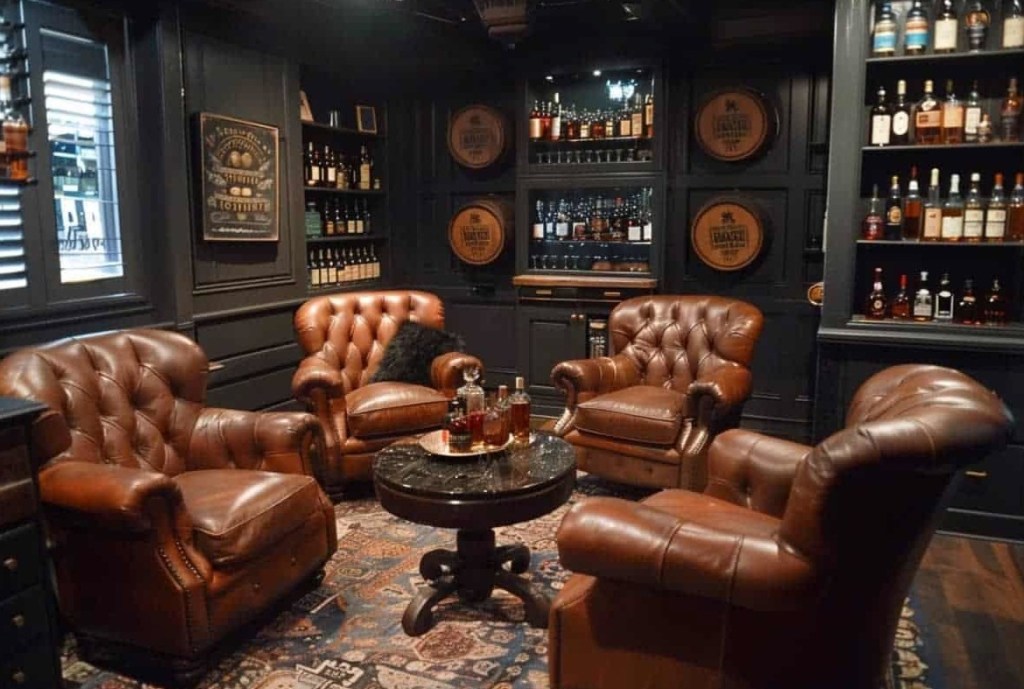
It has been suggested to me on more than one occasion that I should consider starting a whisky or wine club. Although I have never pursued such an endeavor it does provide some great opportunities for those who would like to do so. For example, it allows you to try more whiskies or wines than you could reasonably otherwise source.

Photo credit: artofit.com

It is beneficial to be somewhat knowledgeable about wine or whisky, but it is not absolutely necessary. More importantly, a club president should be an active listener and helpful when it comes to leading a group towards a consensus on the flavour profile of a wine or spirit.

To assist those of you who would like to consider organizing an enthusiastic group of wine or whisky lovers, I have put together a list of recommendations from a few experts to help get you started.

First, understanding the basics of how whisky or wine is made and the fundamental differences between styles is somewhat essential to starting a club. There are many resources you can access at no cost to assist you.

Begin with a small group, no more than ten people. This will help in spreading the cost of the whiskies or wines that you will be sampling.

Find a restaurant with a decent selection of wine or single malts, a good pub, or best yet, a specialist whisky or wine bar, and talk to them about a partnership. If you offer to bring in a group of enthusiastic wine or whisky drinkers on a quiet night on a regular basis, they may be willing to offer you space and may even let you provide some of the selections.

It is a good idea to have a theme for every meeting. This will help your members orient themselves when tasting a wine or whisky and give them something to focus on when thinking about how one selection differs from others tried during the session.

If asked, you may be surprised to learn that your favourite distillers or wineries may be willing to assist in some way. Don’t be afraid to write to your favourite brands, introduce yourself and let them know well in advance of any tastings you are planning. They may agree to support you in some way.

Your club or society should meet regularly, either monthly or bimonthly. This makes managing venues and attendance much easier.

Social media, such as a Facebook group, will enable club members to get more involved, offering opinions and suggestions for future tastings. It relieves you of the pressure of having to come up with all the new ideas.

If you decide that a spirit enthusiasts club is the thing for you, there are additional things you may need to consider such as membership fees and financing, advertising, guest speakers and educators, any liquor control requirements, etc.

Ultimately, whether your club has three or thirty members, it is a venture that can provide much pleasure and banter.

Sláinte mhaith

Muscat Blanc (Moscato)

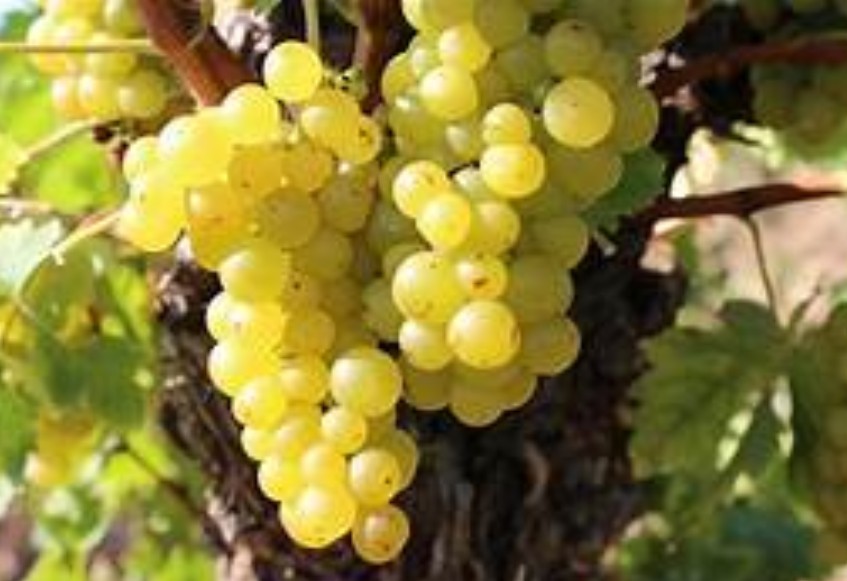
Muscat Blanc, or Moscato as it is known in Italy, is a light to medium-bodied off-dry white wine that has a low alcohol level (usually less than 10% alcohol by volume) but is very flavourful. It has no tannins and is medium -high in acidity. Muscat Blanc expresses the scent of lemons, oranges, peaches, pear, honeysuckle and jasmine, making it a suitable partner for the flavours found in seafood, poultry and sushi, or spicey dishes such as Mexican, Thai and Indian foods.

Photo credit: gastropedia.nl

Muscat Blanc is not a wine that will benefit from decanting. In fact, many of the aromas and much of the flavour would be lost. Long-term cellaring is not recommended either. Generally, retention should be limited to a maximum of 5 years.

In Italy, Muscat is also used to create sparkling wine called Moscato Spumante, which is drunk at special occasions and celebrations. It also pairs well with desserts such as almond cake.

Muscat is also produced as a sweet wine and fortified wine. The fortified wine pairs well with various soft cheeses such as Brie, Gouda and Camembert.

Muscat Blanc is believed to have originated in Greece and was introduced to Italy in the 13th century where it has remained very popular ever since. Production has now spread to Austria and Australia’s Yarra Valley and King Valley.

If you haven’t tried Muscat Blanc, it is well worth trying. It could become your next favourite white wine.

Sláinte mhaith