As the population ages and our good health versus sugar becoming a concern, wine lovers are becoming more troubled about whether they can reduce their sugar intake and still enjoy wine. As I have stated before, there continue to be many health benefits from wine and many are naturally low in sugar.
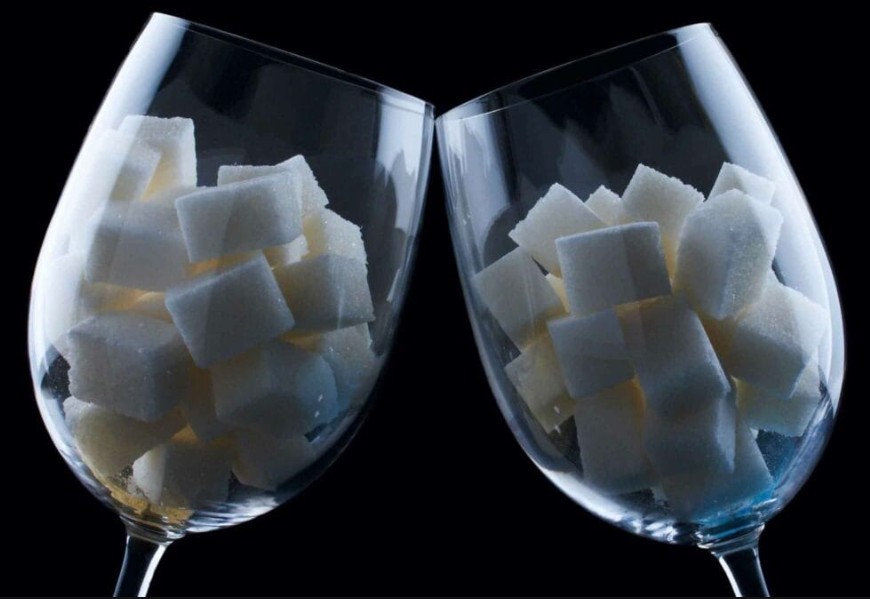
Wine contains natural sugar that comes from the grapes. The varietal and climate that it is grown in determine the amount of sugar in the wine. Grapes produced in warm climates tend to generate more sugar, which in turn leads to wines with a higher alcohol content. In comparison, grapes from cooler climates do not ripen as quickly or as much and therefore generate less sugar and lower levels of alcohol. Thus, a single grape varietal can produce wine with differing levels of sugar and alcohol, depending on where it is grown.
Winemakers can also impact sugar levels through the making of the wine. If the fermentation process is stopped before the yeast has converted all the sugars into alcohol, the wine will be higher in residual sugar.
High-sugar wines also result when the grapes are left on the vine for a longer period before harvesting. The resulting wines are often referred to as “Late Harvest” wines. Another example of grapes being left on the vine for an extended period making it very sweet is “Icewine”.
Because no wine is alcohol free, it can never be completely sugar free. However, be sure to avoid less-expensive, mass-produced wines as these are known to be higher in residual sugars. These cheaper wineries often utilize tricks such as adding artificial acids to help balance overly sweet wines or adding artificial sugars to add balance to overly sour grapes.
Instead, opt for wines made in small, high-quality wineries that don’t intervene with the natural process of the grapes. Make sure they focus on traditional winemaking techniques. It is best to look for organic, biodynamic and natural wines.
Fundamentally, the dryer a wine, the less sugar it contains. Dry wines have lower levels of sugar, ranging from 1 to 3 grams per litre of wine or between 0.9 to 2 grams per 150 ml or 5 oz glass.
Dry white wine options include:
- Muscadet (bone dry)
- Sauvignon Blanc (dry)
- Chablis (bone dry)
- Chardonnay (dry)
- Grenache Blac (bone dry)
- Pinot Gris (dry)
- Pinot Grigio (bone dry)
- Chenin Blanc (dry)
- Viognier (dry)
- Dry Riesling (dry)
- Moscato
Dry red wine options include:
- Barolo (bone dry)
- Cabernet Sauvignon (dry)
- Chianti (bone dry)
- Pinot Noir (dry)
- Sangiovese (dry)
- Tempranillo (dry)
- Merlot (dry)
- Malbec (bone dry)
- Nebbiolo (bone dry)
- Syrah (dry)
- Valpolicella (dry)
Sparkling wines such as Champagne and Prosecco come in a range of sweetness levels. While there is a market for very sweet sparkling wines, with plenty of residual sugar, there are a number of dry and extra-dry varieties. Check the label for terms like “Brut Nature”, “Extra Brut,” or “Dry”.
One final point to contemplate; the higher the alcohol content of the wine, the less residual sugar it contains, but the more calories the wine has.
Sláinte mhaith

