I have been asked by many people over the years how or why I have become a wine enthusiast. I was raised in a home where wine was sometimes drunk on special occasions or holidays, but it was never highlighted in any special way.
My interest in wine was not peaked until I had the opportunity of attending a presentation at a work conference twenty some years ago hosted by a Niagara-based wine steward. The information he presented, combined with his enthusiasm and passion for wine, I found contagious. Since the I have been hooked.
To me, wine making is a craft that not just anybody can master. It is a combination of both science and art. Those winemakers with the artistic flair, imagination and courage to push the limits of their capabilities, become extraordinary in their field.
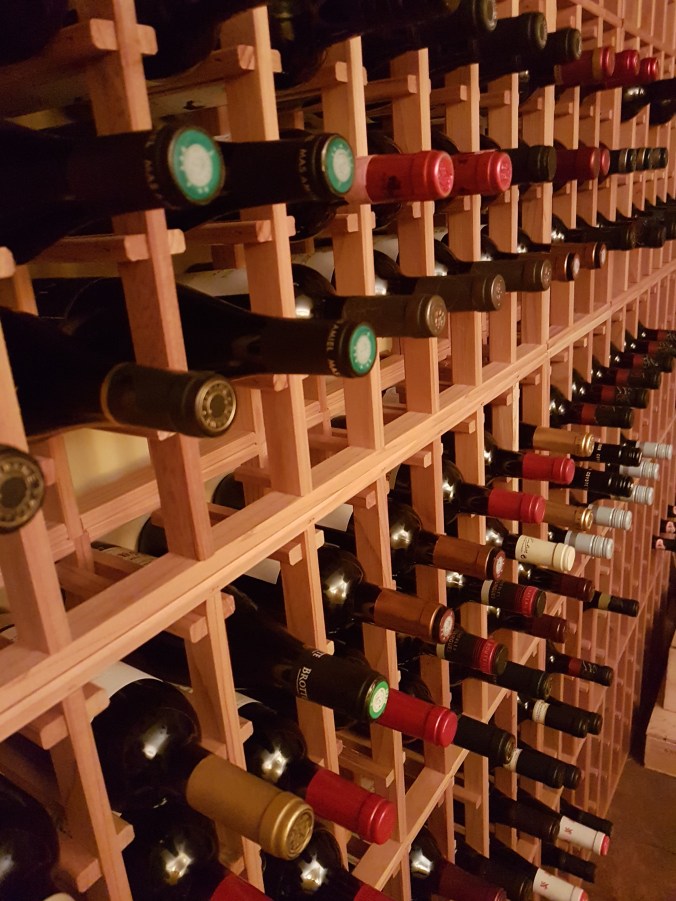
My wine cellar means many things to me. It is a travelog containing highlights from my adventures to various wine regions at home and abroad. I have had creations from Austria, France, Croatia, Germany, Hungary, Italy, Switzerland and of course, the wine regions of Canada from Nova Scotia to British Columbia. Whenever I pop a cork or twist a cap my travel memories come flooding back. I am reminded of the landscapes, the people and their culture and of course the cuisine.
Ten, fifteen, twenty or more years in a properly stored cellar, safeguarded from heat, light and odors, can turn the right bottle of wine into something wonderful, revealing its layers and complexity. On top of this, the wine becomes a shared experience that has developed over time.
For me, wine is often also associated with special events and occasions. I always make a point of selecting a certain wine that I feel is well matched to the occasion, whether it’s a family member or close friend’s birthday or anniversary or something else that is significant in someone’s life.
I admit that not every bottle in my cellar is destined to greatness. Like everyone, there are bottles that only serve to provide me with a casual drink at the end of the day or those that will be paired to turn an average meal into something a little more special.
I also get much satisfaction when I come across an average bottle of wine, that with some time and nurturing in the cellar, will transform into something special when the time comes to release it from its confines.
Wine collecting isn’t about building and stocking a cellar. The cellar only acts as a vehicle to allow something natural to progress over time and then be shared with the people you most care about.
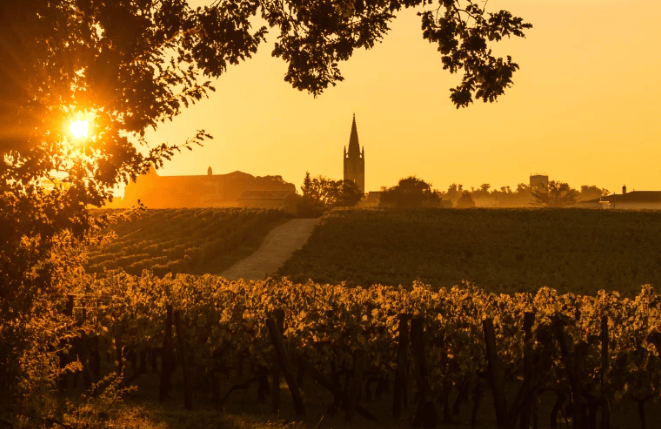
Fifteen or twenty years ago the world was having a love affair with Bordeaux wine. Wine enthusiasts couldn’t seem to get enough. This resulted in prices skyrocketing and even mediocre wines were able to command top dollar.
That has now all changed. Over the past few years, Bordeaux’s wine sales have been, and continue to be in vast decline. This is resulting in Bordeaux undergoing the most extensive structural shift that it has experienced in decades. Overall wine consumption in France is declining. The market for low-priced generic red Bordeaux has weakened resulting in stockpiling of unsold wine. As a result, approximately one in three growers is experiencing significant financial pressure.
As a result, almost 30,000 hectares of vines have been destroyed since 2023. Land prices are declining as the region’s wine crisis grows. Wine sales have fallen below the symbolic threshold of three million hectolitres for the first time in modern history. In the twelve months ending at the end of March this year, sales dropped to 2.98 million hectolitres, down 12% from the previous year.
Some regions have faired better than others, with the more prestigious regions suffering the least. From 2018 to 2025 land prices fell by 23% in in Pauillac, 27% in Margaux and 26% in Saint-Émilion. Elsewhere the effects have been much worse. Land values in Lalande-de-Pomerol have almost halved, falling 46% since 2018, Fronsac declined 50%, Bordeaux Blanc fell 52% and Bordeaux Rouge dropped almost 61%. Some of the abrupt adjustments have come in appellations already under economic pressure. Médoc vineyard land has fallen 82%, and Saint-Émilion Satellites recorded a 74% decline.
In addition to this, Bordeaux producers are contending with a succession of climatic challenges. French vineyards have endured repeated heatwaves, drought, frost and hail in recent years. Temperatures in June this year rose as high as 44°C in parts of the country. Extended heat is lowering yields, affected the grape quality and increased production costs at a time when many growers are already under critical financial pressure.
The worsening crisis has resulted in discontentment among small and mid-sized vintners, which have led to protests and a call for structural changes to the rules for producing both grapes and wine. The Interprofessional Council of Bordeaux Wine (CIVB) believes that a reduction in the size of the grape harvest could lessen the overproduction problem, thus reducing stock and possibly increasing bulk wine prices. While this could possibly provide relief to producers, it does not resolve the larger issues affecting Bordeaux’s smaller producers.
While lower production levels may help stabilize the wine market and improve pricing, external pressures from international trade policies may negatively impact recovery efforts. The coming months will be critical in determining whether the adjustment to reduce Bordeaux’s wine production will strengthen the market or result in still further decline. However, producers feel it is a risk worth taking. Time will tell.
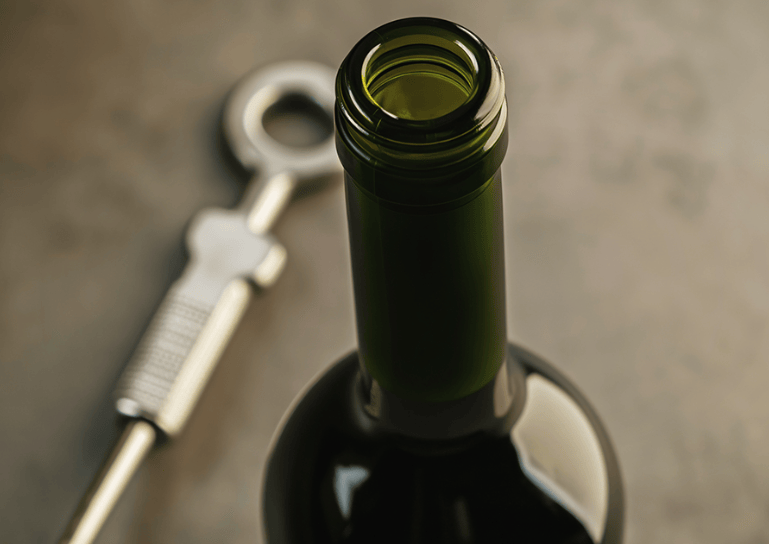
When you open a bottle of wine but don’t immediately consume it all, how long will that open bottle of wine keep? The answer is, “it depends”.
Photo credit:crushmag-online.com
When a bottle of wine is opened, it is fully exposed to a massive amount of oxygen, tremendously speeding up the micro-oxygenation process which will ultimately cause the wine to break down and lose its flavour. Even though wine that is past its prime may taste a little flat or stale, it’s not actually unsafe to consume. If it tastes okay, feel free to drink it. Spoiled wine is essentially vinegar so even though it won’t taste great it won’t hurt you.
To maximize the storage time of an open bottle of wine, make sure the wine is kept as airtight as possible by reinserting the cork or relacing the screw cap immediately following each use. It is also best to store an open bottle of wine upright to minimize the portion of the wine being exposed to the air in the bottle. You can also purchase a vacuum pump and stopper that will remove much of the oxygen from the open bottle. All opened wine, whether white, red or sparkling, should be stored in the refrigerator. Fortified wines can be stored either in the refrigerator or in a cool, dry place.
Sparkling wines like Champagne, Cava and Prosecco have the shortest lifespan after opening. Once opened, the bottle pressure that retains the bubbles dissipates and the wine goes flat. A sparkling wine stopper might help for a day or so, but it is best to drink sparkling wine the day it is opened.
High-acidity white wines, such as Pinot Gris, Riesling, Pinot Grigio or Sauvignon Blanc will last at least five days in the refrigerator after opening. Lower-acid whites, such as Chardonnay, Grenache Blanc, Viognier, Gewürztraminer, Semillon and Muscat can keep three to four days. If you transfer a higher-acid wine to an airtight container such as a Mason jar, before refrigerating it, you can enjoy it for up to a week after it is opened.
High-tannin red wines will keep for up to five days. These wines include Cabernet Sauvignon, Nebbiolo, Syrah/Shiraz and Malbec. Low-tannin reds include Pinot Noir, Baco Noir, Gamay and Sangiovese. They will lose their flavour after two or three days.
The length of time for Rosé to be kept is dependent on the grape varietal that it is made from (all Rosé is made from red grapes), the region the wine comes from and the style in which it is made. On average, Rosé wines will last three to five days after opening when stored in the refrigerator.
Fortified wines have a much higher alcohol content because of the addition of a distilled spirit, such as brandy. Because of the inclusion of the spirit, fortified wines can last up to four weeks after opening if stored in a cool and dry environment. You do not have to refrigerate fortified wines, but it can help preserve them for longer. These wines include Sherry, Vermouth, Port, Madeira and Marsala.
The exception to the rules is bag-in-a-box wines. I won’t comment on the quality of these wines, but they will last for up to a month after they have been opened. Note, though, that boxed wines carry an expiration date on the carton which needs to be followed.
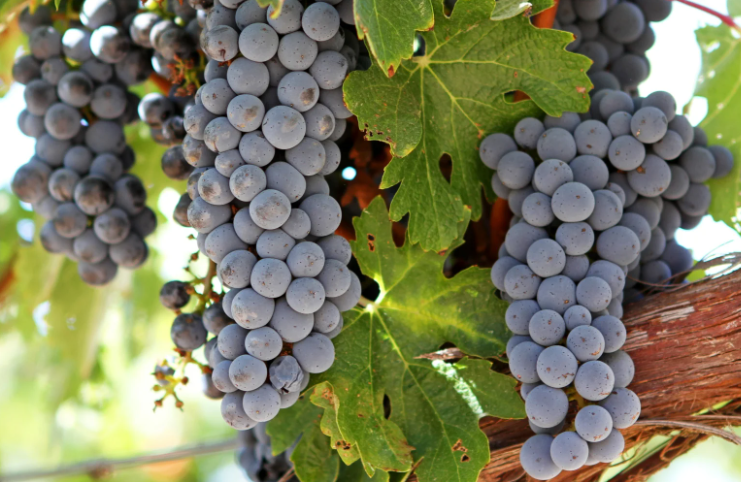
It is claimed that Cabernet Sauvignon is the most popular wine in the world. It is famous for its dry, bold, powerful flavour, medium acidity and rich fruit flavours. Cabernet Sauvignon has high tannins, which combined with thick skins, gives it great ageing potential.
Photo credit: wine-searcher.com
Cabernet Sauvignon originated in the Bordeaux region of France. There, it is usually blended with other varieties such as Merlot, Cabernet Franc, Petit Verdot and Malbec to create Bordeaux Wine. Today Cabernet Sauvignon is grown in many wine regions around the world, including Australia, South Africa, Chile, Spain, the U.S. and Canada.
The flavours and aromas vary depending on which region the Cabernet Sauvignon comes from. However, there are some characteristics that are consistent across all regions. It will always have intense, dark fruit flavours such as blackcurrant and cherry, as well as notes of baking spices. Some Cabernet Sauvignons are fruity, while others are savory and smoky. It will depend on where the Cabernet Sauvignon is grown and how the wine is made. For example:
Cabernet Sauvignon from Bordeaux, France will contain flavours and notes of blackcurrant, anise, tobacco leaf, plum sauce and pencil lead.
Australian wines will have notes of black plum, white pepper, chocolate and bay leaf.
Chilean Cabernet Sauvignon will have hints of blackberry, black cherry, fig, baking spices and green peppercorn.
With its intense rich flavours, Cabernet Sauvignon will pair well with steaks, burgers, strong cheeses and dark chocolate desserts.
It is up to you to decide which part of the world produces the Cabernet Sauvignon best suited to your taste. Personally, both the traditional Bordeaux wines and Australia’s Cabernet Sauvignons have had the most appeal to me. Unfortunately, even though Cabernet Sauvignon is grown in Canada, the growing season in this northern climate is not long enough to allow the grapes to achieve their full flavour potential.
The 2026 National Wine Awards of Canada (NWAC) took place in Niagara Falls, Ontario in mid June. However, the results were not fully tallied and presented until July 31st.
This week I will focus on the wineries that attained the highest honours and next week I will direct attention to the individual wines that were declared the top in their class.
Winery of the Year
The Niagara region’s Tawse Winery was bestowed the honour of being Winery of the Year, for the fifth time in the Awards 26-year history. At this year’s Awards Tawse earned 1 Platinum, 4 Gold, 13 Silver and 8 Bronze medals.
Maverick Estate Winery – British Columbia – 4 Gold, 2 Silver
Phantom Creek Estates – British Columbia – 4 Gold, 8 Silver, 2 Bronze
Painted Rock Estate Winery – British Columbia – 4 Gold, 3 Silver, 4 Bronze
Township 7 Vineyards & Winery – British Columbia – 4 Gold, 4 Silver, 3 Bronze
Best Performing Small Winery
Black Bank Hill, located in the Lincoln Lakeshore appellation of the Niagara Peninsula, is the Best Performing Small Winery. This award goes to the top-scoring winery that produces a maximum of 10,000 cases of wine. Blank Bank Hill only opened in 2021, making it one of the most rapid rising wineries ever witnessed by the NWAC.
The winery earned 1 Platinum, 4 Gold and 4 Silver medals at this year’s event.
Top 10 Small Wineries
Black Bank Hill – Ontario – 1 Platinum, 4 Gold, 4 Silver
La Frenz Estate Winery – British Columbia – 6 Gold, 6 Silver, 5 Bronze
This past June the All Canadian Wine Championships (ACWC) took place in Ontario’s Lake Erie North Shore wine region. This year there were 1,085 products registered with entries submitted from all ten provinces.
If you are looking for a new wine to try or want to see how your favorite wines compare, this list may be useful for you. All prices are presented in Canadian dollars.
The 2026 trophy winners for 2026 are as follows:
Best Sparkling Wine of the Year
Noble Ridge Vineyard and Winery, BC – 2019 The One – $40.25
Intrigue Wines Ltd., BC – 2025 Social Rosé – $23.00
Best Fruit Wine of the Year
Krause Berry Farms & Estate Winery, BC – N/V Sparkling Golden Raspberry – $31.05
The following are the Double Gold and Gold medal winners for each grape wine category: To see the complete list, including all the silver and bronze medal winners, visit the ACWC website at allcanadianwinechampionships.com/acwc-2026-results/
Sparkling Wine-Traditional Method
Double Gold *Trophy, Best Sparkling Wine of the Year
Noble Ridge Vineyard and Winery, BC – 2019 The One – $40.25
Gold
Huff Estate Winery, ON – 2022 Cuvée Janine – $38.80
Tzafona Cellars, ON – 2024 – Cabernet Franc Icewine – $63.00
Gold
Pilliteri Estate Winery, ON – 2024 Family Reserve Corvina Icewine – $85.00
Grape Fortifieds
Double Gold
Moraine Winery, BC – 2023 O’Port – $47.00
Gold
Adega on 45th Estate Winery, BC – N/V Terra Quente – $29.99
INTERNATIONAL SEGMENT FOR 2026 “Cellared in Canada”
These wines are comprised of partial or 100% imported grapes or juice. The program was introduced to assist the BC wineries after 2 harsh winters. These wines are excluded from the trophy rounds.
Not having been to the Niagara wine region since May of 2019, my wife and I decided that this spring was time for a return trip. Given that there are now around 100 wineries operating in the region, the all-important question was, which wineries should we visit? To help narrow the field I used several techniques: personal recommendations, previous award results, some of my own curiosity and follow ups from previous adventures. The result was that we ventured to 7 wineries: Domaine Le Clos Jordanne, Megalomaniac, Two Sisters Vineyards, Stone Eagle Winery, Fielding Estate Winery, Chateau des Charmes and Ravine Vineyard Estate Winery.
Domaine Le Clos Jordanne
Over the next few weeks I will share some of my winery experiences; some good, some not so good, but all were enlightening.
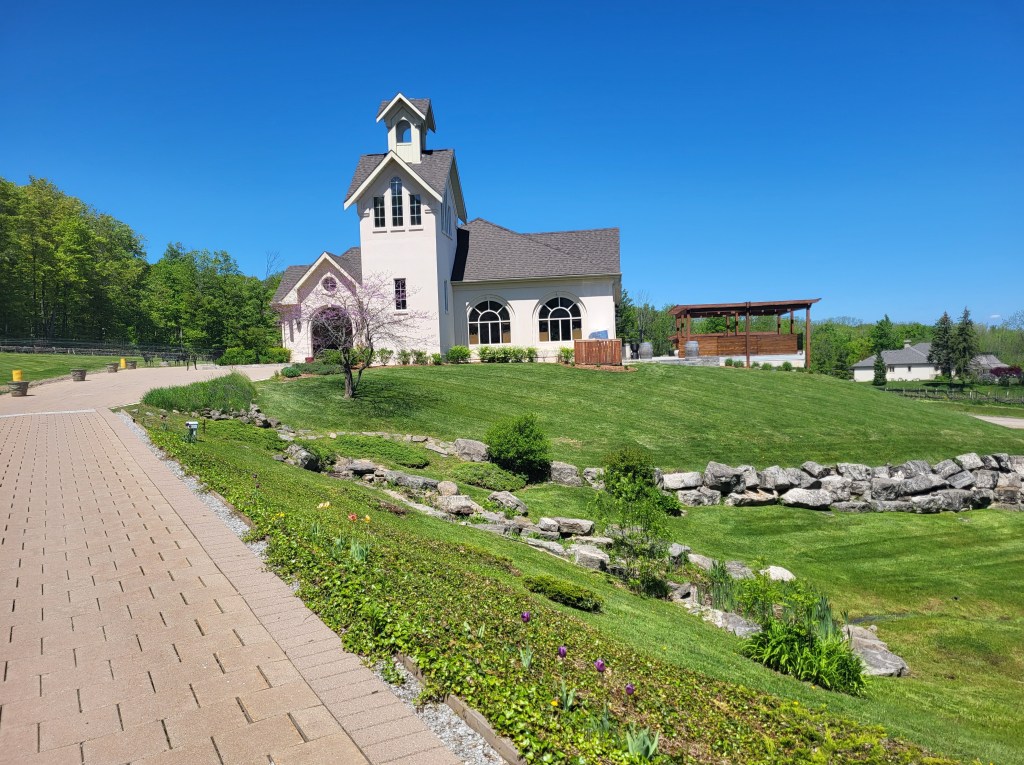
I will begin with Domaine Le Clos Jordanne, which now occupies the site of the former Angels Gate Winery. In May of 2023, Angels Gate was purchased by Arterra Wines Canada Inc. However, Arterra was not interested in continuing the production of Angels Gate wines. Instead, they were looking for a physical home for their Le Clos Jordanne French inspired wines, under the direction of their winemaker Thomas Bachelder. Bachelder is internationally recognized and is Le Clos Jordanne’s original founding winemaker who is specialized in the production of cool-climate Pinot Noir and Chardonnay. His terroir-revealing wines showcase how Old World, French Burgundy style winemaking techniques can apply to New World terroir with minimal intervention to produce great wines.
Following the French philosophy, Domaine Le Clos Jordanne only produces wines supported by the local terroir. Thus, the selection at the winery is limited to a variety of Chardonnay and Pinot Noir. So if you are looking to purchase a wide range of varietals, or looking for something other than Chardonnay or Pinot Noir, this winery is not for you. However, if you are a fan of true Burgundy style wines, Domaine Le Clos Jordanne is worth a look.
My wife and I couldn’t resist getting some of their neutral oaked Chardonnay and a couple of different Pinot Noirs to try.
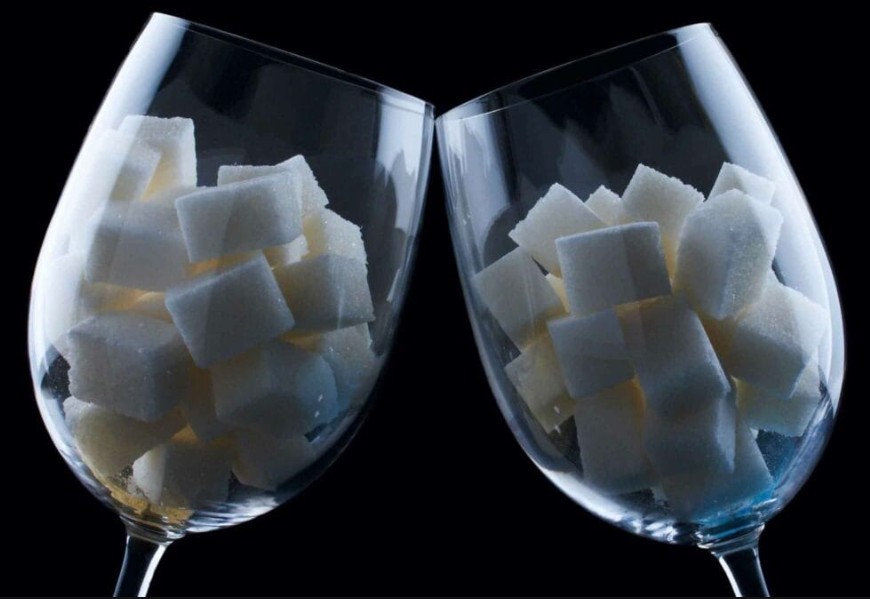
As the population ages and our good health versus sugar becoming a concern, wine lovers are becoming more troubled about whether they can reduce their sugar intake and still enjoy wine. As I have stated before, there continue to be many health benefits from wine and many are naturally low in sugar.
Photo credit: wineflavorguru.com
Wine contains natural sugar that comes from the grapes. The varietal and climate that it is grown in determine the amount of sugar in the wine. Grapes produced in warm climates tend to generate more sugar, which in turn leads to wines with a higher alcohol content. In comparison, grapes from cooler climates do not ripen as quickly or as much and therefore generate less sugar and lower levels of alcohol. Thus, a single grape varietal can produce wine with differing levels of sugar and alcohol, depending on where it is grown.
Winemakers can also impact sugar levels through the making of the wine. If the fermentation process is stopped before the yeast has converted all the sugars into alcohol, the wine will be higher in residual sugar.
High-sugar wines also result when the grapes are left on the vine for a longer period before harvesting. The resulting wines are often referred to as “Late Harvest” wines. Another example of grapes being left on the vine for an extended period making it very sweet is “Icewine”.
Because no wine is alcohol free, it can never be completely sugar free. However, be sure to avoid less-expensive, mass-produced wines as these are known to be higher in residual sugars. These cheaper wineries often utilize tricks such as adding artificial acids to help balance overly sweet wines or adding artificial sugars to add balance to overly sour grapes.
Instead, opt for wines made in small, high-quality wineries that don’t intervene with the natural process of the grapes. Make sure they focus on traditional winemaking techniques. It is best to look for organic, biodynamic and natural wines.
Fundamentally, the dryer a wine, the less sugar it contains. Dry wines have lower levels of sugar, ranging from 1 to 3 grams per litre of wine or between 0.9 to 2 grams per 150 ml or 5 oz glass.
Dry white wine options include:
Muscadet (bone dry)
Sauvignon Blanc (dry)
Chablis (bone dry)
Chardonnay (dry)
Grenache Blac (bone dry)
Pinot Gris (dry)
Pinot Grigio (bone dry)
Chenin Blanc (dry)
Viognier (dry)
Dry Riesling (dry)
Moscato
Dry red wine options include:
Barolo (bone dry)
Cabernet Sauvignon (dry)
Chianti (bone dry)
Pinot Noir (dry)
Sangiovese (dry)
Tempranillo (dry)
Merlot (dry)
Malbec (bone dry)
Nebbiolo (bone dry)
Syrah (dry)
Valpolicella (dry)
Sparkling wines such as Champagne and Prosecco come in a range of sweetness levels. While there is a market for very sweet sparkling wines, with plenty of residual sugar, there are a number of dry and extra-dry varieties. Check the label for terms like “Brut Nature”, “Extra Brut,” or “Dry”.
One final point to contemplate; the higher the alcohol content of the wine, the less residual sugar it contains, but the more calories the wine has.
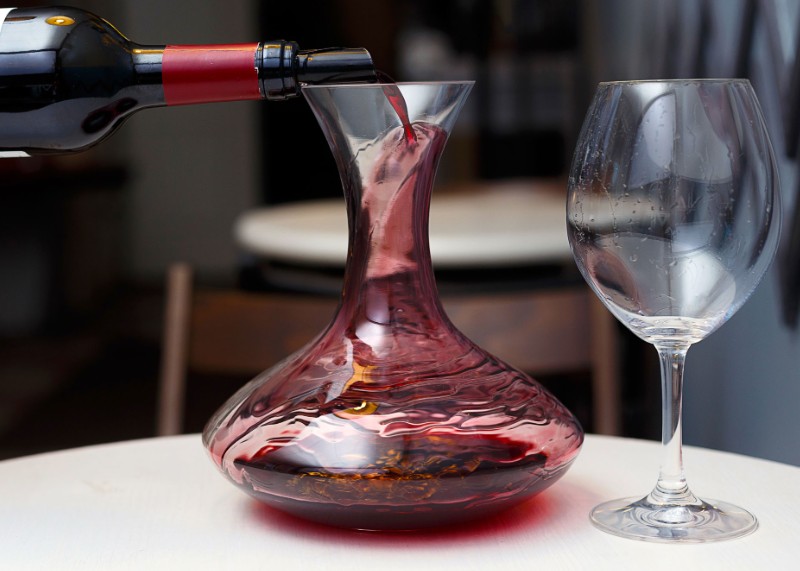
I have written quite a few posts about wine decanters and the practice of decanting over the years but until now I have never addressed the question of how long various varietals should be decanted for. Decanting times vary depending on the varietal and the age of the wine. Generally, young, bold reds need 1 to 3 hours to soften tannins while lighter reds benefit from just 30 to 60 minutes. Mature wines only need enough time to separate out any sediment that has collected in the bottle – generally no more than 20 minutes. In this case, too much oxygen can quickly weaken the flavour. White wines and sparkling wines don’t often benefit from decanting, but some full-bodied whites will benefit from up to 30 minutes.
Photo credit: idvip.edu.pe
Here is a more detailed guideline to help you achieve the optimum amount of decanting:
Light-bodied red wines – 20 to 30 minutes
Beaujolais
Gamay
Pinot Noir
Medium-bodied red wines – 30 to 60 minutes
Barbera
Cabernet Franc
Grenache
Malbec
Merlot
Sangiovese
Syrah
Tempranillo
Zinfandel
Full-bodied red wines – 60 minutes or more
Cabernet Sauvignon
Mourvèdre
Nebbiolo
Petit Sirah
Shiraz
Most Rosé wines don’t need to be decanted. For those that do, the time should be limited from 15 to 20 minutes. Ask the wine expert where you buy your wine or check the winery’s website to determine if decanting is suggested.
Sparkling wines very rarely benefit from decanting. If they do require decanting, limit the time to no more than 5 minutes. Again, the wine expert where you purchase your wine, or the winery’s website will help you decide.
Orange wines are basically white wines that have had skin contact during the winemaking process. As a result, these wines contain tannins and therefore may benefit from 15 to 30 minutes of decanting.
There you have it, a quick and easy guide for how long various wines should be decanted for.
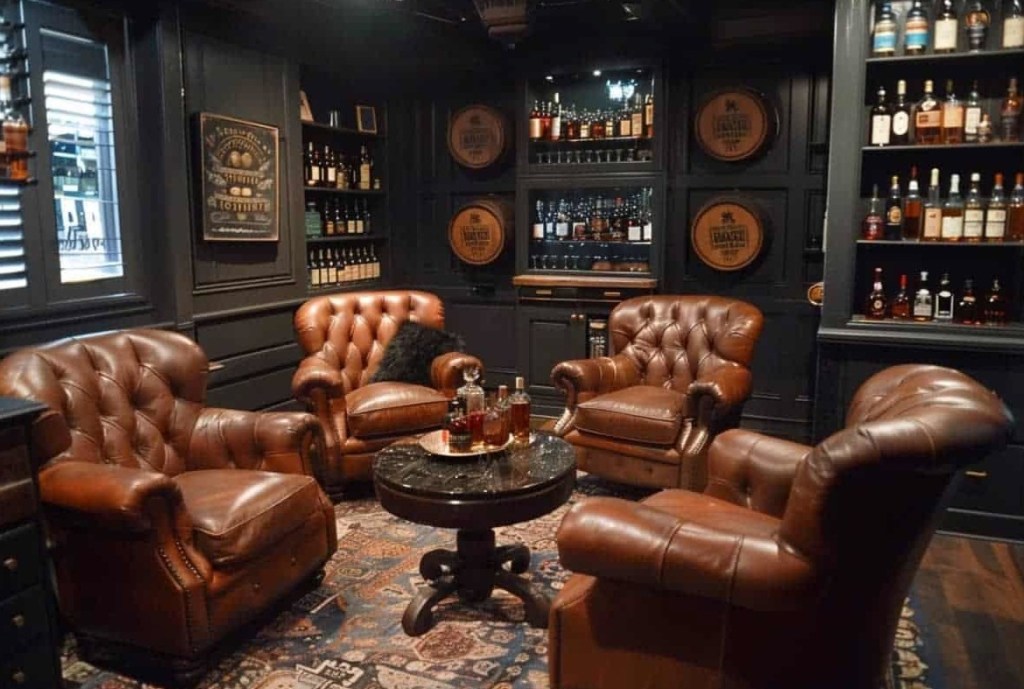
It has been suggested to me on more than one occasion that I should consider starting a whisky or wine club. Although I have never pursued such an endeavor it does provide some great opportunities for those who would like to do so. For example, it allows you to try more whiskies or wines than you could reasonably otherwise source.
Photo credit: artofit.com
It is beneficial to be somewhat knowledgeable about wine or whisky, but it is not absolutely necessary. More importantly, a club president should be an active listener and helpful when it comes to leading a group towards a consensus on the flavour profile of a wine or spirit.
To assist those of you who would like to consider organizing an enthusiastic group of wine or whisky lovers, I have put together a list of recommendations from a few experts to help get you started.
First, understanding the basics of how whisky or wine is made and the fundamental differences between styles is somewhat essential to starting a club. There are many resources you can access at no cost to assist you.
Begin with a small group, no more than ten people. This will help in spreading the cost of the whiskies or wines that you will be sampling.
Find a restaurant with a decent selection of wine or single malts, a good pub, or best yet, a specialist whisky or wine bar, and talk to them about a partnership. If you offer to bring in a group of enthusiastic wine or whisky drinkers on a quiet night on a regular basis, they may be willing to offer you space and may even let you provide some of the selections.
It is a good idea to have a theme for every meeting. This will help your members orient themselves when tasting a wine or whisky and give them something to focus on when thinking about how one selection differs from others tried during the session.
If asked, you may be surprised to learn that your favourite distillers or wineries may be willing to assist in some way. Don’t be afraid to write to your favourite brands, introduce yourself and let them know well in advance of any tastings you are planning. They may agree to support you in some way.
Your club or society should meet regularly, either monthly or bimonthly. This makes managing venues and attendance much easier.
Social media, such as a Facebook group, will enable club members to get more involved, offering opinions and suggestions for future tastings. It relieves you of the pressure of having to come up with all the new ideas.
If you decide that a spirit enthusiasts club is the thing for you, there are additional things you may need to consider such as membership fees and financing, advertising, guest speakers and educators, any liquor control requirements, etc.
Ultimately, whether your club has three or thirty members, it is a venture that can provide much pleasure and banter.