I have written quite a few posts about wine decanters and the practice of decanting over the years but until now I have never addressed the question of how long various varietals should be decanted for. Decanting times vary depending on the varietal and the age of the wine. Generally, young, bold reds need 1 to 3 hours to soften tannins while lighter reds benefit from just 30 to 60 minutes. Mature wines only need enough time to separate out any sediment that has collected in the bottle – generally no more than 20 minutes. In this case, too much oxygen can quickly weaken the flavour. White wines and sparkling wines don’t often benefit from decanting, but some full-bodied whites will benefit from up to 30 minutes.
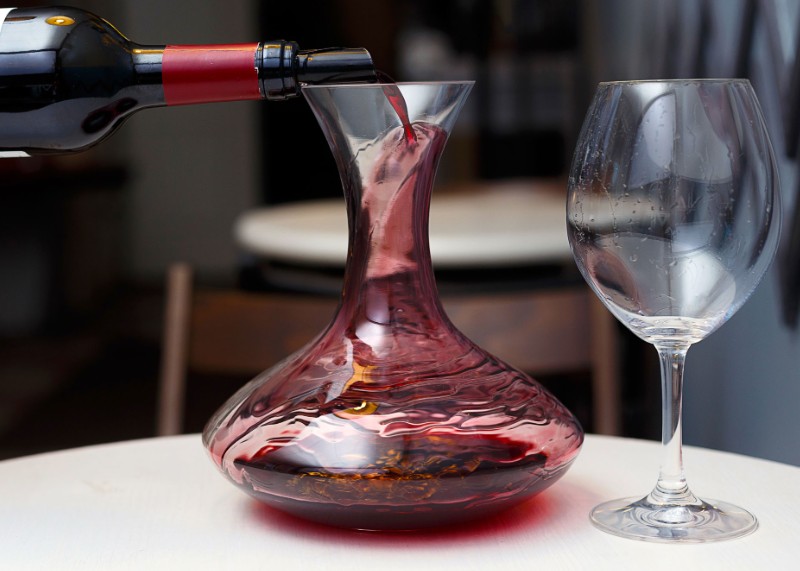
Here is a more detailed guideline to help you achieve the optimum amount of decanting:
Light-bodied red wines – 20 to 30 minutes
- Beaujolais
- Gamay
- Pinot Noir
Medium-bodied red wines – 30 to 60 minutes
- Barbera
- Cabernet Franc
- Grenache
- Malbec
- Merlot
- Sangiovese
- Syrah
- Tempranillo
- Zinfandel
Full-bodied red wines – 60 minutes or more
- Cabernet Sauvignon
- Mourvèdre
- Nebbiolo
- Petit Sirah
- Shiraz
Most Rosé wines don’t need to be decanted. For those that do, the time should be limited from 15 to 20 minutes. Ask the wine expert where you buy your wine or check the winery’s website to determine if decanting is suggested.
Sparkling wines very rarely benefit from decanting. If they do require decanting, limit the time to no more than 5 minutes. Again, the wine expert where you purchase your wine, or the winery’s website will help you decide.
Orange wines are basically white wines that have had skin contact during the winemaking process. As a result, these wines contain tannins and therefore may benefit from 15 to 30 minutes of decanting.
There you have it, a quick and easy guide for how long various wines should be decanted for.
Sláinte mhaith

