As with other South American countries, Bolivia’s winemaking began in the 1500s with the arrival of the Spanish. Bolivia is situated at a very high altitude. Seventy-five percent of the grapes grown produce red wine, while twenty percent are used in white wine with the remaining five percent split between dessert wine, sparkling wine and fortified wine.
The dominant red grape is the Muscat. Cabernet Sauvignon, Merlot, Syrah, Malbec and Tannat grapes are also grown. White wines are creäted using mainly Torrontés, Chenin Blanc and Riesling varietals.
There are some grape vines dating back several hundred years that are still used in wine production today, though efforts continue to be made to identify the specific varietals. These plants are grown in the traditional manner being planted around the trunks of molle and chanar trees.
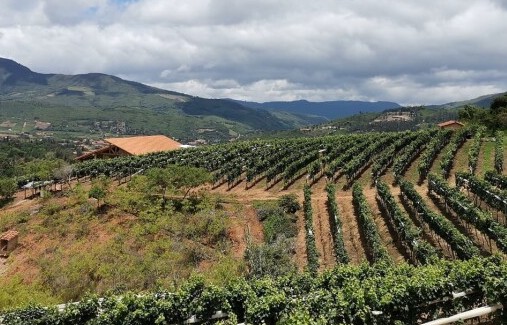
Bolivia’s wine industry is small compared to Chile and Argentina. However, the vines are growing at the highest elevation of any country in the world. Almost all its vineyards are located at an elevation of between 1,600 and 3,000 metres above sea level.
There are about 3,000 hectares of vineyards in the country, eighty percent of which are situated in the Central Valley of Tarija in the south-central region. Conditions there are temperate and semi-arid due to the altitude. Because of the elevation, there is more exposure to sunlight, which concentrates aromas and flavours in the wine. The skins of the grapes get thicker and the grapes grow smaller due to the increased sun exposure. This higher skin to pulp ratio makes the flavours more intense. At the same time, the sun exposure serves to accelerate the ageing of the wines, which are often fully mature only a couple of years after harvesting.
Bolivian wines are worthwhile seeking out at your local wine store, not only for their rich bold flavours but also because it is estimated that with every hectare of land planted with grapevines, a Bolivian family is lifted out of poverty.
Sláinte mhaith

