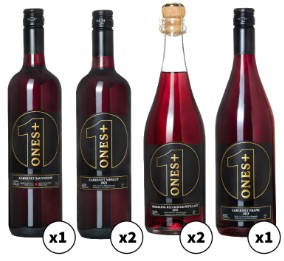
My wife recently came across an article about a non-alcoholic winery that has received endorsement on CBC’s Dragons’ Den television show. Based on their endorsement and our curiosity, we agreed we would purchase a boxed set of wines online, which included Cabernet Merlot, Cabernet Sauvignon, Cabernet Franc and a sparkling red.
I read that before sampling any de-alcoholized wine it is important to keep in mind that these wines cannot be directly compared to wines containing alcohol and should not be considered as a substitute. Instead, according to one source, non-alcoholic wine should be deemed as complementary to regular wine. However, in my opinion, if this beverage is not to be compared to regular wine, then don’t call it wine. Give it a different name.
De-alcoholized wine will still contain some alcohol, but only an amount to a maximum of 0.5% alcohol by volume. Unfortunately, manipulation to remove alcohol can inadvertently remove the aromas and characteristics of the grape varietal.
When the wines arrived, we first tried the Cabernet Merlot, and following the food pairing suggestions on the label, served it with pork tenderloin. To say that we were underwhelmed would be an understatement. My wife described it best by summarizing it by saying that it tasted extremely watered down. The wine had basically no aroma.
The second wine we tried was the sparkling red. It proved to be a much better experience having more of a fuller, less acid taste. There was a sweetness to the wine that I suspected was artificially added but according to the label, no sugar had been added. Also, given the amount of fizz and the length of time that the bubbles remained in both the glass and the bottle, I suspect that the carbonation was added rather than occurring naturally through fermentation.
The third wine we explored was the Cabernet Franc, which we had with spaghetti and meatballs. Although this wine similarly lacked in flavour like the Cabernet Merlot, it did have a little more of a finish to it. One advantage this wine had over the first was that our tastebuds were prepared for the underwhelming flavour and lack of richness, thus making it more palatable and less of a shock.
The final wine selection was the Cabernet Sauvignon. I expected this wine to be the boldest of the group but other than having a slightly longer finish there was not much of a difference between this and either the Cabernet Franc or Cabernet Merlot. We paired the Cab Sauv with homemade pizza, but I don’t think any food pairing is going to make the wine more endearing.
The breweries seem to do a much better job of de-alcoholizing as I have had several brands and types of non-alcoholic beer that I have enjoyed. I found strong similarities to traditional beer. On the other hand, the wines were a big disappointment as they did not come anywhere close to mirroring the alcoholized version of the same varietal. However, once I knew what to expect, I was able to be more accepting of the wine and applaud the initiative to produce a non-alcoholic version. though further effort is needed to enrich the flavour.
The one similarity the de-alcoholized wine shares with regular wine is its appearance. Though the colour may be slightly less vibrant, it is unlikely that anyone at a social gathering could tell what type of wine was in your glass.
Sláinte mhaith

