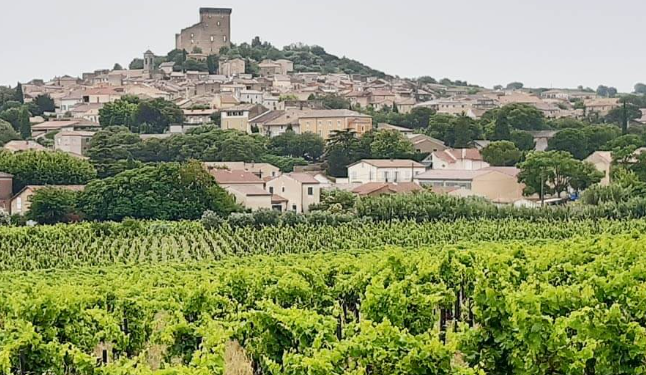
Following my visit to the Châteauneuf-du-Pape (pronounced Sha-too-nuff-doo-pap) district of France in 2024, I have paid more attention to these wines and have gained a better appreciation for them. It is an appellation known for its bold Grenache-based red blends. However, the region produces both red and white wines using as many as 13 different grape varietals.
The name Châteauneuf-du-Pape translates to “the Pope’s new castle,” referring to the Popes from Rome that lived in Avignon during the 14th century.
Of the eight red varietals planted, Grenache makes up about 80%, followed by Syrah, Mourvèdre and often lesser quantities of one or more of Cinsault, Muscardin, Counoise, Vaccarèse and Terret Noir. Thus, it is referred to as a GSM blend (Grenache, Syrah and Mourvèdre). Most Châteauneuf-du-Pape reds are produced with around 80% Grenache, although some wineries use 100% Grenache, bringing out a more robust, stronger flavour.
These grapes combine to create a medium-bodied, rich, spice-infused red wine. The reds are typically aged from 10 to 20 years, depending on the producer and the vintage. The flavours may include rich raspberry, strawberry and plum with notes of leather, game, and herbs such as sage, rosemary and lavender. The Grenache based reds wine tastes superb with heavier meats like lamb, beef, venison and duck.
Châteauneuf-du-Pape Blanc is not as common and not as easy to find because only about 7% of the region’s vineyards are white grapes. These wines are typically a blend of the region’s Grenache Blanc, Clairette, Bourboulenc and Roussanne grapes. Although not common, Picpoul and Picardin are also permitted. The white wines are generally aged for four to five years though some can be aged longer.
The better-quality whites contain plenty of tropical fruit and floral notes and have crisp underlying acidity. They are subtly powerful and strong in alcohol, averaging 14% or more. They go well served alongside fish, veal and poultry.
It is suggested that Châteauneuf-du-Pape wines be chilled to a temperature of 16 to 18 degrees Celsius and decanted about an hour before serving.
Don’t expect to find a 750 ml bottle of Châteauneuf-du-Pape for under $50 CDN but the character and flavour of these wines makes them well worth the price.
Sláinte mhaith
 A Layman's Wine Musings