Merlot never seems to receive the same accolades as Cabernet Sauvignon or Pinot Noir, but it produces wines with the same level of complexity and longevity. Merlot is great on its own or being combined in a blend to produce some extraordinary wines. Merlot produces a balanced, medium-bodied wine with low acidity and relatively high alcohol levels. Cooler climate varieties will contain marginally higher tannins than those produced in warmer climates, where warmer climate Merlot is full of fruitiness.
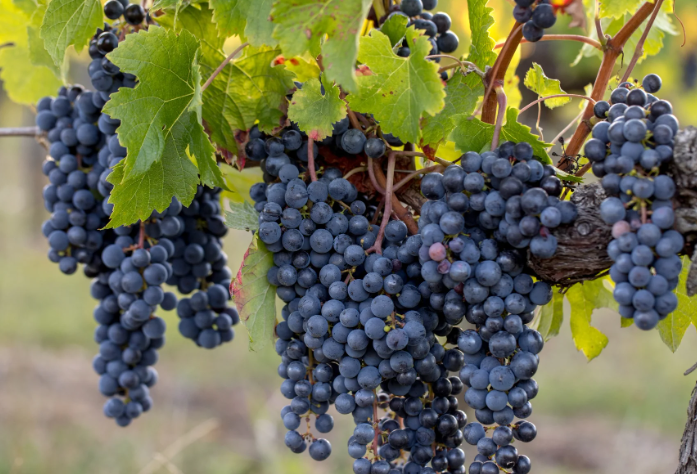
Merlot has often received a bad rap, often thought to only be cheap-and-cheerful, that was to be drunk upon arriving home from the wine shop. However, Merlot is one of the key components in the classic blends of Bordeaux. There, on the Right Bank, it is crafted into wines that are among the greatest in the world.
Merlot originated in Bordeaux but is now grown in both New World and Old World regions. Although French Merlot is still the mainstay region, there are excellent varieties produced in Italy’s Tuscany region, Australia’s McLaren Vale and Barossa Valley, Argentina and Chile.
Merlot can vary in taste depending on the region it comes from. However, it’s common to find Merlot full of the fruity flavours of blackberries, plum and lighter red fruits. Notes of fruit cake and chocolate are often found. As Merlot ages, it often displays hints of tobacco, leather and dried mint. Its tannins will become velvetier, especially in wines that are meant to age for a longer period of time. Vanilla and spicy notes also become evident as the wine matures.
Food pairings with Merlot include lamb, duck, hamburgers or a roast of beef. If the wine has been chilled, it is recommended to let it sit at room temperature for 20 minutes before serving.
Sláinte mhaith

